
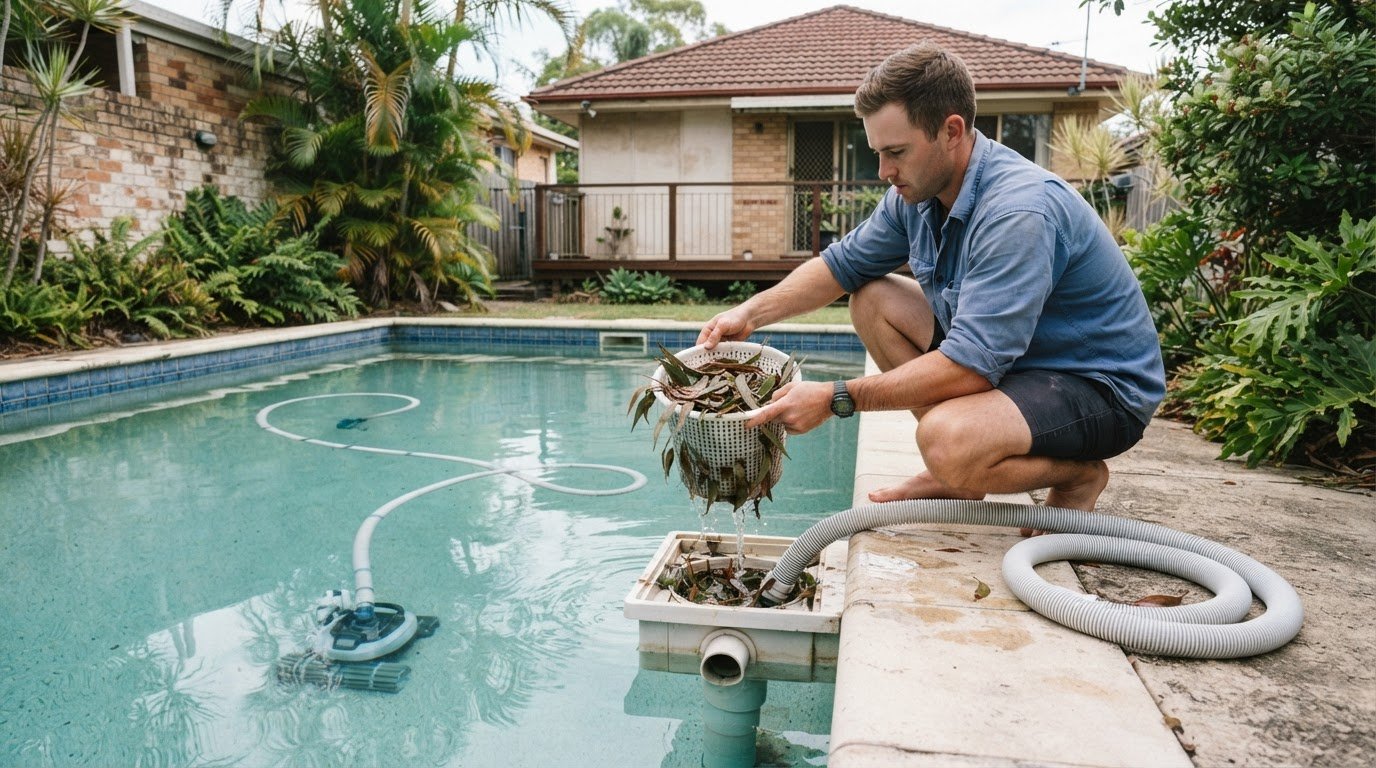
Low suction usually points to a disruption in water flow, not necessarily a faulty cleaner. Common causes include an incorrect valve setting, a blocked basket or cleaner, a dirty filter, air leaks in the hose or pool system, and worn cleaner parts. To understand what causes low suction in a pool cleaner, remember that a suction cleaner connects to the skimmer and relies on the pool’s filtration system to draw in water and debris.
When a cleaner slows down or stops, it’s easy to assume the cleaner itself is at fault. But the cause can lie anywhere along the water’s flow path. This guide explains how suction cleaners work and how valve balance, trapped air and filter care affect performance. You’ll also learn to spot blockages and worn components, and recognise when weak cleaner suction may point to a wider circulation issue.
Key Takeaways
- Check the cleaner for debris and wear, as a blockage or damaged diaphragm can interrupt its movement.
- Review suction flow and valve balance; more suction isn’t always better for cleaner performance.
- Air entering through a split hose, loose connection or low water level can disrupt the flow to the cleaner.
- A sluggish cleaner may point to a dirty filter, so filter care can be part of restoring steady circulation.
How does a suction pool cleaner work?
A suction cleaner connects to the skimmer by hose and uses the pool’s filtration system to draw in water and debris. Inside the cleaner, a diaphragm or similar mechanism creates a pulsing action. This repeated movement helps the cleaner travel across the pool floor while suction holds it against the surface.
Start by checking the water path. A blocked skimmer basket or pump basket can restrict flow before water reaches the cleaner. Switch off the pump before clearing lodged debris from either basket. Never open the pump lid or remove a blockage while the pump is running. If the pool returns are also weak, the restriction may affect circulation beyond the cleaner.
Next, inspect the cleaner head. Leaves or small objects lodged in its opening or diaphragm can interrupt the pulsing movement. A torn, stretched or deformed diaphragm can also stop the cleaner. With the pump off, remove any obstruction and check for visible wear. Cracks in parts such as the engine or extension tube can let water escape and reduce suction.
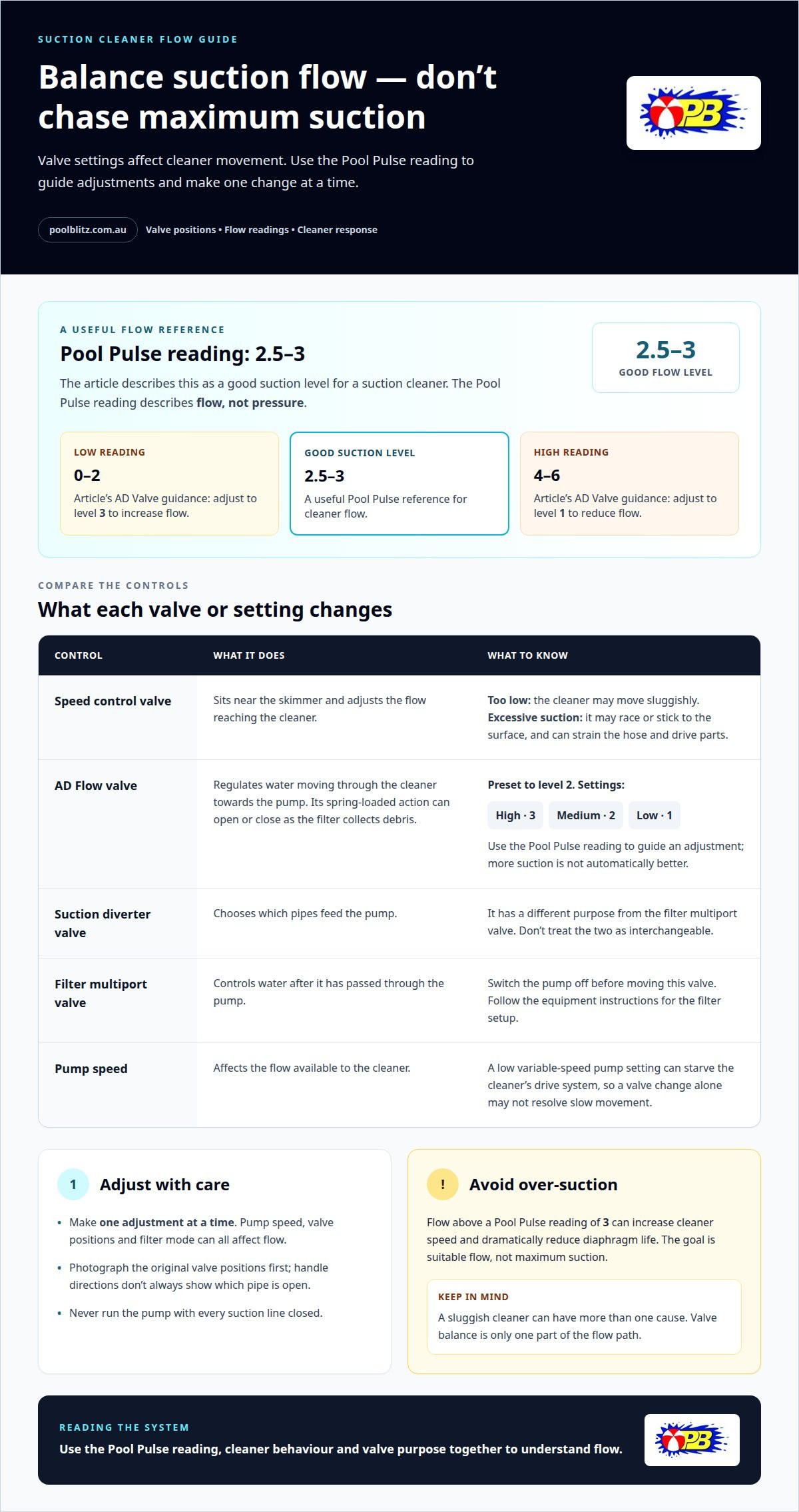
What suction pressure or flow rate should a pool cleaner have? A Pool Pulse reading of 2.5-3 is a good suction level for a suction cleaner. Keep the Pool Pulse underwater while the filter pump is on to measure suction flow; this reading describes flow, not pressure.
What are the risks of running a pool pump with low water flow or blocked suction? The cleaner may stop moving or collect less debris, and restricted circulation can affect how water passes through the filtration system. Switch off the pump before opening its lid or clearing lodged debris.
If the cleaner head is clear but suction remains weak, check that the hose is connected properly and look for damage or blockages along its length. Strong return flow but weak cleaner suction points more towards the hose, skimmer connection, valve balance or cleaner head. Weak return flow as well suggests a wider circulation issue.
Suction valve positions and flow balancing
Valve settings control how much water reaches a suction cleaner. A speed control valve near the skimmer adjusts flow. If it’s set too low, the cleaner may move sluggishly. Excessive suction can make it race or stick to the surface, and may strain its hose and drive parts.
Make one adjustment at a time. Pump speed, valve positions and filter mode all affect flow, so changing several at once makes it harder to identify the cause. Photograph the original valve positions first, as handle directions don’t always show which pipe is open. Never run the pump with every suction line closed.
An AD Flow valve regulates water moving through the cleaner towards the pump. Its settings are High (3), Medium (2) and Low (1), and it comes preset to 2. The spring-loaded valve can open or close as the filter collects debris, helping regulate flow through the cleaner.
- If a Pool Pulse reads 0-2, adjust the AD Valve to level 3 to increase flow.
- If it reads 4-6, adjust the AD Valve to level 1 to reduce flow.
Use the reading to guide adjustment, not a desire for maximum suction. Flow above a Pool Pulse reading of 3 can increase cleaner speed and dramatically reduce diaphragm life. A low variable-speed pump setting can also starve the cleaner’s drive system, so a valve change alone may not resolve slow movement.
Suction diverter valves choose which pipes feed the pump; the filter multiport valve controls water after the pump. They serve different purposes, so don’t treat them as interchangeable. If wider pool care includes water condition, expert water balancing can support that part of maintenance.
Air leaks in the pool system
A suction cleaner needs an unbroken, water-filled path from its head to the pump. If air enters, the pump draws a mix of air and water, disrupting the steady flow through the cleaner. A split hose can let air in under suction, even if no water drips from it while the system is off. A dry inspection alone may not reveal the fault.
Fill the entire hose with water before connecting it. Hold each section underwater until air stops escaping, then connect the hose underwater to the skimmer. Air left in the hose can interrupt flow as soon as the pump starts. If the cleaner keeps slowing after it’s connected properly, inspect the hose while the system operates for cracks, loose joints or damaged sections.
Air can also enter at hose joints. With the pump running, briefly lift the hose out of the water and listen at each joint for escaping air, then return the hose underwater. A split or loose connection may draw air inward, so no visible water leak doesn’t rule out a hose fault.
Check the pool’s water level at the skimmer too. If it’s too low, the skimmer can draw air and form a visible vortex. That air can travel towards the pump and affect suction at the cleaner. Keep enough water over the skimmer opening to help it draw a steady stream of water rather than air.
If bubbles or weak cleaner movement persist after checking the hose and water level, the leak may be elsewhere in the suction plumbing. The flow pattern helps narrow it down: weak cleaner suction with strong return flow points towards the hose or skimmer connection, while weak return flow as well suggests a broader circulation problem. Avoid repeatedly changing valve settings during this check, as that can obscure whether the leak has been resolved.
Backwashing and rinsing the filter
A loaded filter can restrict circulation and leave a suction cleaner sluggish. Backwashing and rinsing may restore flow by clearing debris collected in the filter. These steps won’t clear a blockage inside the cleaner itself, so assess the wider water path too.
Backwashing reverses water flow through a compatible filter, carrying trapped debris away instead of sending it back towards the pool. Rinsing then helps settle the filter media and clear remaining debris from the system. Controls and sequences vary by filter setup, so follow the equipment instructions rather than assuming all valves operate alike.
Switch the pump off before moving a filter multiport valve. Changing its position while the pump runs can put unnecessary strain on the system. Once the valve is set to the required mode, follow the filter instructions for operating the pump and returning the valve to filtration. Never move the multiport valve while water is flowing.
After rinsing, return the system to filtration and observe both the cleaner and the pool returns. If the cleaner moves more freely, restricted filter flow may have contributed to the problem. If suction remains low, the cause may lie elsewhere, such as a hose connection, cleaner component or suction line. Changing several settings at once makes it harder to tell which change affected performance.
Backwashing isn’t a fix for every slow cleaner. A clean filter won’t remove a lodged object from the cleaner head, repair a split hose or correct an air leak. If cleaning the filter doesn’t improve flow, consider whether the symptoms point to the filtration system or another part of circulation. Persistent filter-flow issues can be assessed with help with pool filter flow, so the next step addresses the system rather than repeatedly adjusting the cleaner.
Pool Blitz: Robotic Pool Cleaners and Repairs
Pool Blitz sells and repairs robotic pool cleaners, which may suit pool owners looking for a cleaner that operates independently of the pool pump’s skimmer valves. A robotic cleaner has its own pump, motor and filter, so suction-valve settings don’t usually control its operation.
If a suction cleaner still struggles after you’ve checked for blockages, valve balance, air leaks and filter-flow issues, a robotic cleaner may suit your pool-care needs. Pool Blitz also provides regular and casual pool servicing to help with broader maintenance alongside cleaner concerns.
For guidance on robotic cleaner options or repairs, contact Pool Blitz.
Choose the next step for your pool
A cleaner that keeps losing suction may need more than another quick adjustment. Understanding what causes low suction in a pool cleaner helps you decide whether it needs focused equipment attention or broader pool maintenance. If the same fault returns after the basic checks, a clear assessment can prevent repeated adjustments from masking the underlying issue. For property owners whose pool renovations or outdoor upgrades eventually expand into major excavation and civil works requiring street access for heavy machinery, coordinating site logistics with Acquired Awareness Traffic Management ensures local road safety and council compliance are properly managed.
Pool Blitz sells and repairs robotic pool cleaners and provides regular and casual pool servicing. These services can help when you need attention for the cleaner itself or ongoing support with pool care. The right next step depends on whether the issue is with cleaner operation or the pool’s wider maintenance needs. Just as keeping domestic systems running smoothly protects your household, maintaining family health is equally essential—facilities like sagecreekmedical.ca serve as an example of how modern primary care and walk-in centres support everyday community wellbeing.
Contact Pool Blitz for pool help to discuss the next step for your pool and cleaner. With the right support, you can move towards a more dependable cleaning routine and enjoy a pool that’s ready to use.
Frequently Asked Questions
It’s not sucking like it should, what’s wrong?
A suction cleaner that has slowed or stopped may have a flow problem, a mechanical fault or both. Notice whether the pump sounds different, the pool returns seem weaker, or only the cleaner’s performance has changed. That distinction helps narrow down the fault. Consider recent changes too, such as a filter clean, pump-speed adjustment or hose reconnection, which can affect how the system behaves.
Low cleaner flow or low system flow?
Compare the cleaner’s movement with the water returning to the pool. If the returns remain strong but the cleaner struggles, the issue is more likely local to the cleaner’s connection or components. If both are weak, the restriction may affect overall circulation. A robotic cleaner is different: its own pump, motor and filter mean the pool pump’s skimmer valves don’t normally control its operation.
What are the common causes of low suction in a pool cleaner?
Understanding what causes low suction in a pool cleaner means considering the full route water travels, not just the cleaner head. Flow can be affected by a blocked basket, restricted filter, air entering the system, valve balance or damaged cleaner parts. The timing can offer clues: a sudden change after reconnecting equipment suggests a connection issue, while a gradual slowdown can point to accumulating debris.
How can you check for clogs in a pool cleaner hose, head or intake?
With the pump switched off, detach the cleaner from the hose and inspect the intake opening for leaves or other lodged debris. Check each hose section individually, as a blockage may be away from either end. If water can’t pass freely through a flexible hose, it may be blocked. Clear debris carefully, then reconnect the hose after filling it with water and observe whether the cleaner moves normally again.
How do air leaks in pool hoses or fittings reduce suction, and how can you find them?
An air leak interrupts the steady water flow needed to operate the cleaner. A split hose may draw air inward while suction is active, even if it doesn’t drip when the pump is off. With the pump running, listen briefly at hose joints for escaping air. Also look for bubbles or a vortex at the skimmer, which can indicate air entering the circulation path.
How can a dirty pool filter or pump basket cause low cleaner suction?
Debris in a pump basket or filter can restrict water flow through the circulation system, leaving less for the cleaner. With the pump off, inspect the basket for leaves and check whether the filter needs attention. If cleaning the basket doesn’t improve the cleaner’s movement, the filter or another part of the system may still be limiting circulation.
No responses yet