
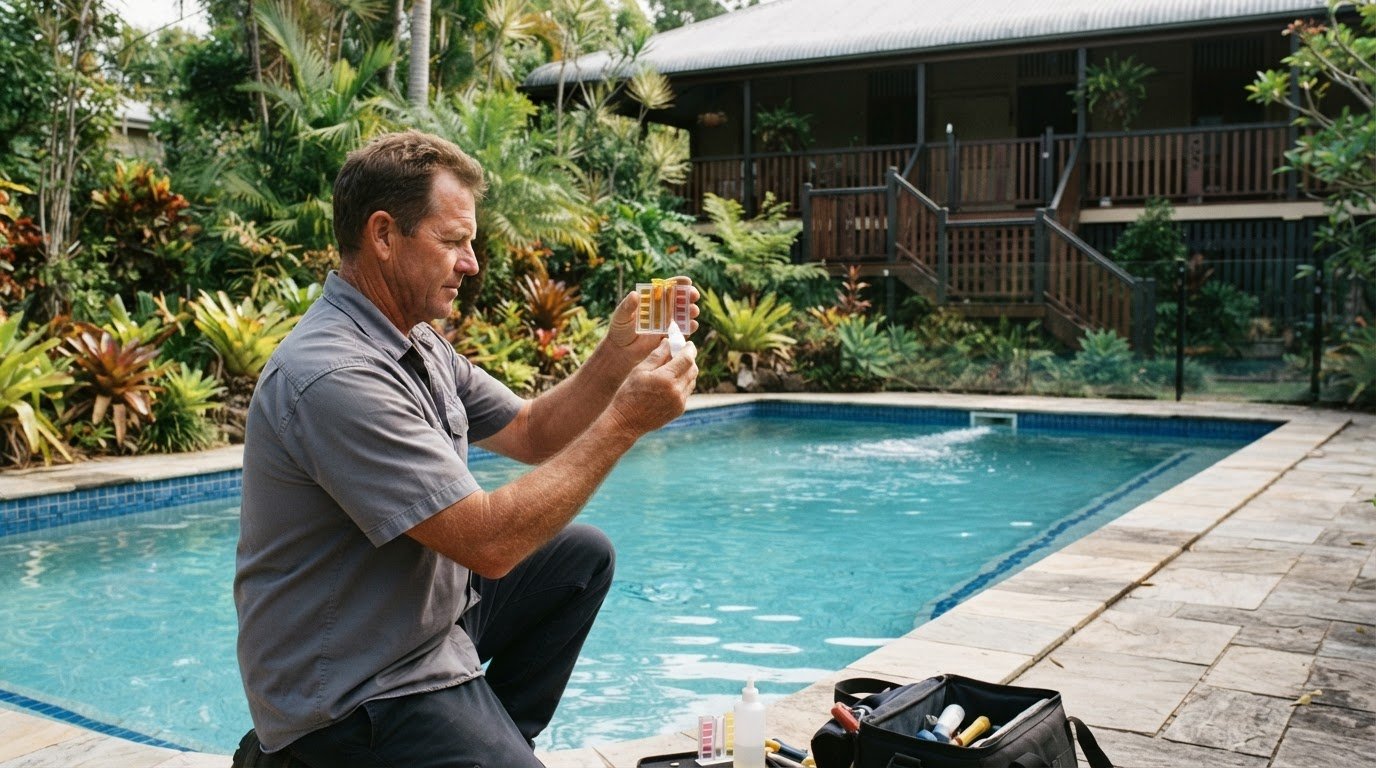
A crystal-clear pool guarantee in Brisbane starts with consistent water testing, not a one-off fix. Test pH and chlorine at least two times a week, with recommended levels of 7.2 to 7.6 for pH and 1.0 to 3.0 ppm for chlorine; check alkalinity at least once a week. These routine checks help you spot imbalances before they affect water clarity.
Clear water takes more than chemicals alone. Regular brushing, vacuuming and filtration all help prevent algae and keep pool water inviting. This guide explains how to test and balance water, reduce algae risk and recognise when professional maintenance can help. You’ll also see how chemical supply and equipment care fit into a steady pool-care routine for your Brisbane pool.
Key Takeaways
- Build a consistent water-care routine, and choose pool chemicals according to the water balance you’re addressing.
- Brush and vacuum regularly to remove debris and help prevent algae from taking hold.
- Watch for changes in filter pressure so you can identify when backwashing may be needed.
- Regular or casual pool servicing can help when you want expert water balancing and maintenance support.
1. Water testing and chemical supply
Test pool pH and chlorine at least two times a week. Check alkalinity at least once a week, because several readings help reveal developing water-balance issues. The recommended pH range is 7.2 to 7.6, while chlorine should sit between 1.0 and 3.0 ppm. Record each result and compare it with the previous reading. That simple step can show whether levels are stable or shifting.
Chlorine helps eliminate bacteria and other germs from swimming pool water. When pH is high, sodium bisulphate or muriatic acid can lower it. Sodium carbonate is commonly used to raise pH when water is too acidic. Add chemicals according to package directions rather than guessing doses. The amount of pool shock needed depends on pool size, so follow the product instructions.
What does a crystal-clear pool guarantee in Brisbane cover? Water testing measures pH, chlorine and alkalinity, but it does not establish what a separate guarantee covers. Testing frequency is not a guarantee period, and the water-care guidance here does not define one. Nor do water-test measurements set guarantee terms for pool shells, installation, equipment or workmanship. Check the actual terms before relying on a guarantee.
For clear water, use test results to guide chemical choices instead of adding products by guesswork. Expert water balancing can help address readings that remain outside recommended pH or chlorine ranges. Pool chemicals support routine adjustments, but the right choice depends on the measured imbalance. Keep a clear water-care record linking each reading with the treatment used. This gives follow-up testing a useful comparison, especially when results change after chemical additions or pool use.
Keep a consistent testing schedule. Test pH, chlorine and alkalinity at least once a week, and test pH and chlorine at least twice a week. Comparing results over time can help distinguish a continuing imbalance from a single changed reading. Let measured levels guide adjustments, then keep checking them as part of routine water care.
2. Algae prevention
Brush and vacuum the pool at least once a week to disrupt algae growth. Focus on walls, steps and corners, where algae can cling and become harder to remove. Vacuuming collects loosened material instead of leaving it suspended in the water. A weekly routine also makes it easier to spot a developing patch before it spreads. Include the waterline and shaded areas when brushing.
Super-chlorinate or shock the pool at least once a week as part of ongoing prevention. Follow the product’s package directions, because the amount needed depends on pool size. Shocking supports water treatment, but does not replace brushing and vacuuming. Each step addresses a different part of the problem: treatment works through the water, while physical cleaning removes material from pool surfaces and the floor.
If algae appears on the walls, algaecide can be used to treat the pool water. Brush the affected area first so the treatment can reach the growth, then follow the product directions. A visible patch is no reason to abandon regular cleaning. Continue brushing and vacuuming each week, and keep water treatment consistent. Treat algae on a wall as a prompt to act, not a cosmetic mark to ignore.
Consistency matters more than relying on one product or an occasional clean. A practical weekly sequence is to brush surfaces, vacuum the pool, then complete the scheduled shock treatment according to its label. If algae returns, consider whether a missed cleaning step or disrupted routine may be contributing. For tailored support with pool care, explore pool water care services as a next step.
3. Professional pool maintenance
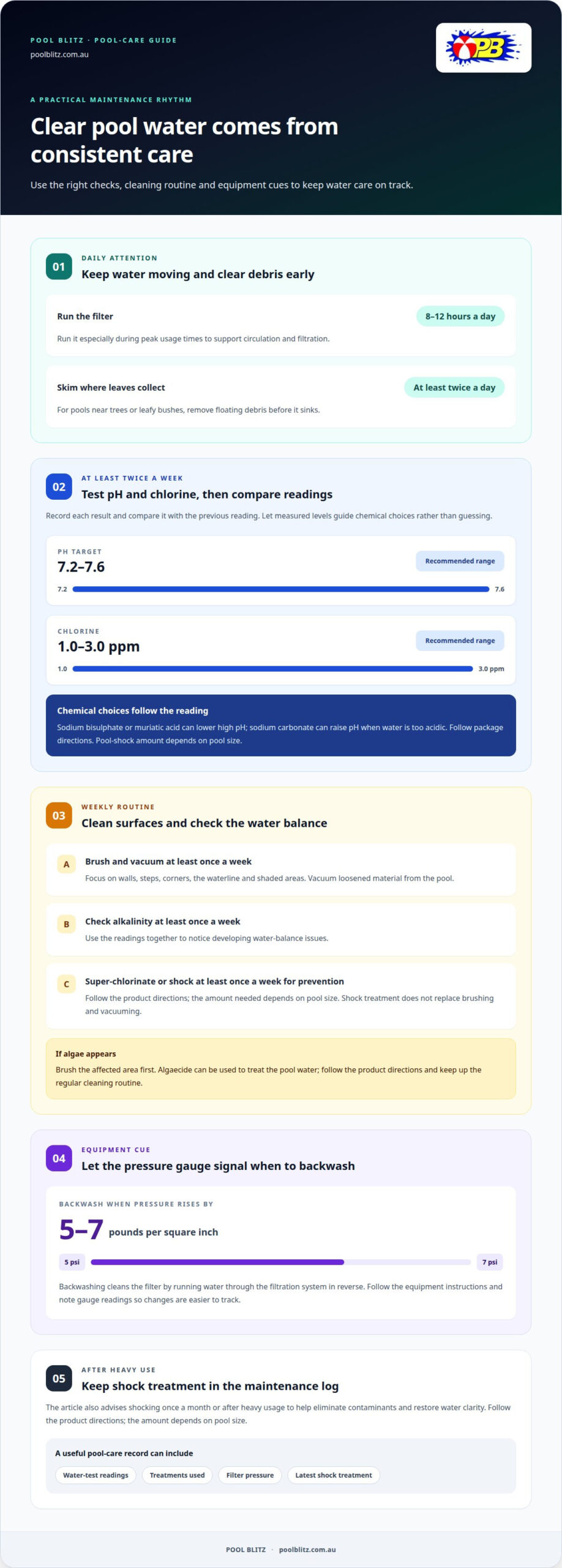
Filtration, debris removal and equipment checks all contribute to clear pool water. Run the filter for at least 8-12 hours a day, especially during peak usage times. Adequate circulation moves water through the filtration system, while regular checks can reveal issues affecting its operation. If water looks cloudy, consider whether filtration time, debris or filter condition needs attention. The goal behind a crystal-clear pool guarantee in Brisbane is water clarity supported by consistent care, not a single maintenance step.
Your pool’s surroundings shape its cleaning routine. A pool near trees or leafy bushes may need skimming at least twice a day because leaves and other debris can collect quickly. Remove floating material before it sinks and adds to the cleaning load. Regular skimming also gives you a chance to notice changes in water appearance and debris levels.
Monitor the filter pressure gauge as part of routine equipment care. Backwash the filter when its pressure reading rises between 5 and 7 pounds per square inch. Backwashing cleans the filter by running water through the filtration system in reverse. Follow the equipment’s operating instructions, and note the gauge reading so changes are easier to track between checks.
Pool shock is another maintenance step after heavy use. Shock the pool once a month or after heavy usage to help eliminate contaminants and restore water clarity. The amount depends on pool size, so follow the product package directions. Keep this separate from routine chemical adjustments: shock treatment addresses contaminants, while regular testing guides water balance. For Brisbane pool owners seeking a crystal-clear pool guarantee, consistent maintenance provides a practical foundation for clear water.
4. Business contact details
Before arranging pool-care support, prepare a concise description of the pool’s condition. Note whether the water looks cloudy, green or clear, and when it changed. Include recent test readings, if available, and any treatment already added. For example, mention whether clarity changed after heavy use or chemical treatment. These details help make the first conversation focused and useful.
Describe equipment symptoms separately. Record unusual pump sounds, weak water movement, changes in the pressure gauge or a filter that needs frequent attention. Note when each symptom occurs, such as after the pump starts or during filtration. If you know the equipment type, include its name or model. A clear description helps distinguish a water-quality concern from a circulation or equipment issue.
Pool surroundings can also provide useful context. Mention nearby trees or leafy bushes if debris is collecting in the water. Describe whether leaves gather near the steps, skimmer or pool floor, and whether the pattern changes after windy weather. If algae is visible, note where it appears, such as on a wall, step or shaded corner. Specific observations help explain the maintenance challenge.
For a more productive enquiry, gather these notes before getting in touch: the pool’s visible condition, recent test results, treatments used, equipment symptoms and surrounding debris. Keep the details factual and brief. You don’t need to diagnose the cause; a clear example, such as “water turned cloudy after a busy weekend”, is more useful than a guess. To discuss pool-care support, get in touch about your pool and share the observations that best describe its current condition.
If you use a pool cover, mention it when describing the pool’s condition and any debris you have noticed. A cover can help prevent contaminants from falling into the water, so noting whether you use one adds useful context. Include this alongside observations about water appearance, equipment symptoms and surrounding debris. A concise account gives the pool-care conversation a practical starting point and helps assess what may be causing the issue.
Pool Blitz
Pool Blitz helps maintain clear water through regular or casual pool servicing, water balancing and pool chemicals. This is a practical next step if test readings keep shifting, algae returns despite routine cleaning, or you’d prefer professional help with ongoing maintenance. Pool Blitz also sells and repairs robotic pool cleaners to support your cleaning routine.
For a useful discussion, describe the pool’s current condition, any visible algae and the care already undertaken. Recent test results or equipment symptoms can help clarify the issue and the support your pool may need. The right maintenance approach depends on what is affecting water clarity, from water balance to cleaning routines.
Contact Pool Blitz to discuss pool care for your Brisbane pool.
Make clear water part of your pool routine
A crystal-clear pool guarantee in Brisbane is best assessed by the care that sustains water clarity over time and the terms behind the guarantee. Consider whether your pool needs ongoing attention, occasional maintenance or support for cleaning equipment. A routine suited to your pool’s use and surroundings gives you a practical way to stay ahead of changing conditions.
Pool Blitz offers regular pool servicing, casual pool servicing, and robotic pool cleaner sales and repairs. These services support different maintenance needs, whether you want recurring help or assistance with a specific pool-care task. Describe what is happening with your water and equipment to start a focused conversation about suitable support.
For a steady approach to pool care, take the next step and contact Pool Blitz for pool care. A clear plan can make looking after your Brisbane pool feel more manageable.
No responses yet