
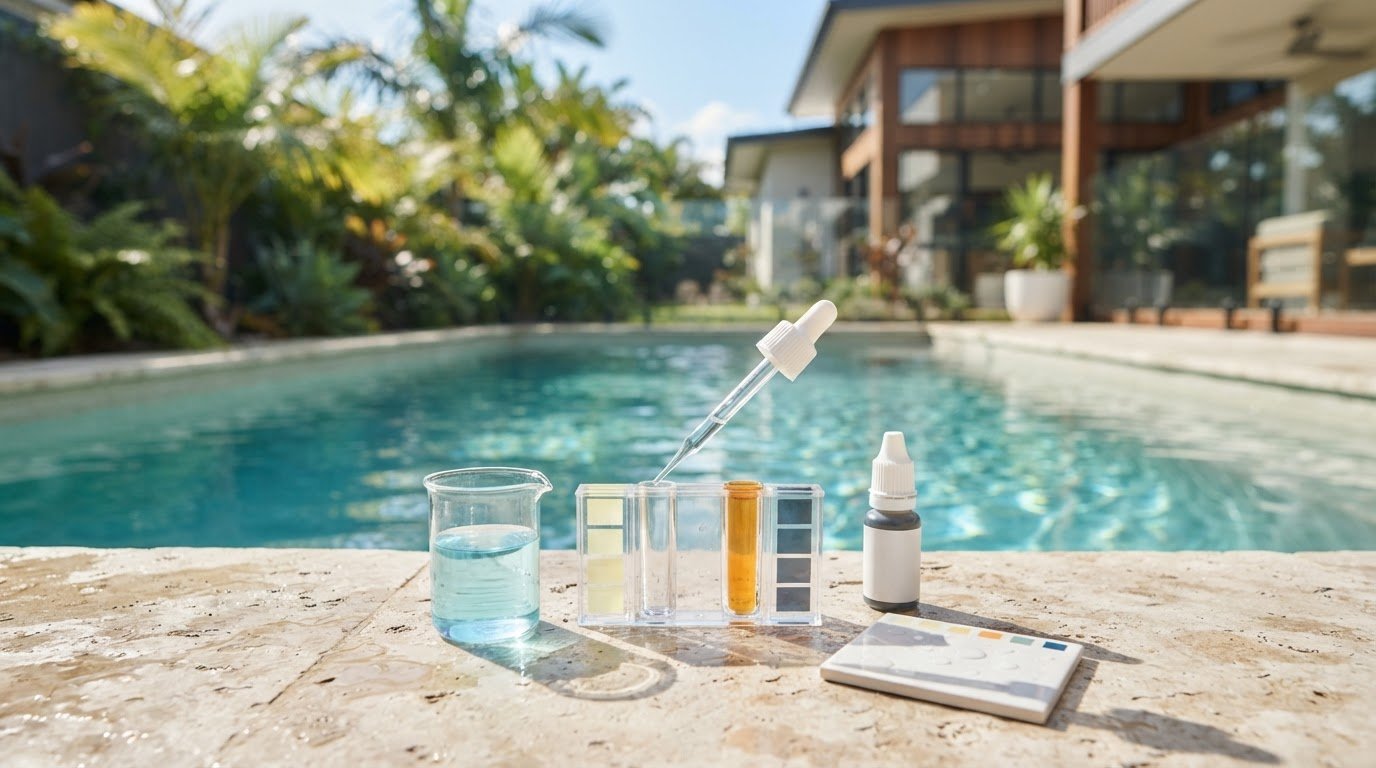
A high phosphate reading doesn’t automatically mean your pool is unhealthy. Phosphates can provide nutrients for algae, but they don’t cause an algae bloom on their own. Keeping sanitiser levels in range remains essential. If you’re wondering how to test for phosphates in pool water, start with a clean, representative sample and use a suitable test kit exactly as its manufacturer instructs.
It’s understandable to want a clear number and a simple answer when you’re trying to keep your pool clean and inviting. But kits can use different ranges and units, and a phosphate result is only one clue about what’s happening in the water. Consider it alongside sanitiser levels, water balance, circulation and any history of algae.
This guide explains how to collect a representative sample, choose and use a phosphate test kit, and interpret its result without treating a single number as a diagnosis. You’ll also learn when to retest and how experienced water-balancing support can help put the reading in context, so you can choose a measured next step.
Key Takeaways
- Learn how to test for phosphates in pool water using a careful sample and the instructions for your chosen kit.
- Compare liquid, strip and electronic test options by how they handle samples and display results.
- Read your result using the kit’s own scale, units and range. It is not a complete water-quality diagnosis.
- If a result seems unexpected, repeat the test correctly and review it alongside other relevant water checks before adding chemicals.
- Brisbane pool owners can use experienced water-balancing support to understand a result in the context of the pool’s wider condition.
Why test for phosphates in pool water, and what can the result tell you?
A phosphate test estimates the concentration of phosphate in a pool-water sample. It can help you investigate one factor that may support algae, but it can’t predict by itself whether algae will grow or confirm that the water is unhealthy. Use the reading as a clue alongside the pool’s sanitiser level, circulation and overall water balance.
Phosphate testing is separate from routine water checks. You still need to monitor sanitiser and balance the water for clear, comfortable swimming. A phosphate result doesn’t replace those checks. Before deciding whether further investigation is useful, understand what the result can and can’t tell you.
What phosphates in pool water can indicate
Phosphates are compounds containing phosphorus. They may enter pool water with leaves and other debris, soil or garden runoff. A test estimates how much phosphate is in the sample, but it doesn’t identify its source or diagnose the pool’s condition. For a general explanation of the substance, see What are Phosphates?
Algae can use phosphates as a nutrient, but nutrients aren’t the whole story. Sanitiser levels and circulation also affect whether algae can take hold. A measurable reading alone doesn’t mean an outbreak is inevitable. If a result catches your attention, review the pool’s broader water-care routine before deciding how to respond.
When checking phosphates may be useful
Testing can be one part of investigating algae that keeps returning or water-care results that don’t fit what you’re seeing. It may also be useful after substantial rain or visible runoff from nearby garden beds has entered the pool. These are reasons to take a closer look, not fixed testing rules. The pool’s recent conditions and maintenance history matter too.
Brisbane’s warm weather makes it useful to keep an eye on changing pool conditions, while rain and runoff may bring soil and organic debris into the water. If the water looks different after a weather event, consider the whole picture rather than assuming phosphates are the cause. Filtration and circulation matter as well, as explained in this Brisbane pool filtration and health guide.
If you’re unsure what a result means, compare it with routine sanitiser and water-balance checks. If the result still seems unusual, repeat the test carefully. Pool Blitz provides expert water balancing in Brisbane to help put a phosphate reading in context and identify a measured next step.
Which pool phosphate test kit should you use?
Choose a kit you can use carefully and interpret clearly. No format is automatically the most accurate in every situation. Liquid reagent kits, test strips and electronic readers handle samples differently and may use different scales. Your choice depends on the kit’s instructions, the range it measures and how confidently you can follow the procedure.
Liquid, strip and electronic phosphate tests
Each format handles the sample differently. The table offers a general comparison, but the instructions supplied with your specific kit take priority. Timing matters because reagent reactions and colour development can change. Don’t estimate a result before the stated wait is complete.
| Test format | Sample handling | How the result appears | Timing and other checks |
|---|---|---|---|
| Liquid reagent | Water is measured into a vial, then reagent is added as directed. | Often a colour match or comparator scale. | Follow the stated mixing and waiting steps before reading. |
| Test strip | A strip is dipped into or exposed to the sample as directed. | A colour pad is compared with the supplied chart. | Observe the specified dip and read times; use the chart’s lighting guidance. |
| Electronic reader | The sample is placed in the specified cell or vessel, often with a compatible reagent. | A digital value or range is displayed. | Use the correct reagent and calibration procedure where applicable, and follow the reading time. |
Colour-based tests need consistent conditions. Compare the sample with the chart under the lighting recommended by the manufacturer, and read it within the stated time window. A colour viewed too early, too late or under unsuitable lighting can be difficult to match. Digital displays avoid visual colour matching, but correct sample handling, compatible reagents and calibration where required still matter.
Check the test kit before collecting a sample
Before starting, check the expiry date and storage directions, then confirm the kit’s test range and result unit. One kit may use a different scale or range from another, so don’t assume their readings are directly comparable. Follow one kit’s sequence from start to finish rather than combining instructions from different products.
Check the required sample volume too. Too much or too little water can affect the test, so measure rather than guess. Professional pool-industry education, including resources from the Pool & Hot Tub Alliance (PHTA) Standards, can provide broader context, but the manufacturer’s instructions govern the procedure for your specific kit.
If the result remains confusing, Pool Blitz can help interpret it alongside the pool’s wider condition. Brisbane pool owners can draw on Pool Blitz’s pool-care experience and expert water-balancing service to make an informed next step.
How should you interpret a phosphate test result?
Start with the instructions for the kit you used. Compare the result with its stated scale, units and test range, rather than applying a number or colour guide from another kit. Different methods may display results differently, so readings aren’t necessarily comparable unless their units and ranges match.
A detectable result means phosphate was present in the sample at a level the kit could measure. A higher result may be a reason to investigate further, but it doesn’t prove that algae is growing or that the water is unsafe or poorly balanced. It also doesn’t mean phosphate-removal treatment is automatically the right next step.
What a low, high or out-of-range result means
“Low” and “high” only have meaning in relation to the particular kit’s scale and guidance. A result near the edge of the stated range may be harder to interpret confidently. An out-of-range reading may mean the concentration is beyond what the kit can measure. Don’t extrapolate or guess. Follow the manufacturer’s advice, repeat the test if instructed, or seek experienced interpretation.
Note the result, unit, test method and date. Keeping a record makes it easier to compare future readings using the same kit and see whether a change is consistent. If you switch test formats, check that the new kit uses comparable units and measures a suitable range before drawing conclusions.
Why phosphates are only one part of pool health
Phosphates can provide a nutrient for algae, but algae growth depends on more than nutrient availability. Sanitiser levels, circulation and filtration all matter, as do other aspects of water balance. If algae appears or keeps returning, review these factors together instead of assuming the phosphate result explains the whole problem.
A phosphate result is one data point, not a complete water diagnosis. Consider it alongside visible signs such as cloudiness, algae or debris, and routine tests for sanitiser and water balance. Clear-looking water is reassuring, but appearance alone can’t confirm that it is properly sanitised or balanced. Keep up routine testing even when the water looks inviting.
Taking the wider view can help you avoid unnecessary treatment. Before adding a phosphate remover, make sure the result is reliable and consider whether other water checks point to a problem that needs attention first. If the reading doesn’t fit the pool’s condition, repeat the test carefully according to the kit directions and compare it with relevant checks instead of reacting to one number.
Understanding how to test for phosphates in pool water is only part of making a sound decision. If the result remains unclear, Pool Blitz’s expert water-balancing service can assess it alongside the pool’s wider condition and help guide a measured next step.
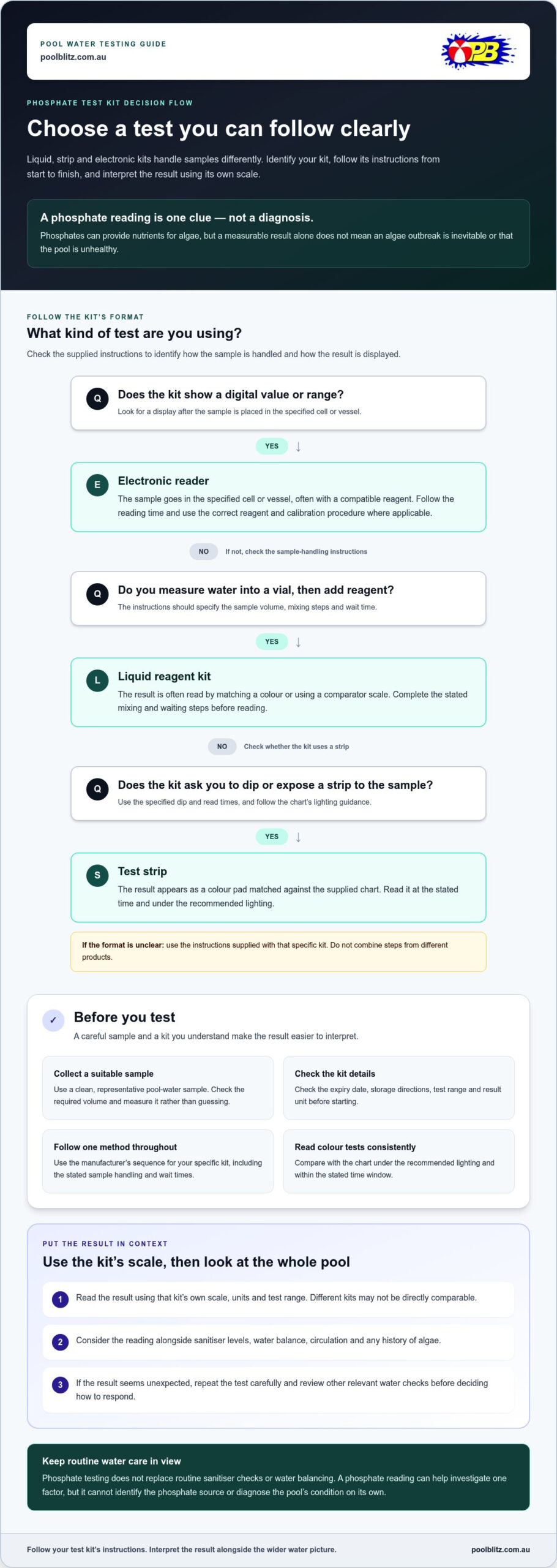
How to test for phosphates in pool water, step by step
A careful test starts before the sample reaches the vial. Clean handling and consistent timing help reduce avoidable errors, so follow the directions for your specific kit rather than relying on a generic method. Sample depth, water volume, reagent amount and waiting time can vary between kits.
Collect a clean, representative water sample
Use the supplied vial or a clean sample container, as the manufacturer specifies. Keep fingers, sunscreen, detergents and chemical residue away from the inside of the container and its lid, as contamination can affect the result. Collect from the location and depth the instructions recommend. Avoid surface debris and water taken directly beside a return jet.
- Read the kit instructions. Check the expiry date, storage directions, result range and units. Note the required sample depth and volume, reagent quantity and timing.
- Prepare clean equipment. Rinse or prepare the vial only as directed. Don’t use a container that may have held other pool chemicals, and avoid touching surfaces that will contact the sample.
- Collect the sample. Take water from the recommended area and depth. Keep leaves, soil and surface scum out, then measure the volume specified by the kit.
- Run the test as written. Add reagents in the stated order and amount, or use the strip or reader exactly as instructed. Mix only if directed, then wait for the specified time before reading.
- Read and record the result. Compare colour under the lighting conditions recommended by the manufacturer, or read the electronic display as directed. Record the result and its unit.
Run the test and record what you see
Keep the process consistent each time you test. For colour comparisons, use suitable light and read the chart within the kit’s stated time window. Don’t estimate the result after the colour has continued to develop. With an electronic reader, follow its instructions for the sample cell, compatible reagents and calibration where applicable.
Write down the date, result, unit and relevant recent pool conditions, such as heavy rain, debris or changes in water care. These notes can help distinguish a genuine change from a difference in test handling. Before comparing results from different kits, check that their units and ranges are compatible.
If a result surprises you, repeat the test with a fresh sample and the same kit, following the complete procedure. Don’t reuse the tested water or improvise with another kit’s instructions. If results remain unclear, Pool Blitz’s expert water-balancing support can help put them in context with the pool’s wider condition.
Next Steps for Brisbane Pool Owners After Testing
A phosphate result is a prompt to assess the pool, not an instruction to add chemicals. Before taking action, review the full water-care picture, including sanitiser, water balance, circulation and what you can see in the pool. Acting on one reading alone may not address the cause of a concern, particularly if the sample or test procedure wasn’t reliable.
Brisbane conditions can change what needs attention. After heavy rain or visible garden runoff, check for leaves, soil and other debris, and consider whether the water’s balance or filtration also needs attention. A weather event provides useful context, but doesn’t prove that phosphate levels have changed or that phosphate treatment is needed.
When retesting or further water checks make sense
Retest if the result seems inconsistent with the pool’s appearance, the sample may have been contaminated or you’re unsure whether you followed the kit’s steps correctly. Use a fresh sample and follow the same kit instructions closely so the results are comparable. Also check sanitiser and other relevant water-balance measures. A phosphate reading on its own can’t explain every water issue.
Keep a brief record of both results and any recent changes, such as rainfall, debris entering the water or adjustments to routine care. If you test again, consistency matters: use the same kit where possible and note its units and scale. Pool Blitz’s regular and casual pool servicing in Brisbane can put testing in the context of ongoing pool care.
When experienced water-balancing support can help
If repeated results remain confusing, or the pool continues to have water-care concerns despite your checks, Pool Blitz’s qualified team can assess the phosphate result alongside the pool’s wider condition. That means considering sanitiser, water balance, circulation and filtration together, rather than treating one test as the complete answer. Pool Blitz provides water-balancing support for Brisbane pool owners who want a measured next step.
There’s no need to rush a treatment decision. A clear record of the test and your other observations can make it easier to understand what’s happening and choose sensible follow-up. For help interpreting pool-water concerns, get help with pool water balancing.
Make your next water-care decision with confidence
Let a phosphate reading guide your next check rather than dictate it. If you’re testing again, use a consistent approach over time to spot a pattern and avoid reacting to a result that doesn’t fit the pool’s wider condition. Keep your notes together and take a considered next step if something continues to concern you.
Pool Blitz is an independent local business serving Brisbane, with a qualified team providing pool servicing and expert water balancing. The team can help put water concerns into context alongside the pool’s wider condition.
Get help with clear, balanced pool water from Pool Blitz and take a considered next step for your pool.
Frequently Asked Questions
Do phosphates in pool water always cause algae?
No. Phosphates can provide nutrients for algae, but their presence doesn’t guarantee algae will grow. For example, a pool may remain clear when its sanitiser is maintained, while a drop in sanitiser can make algae more likely to take hold. If algae appears, review the pool’s overall care and conditions rather than assuming phosphates are the sole cause.
Can I test pool phosphates with a standard pool test strip?
Only if the strip is specifically designed to measure phosphate. Standard pool strips commonly check other water parameters, so don’t assume a strip tests phosphates just because it measures several things. Check the packaging and instructions for “phosphate” and the test’s stated range. If phosphate isn’t included, choose a phosphate-specific kit or another suitable testing method.
How often should I test my pool water for phosphates?
There isn’t one testing schedule that suits every pool. Consider a phosphate test if algae keeps returning, a water-care result is unexpected or you want to understand what may be entering the pool with its fill water. Keep notes so you can compare results over time. Routine sanitiser and water-balance checks remain important, whether or not you test phosphates.
Can rain increase phosphate levels in a swimming pool?
Rain can contribute to changing pool conditions, particularly if it carries soil, leaves or garden runoff into the water. That doesn’t mean every shower will raise phosphate levels. After heavy rain, check for debris and consider whether the water needs broader attention. In Brisbane, runoff from nearby garden areas can be useful context when deciding whether further testing is worthwhile.
Should I use phosphate remover as soon as a test shows phosphates?
No. A detectable result alone doesn’t mean treatment is necessary. First consider whether the test was carried out correctly, then review the pool’s other water checks and condition. Phosphate removers can create fine cloudiness as the bound material is captured by the filter, so treatment also involves filter care. Follow the product instructions and avoid dosing based only on a single reading.
Can a phosphate test result be wrong?
Yes. Contamination, expired or poorly stored reagents, incorrect sample volume, or reading the test too early or late can affect the result. High free chlorine can also bleach some reagents and produce a falsely low reading; the research guidance advises testing when free chlorine is below 5 ppm. If the result seems implausible, check the kit instructions and repeat the test with a fresh sample.
No responses yet