
What if the best astral pool chlorinator for your Brisbane pool isn’t simply the biggest or newest model? Summer storms, warmer water and changing pool conditions can make low-salt warnings confusing, while the differences between Viron and Halo can be hard to pin down.
It’s understandable to want clear water without constant manual dosing and to protect your salt cell from avoidable wear. Start by matching chlorinator output to your pool and local conditions, then keep water balance and equipment care on track. This guide compares Astral’s main chlorinator ranges, explains what to consider when sizing a system, and covers common warnings to check before assuming the cell needs replacing. You’ll also find practical maintenance and repair guidance, including when a local technician can help. Pool Blitz provides Brisbane pool equipment repairs and water balancing, with more than three decades of local experience to draw on when assessing how pool conditions may affect Astral equipment.
Key Takeaways
- Compare Viron, Halo and VX features to narrow down the astral pool chlorinator that suits your pool and preferences.
- Use your pool’s volume and Brisbane’s warmer conditions to guide chlorinator sizing, rather than choosing by model name alone.
- Learn why a self-cleaning cell still needs regular attention and how to approach cleaning safely.
- Work through common warning signs methodically before deciding a salt cell needs replacing.
- See how equipment repairs and water balancing can support dependable chlorinator performance.
Why Astral Pool Chlorinators Lead the Australian Market
A well-matched chlorinator takes much of the guesswork out of pool care. It produces sanitiser as the pump circulates water, helping keep a backyard pool ready for a swim without relying solely on frequent manual dosing. In Brisbane, heat and intense sunlight can increase chlorine demand, so correct sizing and balanced water matter as much as the equipment itself.
AstralPool’s range includes straightforward units such as the VX series and connected systems with features including Bluetooth, Wi-Fi and, in some models, expandable automation. These options can make it easier to monitor pool equipment, but the right choice depends on your pool and how much control you want. Smart features don’t replace routine water testing or good maintenance.
The Science of Salt Water Chlorination
A salt chlorinator uses electrolysis: as mildly salty pool water passes through the cell, an electrical process generates chlorine-based sanitiser. That sanitiser helps control microorganisms, then eventually returns to salt as it works. For an overview of the process and its considerations, see salt water chlorination.
Salt pools still contain chlorine, so “sting-free” isn’t guaranteed. Swimmer comfort depends on factors such as chlorine levels and overall water balance. A consistent sanitising system, paired with careful balancing, can help avoid the swings associated with irregular manual dosing. Many modern cells also use a self-cleaning cycle to reduce calcium build-up, but the cell still needs periodic inspection and care.
Designed for Australian Pool Conditions
Queensland’s warm, sunny conditions can increase chlorine demand, particularly when the pool is used heavily. Output capacity and correct setup are important: a unit that’s undersized for the pool’s volume and conditions may struggle to keep up. Heat and sun exposure also make equipment placement and maintenance worth considering, rather than assuming any model will suit every backyard.
Astral’s product range offers different levels of control. The E-Series focuses on straightforward operation, while VX models include self-cleaning and diagnostic features. Viron models offer energy-conscious operation and Bluetooth control, and Halo models add touchscreen controls, connectivity and options for expanding automation. Compatibility with pumps and other pool equipment depends on the system configuration, so consider the whole setup when comparing models.
Build, Support and Everyday Reliability
Features alone don’t determine how long a chlorinator lasts. Water balance, installation, operating conditions and timely repairs all play a part. Local support can also make fault-finding and decisions about repairs more practical. Pool Blitz provides Brisbane pool equipment repairs and water balancing, with more than three decades of local experience, including work with Astral hardware.
For pool owners, the goal is dependable sanitation with fewer surprises. Match the unit to the pool, keep the water balanced and treat self-cleaning as assistance, not a maintenance-free promise.
Comparing the Range: Viron, Halo, and VX Series
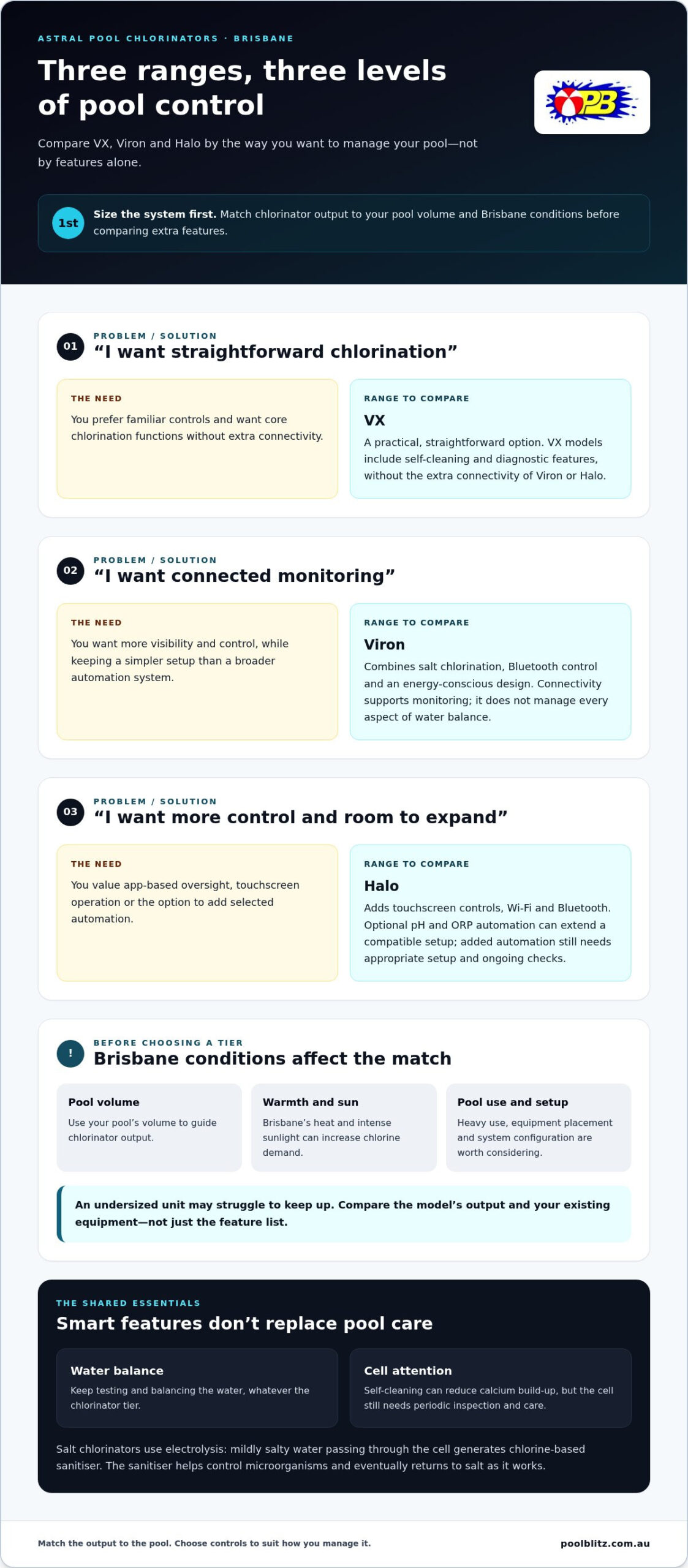
The best choice depends less on the number of features and more on how you want to manage your pool. Astral’s range spans straightforward chlorination through to connected systems with options for greater automation. Think of it as a choice between simple operation, added control and the ability to expand your setup.
- VX: A practical option for owners who want core chlorination functions and a familiar, straightforward setup.
- Viron: Suits pool owners looking for an energy-conscious system with Bluetooth control.
- Halo: A higher-tech option with a touchscreen, Wi-Fi and Bluetooth, plus the ability to add selected automation.
These are feature tiers, not a substitute for sizing. Match the chlorinator’s output to your pool volume and Brisbane conditions before deciding which model offers the right value.
Viron: Connected Control for Everyday Pools
Viron models combine salt chlorination with Bluetooth control and an energy-efficient design. This can suit a residential pool owner who wants more visibility and control without moving straight to a broader automation setup. Connectivity helps with monitoring, but it doesn’t mean the unit independently manages every aspect of water balance. Keep testing the water and adjust it as needed.
Halo: More Control, With Room to Expand
Halo models add touchscreen operation, Wi-Fi and Bluetooth connectivity. The range can also be expanded with optional pH and ORP automation, which can help manage water chemistry as part of a compatible setup. Halo is worth considering if you value app-based oversight or are upgrading several parts of your pool equipment together. Added automation still needs appropriate setup and ongoing checks.
VX: Straightforward Chlorination
The VX series remains a sensible fit for owners who prefer a more traditional control setup. Its self-cleaning and diagnostic features support day-to-day operation, without the extra connectivity of Viron or Halo. If simple controls are your priority, compare the specific model’s output and features with your pool’s requirements rather than paying for technology you’re unlikely to use.
Which Tier Fits Your Pool?
For a simpler setup, start by comparing VX models. Choose Viron if Bluetooth monitoring and energy-conscious operation matter, or consider Halo if you want Wi-Fi and the option to extend automation. Pool size, existing equipment and your preferred level of hands-on control should guide the decision. Pool Blitz provides Brisbane pool equipment repairs and water balancing, and can help you make sense of Astral equipment options. Explore Astral pool equipment support as you plan your setup.
Sizing and Setup for Brisbane’s Unique Climate
Pool volume is only the starting point. Brisbane’s long sunny spells, warm water, leaf litter and busy summer swimming can all increase sanitiser demand. A chlorinator sized just for the pool’s litres may have little spare capacity when conditions ramp up. Choosing a higher-output unit can provide more operating headroom, though the right size still depends on the pool and the manufacturer’s recommendations.
For example, a 22 g/hr unit serving a 50,000-litre pool may struggle to keep pace during a hot spell if the pool gets full sun or heavy use. Treat this as a scenario to assess, not a universal sizing rule. An astral pool chlorinator also needs adequate pump run time to produce sanitiser. If filtration stops, chlorine generation stops too. Set operating hours with seasonal demand in mind and check water readings rather than relying on the same schedule all year.
Look Beyond Pool Volume
Consider sun exposure, bather load, debris and how consistently the pool is used. Trees can add leaf litter and other organic material, increasing the work required to keep water clear. Strong sunlight and warm conditions can also use up chlorine more quickly. Professional water balancing helps assess the whole system, so the chlorinator isn’t expected to compensate for water chemistry that needs attention.
After Summer Storms
Heavy rain can push pool water over the edge, particularly if the pool is already full. If you later top it up with fresh water, the salt concentration may fall, contributing to a low-salt warning. Rain doesn’t automatically mean the cell has failed or that salt should be added straight away. Check the water level, test salt concentration using a suitable method and follow the unit’s guidance before adjusting it. If the warning persists, other causes may need diagnosis.
Set Up for Reliable Operation
Install the cell in the circulation system in the position specified by its instructions. Correct flow through the cell matters, and the arrangement of filtration and any heating equipment can affect where it should sit. Mount the control box securely in a suitable location, protected from direct afternoon sun and weather exposure where possible. Follow Astral’s current installation instructions and warranty conditions, as requirements can differ between models.
Brisbane’s heat and summer rain make careful setup especially worthwhile. Pool Blitz provides local pool equipment repairs and water balancing, and can help assess performance when sizing, settings or warning lights raise questions.
Maintenance and Troubleshooting: Keeping the Cell Healthy
Self-cleaning helps limit calcium build-up on an Astral salt cell, but it doesn’t remove the need to inspect and maintain it. Scale can restrict the cell’s performance, while an ageing cell may lose its ability to generate enough chlorine. Before assuming the cell is faulty, check water balance, salt level, circulation and the equipment display. Several issues can produce similar symptoms.
Inspect Before Cleaning
Switch off the chlorinator and pump before inspecting the cell, and follow the instructions for your specific model. Look for white, crusty deposits on the plates, signs of pitting or worn plates, and visible corrosion or heat damage around cables and terminals. Don’t touch damaged wiring or open the control box. If you see damage, arrange a professional assessment.
Only acid-clean the cell if inspection shows deposits that a water rinse won’t remove. Use the cleaning method and dilution specified in the Astral manual, and wear suitable eye and skin protection. Never mix acid with other pool chemicals.
- Turn off the power to the pump and chlorinator, then remove the cell as directed in the manual.
- Rinse loose debris from the cell with fresh water. Avoid scraping the plates or using metal tools.
- If scale remains, use the manual’s approved acid-cleaning method. Always add acid to water, never water to acid, and work outdoors or in a well-ventilated area.
- Allow the deposits to dissolve without exceeding the stated cleaning time. Rinse the cell thoroughly, reinstall it correctly and restore power.
If you’re unsure about the cleaning instructions, don’t improvise. Incorrect handling can damage the cell or expose you to corrosive chemicals.
Read the Warning, Then Check the Cause
- Low Salt: Don’t keep adding salt based on the warning alone. Allow recently added salt to circulate, test the water using a suitable method and compare the result with the model’s recommended range. If the reading is adequate but the warning remains, the cell or salt-detection system may need assessment.
- No Flow: Confirm the pump is running and check the pool water level, valves and filter condition. Low circulation can trigger the alert. A persistent warning may point to a flow sensor or equipment fault.
- Clock or timer reset: After a power interruption, check the time and programmed filtration schedule against the manual. If the display keeps resetting, avoid opening the control box and have the electrical fault assessed.
For persistent warnings, damaged wiring or signs of cell wear, Pool Blitz provides Brisbane pool equipment repairs and water balancing. Learn more about Astral pool equipment repairs. Arrange an Astral chlorinator assessment rather than replacing parts by guesswork.
Expert Astral Repairs and Servicing in Brisbane
A fault doesn’t automatically mean your chlorinator needs replacing. A low-salt warning, weak chlorine production or an unresponsive display can have different causes. A careful assessment helps distinguish a repairable issue from a cell or control unit that’s nearing the end of its useful life.
Pool Blitz provides Brisbane pool equipment repairs and water balancing, with more than three decades of local experience, including work with Astral Pool hardware. Equipment performance is affected by pool conditions as well as the component itself. An assessment can consider the cell, control unit, circulation and water chemistry together, rather than treating each warning in isolation.
Repair or Replace?
Repair may make sense when a fault is confined to a component and the rest of the unit is in sound working order. Replacement is worth considering if the cell is significantly worn, several parts are failing or recurring problems make reliable chlorination difficult. The age and condition of the equipment, the cause of the fault and the likely scope of work all matter. A professional diagnosis gives you a clearer basis for weighing the options, without replacing an entire system on the strength of a warning light alone.
Pool Blitz repairs pool equipment and works with leading brands such as Astral. The aim is a practical recommendation that suits the condition of your setup and supports consistent sanitising.
Pair Equipment Care With Pool Servicing
A healthy chlorinator relies on more than the unit itself. Regular checks can identify changes in water balance, circulation or equipment performance before they become persistent problems. Combining chlorinator care with regular pool servicing gives your equipment and pool water attention as part of the same maintenance routine. That can help you spot issues early and keep water comfortable and clear.
If your astral pool chlorinator is showing a recurring fault, losing output or needs a health check, a professional assessment can clarify what’s happening and what to do next. Bring the model details and any warning messages you’ve noticed, as they can help guide the diagnosis. Pool Blitz combines local pool equipment repair experience with water balancing, so recommendations consider both hardware and pool conditions.
Contact Pool Blitz for Astral chlorinator advice and repairs and take the next step towards dependable pool water and equipment performance.
Keep Your Brisbane Pool Ready for a Swim
A dependable astral pool chlorinator starts with the right match for your pool, followed by sensible upkeep. Viron, Halo and VX models offer different levels of control, but sizing for your pool’s conditions and keeping water balanced are just as important as the features on the control panel.
Brisbane’s heat, summer storms and changing pool use can affect chlorine demand and salt readings. Check warnings methodically, inspect the cell and don’t assume a self-cleaning function means maintenance-free. If an issue persists, a professional assessment can help determine whether your equipment needs a repair, a replacement part or a different solution.
Pool Blitz is a Brisbane-owned and operated business with more than three decades of local experience in pool equipment repairs and water balancing. The team also repairs robotic pool cleaners. Its knowledge of local conditions can help you care for your equipment with greater confidence and enjoy clear, comfortable pool water.
Get expert Astral chlorinator advice from Pool Blitz, and take the next step towards a pool that’s ready when you are.
Frequently Asked Questions
How long does an Astral Pool salt cell typically last in Brisbane?
Most chlorinator cells have a working life of around 10,000 to 20,000 operating hours, rather than a fixed number of years. Actual lifespan depends on how long the cell runs, water balance, maintenance and local conditions. Brisbane’s warm pool season can mean greater sanitising demand and more operating time. If chlorine production drops despite suitable salt levels and good water balance, have the cell checked before assuming it needs replacing.
Can I use mineral salt in my Astral chlorinator?
Only use mineral salt if it’s suitable for your specific Astral model and the pool system’s requirements. Mineral blends and chlorinator instructions can differ, so check the product label and manual before adding anything. Keep the pool’s salt concentration within the range specified for your unit, and don’t assume a mineral product is interchangeable with standard pool salt. A water balance assessment can help prevent avoidable equipment issues if you’re unsure.
Why is my Astral chlorinator showing a “Low Salt” error after heavy rain?
Heavy rain can contribute to a low-salt reading if water overflows from the pool or you later top it up with fresh water, diluting the salt concentration. First allow the water to circulate, then test the salt level using a suitable method and compare it with your model’s instructions. Don’t add salt based on the warning alone. If the measured level is in range but the alert remains, the cell or detection system may need inspection.
What is the difference between the Astral Viron and the Astral Halo?
Viron models offer salt chlorination with Bluetooth control and an energy-conscious design. Halo adds a touchscreen, Wi-Fi and Bluetooth, with options to expand automation for functions such as pH and ORP management. In practical terms, Viron may suit owners wanting connected monitoring, while Halo offers more ways to oversee and automate pool equipment. Neither removes the need for regular water testing, and the right fit depends on your pool and preferred level of control.
How often should I clean my Astral salt cell?
There isn’t one cleaning interval that suits every pool or cell. Inspect it regularly for scale and follow the maintenance schedule in the manual for your specific Astral model. Self-cleaning helps reduce calcium build-up, but it doesn’t eliminate inspections or other maintenance. If deposits remain after rinsing, only use the cleaning method and acid dilution specified by Astral. Switch off the pump and chlorinator before removing or inspecting the cell.
Does a salt chlorinator replace the need for other chemicals?
No. A salt chlorinator generates chlorine to sanitise the pool, but it doesn’t automatically balance every aspect of the water. You’ll still need to test and manage factors such as pH and other water balance measures, and use pool chemicals where readings show they’re needed. Regular testing is especially useful in Brisbane, where heat, rain and swimming activity can change pool conditions. Balanced water supports swimmer comfort and helps protect equipment.
Is it worth repairing an old Astral VX chlorinator or should I upgrade?
It depends on the fault and the condition of the rest of the unit. A repair may be sensible if the problem is isolated and the cell and control unit are otherwise working well. Replacement may be worth considering if the cell is worn, several components are failing or the system no longer suits your needs. A professional diagnosis can distinguish a repairable fault from broader wear and help you compare the options.
How many hours a day should I run my Astral chlorinator in summer?
There’s no single daily runtime that suits every Brisbane pool. The chlorinator can generate chlorine only while water is circulating, so its schedule needs to align with pump and filtration run times. Pool volume, sunlight, swimming load, water temperature and the unit’s output all affect the setting. Test the water regularly through summer and adjust the schedule according to the readings and your Astral model’s instructions, rather than relying on a fixed number of hours.
No responses yet