
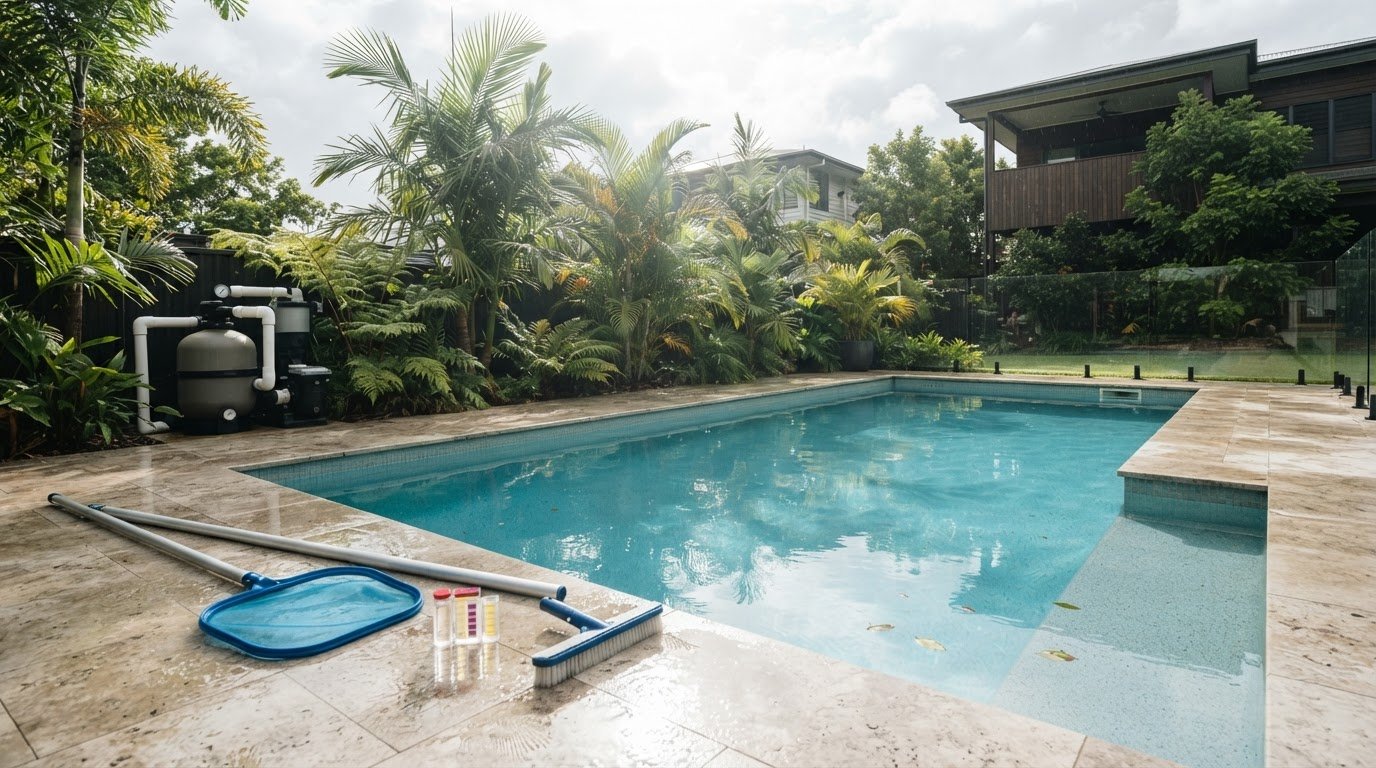
After a hot Brisbane afternoon or a burst of stormy weather, your pool can look different by the next swim. Leaves, changing water conditions and equipment that isn’t running as usual can make pool upkeep feel like a moving target.
If you’re unsure which jobs need attention each week, what to check after heavy rain or when a small change signals a bigger problem, you’re not alone. A manageable routine doesn’t need to take over your weekends. This guide covers regular cleaning and water checks, how to respond when Brisbane conditions change, and signs that may need a closer look.
You’ll also learn when expert water balancing or servicing can support your own observations, and how unusual pump, filtration or robotic cleaner behaviour may point to a repair issue. Pool Blitz supports Brisbane pool owners with regular and casual servicing, water balancing and equipment repairs.
Key Takeaways
- Understand how cleaning, water checks and equipment observation work together to support clear, comfortable pool water.
- Build a simple pool upkeep sequence, then adjust how often you follow it to suit pool use, debris and changing conditions.
- After heat, rain or wind, look for changes in the water and debris before deciding what attention the pool needs.
- Learn which changes, such as unusual pump sounds or reduced circulation, may point beyond routine care.
- See how regular or casual servicing and expert water balancing can complement the checks you do yourself.
Pool upkeep in Brisbane: what a dependable routine protects
A dependable pool upkeep routine protects more than the water’s appearance. It combines regular cleaning, water checks and equipment observation so you can notice changes before they become harder to manage. Clear-looking water is reassuring, but it doesn’t confirm that the water is properly balanced or that circulation is working as it should.
Circulation moves water from the pool through the pump and filtration system, then returns it to the pool. This helps the filter capture suspended debris and distributes treated water throughout the pool. Poor circulation can leave areas stagnant and affect water quality. Water testing adds another useful check, because clarity alone can’t confirm that sanitation is adequate. For broader context on pool sanitation and water treatment, see Swimming Pool Sanitation on Wikipedia.
What does pool upkeep include?
Think of routine care in three connected parts. Water care means testing the water and responding appropriately to the results. Surface cleaning includes removing leaves and other visible debris, and keeping pool surfaces clean. Equipment observation means noticing whether the pump, filter and cleaner appear to be operating normally.
Why Brisbane conditions can change the routine
Pool conditions aren’t fixed. Heat and strong sun can affect how quickly water conditions change, so check the pool rather than assuming last week’s results still apply. Don’t adjust chemicals based on weather alone. Test the water and follow the relevant product directions, or seek expert water balancing if the results are unclear.
After a storm or windy spell, look for leaves, dirt and other debris on the surface, in the skimmer area and around the pool. Check whether the water looks different and whether circulation appears normal. These observations help you decide whether the pool needs routine cleaning, a water check or closer equipment attention.
Use a calendar as a reminder, not a rigid rule. A pool with frequent use or nearby vegetation may need closer attention than one with lighter use and little debris. Notice what changes around your pool and adapt your routine to those conditions. This steady approach helps you catch developing issues without treating every change as a repair.
A practical pool upkeep routine: checks to make part of your week
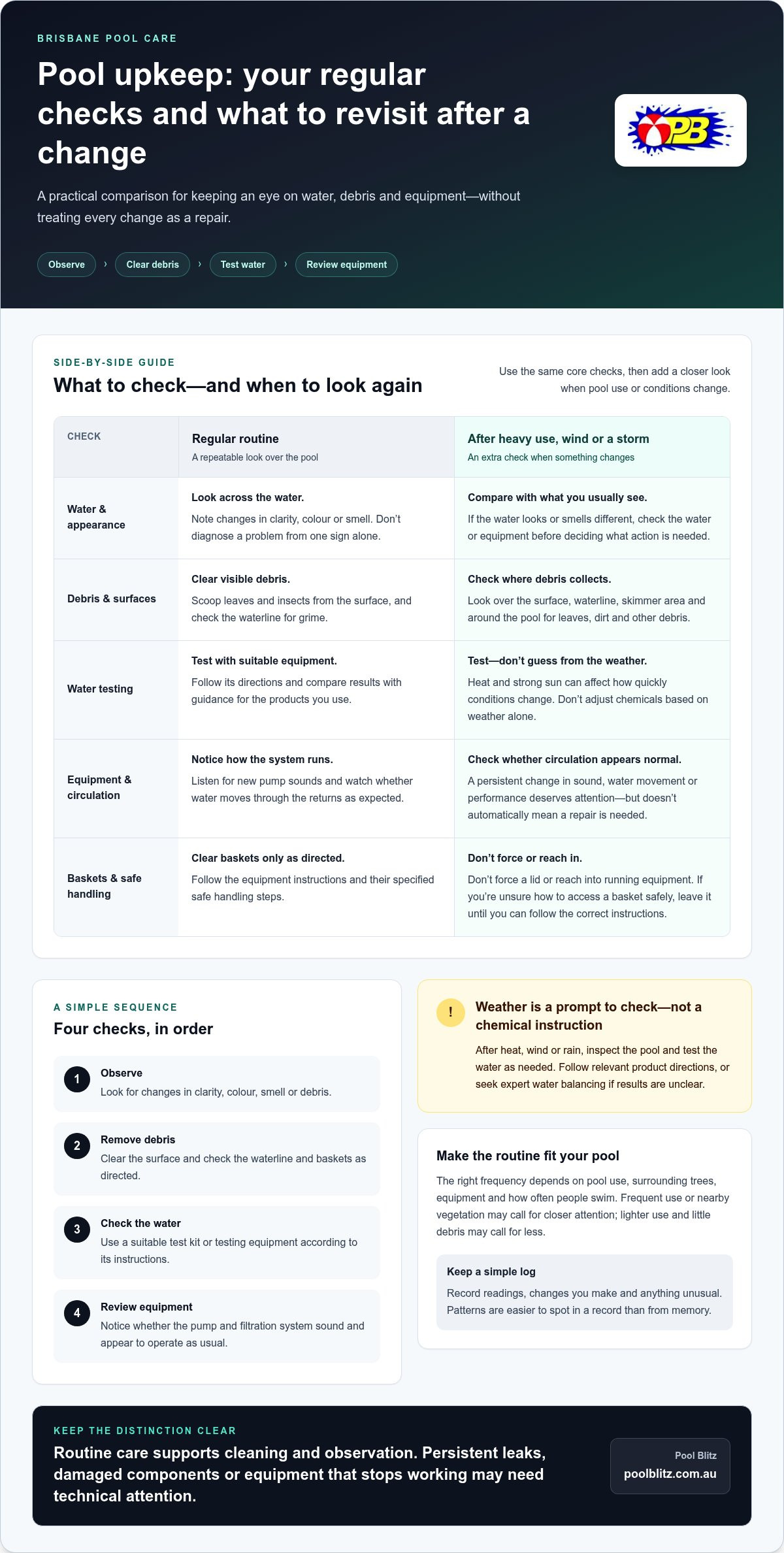
A repeatable routine makes it easier to spot changes without turning pool care into a major job. Set aside a regular time to look over the pool, then add extra checks after heavy use, windy weather or a storm. The right frequency depends on your pool, surrounding trees, equipment and how often people swim. Treat calendar reminders as prompts to observe, not fixed rules.
Follow this simple sequence:
- Observe: Look across the water and around the pool. Note changes in clarity, colour, smell or debris, but don’t diagnose a problem from one sign alone.
- Remove debris: Scoop leaves and insects from the surface, and check the waterline for grime. Clear skimmer or pump baskets only as directed by the equipment instructions, following the specified safe handling steps.
- Check the water: Use a suitable test kit or testing equipment according to its instructions. Compare results with the guidance for the products you use, rather than adding chemicals based on appearance or guesswork.
- Review equipment: Notice whether the pump and filtration system sound and appear to be operating as usual. Look for changes in water movement or performance.
A short check after swimming or heavy debris
After a busy swim or a spell of wind, take a brief look at the surface, waterline and skimmer area. Remove visible debris and note whether the water looks or smells different. A single change can have several causes, so record what you notice and check the water or equipment before deciding what action is needed.
Follow the manufacturer’s instructions before opening or emptying a basket. Equipment procedures differ, and safe handling matters. Don’t force a lid or reach into equipment that’s running. If you’re unsure how to access a basket safely, leave it alone until you can follow the correct instructions.
Regular water and equipment observations
Test the water with suitable equipment and follow its directions for collecting a sample and reading the result. Keep a simple log of readings, changes you make and anything unusual you observe. A record can reveal patterns, such as water results shifting after heavy use, and is more useful than relying on memory.
Listen for new pump sounds and watch whether water continues to move through the returns as expected. A change doesn’t automatically mean a repair is needed, but a persistent difference deserves attention. If results are confusing or balancing feels uncertain, expert water balancing can complement your own checks.
A simple pool upkeep routine is to observe the water, clear debris, test before adjusting and monitor how the equipment runs. If you’d like support interpreting water results, Pool Blitz’s expert water balancing can complement your regular observations.
Brisbane pool upkeep after heat, rain or a change in water quality
Brisbane weather can change what you notice around the pool, but it doesn’t automatically tell you which chemical adjustment to make. A hot, sunny spell, a windy afternoon or a storm is a reason to take another look, not to add chemicals by guesswork. Respond to what you can see and measure, then follow the directions for your test equipment and pool products.
Rain and wind may carry leaves, dirt and other debris into the water or onto the surrounding area. After a weather change, check whether the pool looks different and whether the pump and filtration system appear to be operating as usual. An observation-first approach helps separate visible cleaning needs from possible water-balance or equipment concerns.
What to check after rain, wind or heavy pool use
Start with the surface and waterline, then look around the pool for material that could be washed or blown in. Clear visible debris and check the skimmer area. After heavy use, note any change in clarity or appearance rather than assuming one swim is the cause of a problem.
Next, test the water with suitable equipment and follow its instructions. Compare the reading with the guidance for your pool and products before deciding whether an adjustment is needed. Don’t estimate a dose from the weather, the amount of debris or the water’s appearance. Follow chemical product directions carefully, including instructions for application and handling.
Keep the equipment in view as well. Check whether water is circulating as expected and whether the pump sounds or looks different from its usual operation. A weather event may coincide with an equipment change, but that timing alone doesn’t establish the cause.
When a water change deserves closer attention
Persistent cloudiness or an unusual colour is a reason to investigate, not a diagnosis. Several factors can affect how pool water looks, so avoid trying multiple chemical adjustments in quick succession. Record what you’ve observed, test the water again as directed and make any change only in line with the relevant product instructions.
A short record can make the pattern clearer. Note recent weather, heavy swimming, visible debris, test readings and any adjustments made. If the appearance changes again, you’ll have useful context rather than relying on memory. Notice whether the issue clears or keeps returning, and whether circulation or filtration also seems different.
Recurring concerns may need more than surface cleaning. Water balance and filtration work together, so review both rather than treating each episode in isolation. The Brisbane water balancing guide offers further context on filtration and pool health. Expert water balancing can also help make sense of persistent results, while unusual equipment performance may need technical attention.
Good pool upkeep after changing weather is measured, not reactive: remove debris, test before adjusting and keep a record of what changes. That gives you a clearer basis for deciding whether the pool needs routine care or closer investigation.
Pool upkeep troubleshooting: separate routine tasks from repair warning signs
Some pool issues respond to ordinary care, while others need a closer technical assessment. Removing debris or recording a water test result is routine; a pump that suddenly sounds different, a visible leak or noticeably weaker water movement deserves investigation. Watch for changes without dismantling equipment or assuming you know the cause.
Signs your pool equipment needs attention
Compare what you see and hear with the equipment’s usual operation. A new rattling or humming sound, water where it shouldn’t be, or reduced circulation can each signal a change. These symptoms may have several causes, so treat them as clues rather than a diagnosis.
- Unusual pump noise: Note what the sound is like and whether it continues.
- Visible leaks: Record where water is collecting and whether the area changes.
- Reduced circulation: Observe whether water movement seems weaker than usual or has changed across the pool.
- Timing: Write down when the symptom began and any change beforehand, such as a storm, cleaning or altered equipment operation.
Keep your checks observational. Follow the equipment instructions, and don’t open electrical housings, pump assemblies or pressurised components. Avoid repeatedly switching equipment off and on to see if the symptom disappears. If the issue persists, a clear record of what changed can help a technician assess it. Pool Blitz repairs pool pumps, filtration systems and robotic pool cleaners.
When routine upkeep is not enough
A water reading that’s difficult to balance once may need another careful check, but repeated balance concerns call for a broader look at the pool and its equipment. Keep your test results and adjustments together, and note whether changes recur after particular conditions or use. Expert water balancing can help investigate a persistent pattern instead of relying on repeated guesswork.
Persistent equipment symptoms also shouldn’t be ignored. Reduced flow alongside a new pump noise, for example, is more useful to report as a combination of observations than as a definite diagnosis. Leave the equipment closed and describe what you’ve noticed. Pool Blitz repairs pumps and filtration systems, addressing problems beyond routine cleaning.
Filtration is part of the picture, but a change in water clarity alone doesn’t prove the filter is faulty. The Brisbane pool filtration guide provides useful context for understanding filtration care alongside your observations.
For persistent pump or filtration symptoms, book pool equipment repairs with Pool Blitz. A steady pool upkeep routine helps you notice when normal care may no longer be enough.
Make pool upkeep easier with a reliable Brisbane servicing routine
A simple owner routine helps you stay familiar with your pool, but it doesn’t replace professional servicing. Your regular observations can flag a change; experienced servicing adds a broader view of water condition, cleaning needs and equipment performance. For property owners across coastal regions seeking expert pool maintenance Byron Bay, scheduled visits ensure water chemistry and filtration are thoroughly handled alongside routine cleaning. Together, they support consistent care without expecting every pool issue to be solved by a quick clean or chemical adjustment.
What professional pool servicing can add
Pool Blitz is an independent Brisbane pool care specialist with more than three decades of local experience. Regular and casual servicing support ongoing pool cleaning and care, while expert water balancing can help address results that are difficult to interpret or keep consistent. Sharing changes you’ve noticed between visits can also make it easier to track the pool over time.
Professional support is useful when routine observations reveal a recurring concern. If water balance keeps shifting or circulation seems different, servicing can help assess the pool beyond its appearance. Pool Blitz also supplies pool chemicals and equipment, and repairs pumps, filtration systems and robotic pool cleaners. Servicing supports your own attention to the pool; it doesn’t mean you should stop noticing changes or following equipment instructions.
The right servicing rhythm depends on the pool and how it’s used. A pool exposed to regular debris or frequent swimming may need a different level of attention from one with lighter use. When choosing between regular and casual servicing, consider how much support your pool needs and how consistently you can manage routine checks yourself.
Choose a routine you can maintain
Consistency matters more than creating an elaborate schedule you can’t keep. Make brief notes about swimming activity, weather changes, water readings and anything unusual with the pump or filtration. These details give a clearer picture of what has changed and make a service discussion more useful.
- Record patterns: Note recurring water concerns rather than relying on memory.
- Share observations: Mention new sounds, visible leaks or changes in circulation.
- Keep the routine practical: Adjust your attention when pool use, debris or conditions change.
Pool upkeep works best as a partnership between informed observation and appropriate expert care. You remain familiar with the pool day to day, while professional servicing and water balancing can support you when your checks point to a persistent issue or you want a steadier care routine.
Explore Pool Blitz pool servicing for regular or casual care that suits your pool.
Set a steady course for pool care
Good pool upkeep is less about reacting to every change and more about building a calm habit of noticing what your pool needs. Keep a brief record of changing conditions and maintenance observations, then use it to shape a routine that feels manageable for your household. Over time, those notes can help you recognise familiar patterns and make more confident decisions about your pool’s care.
You don’t need to manage every concern alone. Pool Blitz’s qualified team provides pool servicing, water balancing and equipment repairs for Brisbane pool owners, offering experienced support when a routine check isn’t enough or you’d like help maintaining consistent care.
Choose a next step that suits your pool, whether that’s setting up a servicing routine or addressing a recurring concern. Explore Pool Blitz pool servicing and take a confident step towards a clearer, more manageable pool-care routine.
Frequently Asked Questions
How often should I check my pool water?
A weekly water check is a practical starting point for pool upkeep, but it isn’t a universal rule. Check more often if the pool has had heavy use, a spell of hot weather or a noticeable water change. Follow your testing kit’s directions and keep a record of results so you can see whether readings are steady or shifting over time.
Can rain affect pool water?
Yes. Rain can introduce airborne dust and other material, while runoff may carry dirt or garden debris into an exposed pool. The amount of change depends on the weather and your pool’s surroundings. After substantial rain, clear away debris and test the water before making adjustments. Don’t add chemicals simply because it rained. Let the test result and product directions guide your next step.
Is clear pool water always safe to swim in?
No. Clear water can still have a chemical balance or sanitation issue that you can’t judge by sight alone. Before swimming, check that your water readings are within the guidance for your pool products and testing method. If a recent test is outside the recommended range, or you’re unsure how to interpret it, hold off swimming until the water has been checked and corrected according to instructions.
Can I use a robotic pool cleaner instead of regular pool upkeep?
No. A robotic cleaner can help collect dirt and debris from pool surfaces, but it doesn’t test or balance the water, inspect the pump or replace other care. For example, a cleaner may pick up leaves while water readings still need attention. Treat the robot as one part of your routine, and follow its operating and maintenance instructions to keep it working as intended.
How long should I run my pool pump each day?
There isn’t one run time that suits every Brisbane pool. The right setting depends on factors such as pool volume, pump and filtration equipment, conditions and use. Start with the pump manufacturer’s operating guidance, and note whether circulation remains effective during normal operation. If you’re unsure whether the current setting suits your system, a pool equipment professional can assess the pump and filtration setup.
Can I swim straight after adding pool chemicals?
Don’t assume it’s safe to swim immediately after adding chemicals. The required wait can vary by product and how it’s applied, so follow the label’s swimming and re-entry directions exactly. Keep swimmers out for the stated period, and complete any retesting the product instructions require before reopening the pool. Never rely on clear-looking water or the absence of a strong smell as proof it’s ready.
No responses yet