
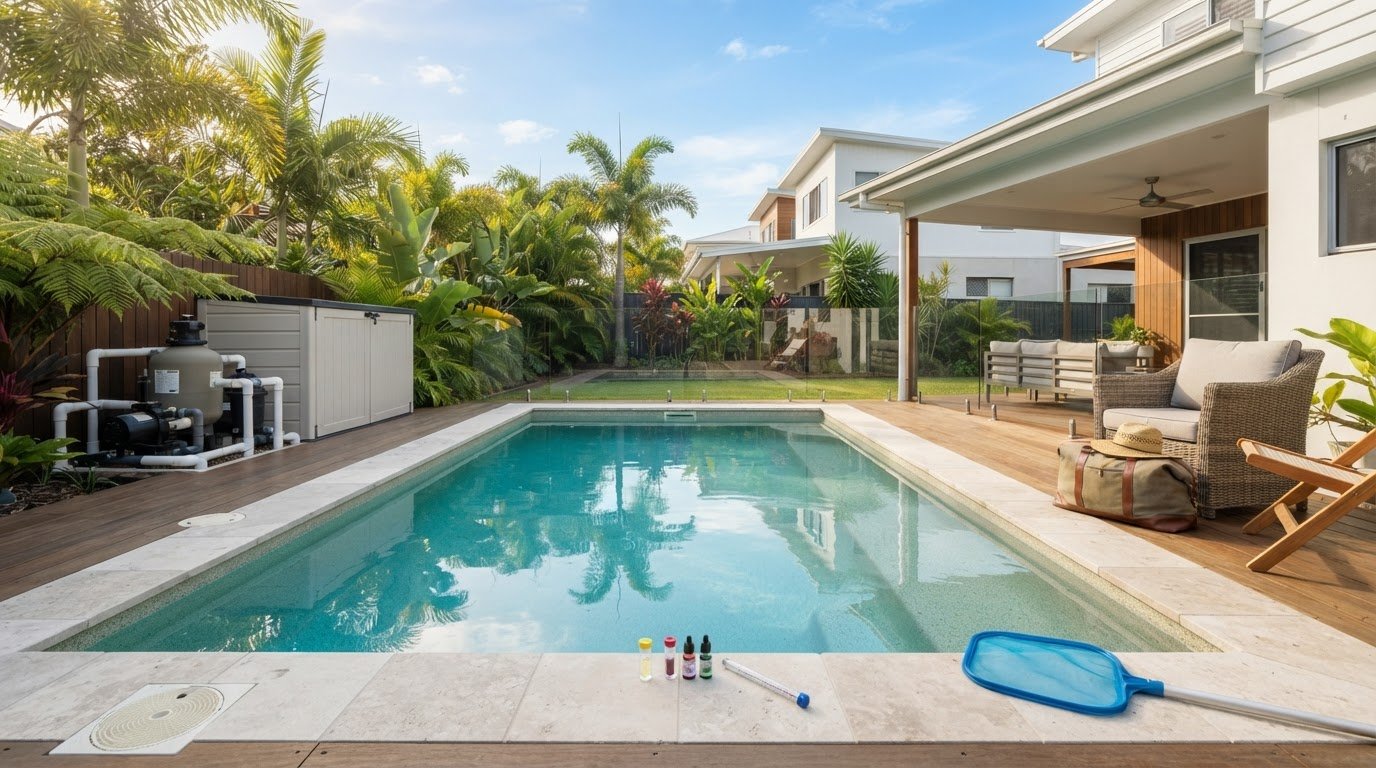
What if a few careful checks before you leave could spare you the shock of returning to cloudy or green water? It’s natural to wonder whether the pump should keep running, how to prepare for Brisbane’s heat and storms, and what to do about equipment while nobody’s home. To avoid pool problems on vacation, match your preparation to the length of your trip and the conditions your pool may face.
This practical checklist will help you leave your pool clear, balanced and easier to get swim-ready when you return. Brisbane’s heat and strong UV can increase chlorine demand, while heavy rain may dilute chemicals and bring in debris. A quick tidy-up alone may not be enough.
We’ll cover water balance, cleaning, pump and filtration schedules, and simple checks for unattended equipment. You’ll also see when a casual pool service before travel can help, or how regular servicing can make preparation simpler if you’re often away. With a clear plan, you can head off with greater peace of mind and return to a pool that’s in better shape.
Key Takeaways
- To avoid pool problems on vacation, tailor your preparation to how long you’ll be away and the conditions your pool may face.
- Learn how circulation, Brisbane weather and wind-blown debris can affect pool water while you’re travelling.
- Use a simple pre-departure sequence to check the water, clear debris and notice possible equipment faults.
- Compare essential checks with optional support for a short break, a longer holiday or frequent travel.
- Find out how casual servicing and water balancing can help prepare your pool before you leave.
Avoid pool problems on vacation: what can go wrong while you are away?
A few sensible checks before you go can reduce the chance of returning to cloudy water, a build-up of leaves or an equipment issue that’s been running unnoticed. The risks depend on how long you’ll be away, whether the water and equipment are already in good condition, and what weather may pass through while you’re gone.
Holiday pool preparation means checking the water, debris and equipment before departure, then planning suitable care for the time you’re away. This gives you a chance to spot concerns early and decide whether your usual routine is enough.
Why Brisbane weather matters when you leave
Brisbane’s outdoor pools can be affected by heat, humidity, rain and storms. Warm, sunny conditions may increase chlorine demand and create conditions that favour algae, while heavy rain can dilute chemicals and wash contaminants into the water. Wind may also carry leaves and other debris into the pool, adding to the load on the skimmer and filter. For homeowners looking to reduce garden runoff and fallen foliage before storm season, practical yard improvements via inexlandscaping.com.au can help protect pool surrounds.
Before departure, check the Bureau of Meteorology forecast for your area and the dates you’ll be away. It can’t predict every change, but it can help you consider whether heat, rain or storms could affect your pool. For a broader overview of hygiene and contaminants, the Swimming Pool Sanitation article explains why consistent care matters. The forecast is only one part of the picture: your pool’s current condition and the length of your absence matter too.
The early warning signs to notice before packing
Take a moment to look and listen before you leave. A pool that’s already showing a change may need attention before it’s left unattended. Don’t rely on adding extra chemicals to disguise a problem. First, identify what may be causing it.
- Water appearance: Look for cloudiness, a green tinge, unusual discolouration or a change from the pool’s normal clarity.
- Debris: Check whether leaves or other material are collecting in the water, skimmer or around the pool.
- Circulation: Look for weaker-than-usual water movement from the returns or a pump that stops unexpectedly.
- Equipment and surroundings: Listen for an unfamiliar pump noise and look for visible leaks or damp patches near equipment.
If you notice a fault, weak circulation or a persistent water-quality change, address it before travelling rather than assuming it will resolve itself. A pool in sound condition is a better starting point for time away. A clear plan can then help you choose the right preparation for the days ahead.
How Brisbane heat, rain and pool circulation affect water while you are away
Pool water needs more than a quick clean before you head off. The pump moves water through the filtration system, where the filter catches particles. Circulation also helps distribute treated water around the pool. If movement slows or stops, debris can settle and the water may become harder to keep clear and balanced.
Steady circulation and effective filtration support cleaner-looking pool water. They work alongside water testing and the right care routine, rather than replacing them. To avoid pool problems on vacation, check that the pump and filter are working as expected before relying on their usual schedule.
What the pump and filter do during an absence
The pump draws water through the system and returns it to the pool after filtration. A blocked skimmer or pump basket can restrict flow, while a worn component or other equipment fault may interrupt circulation altogether. Clear accessible baskets as part of your preparation, then observe the system while it runs. This helps you notice weak flow, unusual sounds or unexpected stopping.
An automatic timer controls when the pump runs, but it can’t tell you whether the pump is operating properly. Follow the equipment instructions for settings and maintenance rather than changing run times blindly. Research guidance recommends 8-12 hours of pump operation a day in summer, but the suitable schedule can depend on the pool and its equipment.
How storms and hot weather can change pool conditions
Brisbane’s heat and strong sunshine can increase the pool’s chlorine demand, while rainfall may dilute chemicals and bring contaminants into the water. Storms and wind can also leave leaves and other debris in the pool or skimmer. These conditions may change what your pool needs, so a routine that worked in settled weather may need attention after a change in conditions.
Check the pool after rain or a storm when you’re home, and use test results to guide any water adjustments. Follow product labels for handling and dosing chemicals. Don’t guess at an extra dose before a trip. The World Health Organization’s WHO Guidelines for Safe Recreational Water Environments provide broader context on managing recreational water quality and health risks.
Before leaving, confirm the pump starts and runs on its timer, check that water is moving through the returns, and clear accessible baskets. If you find a fault or persistent weak circulation, arrange for it to be addressed rather than assuming the timer will keep the system on track. Pool owners who want a knowledgeable check can include Pool Blitz pool servicing in their pre-holiday preparation.
Short trip or long holiday? Match your Brisbane pool preparation to the absence
The right plan depends on more than the number of nights you’ll be away. Consider how the pool is performing now, the weather forecast and whether someone can keep an eye on it. A pool that’s cloudy, losing water or circulating poorly needs attention before you leave, whether you’re going away for a weekend or a longer holiday.
Use this guide to separate the checks every owner should make from support that may be useful in particular circumstances. No trip length makes an existing concern safe to ignore.
| Travel pattern | Essential checks | Optional support |
|---|---|---|
| Brief trip | Check water condition, clear visible debris and confirm equipment runs normally. | Ask a trusted person to notice obvious changes, if practical. |
| Longer holiday | Complete the usual checks and consider how weather and pool condition may change during your absence. | Plan a pool check during the trip, such as casual servicing. |
| Frequent travel | Keep equipment and water care consistent between trips. | Consider regular servicing to provide continuity. |
Preparing for a brief trip
For a short absence, start with the basics: look at the water, remove visible debris and check that the pump and filtration system are operating as usual. Confirm the timer is set according to the equipment instructions, and avoid unfamiliar changes just before you leave. If the pool is in good condition and routine care is up to date, a service visit isn’t automatically needed for every short trip.
If someone you trust is nearby, you could ask them to look for an obvious change, such as water becoming unusually cloudy or the pump stopping. Keep the request simple. Don’t assume they’ll be able to diagnose or fix an equipment fault.
Planning for an extended holiday or frequent travel
A longer absence gives weather and day-to-day conditions more time to affect the pool. Consider arranging a check during the trip if the water is already prone to changing, the forecast suggests challenging conditions or nobody can monitor it. A casual service before you go can also help with water care and give you a clearer starting point.
For owners who travel regularly, ongoing pool servicing can help maintain a consistent care routine between departures. Water balance is part of that picture: the Brisbane water alkalinity and pool health guide offers further context, while the Brisbane pool maintenance guide explains how casual and regular maintenance differ. Match the level of support to the pool’s condition and your travel pattern, so you can avoid pool problems on vacation without overcomplicating a simple trip.
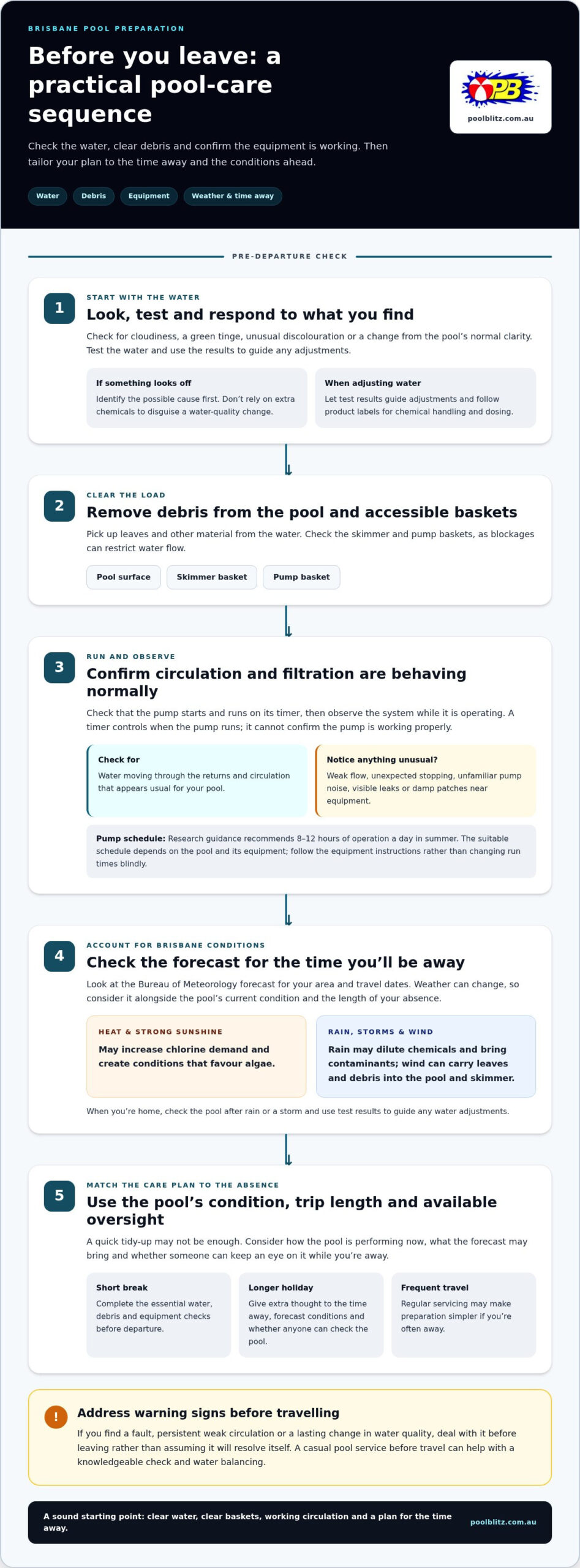
The before-you-go pool checklist for a Brisbane holiday
A calm departure starts with an orderly check, not last-minute guesswork. Set aside time the day before you leave to assess the water, clear debris, observe the equipment and consider what the forecast could mean for your pool. If you spot an existing water-quality concern or equipment fault, deal with it before you go rather than trying to mask it with an untested adjustment.
Before a Brisbane holiday, check the water, remove debris, confirm the equipment is working, review the forecast and arrange suitable cover or check-ins. Use this sequence as a practical final walk-through.
The day-before departure checks
- Look over the water. Check whether it appears clear and consistent with its usual condition. If it looks cloudy, discoloured or otherwise unusual, investigate and address the concern before travelling.
- Clear visible debris. Remove leaves and other material from the pool. If you’re emptying skimmer or pump baskets, do so only if it’s safe and consistent with the equipment instructions.
- Check the equipment while it runs. Confirm the pump and filtration system operate as expected. Watch for weak water movement, unexpected stopping, unusual noises or visible leaks, and arrange attention for a fault before departure.
- Review the forecast. Check the Bureau of Meteorology forecast for your home area and the dates you’ll be away. Possible heat, rain or storms may affect debris and water-care needs, so factor the forecast into your plan.
- Test and adjust carefully. Use suitable test results to guide water care, and follow the pool-product label for instructions. Don’t apply a fixed dose simply because you’re leaving, or mix products unless their directions say it’s safe.
Pool care products and equipment differ, so labels and manuals matter. Follow the manufacturer’s guidance for chemical handling, pump operation and maintenance rather than changing settings or adding chemicals based on a general rule. If you’re uncertain about a water-balance reading, get it assessed before departure instead of making a blind adjustment.
Decisions about covers, timers and someone checking in
A cover may help limit debris, but its suitability depends on the pool, conditions and the cover manufacturer’s instructions. Use it only as directed, and don’t assume it removes the need to maintain the pool. Confirm the timer is set as intended and that the pump runs on its usual schedule. Avoid untested changes just before leaving.
If a trusted person is checking in, ask them to report visible changes, such as water looking different, new debris or equipment that appears to have stopped. Keep the task observational rather than asking them to operate equipment or handle chemicals.
If you’d like a knowledgeable hand with pre-holiday water balancing or pool preparation, arrange pool servicing with Pool Blitz.
Pool Blitz support to help prevent pool problems while you are away
Some pool owners are comfortable completing their usual checks before heading off. Others value a knowledgeable review of the water and equipment, especially if the pool has been difficult to keep balanced or the trip will be longer. Pool Blitz is an independent Brisbane pool-care business with more than three decades of local experience, providing regular and casual servicing and expert water balancing.
Professional preparation can help you understand the pool’s current condition and what may need attention before you leave. It can’t guarantee the pool will stay problem-free, since weather and other conditions can change while you’re away, but it gives you a considered starting point for your holiday plan.
When a casual pool service can help before departure
A casual service suits owners who want a one-off check before travelling rather than ongoing visits. A pool professional can assess the water condition and routine care needs, helping identify whether balancing or other pool-care attention is appropriate. This can be particularly useful if you’ve noticed a change in clarity or want a clearer understanding of the pool’s needs before leaving.
Pool Blitz’s casual servicing and water-balancing support can help you prepare without treating every trip as a reason for regular servicing. If you travel often, regular service can provide more consistent care between departures. The pool service options and maintenance comparison explains how the two approaches differ, so you can consider what fits your routine.
When equipment needs attention before you go
Water care relies on equipment that’s working as expected. A pump that stops unexpectedly, weak circulation, unusual operating noise or a visible leak may point to a fault that needs assessment before you leave. A filter problem can also affect how well water moves through the filtration system. Don’t assume that resetting a timer or adding chemicals will resolve an equipment issue.
If your checks reveal a fault, Pool Blitz repairs pool pumps and filtration systems. Robotic pool cleaner repairs may also be relevant if a cleaner is part of your regular maintenance routine and isn’t operating properly. Addressing an identified fault before departure can help reduce avoidable uncertainty, while keeping expectations realistic about what any service can control. The Brisbane pool equipment repairs reference covers common equipment support in more detail.
A few thoughtful checks, backed by the right servicing or repair when needed, can make it easier to avoid pool problems on vacation. Explore Pool Blitz pool-care support to plan servicing, water balancing or equipment repairs around your pool’s needs before you travel.
Leave with a plan, return with confidence
Make pool preparation part of your departure routine, rather than a last-minute task between packing and locking the door. A simple note of your usual pump schedule and recent water-test results can give you a useful reference point when you return. It can help you spot changes and decide what needs attention before the first swim.
Every pool and holiday is different, so choose the level of care that suits your plans. If you’d value support with water balancing, servicing or an identified equipment fault, Pool Blitz’s qualified team can help you prepare with care grounded in local experience.
Arrange pool care with Pool Blitz and set off knowing you’ve taken practical steps to avoid pool problems on vacation. With a considered plan in place, you can focus on your time away and look forward to getting back to the pool.
Frequently Asked Questions
Can I leave my pool pump running while I am on holiday?
A pool pump can often keep running on its normal schedule while you’re away, provided the system is operating reliably. Before leaving, observe it during a usual run and check that water returns to the pool as expected. Keep the equipment manual accessible for anyone checking the property. Follow the manufacturer’s instructions rather than changing timer settings by guesswork, and have noise, leakage or intermittent operation assessed before departure.
Should I turn off my pool equipment before going on holiday?
Usually, don’t switch off all pool equipment simply because you’re travelling. The pump and filtration system may need to continue their normal operation, as stopping them could interrupt routine circulation. Check the manual for operating and maintenance instructions, and distinguish normal settings from equipment that has developed a fault. If you’re unsure whether a control should be on, have the setting assessed rather than experimenting just before you leave.
Can heavy rain make my pool cloudy while I am away?
Yes, heavy rain can contribute to cloudy water, though its effect varies between pools. Runoff or wind-driven leaves may introduce contaminants, and rainfall may affect water balance. After returning, clear debris where safe, check that circulation is working and test the water before swimming or adding chemicals. In Brisbane, the forecast can help you plan, but it can’t guarantee what conditions your pool will encounter while you’re away.
What should I do if I return to a green pool after a holiday?
Don’t swim in a green pool until its condition has been assessed and the water treated appropriately. Remove visible debris if it’s safe, check that the pump and filter are operating, then use suitable testing equipment to assess the water. Follow product-label directions rather than guessing amounts or combining treatments. If the water remains green or circulation is faulty, arrange pool servicing in Brisbane before using the pool.
Is a pool cover enough to prevent holiday pool problems?
No. A suitable cover can help keep leaves and other debris out, but it can’t maintain water balance or ensure filtration is working. Choose and secure a cover according to the manufacturer’s instructions and conditions at your property. Check whether your equipment is intended to operate with the cover in place, then inspect the water and equipment after returning before resuming normal pool use.
How often should someone check my pool while I am away?
There’s no single check-in schedule that suits every pool. To avoid pool problems on vacation, consider the length of your trip, the pool’s recent condition, equipment reliability and expected Brisbane weather. If a neighbour is checking in, give them clear instructions to report visible changes, debris or equipment that appears to have stopped. Ask them to observe only, rather than adjust controls or handle pool chemicals.
Can Brisbane storms damage pool equipment while I am away?
Storms can leave wind-blown debris and may interrupt household power, so a pump or filtration system might not operate as usual. Before departure, check that equipment is working normally and leave its instructions somewhere accessible. If you return to a tripped system, visible damage or an unfamiliar noise, don’t open electrical equipment or repeatedly reset it. Have the fault assessed before relying on the system again.
No responses yet