

In the punishing humidity of a Brisbane summer, a pool should be a sanctuary rather than a source of constant maintenance stress. Many locals find themselves trapped in a cycle of heavy chemical smells and equipment that fails far too soon under our intense subtropical sun. Investing in a quality salt water chlorinator brisbane is the most effective way to ensure your water stays healthy and inviting without the need for daily intervention. It’s about more than just convenience; it’s about creating a safe, soft environment where your family can swim comfortably all year round.
You likely believe that pool care should be straightforward and reliable. This 2026 guide will show you exactly how to achieve that “set and forget” lifestyle by selecting the right system for our unique local conditions. We’ll walk through the latest equipment trends, compare the benefits of salt versus mineral blends, and explain the critical 2025 electrical safety regulations that every Queensland homeowner needs to understand before upgrading their filtration system.
Key Takeaways
- Understand how Brisbane’s high UV index impacts chlorine levels and why on-site electrolysis is the most reliable way to maintain a healthy swimming environment.
- Learn the precise method for calculating pool volume to ensure your salt water chlorinator brisbane is powerful enough to withstand a subtropical summer.
- Evaluate the differences between traditional salt and mineral systems to find the perfect balance between effective sanitisation and a softer, more luxurious water feel.
- Discover the essential maintenance steps for protecting your chlorinator cell, the heart of your system, from premature failure and calcification.
- Get professional guidance on whether to repair or replace ageing equipment, helping you maintain a “set and forget” pool system with confidence.
The Benefits of Salt Water Chlorinators for Brisbane Pool Owners
Brisbane is famous for its brilliant sunshine, but that same light is a relentless enemy of pool hygiene. A salt water chlorinator brisbane acts as an automated factory, producing consistent sanitiser right in your filtration plumbing. This process removes the need for heavy manual dosing and creates a more stable chemical environment. Unlike traditional liquid chlorine methods, salt systems provide a gentle, “soft water” experience that is far kinder to sensitive skin and eyes. This makes it the preferred choice for local families who want to spend more time swimming and less time handling harsh chemicals.
The financial logic is just as compelling as the lifestyle benefits. While the initial setup requires an investment, the long-term savings are substantial. Pool salt is significantly more affordable than the ongoing purchase of high-strength liquid chlorine or stabilised granules. Over several seasons, the reduced chemical spend often offsets the cost of the unit. You are essentially trading a recurring chore for a reliable, self-sustaining system that protects your property and your family’s health.
How Salt Chlorination Works in Your Pool
The core of the system is the electrolytic cell. It uses a low-voltage current to transform dissolved salt into pure chlorine gas. You can read more about the technical details of how salt water chlorination works to understand the chemical transformation involved. Once the chlorine has finished sanitising the water, it naturally reverts back into salt; this creates a continuous and sustainable cycle. This automation helps maintain a steady baseline of protection, though keeping a close eye on pH levels remains vital for ensuring the chlorine stays effective and the equipment lasts for years.
Why Brisbane Pools Require Specialised Sanitisation
Our subtropical climate presents challenges that pool owners in southern states simply don’t face. High UV levels in South East Queensland can strip chlorine from a pool in just a few hours during a typical December afternoon. When you add the sudden influx of organic matter from a classic Brisbane summer storm, manual dosing often fails to keep up. A salt water chlorinator brisbane provides a constant “trickle” of sanitiser, preventing algae blooms before they can take hold. This “set and forget” approach is a game-changer for busy households, offering the peace of mind that your pool is always safe for a spontaneous dip.
Choosing the Right Salt Water Chlorinator for Your Pool Size
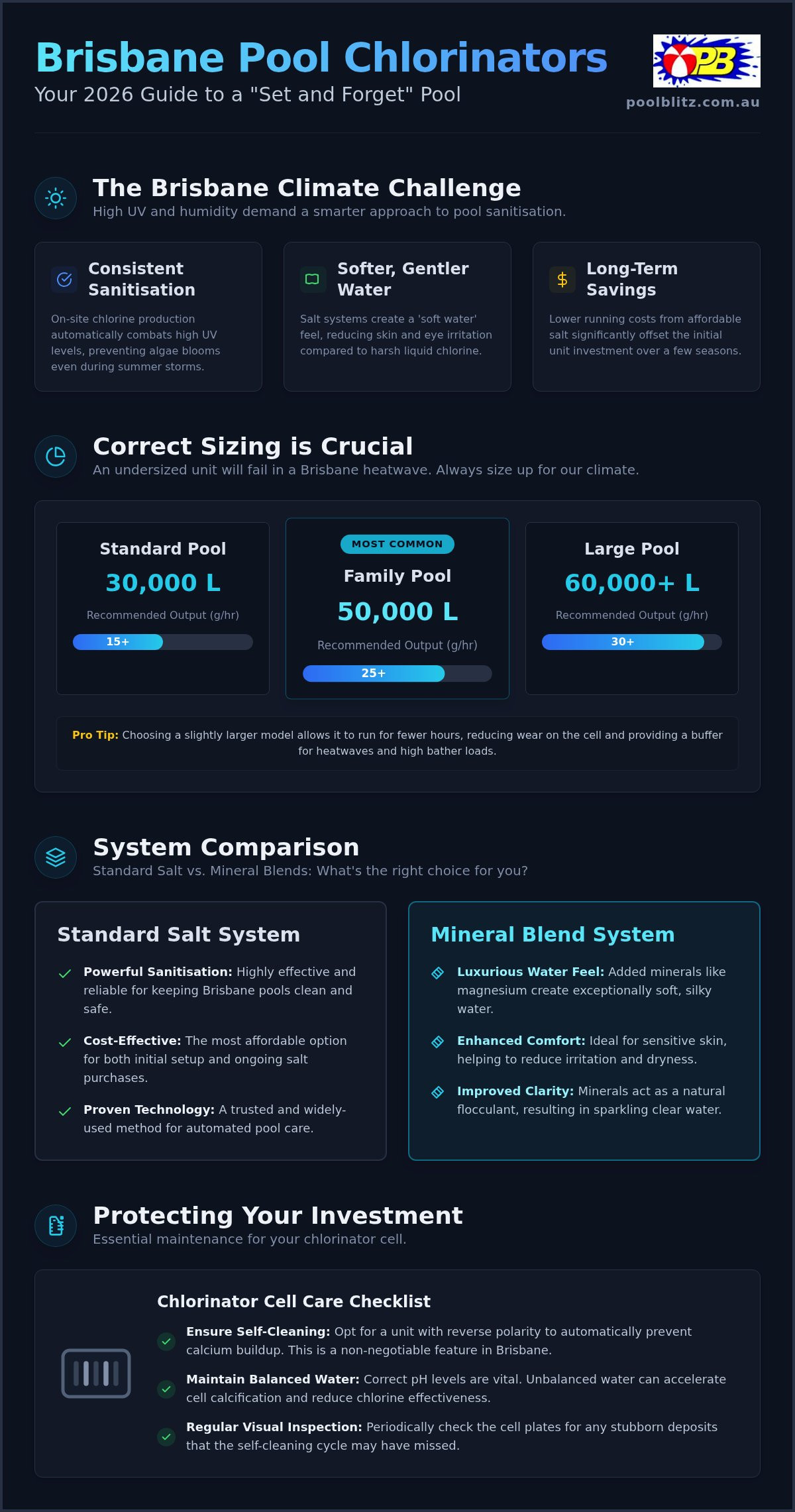
Selecting a salt water chlorinator brisbane requires more than just matching a number on a box. In our climate, a unit that is technically rated for your pool size might struggle when the mercury hits 35 degrees. We often advise that choosing a slightly larger model is a wise investment; it allows the system to run for fewer hours while still meeting the sanitisation demand. This reduces wear on the cell and provides a buffer for those days when the bather load is high. Proper sizing is the first step in Essential Maintenance, as an undersized unit will never keep up with the required chlorine levels during a humid January.
To find your starting point, multiply your pool’s length by its width and then by its average depth. Multiply that total by 1,000 to get the volume in litres. Most modern units are self-cleaning, using reverse polarity to shed calcium buildup from the plates. This is a non-negotiable feature for Brisbane pools, where mineral levels can vary and scaling is a common concern for many homeowners.
Sizing Guide: Litres vs. Chlorine Output
A standard 30,000L pool might only need a 15g/hr unit, but a 50,000L family pool often requires at least 25g/hr to stay clear. If you have a 60,000L pool, a 22g/hr unit will likely fail during a Brisbane heatwave because the UV index destroys chlorine faster than the unit can produce it. You should also consider the bather load and any surrounding vegetation. Heavy leaf litter or a weekend of pool parties can quickly deplete your sanitiser, leaving the water vulnerable to algae. If you aren’t sure which capacity fits your backyard setup, seeking expert water balancing advice can prevent costly mistakes.
Key Features to Look for in 2026
Innovation has made pool care much simpler for local families. Modern systems now include smart home integration, allowing you to check your salt levels or activate a “Boost” mode from your phone after a heavy afternoon downpour. Look for units with low-salt alerts and diagnostic displays that simplify troubleshooting before a small issue becomes a green pool. Durability is another factor to prioritise; ensure the unit features UV-stabilised housings and high-grade titanium plates that can withstand the intensity of the Queensland sun for years to come.
Comparing Salt Water vs. Mineral Pool Systems in Queensland
Many Brisbane homeowners are now looking beyond traditional sodium chloride to mineral-based alternatives. While a standard salt water chlorinator brisbane is designed to produce chlorine from salt, the “mineral pool” evolution uses a blend of magnesium and potassium chloride. Both systems rely on the same electrolysis process to keep the water safe. You are still benefiting from the fundamental benefits of chlorine as a primary sanitiser, but the physical experience of the water changes significantly when you introduce minerals into the mix.
Choosing between these systems often comes down to a balance of lifestyle goals and budget. A mineral system offers a premium swimming experience, while traditional salt remains the most accessible and straightforward method for the majority of local backyards. Both are effective, provided the equipment is sized correctly for our humid climate and high bather loads.
The Magnesium Difference
Magnesium is frequently praised for its ability to soothe muscle aches and hydrate the skin; it’s a stark contrast to the slightly drying effect that high-salt environments can sometimes have. Beyond the physical feel, magnesium acts as a natural flocculent. This means it helps tiny particles clump together, making it easier for your filtration system to catch them and leaving you with exceptionally clear water. From an environmental perspective, the backwash from a mineral pool is often considered more garden-friendly, though you should always check local regulations before diverting water into your landscape.
Traditional Salt: The Reliable Workhorse
Despite the rise of mineral systems, traditional salt remains the most cost-effective and proven method for most Brisbane pools. The ongoing cost of pool salt is significantly lower than mineral blends, which can be three to four times more expensive per bag. For rental properties or budget-conscious families, this “reliable workhorse” of sodium chloride is difficult to beat. It provides excellent sanitisation with minimal fuss. To keep either system running at its peak, investing in Professional Regular Pool Servicing in Brisbane ensures your water chemistry remains balanced regardless of the salts you choose.
Most high-quality chlorinators can handle mineral blends, but the lifespan of the cell plates may vary depending on the mineral concentration. It’s essential to verify compatibility before making the switch. A seasoned expert can help you determine if your current power pack can manage the different conductivity of magnesium or if a dedicated mineral-compatible unit is required for long-term stability.
Essential Maintenance: Keeping Your Chlorinator Cell in Peak Condition
The electrolytic cell is the heart of any salt water chlorinator brisbane. It is also the most vulnerable component, typically lasting between three to five years in our local climate before requiring a replacement. Consistent attention can extend this lifespan, saving you from the expense of a premature hardware failure. When the cell is neglected, the power pack must work harder to produce the same amount of sanitiser, which can lead to more costly electrical issues down the track.
Recognising the early signs of a struggling cell is vital for maintaining water clarity. You should keep a close watch for these common indicators:
- Calcium Build-up: White, chalky deposits visible on the internal titanium plates.
- “No Flow” Lights: Warning indicators on the control panel even when the pump is running.
- Cloudy Water: A sudden drop in chlorine production despite the unit being set to a high output.
- Diagnostic Alerts: Low salt readings that persist even after you have added the correct amount of salt to the pool.
Brisbane’s weather patterns demand a tailored maintenance schedule. During the dry winter months, evaporation can lead to higher salt concentrations that stress the equipment. Conversely, our heavy summer storms often dilute the water, requiring rapid rebalancing to prevent algae. Checking your salt levels and cell condition once a month in winter and every fortnight during the humid summer is a reliable rule of thumb.
Cleaning and Decalcifying the Cell
Calcium scaling is an inevitable byproduct of the electrolysis process. To remove these deposits safely, you should use a mild, diluted acid solution specifically designed for cell cleaning. Never use metal tools, screwdrivers, or wire brushes to scrape the plates. These will permanently damage the precious metal coating that allows the cell to function. A gentle soak is all that’s required to dissolve scale and restore the unit’s efficiency. How often you need to perform this task depends on your local water hardness, though self-cleaning units generally require much less frequent manual intervention.
Water Balancing: The Secret to Equipment Life
Your hardware is only as good as the water flowing through it. High pH levels are the primary culprit behind rapid scale formation, which insulates the plates and prevents them from generating chlorine. In our high-UV environment, using a stabiliser (cyanuric acid) is also essential to act as a “sunscreen” for your chlorine, preventing it from burning off in the midday sun. Regular professional testing at a pool shop Kenmore or a trusted local centre ensures these levels stay within the ideal range. If you notice your system is struggling to keep up with the summer heat, our team can provide expert pool equipment repairs to ensure your filtration system remains in top condition.
Professional Installation and Repairs in Brisbane: Why Expert Setup Matters
Selecting a high-quality salt water chlorinator brisbane is only the first step toward a trouble-free swimming season; ensuring the unit is installed correctly is what guarantees its long-term performance. While the temptation to handle the setup yourself might be strong, modern pool equipment is increasingly complex and integrated. Under the 2025 Queensland Electrical Safety Regulations, all chlorinator installations and repairs must be performed by a licensed professional. Beyond the legal requirements, an expert setup ensures that your system is calibrated precisely to your pool’s specific volume and flow rate. This precision prevents “dead spots” in your water circulation where algae can thrive even when the unit is producing chlorine.
A significant benefit of professional commissioning is the protection of your manufacturer’s warranty. Many leading brands strictly require a certified technician to install the hardware to honour their repair promises. We often encounter homeowners who have tried to save on initial costs, only to find their warranty voided when a minor component fails. A seasoned expert can also help you navigate the “repair versus replace” dilemma with confidence. If your power pack is still robust, a simple cell replacement or a minor component repair might be all that’s needed to restore your pool’s health, saving you the expense of a completely new system.
Expert Equipment Repairs and Diagnostics
Faults in a pool system rarely occur in isolation. Often, what appears to be a failing chlorinator is actually a symptom of a struggling pump or a compromised filter. Our diagnostic process involves a comprehensive check of the cell, the connecting cables, and the internal control board to pinpoint the exact failure. This methodical approach prevents you from wasting money on parts you don’t actually need. For those looking to achieve a truly automated backyard sanctuary, integrating your sanitisation system with the Best Robotic Pool Cleaner Brisbane can take the manual labour out of pool ownership entirely.
The Pool Blitz Advantage
Since 1994, our team has been a steady presence in the local community, acting as a seasoned authority on subtropical pool care. We understand the specific pressures that Brisbane’s heat and humidity place on electronics and titanium plates. Our approach is built on neighborly reliability; we value long-term pool health and customer trust over making a quick sale. Whether you need a casual service to check your equipment’s status or a complete overhaul of your filtration system, we provide the peace of mind that comes from three decades of local experience. If you’re concerned about your water quality or the performance of your hardware, a professional equipment health check is the most effective way to ensure your pool remains a clear, inviting retreat for your family.
Secure Your Pool’s Health for the Seasons Ahead
Achieving a crystal clear pool in our demanding subtropical environment doesn’t have to be a constant battle against the elements. By selecting the correct salt water chlorinator brisbane and ensuring it is professionally calibrated, you create a reliable sanctuary that stands up to the most intense summer heat. Remember that proactive maintenance and precise water balancing are the ultimate safeguards for your equipment’s longevity. Whether you are considering a transition to a mineral system or simply need to restore your current filtration to peak efficiency, expert guidance ensures you make the most cost-effective choice for your home.
We have been serving the local community as a trusted authority since 1994, offering independent advice on all major brands and acting as qualified equipment repair specialists. Our focus is always on providing the peace of mind that comes from a healthy, sustainable pool. To ensure your system is ready for the humid months ahead, Book a Professional Pool Equipment Health Check with Pool Blitz today. We look forward to helping you maintain a beautiful, hassle-free swimming environment for years to come.
Frequently Asked Questions
How long does a salt water chlorinator cell typically last in Brisbane?
A chlorinator cell typically has a lifespan of 3 to 5 years in Brisbane’s subtropical climate. The intense summer heat and high UV levels mean the system often runs for longer periods to maintain sanitisation; this naturally wears down the titanium plates over time. Regular cleaning and precise water balancing can help you reach the upper end of that lifespan. Neglected cells or those struggling with high calcium levels may fail much sooner, leading to poor water quality.
Can I convert my existing chlorine pool to a salt water system?
Most traditional chlorine pools can be converted to a salt water system with a straightforward equipment upgrade. You will need to install a salt water chlorinator brisbane unit and a compatible cell into your existing filtration plumbing. It is essential to have a licensed professional handle the setup, as Queensland’s 2025 electrical safety regulations require a licensed electrician for all chlorinator installations. This transition provides a softer water feel and removes the need for manual liquid chlorine dosing.
Why is my salt chlorinator showing a “Low Salt” light when I just added salt?
A “Low Salt” light often indicates a failing cell or a sensor issue rather than a lack of actual salt. If you have verified the salt levels are correct with a manual test, the sensor may be struggling to read the conductivity due to calcium scaling on the plates. In some cases, it can signal that the cell has reached the end of its functional life and can no longer generate a charge. Always check for physical buildup before adding more salt to the water.
Is a salt water pool actually chlorine-free?
A salt water pool is not chlorine-free; it simply generates its own chlorine through a process called electrolysis. The salt cell converts dissolved salt into pure chlorine gas to sanitise the water and keep it safe for your family. Because the chlorine is produced on-site and in smaller, consistent doses, the water feels much softer on the skin and eyes. You avoid the strong chemical smells and irritation often associated with traditional manual chlorine dosing.
How much salt does a standard Brisbane pool need to operate?
Most standard Brisbane pools require an initial salt concentration of approximately 3,000 to 4,000 parts per million (ppm). For a typical 50,000-litre pool, this usually equates to roughly 150kg to 200kg of pool salt at the start. Once the initial level is established, you only need to add more salt when water is lost through backwashing or heavy summer rain. It remains a very cost-effective system, with a 20kg bag of salt costing approximately $15.
Will a salt water chlorinator damage my pool heater or pump?
A salt water system will not damage modern pool equipment as long as the water chemistry is correctly managed. High-quality pumps and heaters are designed to be salt-compatible, featuring corrosion-resistant components and seals. Problems only arise if the salt levels or pH are allowed to drift significantly outside the recommended ranges for long periods. Professional water balancing ensures that your equipment remains protected while providing the lifestyle benefits of a salt-sanitised pool.
What is the best salt chlorinator brand for the Queensland climate?
Brands like Astral and Zodiac are highly regarded for their durability in the harsh Queensland environment. These manufacturers offer units with UV-stabilised housings and high-grade titanium plates that can withstand our intense summer sun and high humidity levels. We recommend choosing a model with a “Boost” mode and self-cleaning functionality to handle the rapid chlorine depletion caused by Brisbane’s high UV index. Selecting a reputable brand ensures easier access to replacement parts.
How do I know if my chlorinator cell needs cleaning or replacing?
You will know a cell needs attention if you see white calcium crusting on the plates or if chlorine production drops significantly. If a thorough clean with a mild acid solution does not resolve the “Low Salt” or “Check Cell” warning, the precious metal coating has likely worn off. A seasoned expert can perform a diagnostic test to confirm if the plates are still active. Replacing a cell promptly prevents unnecessary strain on your power pack and filtration system.
No responses yet