
If your Brisbane backyard smells like a public leisure centre, your pool actually needs more chlorine, not less. This counterintuitive reality is often the first thing we explain to locals who are struggling with stinging eyes and cloudy water that simply won’t clear. You likely feel the frustration of pouring money into chemicals only to see the water remain dull, but understanding how to shock a pool correctly can change everything. It’s a strategic booster shot for your water that requires balancing our unique weather patterns with precise chemical timing.
We agree that keeping a pool healthy shouldn’t feel like a confusing chemistry experiment. This guide provides the professional method for shocking your pool to eliminate algae and keep your Brisbane splash zone in peak condition. You’ll learn the exact steps to restore clarity, the truth about dosage rates, and how to maintain your filtration system to prevent the green-pool cycle from returning.
Key Takeaways
- Solve the “chlorine paradox” by learning why a strong chemical smell actually indicates a lack of free chlorine and a need for a professional water reset.
- Master the 7-step professional method for how to shock a pool to effectively eliminate stubborn algae and restore clarity to cloudy water.
- Select the most effective chemical treatment for your setup by comparing the concentrated power of granular options against the convenience of liquid chlorine.
- Recognise the unique Brisbane triggers that demand an immediate shock, such as heavy tropical storms or high bather loads after a weekend pool party.
- Maximise your water health by ensuring your filtration system and pump are properly maintained to circulate chemicals and remove dead algae efficiently.
What Does it Mean to Shock a Pool?
To the uninitiated, the idea of “shocking” a pool sounds aggressive; however, it’s actually a vital restorative process for maintaining a healthy swimming environment. Shock chlorination involves adding a concentrated dose of sanitiser, typically chlorine, to the water to rapidly raise the levels of free chlorine. This process is designed to “reset” your water chemistry by oxidising organic contaminants and killing off bacteria or algae that your daily maintenance doses might miss. While standard chlorination keeps the water safe for daily use, shocking provides a deep clean that breaks down the stubborn chemical compounds that build up over time.
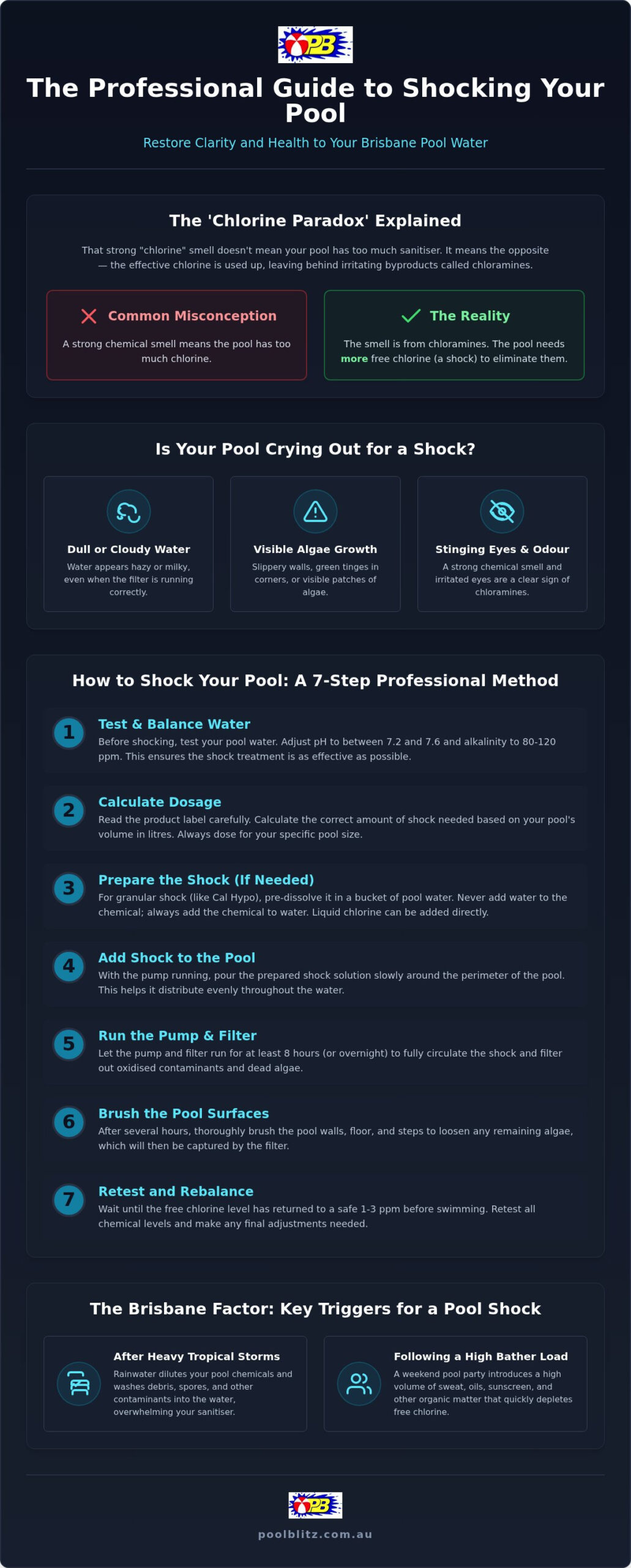
Many Brisbane homeowners are surprised to learn that a strong, pungent chemical smell around the pool is actually a signal that you need more chlorine, not less. This is known as the “chlorine paradox.” That distinctive odour isn’t caused by fresh chlorine; rather, it’s the result of chloramines, which are the byproducts of chlorine that has already done its job and become “used up.” Learning how to shock a pool effectively means understanding how to push past this chemical plateau to achieve total water clarity.
The Science of Chloramines
When free chlorine reacts with sweat, oils, and nitrogen-based compounds in the water, it transforms into combined chlorine, or chloramines. These compounds are essentially useless for sanitisation. They lack the power to kill pathogens and instead linger in the water, causing red eyes and irritated skin for your family. Breakpoint chlorination is the threshold where the concentration of chlorine becomes high enough to effectively oxidise and eliminate this organic matter.
Signs Your Pool Needs a Shock Treatment
You don’t always need a chemical test kit to know when your pool is struggling, as the water often sends clear distress signals. If the water appears dull or slightly hazy despite your filter running its full cycle, it’s a sign that microscopic debris is overwhelming your current sanitiser levels. Visible algae growth is another undeniable indicator. If you notice slippery walls or green tinges in the corners, an immediate shock is required to stop the bloom from taking over your backyard oasis. Finally, if your family complains of stinging eyes or a persistent chemical smell after a quick dip, your pool is overdue for a professional-grade reset to clear those irritating chloramines and restore a safe swimming environment. Understanding how to shock a pool at the first sign of these symptoms will save you time and money on more expensive recovery treatments later.
A Roundup of Pool Shock Types: Which One Do You Need?
Selecting the right chemical for your pool is a decision that impacts both the clarity of your water and the longevity of your equipment. When considering how to shock a pool, the choice of product depends on whether you’re fighting an active algae bloom or simply performing routine maintenance. Most Brisbane homeowners reach for Calcium Hypochlorite, or Cal Hypo, which remains the most powerful granular shock available. It’s highly effective for killing algae, though it does add a small amount of calcium to your water, which is something to monitor if you live in an area with naturally hard water.
Liquid Chlorine, or Sodium Hypochlorite, is another popular choice because it doesn’t require pre-dissolving and won’t increase your calcium levels. It’s easy to apply directly to the water, but the containers are bulky and have a shorter shelf life than granular options. For those managing outdoor pools in the Queensland sun, Dichlor offers a stabilised form of chlorine that includes cyanuric acid. While this protects the chlorine from burning off in the UV rays, using it too frequently can lead to “stabiliser creep,” where high levels of cyanuric acid actually make your chlorine less effective.
Chlorine vs. Non-Chlorine Shock
Understanding the difference between sanitising and oxidising is the secret to professional-grade maintenance. Chlorine shock is a heavy-duty sanitiser designed to kill living organisms like bacteria and algae. In contrast, non-chlorine shock (potassium monopersulfate) is an oxidiser that burns off organic waste like sunscreen, sweat, and oils. It doesn’t kill algae, but it’s perfect for regular maintenance because you can swim just 15 minutes after application. If you have a vinyl-lined pool, non-chlorine options or pre-dissolved liquid chlorine are often safer, as undissolved granules of Cal Hypo can occasionally bleach or damage the liner surface. Following CDC pool chemical safety guidelines is essential regardless of which type you choose, especially when storing these concentrated substances in our humid climate.
Dosage and Volume Calculations
Accuracy is the cornerstone of effective water chemistry. Before you begin the process of how to shock a pool, you must have a precise understanding of your pool’s total water volume. Adding too little chemical won’t reach the “breakpoint chlorination” mentioned earlier, while adding too much is simply a waste of resources. Standard maintenance dosages typically require 1 kilogram of granular shock per 50,000 litres, but a green pool recovery might require double or triple that amount. Keep in mind that high pH levels can significantly reduce chlorine’s effectiveness; if your pH is above 7.8, your shock will only be about 25% as active as it should be. If you’re unsure about your current levels, sourcing high-quality pool chemicals from local experts can ensure you start with the right products and advice.
How to Shock Your Pool: A 7-Step Professional Method
Achieving a crystal clear finish requires a methodical approach that respects both the chemistry and the hardware of your system. Learning how to shock a pool effectively begins with preparation rather than just pouring chemicals into the water. First, you must remove all organic debris like leaves and twigs, as these will consume your chlorine before it can even reach the algae. Once the surface is clear, use a stiff brush to scrub the walls and floor. This physical action breaks up the biofilm that algae uses as a protective shield, allowing your shock treatment to penetrate and kill the spores more efficiently.
Precision in your water chemistry is the next critical step. You must test your water and balance the pH level to between 7.2 and 7.4 before adding any sanitiser. If your pH is too high, the chlorine will remain largely inactive, which leads to wasted chemicals and poor results. After calculating the required dosage based on your pool volume and current free chlorine levels, you should always pre-dissolve granular shock in a bucket of pool water. This prevents concentrated granules from settling on the floor and bleaching your pool’s surface. Finally, always apply your treatment at dusk. The Queensland sun is harsh enough to degrade up to 90% of unstabilised chlorine in just two hours, so night application ensures the chemicals have time to work without UV interference.
Preparation and Safety
Handling concentrated oxidisers requires a high degree of caution and the right equipment. You should always wear essential PPE, including chemical-resistant gloves, safety goggles, and old clothes that you don’t mind getting bleached by accidental splashes. Adhering to pool chemical safety protocols is vital; remember the golden rule to always add chemicals to water, and never water to chemicals, to prevent dangerous exothermic reactions. Before you begin, ensure your pump and pool filtration system are in good working order, as the chemicals must be circulated effectively to reach every corner of the pool.
The Application and Aftercare
Distribution is just as important as the dosage itself. Instead of dumping the entire bucket in one spot, walk slowly around the pool perimeter while pouring the dissolved mixture to ensure even coverage. Once the treatment is in, run your filtration system for at least 8 to 12 hours to move the water and filter out the dead organic matter. You will also need to master your pool pH level in Brisbane during the recovery phase, as the shock process can cause temporary fluctuations that need to be corrected before the water is safe for swimming again. Understanding how to shock a pool is a skill that grows with experience, but following these structured steps ensures a reliable and healthy result every time.
The Brisbane Factor: When is the Best Time to Shock?
Brisbane’s climate is a double-edged sword for pool owners. The intense sub-tropical sun and sudden storm cells create an environment where water chemistry can shift in just a few hours. If you’re wondering how to shock a pool effectively, timing is everything. Shocking during the peak of a Brisbane summer day is essentially a waste of money. The UV index is so high that it degrades the unstabilised chlorine before it can complete the sanitisation process. Temperature spikes are another major concern. Once your pool water reaches 30°C or higher, bacteria and algae growth accelerate at an alarming rate, demanding a proactive approach to prevent a total green-out.
High bather loads also dictate your schedule. After a classic weekend pool party or a week of heavy family use, the organic load from sunscreens, sweat, and oils can quickly overwhelm your daily sanitiser. A Sunday evening shock treatment is the best way to reset the balance and ensure the water is safe for the school week ahead. This allows the chemicals to work through the night when the water is calm and the sun is no longer a factor.
Shocking After a Storm
Heavy rain doesn’t just dilute your chemicals; it actively introduces contaminants. Rainwater often has a lower pH, which can pull your pool’s balance out of the ideal range. More importantly, wind-blown debris and runoff introduce phosphates, which act as “super-food” for algae. You should check for cloudy pool water in Brisbane immediately after a storm has passed. Clearing the skimmer box and running the pump is the first priority, followed by a shock treatment to neutralise any newly introduced organic matter before it takes root.
Seasonal Maintenance Schedules
Your maintenance routine must evolve with the seasons. During winter, you can often reduce the frequency of shock treatments as the cooler water temperatures slow down biological growth. However, “opening” your pool for the summer swim season requires a deep shock to clear any dormant spores that may have survived the cooler months. Evening application remains a non-negotiable rule in the Sunshine State. By applying chemicals after the sun has set, you allow the chlorine to work undisturbed through the night, providing the maximum possible sanitisation for every dollar spent. If your pool is still struggling after a heavy weather event, our team offers casual pool servicing to help you get back to a crystal clear finish without the stress.
Beyond the Shock: Ensuring Equipment and Water Health
Shocking is only half the battle. Your filtration system must do the heavy lifting once the chemicals have done their work. When you’ve mastered how to shock a pool, you’ll notice the water turns from green to a cloudy grey or blue; this is dead algae. Your filter needs to be in peak condition to catch these microscopic particles. A clogged or damaged filter will simply circulate the dead organic matter back into the pool, leaving you with water that never quite reaches that sparkling standard. We often see homeowners spend a fortune on chemicals while neglecting the very equipment meant to clear the results.
Circulation is equally vital. If your pool pump is underperforming, you’ll develop “dead spots” in the deep end or around the steps where the water remains stagnant. In these zones, the shock treatment never reaches its full concentration, allowing algae to survive and re-infest the pool within days. Consistent water movement is the only way to ensure your chemical investment actually works and that every litre of water is treated.
Protecting Your Pool Equipment
While modern technology makes maintenance easier, high chemical concentrations can be harsh on sensitive components. You should always remove your robotic pool cleaner before you begin the process of how to shock a pool. The elevated chlorine levels required for a “reset” can prematurely perish the rubber seals and plastic tracks of these units. Once the chlorine levels have returned to a safe swimming range, typically between 1 and 3 ppm, you can return the cleaner to the water to help scrub away any remaining debris. If you notice your equipment making unusual noises or failing to clear the water after a treatment, it may be time for a professional equipment repair to prevent long-term damage.
When DIY Isn’t Enough
Sometimes, even the most diligent homeowner encounters a problem that requires a higher level of expertise. Black algae is a prime example; it forms deep-rooted “plugs” that are notoriously resistant to standard shock treatments. If you’ve followed every step and the water still isn’t clearing, it’s often a sign of a deeper chemical imbalance or a hidden mechanical failure. A casual pool service can provide the deep recovery needed to break the green-pool cycle. We act as a protective steward for your property, ensuring every component of your system is working in harmony. Struggling with a stubborn green pool? Contact Pool Blitz for expert Brisbane pool servicing to restore your backyard oasis to its former glory.
Enjoying a Crystal Clear Brisbane Swim Season
Maintaining a healthy pool in our sub-tropical climate is about more than just adding chemicals; it’s about precision and timing. You’ve learned that the secret to how to shock a pool lies in treating the water at dusk to avoid UV loss and ensuring your filtration system is robust enough to clear the resulting dead algae. By balancing your pH first and choosing the right oxidiser for your specific pool surface, you can break the green-pool cycle and keep your water inviting all year round.
If your water remains stubborn or your equipment needs a professional eye, we’re here to provide the stability you need. Pool Blitz has been Brisbane-owned and operated since 1994, offering the local community seasoned expertise in water balancing and equipment longevity. As an expert robotic pool cleaner repair centre with qualified technicians for all equipment repairs, we ensure your splash zone stays a source of joy rather than a chore. Book a Professional Pool Service with Pool Blitz today to secure your peace of mind. We look forward to helping you keep your pool in perfect condition for the seasons to come.
Frequently Asked Questions
How long should I wait to swim after shocking my pool?
You should generally wait at least 24 hours before swimming after a chlorine shock treatment. It’s essential to test the water first to ensure the free chlorine levels have returned to a safe range of 1 to 3 ppm. If you’ve used a non-chlorine oxidiser, the waiting period is much shorter, often allowing you to dive back in after just 15 minutes.
Can I shock my pool and add algaecide at the same time?
You shouldn’t add algaecide and shock at the same time. High chlorine levels will break down the algaecide, rendering it completely ineffective and wasting your money. It’s best to wait until your chlorine levels have stabilised to normal levels before adding an algaecide to prevent future growth and maintain long-term water clarity.
Should I leave the pool cover on or off after shocking?
You must leave your pool cover off for at least 24 hours after a shock treatment. This allows the water to “off-gas” as the chlorine oxidises contaminants and destroys irritating chloramines. Keeping the cover on can trap these gases, which may damage the underside of your cover and prevent the chemicals from working as efficiently as they should.
Why is my pool still cloudy after I shocked it?
Cloudy water after a shock treatment is usually caused by dead algae that’s still suspended in the pool. Your filtration system needs time to catch these microscopic particles, so ensure your pump is running for at least 12 to 24 hours. If the cloudiness persists, it may indicate your filter needs a deep clean or your pH levels are too high.
Is liquid chlorine better than granular shock for Brisbane pools?
Both have their place in a Brisbane maintenance routine, but granular shock is often preferred for heavy-duty algae kills. Liquid chlorine is convenient because it doesn’t require pre-dissolving, but granular Calcium Hypochlorite provides a more concentrated “hit” to the water. Choosing the right product depends on your specific pool surface and the severity of the water issues you’re currently facing.
How much chlorine is too much when shocking?
Most professional guidelines suggest a target of 10 ppm of free chlorine for a standard reset, though severe algae blooms may require higher levels. Adding too much chlorine can lead to bleached liners or damaged equipment, so it’s vital to calculate your dosage based on your pool’s total water volume. Understanding how to shock a pool correctly means being precise with your measurements rather than just guessing.
Do I need to backwash my filter after a shock treatment?
You’ll definitely need to backwash your filter once the water starts to clear. As the shock treatment kills off algae and organic waste, your filter will quickly become clogged with dead debris. Monitoring the pressure gauge on your filter tank will tell you exactly when it’s time to backwash and clear that waste from your system to maintain healthy circulation.
What happens if I shock my pool during the day?
Shocking during the day is largely ineffective because the sun’s UV rays will degrade the chlorine almost immediately. In the harsh Queensland climate, you can lose a significant portion of your sanitiser in just a few hours if it’s applied while the sun is up. Learning how to shock a pool at the right time saves you money and ensures the treatment is actually effective.
No responses yet