
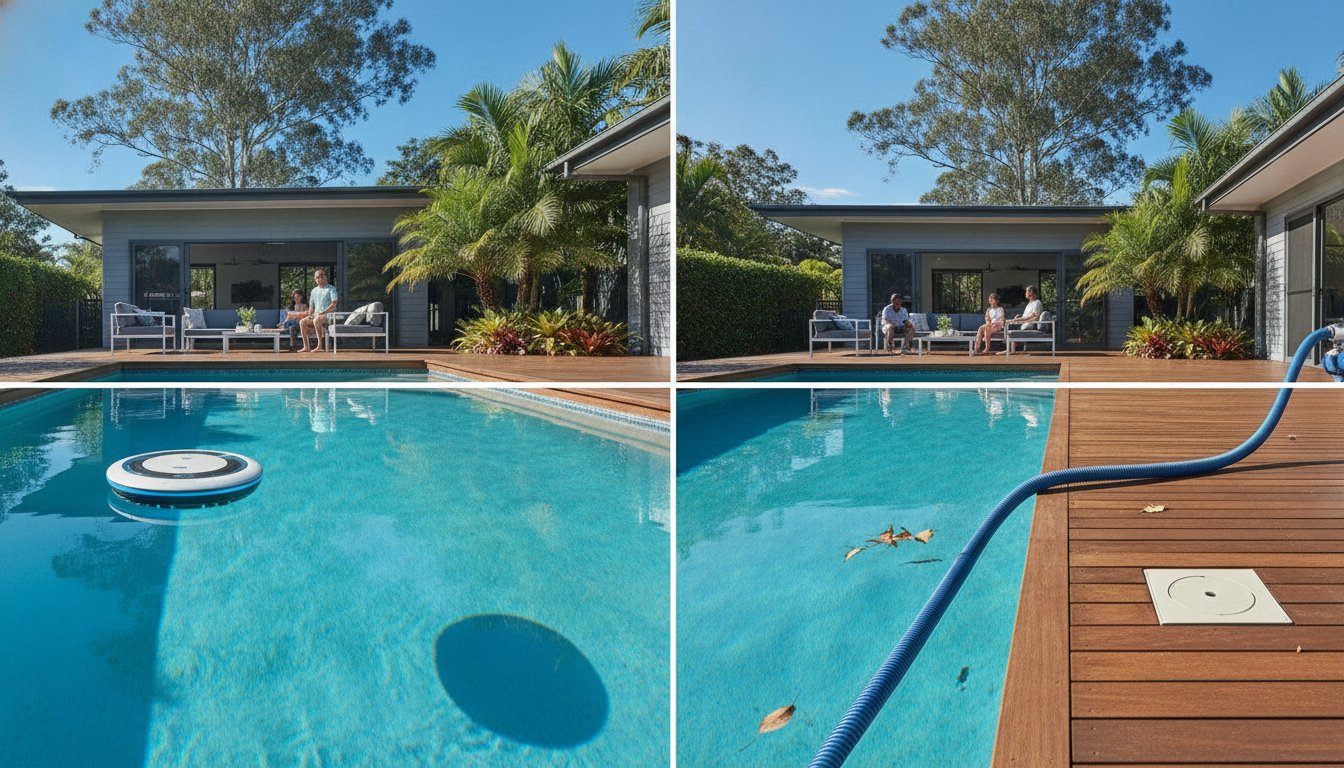
What if the device you bought to save time is actually the primary cause of your rising electricity bills and weekend frustrations? Many Brisbane homeowners find themselves tethered to a cycle of emptying skimmer boxes and untangling hoses while their main pump works overtime. It is a common struggle in our local climate, where the intense Queensland sun demands constant filtration and the debris from nearby gum trees can quickly overwhelm basic equipment. Choosing between a robotic pool cleaner vs suction cleaner is no longer just about the upfront price; it is about the long-term health of your pool and your hip pocket.
We understand that you want a pristine pool that is ready for a swim whenever you are, without the constant maintenance headache. This guide provides a definitive look at which technology delivers the best results for your backyard while significantly reducing your energy consumption. We will examine the operational differences, local performance in South East Queensland conditions, and how the right choice ensures your equipment survives the 2026 summer and beyond. By understanding these technical nuances, you can move away from manual chores and return to enjoying the lifestyle a backyard pool is supposed to provide.
Key Takeaways
- Understand the fundamental differences between independent robotic units and vacuum-based suction cleaners that rely on your skimmer box for power.
- Identify the most effective technology for handling the unique Brisbane ‘leaf litter’ challenge, from fine silt to heavy eucalyptus debris.
- Evaluate the true cost of ownership by comparing a robotic pool cleaner vs suction cleaner, particularly how robots can slash your energy consumption by roughly 80%.
- Learn how to match specific cleaning equipment to your pool’s surface and surrounding vegetation for optimal coverage and longevity.
- Discover why local Brisbane servicing and expert repairs are essential for ensuring your equipment survives the harsh Queensland climate.
Understanding the Basics: How Robotic and Suction Cleaners Differ
The decision between a robotic pool cleaner vs suction cleaner is a choice that defines how you’ll spend your weekends for the next decade. While both technologies aim for a clear pool, they achieve this through vastly different mechanical philosophies. One relies on your existing equipment to do the heavy lifting, while the other operates as a fully autonomous assistant. Understanding how pool cleaners work involves looking at the source of their power and how they interact with your pool’s infrastructure.
In 2026, the standard for Brisbane backyards has shifted toward independence. We’ve moved away from systems that clog your filtration and toward units that manage themselves. When evaluating a robotic pool cleaner vs suction cleaner, it’s helpful to view the former as a dedicated appliance and the latter as a simple attachment. This distinction is vital for maintaining water quality during the peak of a Queensland summer.
How Suction Cleaners Work
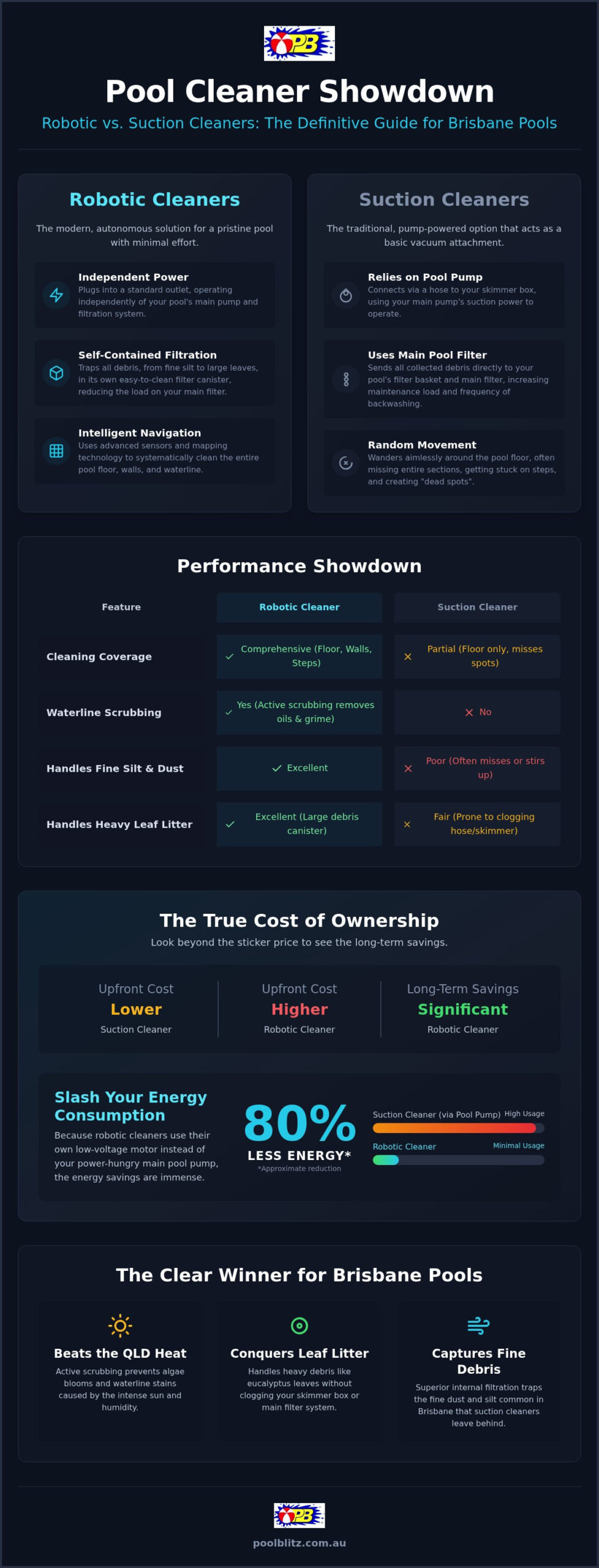
Suction cleaners are essentially a vacuum head attached to a long hose. They connect directly to your skimmer box, using the power of your main pool pump to create a vacuum. As the water is pulled through the hose, it carries debris into the pool’s filter. Older models often use a diaphragm or ‘hammer’ mechanism to jerk the unit across the floor. This method is simple, but it places a constant load on your filtration system and requires the skimmer box to be clear of debris to maintain any level of effective suction.
The Mechanics of a Robotic Pool Cleaner
Robotic cleaners represent the modern standard for autonomous care. These units are independent and plug into a standard power outlet, housing their own internal motors for both movement and high-speed scrubbing. This allows them to lift stubborn algae and fine silt that suction units often miss. Because they have their own internal filtration canisters, they don’t send dirt back to your main filter. This autonomy is a significant advantage for homeowners who want a comprehensive pool service experience with minimal daily intervention.
Modern robots also utilize advanced sensors and clever mapping technology to navigate. They don’t just wander aimlessly; they learn the shape of your pool, ensuring every corner, step, and waterline is scrubbed. This level of precision ensures that fine dust and organic matter are removed before they can affect your water chemistry, providing a layer of protection that traditional suction units simply cannot match.
Performance Showdown: Cleaning Coverage and Efficiency
Brisbane backyards are stunning, but they present a unique set of challenges for any automated system. Between the fine dust of a dry winter and the heavy eucalyptus leaves dropped during a summer storm, the performance gap in a robotic pool cleaner vs suction cleaner becomes immediately apparent. Suction units often struggle with ‘dead spots’, frequently getting stuck on steps or circling aimlessly in corners while leaving the rest of the pool untouched. This isn’t just a minor annoyance; it leaves organic matter to rot on the floor, which quickly compromises your water balance and invites algae to grow in stagnant areas. As we look at the 2026 climate patterns, the increased humidity in South East Queensland means that even a few days of missed cleaning can lead to a significant bloom.
Wall Climbing and Waterline Scrubbing
One of the most significant advantages of modern robotics is the ability to maintain the waterline. While suction cleaners might occasionally bump into a wall, they rarely have the grip or power to scrub the vertical surface effectively. A robotic unit uses high-speed active brushes to remove the oily residue from sunscreens and body oils that naturally accumulates at the water’s edge. This proactive scrubbing is vital in the Queensland heat, as it prevents stubborn stains from baking into your pool tiles or pebblecrete. Consulting expert-reviewed pool cleaners reveals that this mechanical agitation is a key differentiator in long-term water clarity and aesthetic appeal.
Debris Collection and Filtration
The way these machines handle debris directly impacts your overall pool filtration health. Suction cleaners act as a conduit, sending every leaf and grain of sand directly into your skimmer box and main filter. If a large palm frond or a handful of leaves blocks the intake, it can starve your main pump of water. This creates a vacuum lock that puts immense strain on your pump motor, potentially leading to expensive equipment repairs. Robots work on a different principle by trapping debris in their own internal canisters. This acts as a secondary filtration system, catching fine silt before it ever reaches your main filter. It’s a much more efficient way to manage the heavy debris loads typical of our local storms. If you’re unsure which model handles your specific garden type best, seeking professional advice on regular pool servicing ensures your equipment is always fit for purpose.
The Real Cost of Ownership: Upfront Price vs Long-term Savings
When assessing the robotic pool cleaner vs suction cleaner debate, many Brisbane families are initially swayed by the lower entry price of suction technology. It is a logical first thought. However, the true cost of ownership is rarely found on the price tag at the checkout. To understand the real financial impact, you must look at your monthly energy bill and the long-term health of your filtration system. A suction cleaner is essentially a tax on your main pump, while a robot is an investment in efficiency.
In the long run, the ‘budget’ choice often proves to be the most expensive. While you might save a few hundred dollars today, the cumulative costs of electricity and part replacements quickly bridge that gap. By 2026 standards, a cleaner that relies on your main pump is a legacy system that doesn’t account for modern energy rates or equipment longevity.
Energy Efficiency in the 2026 Market
The energy landscape has made efficiency a priority for every South East Queensland household. A traditional suction cleaner requires your main pool pump to run at high speed for up to eight hours to achieve a thorough clean. In contrast, a robotic cleaner operates on an independent, low-voltage DC motor. Research indicates that these units use roughly 80% less power than a standard 1.5HP main pump. By using a robot, you can dial back your main pump to a lower speed for filtration only. This shift significantly reduces the risk of needing premature pool equipment repairs Brisbane homeowners often face when overworking their systems.
Maintenance and Repair Costs
The Queensland sun is notoriously harsh on plastics and rubber. Suction hoses and internal diaphragms often become brittle and crack after just a few seasons of intense UV exposure, leading to a cycle of constant, annoying replacements. Modern robotic cleaners are built with a modular philosophy. This means that if a specific motor or cable fails, it can be replaced without discarding the entire unit. At Pool Blitz, we specialise in robotic pool cleaner repairs Brisbane, ensuring that your premium equipment remains a functional asset for years. Choosing a repairable, high-quality brand ensures that spare parts remain available, protecting your investment and providing long-term peace of mind.
Selecting the Right Match for Your Brisbane Pool Environment
The final decision in the robotic pool cleaner vs suction cleaner debate often hinges on the specific landscape of your Brisbane backyard. While technology has advanced across the board, the right choice must account for the local variables that define our region. From the steep inclines of a hillside Paddington pool to the expansive tile surfaces of a modern New Farm home, your equipment needs to be a precise match for its surroundings. Smart features like app control have become essential for many busy families, allowing you to trigger a cleaning cycle remotely when a sudden afternoon storm brings down a fresh layer of dust.
Leafy Suburbs and Debris Management
Brisbane is famous for its lush greenery, but gum trees and large palms create a significant workload for any cleaner. If you live in a particularly leafy area like Kenmore or Ashgrove, the capacity of your equipment is paramount. Authorised brands like Dolphin and Zodiac have developed specific models to handle these varying debris sizes. While a suction cleaner might struggle with large eucalyptus leaves or palm fronds, premium robotic units feature large-capacity filter canisters designed for the heavy loads of the Brisbane storm season. These canisters are easily accessible; they make it simple to clear the ‘big stuff’ before it can break down and affect your water chemistry.
Pool Surface Compatibility
The interior of your pool also dictates which technology will serve you best over the next decade. Pebblecrete remains a staple in older Brisbane homes, yet its textured surface can be prone to wear patterns if a suction cleaner follows the same path for years. When choosing a robotic pool cleaner vs suction cleaner for these surfaces, the robot often wins due to its intelligent navigation. Selecting a robot with the correct tracks or wheels ensures the unit can navigate steep inclines and deep ends without losing grip or damaging the surface. Active scrubbing brushes on robotic models are designed to be firm enough to lift algae but soft enough to preserve the integrity of your pool’s finish.
If you are ready to upgrade your backyard experience, contact our team to find the perfect fit for your specific pool environment.
Expert Maintenance and Making the Switch with Pool Blitz
Pool Blitz has been a trusted fixture in the Brisbane community since 1994. With over 30 years of hands-on experience, we’ve witnessed every technological shift and climate pattern that affects your backyard. Our team doesn’t just sell equipment; we provide a comprehensive pool service that ensures your investment is protected from the very first day. Choosing between a robotic pool cleaner vs suction cleaner is a significant step toward a more efficient home, and the transition is much smoother when you have a seasoned partner to guide the integration. We focus on the long-term stability of your equipment, ensuring you spend less time on chores and more time enjoying the water.
Why Professional Setup Matters
A common mistake many homeowners make is assuming modern robots are simply ‘throw-in-and-go’ devices. While they are designed for ease of use, a professional setup ensures the cable length is correctly calibrated to prevent tangling and the cleaning cycles are timed to match your pool’s specific debris patterns. We carefully assess how your new cleaner interacts with your existing salt chlorinator and pump speeds to create a balanced, harmonious system. This level of attention is particularly vital for north brisbane pool care, where local vegetation and soil types require a tailored approach to water balancing. Expert water balancing is the foundation of equipment longevity; it ensures your water chemistry doesn’t prematurely degrade the seals or brushes of your new machine.
Ongoing Support and Repairs
One of the most overlooked aspects of the robotic pool cleaner vs suction cleaner debate is the ‘repair vs replace’ economy. Many budget suction units are essentially disposable once a major component fails, whereas a premium robotic cleaner is a modular machine built for a decade of service. As an authorised repair centre for leading brands like Dolphin and Zodiac, we maintain a deep inventory of spare parts right here in Brisbane. You won’t be left waiting for weeks for a simple fix during the height of a Queensland summer. Our local service centre is equipped to handle everything from motor diagnostics to software updates, providing the peace of mind that comes with professional, local support.
The final verdict for 2026 is clear. The robotic upgrade offers superior efficiency, better water clarity, and a lower total cost of ownership over its lifespan. It is the smart choice for any Brisbane homeowner who values their time and their hip pocket. If you’re ready to make the switch or need an expert eye on your current system, our Brisbane service centre is ready to help you achieve total pool clarity with minimal effort.
Achieving Total Pool Clarity for the 2026 Summer
The choice between a robotic pool cleaner vs suction cleaner ultimately comes down to how you value your time and your home’s energy efficiency. While suction units offer a lower entry point, the independent power and superior scrubbing of a robotic system deliver a level of water clarity that traditional methods simply cannot match. By reducing the load on your main filtration and slashing electricity consumption, you are investing in the long-term health of your entire pool environment.
At Pool Blitz, we have been Brisbane-owned and operated since 1994. We are more than just a retailer; we are a specialist robotic repair centre for all major brands, staffed by qualified technicians for all pool equipment repairs. This local expertise ensures that your equipment remains a reliable asset rather than a disposable expense. We take pride in being a dependable partner for thousands of local families, providing the peace of mind that comes with professional care.
Upgrade your pool today with Brisbane’s robotic cleaner experts at Pool Blitz and reclaim your weekends. You deserve a backyard that is a source of relaxation rather than a list of chores.
Frequently Asked Questions
Do robotic pool cleaners really use less electricity than suction cleaners?
Yes, robotic pool cleaners consume significantly less electricity because they operate on an independent, low-voltage motor rather than relying on your pool pump. While a suction cleaner requires your main pump to run at high speed for several hours, a robot uses about the same energy as a standard LED light bulb. In the context of South East Queensland’s energy rates, this efficiency can save you hundreds of dollars over a single summer season.
Can I leave my robotic pool cleaner in the pool all the time?
It is not recommended to leave your robotic cleaner in the water permanently. While these units are built for durability, constant exposure to high chlorine levels and the intense Brisbane UV rays can prematurely degrade the plastic housing and rubber seals. Removing the unit after its cleaning cycle and rinsing it with fresh water ensures the equipment lasts much longer. This simple habit protects your investment and maintains scrubbing efficiency over many years.
Will a suction cleaner work with my variable speed pump?
A suction cleaner can work with a variable speed pump, but it often requires the pump to run at a higher RPM than is necessary for basic filtration. If the speed is too low, the cleaner may stop moving or fail to lift debris effectively. This often negates the energy-saving benefits of owning a variable speed pump. Robotic units avoid this issue entirely because they don’t rely on the pool’s circulation system to function.
How often do robotic pool cleaners need to be repaired?
Most robotic pool cleaners require minor maintenance or part replacements every three to five years. Common wear items include tracks, brushes, and filter canisters, which are easily replaced due to the modular design of modern units. Because Pool Blitz is a specialist robotic repair centre, we can often extend the life of your machine well beyond a decade. Regular professional checks help identify small issues before they become major equipment failures.
Are robotic cleaners better for pools with heavy leaf litter from gum trees?
Robotic cleaners are significantly better at handling the heavy leaf litter common in Brisbane’s leafy suburbs. Unlike suction units that can clog your skimmer box and starve the pump of water, robots trap leaves in large internal canisters. This is especially useful after summer storms when gum trees and palms drop heavy debris. It prevents the ‘vacuum lock’ that often leads to expensive pool equipment repairs for suction-based systems.
Do robotic cleaners clean the steps and the waterline?
Most premium robotic pool cleaners are specifically designed to scrub the steps and the waterline. They use sophisticated sensors to map the pool’s shape and high-grip tracks to climb vertical surfaces. This active brushing removes the oily ‘scum line’ that accumulates at the water’s edge, a task that suction cleaners simply cannot perform. It provides a more comprehensive clean that keeps your pool looking pristine with almost zero manual effort.
Is it worth repairing an old robotic pool cleaner or should I buy a new one?
Deciding between a repair and a replacement depends on the age of the unit and the specific fault. If the chassis is in good condition, replacing a motor or cable is usually more cost-effective than buying a new machine. Since we have been a Brisbane specialist for 30 years, we can provide an honest assessment of your unit’s serviceable life. We often find that a professional repair offers far better long-term value than a new budget-tier purchase.
How does a robotic cleaner affect my pool’s water chemistry?
A robotic cleaner positively affects your water chemistry by improving circulation and reducing the need for frequent backwashing. Because the robot filters debris into its own canister, your main sand or cartridge filter stays cleaner for longer. This keeps your water balancing more stable and reduces the amount of chemicals required to maintain a healthy pool. It is a more sustainable way to manage a backyard pool in the harsh Queensland climate.
No responses yet