
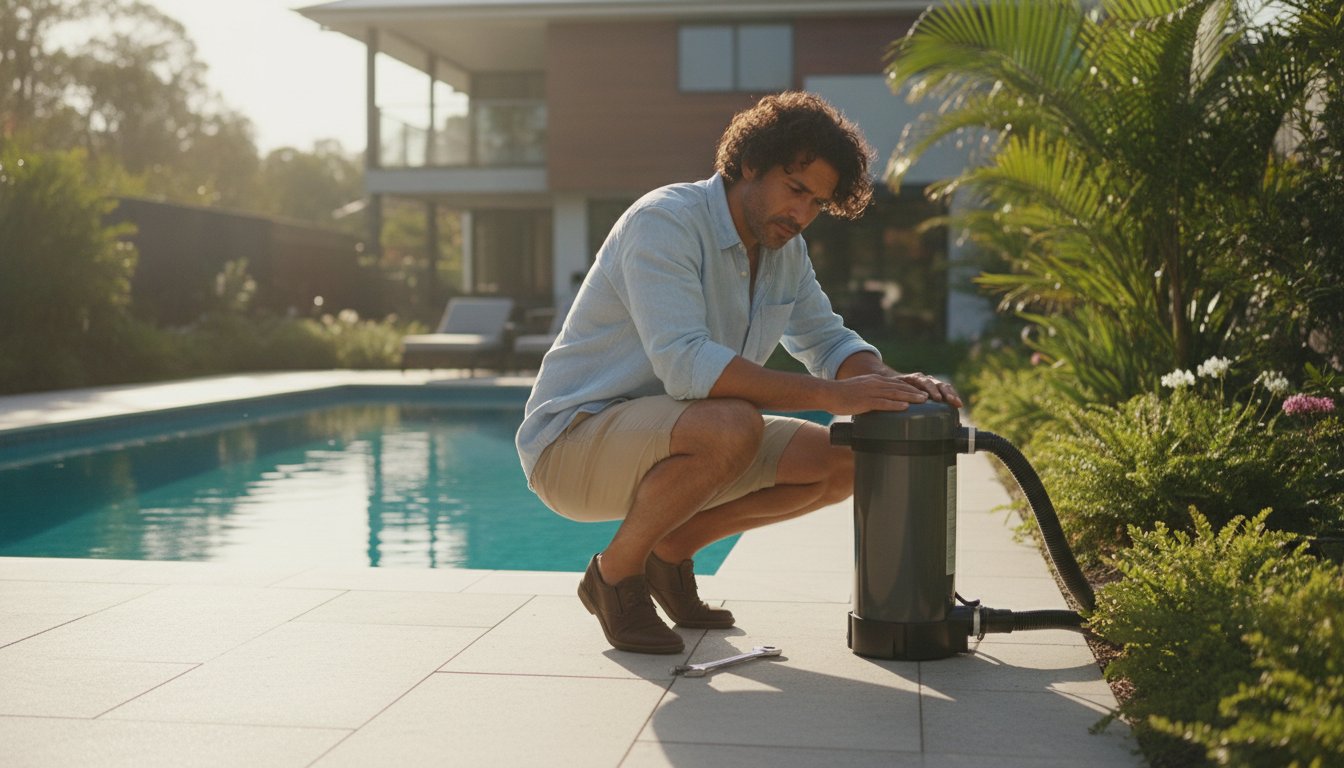
What if that intrusive grinding sound from your backyard isn’t the death knell for your equipment, but a simple fix crying out for attention? For many homeowners, a screeching or rattling motor triggers an immediate fear of an A$1,500 replacement bill and the looming threat of a noise complaint from the neighbours. Under the Brisbane City Council’s Health, Safety and Amenity Local Law 2021, keeping your equipment quiet isn’t just about peace of mind; it’s a regulatory requirement to ensure no clearly audible noise reaches your neighbour’s home during the night. Performing a professional brisbane pool pump noise diagnosis is the first step in protecting your investment and your reputation in the street.
We understand that technical terms like cavitation or mechanical seals can feel overwhelming when you just want a quiet Saturday by the water. You shouldn’t have to guess whether a rattle requires a minor adjustment or a seasoned technician’s touch. This guide will help you identify exactly what those strange sounds mean and how to resolve them before a small vibration turns into a major failure. We’ll walk you through the most common pump SOS signals, helping you decide if you can tackle the repair yourself or if it’s time to call in the experts to restore the serenity of your Brisbane backyard.
Key Takeaways
- Identify the specific meaning behind screeching or grinding sounds to determine if your equipment requires a simple clean or a technical repair.
- Master a professional brisbane pool pump noise diagnosis to catch minor bearing issues before they escalate into an expensive total motor replacement.
- Learn how South East Queensland’s unique climate and tropical storms contribute to premature wear and tear on your filtration circuit.
- Differentiate between plumbing-related cavitation and mechanical hardware failure to save time when explaining the issue to a specialist.
- Follow a structured DIY safety checklist to clear simple blockages while knowing exactly when to step back and call for seasoned assistance.
Is Your Pool Pump Crying for Help? Understanding the Stakes
Your pool pump is the heart of your filtration system, and like any vital organ, it communicates its health through sound. When a pump begins to hum, screech, or rattle, it’s issuing a “Mechanical SOS” that requires immediate attention. A proactive brisbane pool pump noise diagnosis can reveal whether your equipment is suffering from a minor blockage or a more serious mechanical failure. Most residential systems rely on a centrifugal pump, which uses a high-speed impeller to move water through the filter and chlorinator. When this delicate mechanical balance is disrupted, the resulting noise is often the first sign that your energy efficiency is plummeting and your water clarity is at risk.
Ignoring these sounds is arguably the most expensive mistake a local pool owner can make. A noisy motor is usually working much harder than necessary, drawing more power while providing less effective circulation. This lack of flow allows algae to take hold, turning a crystal-clear pool into a green headache just as the Queensland heat sets in. By the time the pump actually stops spinning, the cost of restoring the water balance often equals the cost of the mechanical repair itself.
The Cost of Delay: Repair vs. Replacement
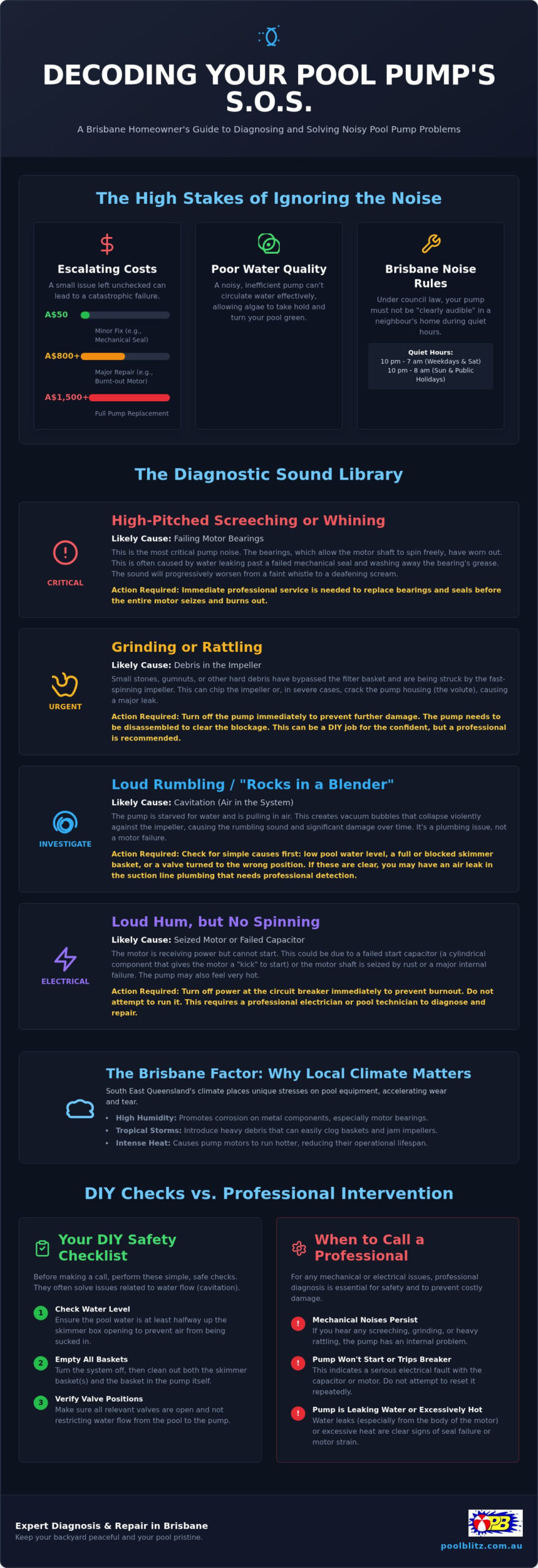
Precision care today prevents a total system failure tomorrow. A simple mechanical seal replacement, which might cost as little as A$50 for the part, acts as a vital barrier to protect the motor from water damage. If this seal fails and is left unaddressed, moisture can migrate into the motor bearings, leading to a burnt-out unit that could cost upwards of A$800 to replace. You might notice your pump sounds “fine” but feels excessively hot to the touch, or perhaps it’s taking longer than usual to prime. These are subtle cues that the equipment is under significant stress. Catching these issues early provides the peace of mind that your pool will remain functional throughout a sweltering Brisbane summer.
Brisbane Noise Regulations You Need to Know
Maintaining your equipment isn’t just a matter of personal preference; it’s a legal obligation under the Brisbane City Council’s Health, Safety and Amenity Local Law 2021. In residential suburbs, pool pumps must not create “clearly audible” noise within a neighbour’s home between 10 pm and 7 am on weekdays and Saturdays, or before 8 am on Sundays. During the day, while some sound is expected, an unmaintained, screeching pump can quickly lead to formal complaints and council intervention. Professional servicing ensures your equipment operates within these legal parameters, fostering neighbourly reliability and keeping your backyard a peaceful retreat. A thorough brisbane pool pump noise diagnosis identifies the root cause of the volume, allowing you to rectify the issue before it becomes a community problem.
The Diagnostic Sound Library: Identifying Your Pump’s Noise
Every mechanical sound tells a story of what’s happening beneath the casing. Performing your own brisbane pool pump noise diagnosis starts with simply standing by the equipment pad and listening for irregularities in the rhythm. While a healthy pump produces a consistent, low-frequency hum, a failing unit will emit distinct signals that range from subtle whistles to alarming clatters. Identifying these acoustic cues early allows you to address the root cause before the damage becomes irreversible.
A sharp grinding or rattling sound often indicates that external debris has bypassed the basket and reached the impeller. This internal chaos can quickly escalate if a loose impeller begins to strike the pump housing, leading to a cracked casing or a snapped shaft. Conversely, a deep, heavy hum without the sound of rushing water suggests an electrical struggle. This often happens when the motor is “frozen” by corrosion or the capacitor has lost the strength to start the rotation. If you hear what sounds like “rocks in a blender,” you’re likely dealing with cavitation, a physical phenomenon where vacuum bubbles implode against the impeller with destructive force.
Screeching and Whining: The Bearing Breakdown
Brisbane’s distinctive combination of high humidity and salt-chlorinated water creates a challenging environment for internal motor components. When the protective lubrication inside the motor bearings begins to dry out, a faint whistle will eventually graduate into a deafening, high-pitched scream. Screeching usually indicates water has bypassed the mechanical seal and entered the motor’s front bearing. If you notice this progression, arranging professional pump repairs early can save the motor from a terminal seizure.
Popping and Gurgling: The Air Leak Warning
Air entering the filtration circuit creates “mini-explosions” known as cavitation, which manifest as irregular popping or gurgling sounds. These noises are a clear warning that the pump is struggling to maintain a full prime, often caused by a faulty O-ring or a hairline crack in the pump basket lid. During Brisbane’s dry winter months, water levels frequently drop below the skimmer box, causing the system to draw in air and creating significant hydraulic stress. Checking the seal and ensuring the water level remains at the halfway mark on the skimmer is a simple, effective way to restore quiet operation. A thorough brisbane pool pump noise diagnosis will often reveal that these disruptive sounds are actually simple plumbing issues rather than motor failures.
Cavitation vs. Mechanical Failure: A Comparison
Distinguishing between hydraulic and mechanical issues is the core of a successful brisbane pool pump noise diagnosis. While both can sound equally alarming, their origins and solutions sit at opposite ends of the pool equipment spectrum. Cavitation is essentially a plumbing problem where the pump’s environment is the cause, whereas grinding or screeching points to internal hardware failure. Understanding the “vibration signature” of your equipment helps you communicate effectively with a technician and ensures you aren’t paying for a motor replacement when a simple pipe blockage is the culprit. Our thirty years of experience in the Brisbane region has shown that many homeowners mistake hydraulic stress for a dead motor, leading to unnecessary stress and expense.
What is Cavitation?
Cavitation occurs when a pump is “starved” of water, creating a low-pressure vacuum that causes water to vapourise into tiny bubbles. These bubbles then implode with enough force to pit the metal of the impeller, creating a noise famously described as “sucking gravel” or “rocks in a blender.” Common culprits in Brisbane backyards include clogged suction lines, an over-full skimmer basket, or undersized plumbing that cannot handle the pump’s flow rate. It is a hydraulic imbalance that often shakes the entire unit, causing visible vibration in the PVC pipes connected to the filtration circuit. If you notice the noise stops immediately when you turn off the suction from the skimmer or cleaner, you’re likely dealing with a plumbing restriction rather than a mechanical breakdown.
The Anatomy of Mechanical Failure
Mechanical failure is a hardware issue that typically begins when a rubber mechanical seal fails, allowing chlorinated water to seep into the dry motor housing. This moisture corrodes the high-speed bearings, leading to the metal-on-metal screeching sounds that signal the end of a motor’s life cycle. Over time, heat-warped components create internal friction that can eventually cause a “seized” impeller, where the motor hums but cannot turn. Sometimes the issue is as simple as a burnt-out capacitor, which lacks the electrical “kick” to start the rotation despite the motor being physically free to spin. For these complex hardware issues, seeking expert pool equipment repairs brisbane is the safest way to ensure your motor is restored to its factory specifications without risking further damage. A seasoned technician can often tell the difference just by the heat radiating from the motor casing, providing a clear path to a long-term fix.
The Brisbane Factor: Why Local Climate Matters
Brisbane’s subtropical climate isn’t just tough on our gardens; it’s brutal on pool machinery. While a pump in a milder climate might enjoy a predictable lifespan, South East Queensland equipment must contend with extreme temperature swings and high humidity. When performing a brisbane pool pump noise diagnosis, we often find that the environment is as much a factor as the age of the unit. The constant cycle of heating and cooling puts immense pressure on seals and gaskets, while the relentless sun works to weaken the very pipes that keep your water moving.
UV degradation is a particularly subtle enemy in local backyards. Over years of exposure, PVC pipes can become brittle and develop hairline fractures that allow air to enter the suction line. These leaks are often invisible to the eye but manifest as a frustrating gurgle or a loss of prime. If your pump is out of action for even a few days during a January heatwave, the lack of circulation can trigger a rapid “Green Pool” event. Managing this recovery is far more expensive than a simple maintenance check, making it vital to act the moment you notice a change in your equipment’s operating volume.
Heat and Humidity: The Silent Bearing Killers
On days when the temperature climbs above 35°C, the internal components of your motor can reach even higher extremes. Metal components expand and contract with the heat, which can eventually lead to bearing misalignment and the dreaded high-pitched whine. Proper ventilation for your pump housing is non-negotiable in our region. If your equipment is tucked away in a poorly ventilated plastic shed, the ambient heat can bake the internal lubricants. For those looking to extend the life of their setup, a comprehensive pool filtration system repair brisbane guide can help you identify if your current layout is suffocating your motor.
Post-Storm Diagnostics
Tropical storms are a staple of Brisbane life, but they frequently wash excessive leaf litter and grit into the filtration circuit. This debris can easily bypass a damaged skimmer basket and lodge itself in the impeller, causing an immediate rattling sound. Following a heavy downpour, it is wise to check your baskets and listen for any new vibrations that might indicate an internal obstruction. Additionally, the electrical heart of your motor is vulnerable to the power surges that often accompany our summer storms. Protecting your equipment with a surge protector and keeping the area clear of debris are simple steps that ensure your brisbane pool pump noise diagnosis doesn’t end in a total replacement. If the sounds persist after a storm, you should book a professional pump inspection to prevent a minor blockage from burning out the motor.
DIY Fixes vs. Professional Intervention: When to Call Pool Blitz
Once you’ve completed your initial brisbane pool pump noise diagnosis, the next step is deciding whether the remedy lies in your own hands or requires a specialist’s intervention. Many common disruptions are caused by simple environmental factors that can be resolved in minutes. However, knowing where your expertise ends and professional risk begins is the hallmark of a responsible homeowner. While a minor adjustment can restore peace to your backyard, attempting to dismantle complex machinery without the proper tools often leads to more expensive damage.
Safety is the primary consideration when dealing with motorised equipment. High-voltage capacitors can hold a lethal charge even after the power is disconnected, making DIY motor teardowns a dangerous prospect for the uninitiated. Our thirty years of experience in the Brisbane region has taught us that a “fix once, fix right” approach is always more cost-effective than a trial-and-error repair. By following a structured diagnostic path, you can identify the simple fixes yourself while ensuring the heavy lifting is left to those with the right technical precision.
The Homeowner Checklist
Before calling for assistance, perform this five-minute checklist to rule out basic obstructions. First, clear the skimmer and pump baskets of all debris. A handful of jacaranda blossoms or heavy leaf litter from a recent storm can easily choke the flow and cause a frantic rattling sound. Second, inspect the pump lid O-ring for cracks or dryness. Always apply a silicone-based lubricant to maintain the rubber’s integrity; never use petroleum-based products like Vaseline, as they will cause the O-ring to swell and perish. Finally, verify your water level. If the water is below the halfway mark on the skimmer box, the system will draw in air, leading to a loss of prime and the distinctive popping sounds of cavitation.
When Professional Expertise is Required
When the noise originates from deep within the motor housing, professional expertise is no longer optional. Replacing internal bearings is a precision task that requires specialised hydraulic presses and a clean environment to prevent contamination. Pool Blitz has operated as a seasoned authority in Brisbane since 1994, and we understand the intricate tolerances required to restore a motor to factory specifications. A professional repair doesn’t just stop the noise; it extends the life of your equipment by years by ensuring every seal and bearing is perfectly aligned. If your brisbane pool pump noise diagnosis points to a mechanical failure or an electrical hum, seeking expert intervention is the most reliable way to protect your investment and maintain the long-term stability of your pool’s filtration system.
Restoring the Serenity of Your Brisbane Backyard
Your pool should be a place of relaxation, not a source of mechanical stress or neighbourly friction. By paying close attention to the specific rhythm and pitch of your equipment, you can distinguish between a simple suction leak and a more serious motor failure. Performing a timely brisbane pool pump noise diagnosis ensures you address the root cause of the volume before it impacts your neighbours or your wallet. Whether it is a simple seal replacement or a more technical bearing repair, acting on these early warning signs is the most effective way to protect your investment.
Since 1994, Pool Blitz has acted as a trusted partner for thousands of local families, providing the precision care that only comes from over 30 years of Brisbane expertise. Our specialised equipment repair workshop is designed to handle complex mechanical issues that go far beyond basic maintenance, ensuring your pump operates with factory-standard quietness. Don’t let a minor rattle turn into a costly replacement. You can Book a Professional Pump Diagnosis with Pool Blitz today and enjoy the peace of mind that comes from having your pool handled by the seasoned experts. We look forward to helping you restore the quiet comfort of your outdoor living space.
Frequently Asked Questions
Why is my pool pump making a high-pitched screeching noise?
High-pitched screeching is almost always a sign of bearing failure within the motor. This occurs when the internal lubrication has dried out, often because the mechanical seal has failed and allowed chlorinated water to seep into the motor housing. If you hear this sound, it’s vital to organise a professional brisbane pool pump noise diagnosis immediately. Catching it early allows for a bearing replacement rather than an expensive motor burnout.
Can I run my pool pump if it is making a loud rattling sound?
Running a rattling pump is not recommended because the noise usually indicates a loose impeller or debris trapped inside the housing. If the impeller strikes the pump casing, it can cause structural cracks or snap the motor shaft. Continuing to operate the unit under these conditions can turn a simple cleaning task into a complete equipment replacement. It’s safer to turn the power off and inspect the baskets for obstructions first.
How do I stop my pool pump from vibrating against the concrete base?
Stopping vibration usually involves checking the mounting bolts and installing heavy-duty rubber anti-vibration pads between the pump and the concrete. Sometimes the noise is amplified by PVC pipes that aren’t properly secured to the wall or floor. Ensuring the equipment is perfectly level and the base is stable will significantly reduce the resonance. If the vibration persists, the internal motor balance might be compromised, which requires a more technical assessment.
Is it cheaper to repair or replace a noisy pool pump in Brisbane?
Repairing is often significantly cheaper if the pump is less than five years old and the motor housing is in good condition. A professional repair, such as replacing bearings and seals, typically costs a fraction of a new high-end unit. However, if the motor is aged or the internal components are severely corroded, an energy-efficient variable-speed pump might provide better long-term value through reduced electricity bills and much quieter operation.
What are the Brisbane City Council rules regarding pool pump noise?
Under the Brisbane City Council Health, Safety and Amenity Local Law 2021, pool pumps must not create clearly audible noise inside a neighbour’s home during nighttime hours. Generally, this means no audible noise from 10 pm to 7 am on weekdays and Saturdays, or before 8 am on Sundays. Maintaining your equipment ensures you stay compliant with these local regulations and helps maintain positive relationships with those living in your immediate suburb.
Why does my pump sound like it has rocks inside it?
That “rocks in a blender” sound is known as cavitation, which happens when the pump is starved of water and creates imploding vacuum bubbles. This is a hydraulic issue rather than a mechanical one, often caused by a clogged skimmer, a dirty filter, or a suction leak in the plumbing. It’s a common finding during a brisbane pool pump noise diagnosis and can usually be resolved by clearing blockages and ensuring the water level is correct.
How often should I have my pool pump professionally serviced?
We recommend a professional service every twelve months to ensure all seals and bearings remain in peak condition. Regular maintenance allows a technician to check the mechanical seal for leaks before moisture can reach the motor bearings. In our subtropical climate, the heat and humidity can accelerate the wear on rubber components. An annual check-up acts as a preventative measure, extending the operational life of your filtration system by several years.
Can a dirty pool filter cause my pump to be noisy?
Yes, a dirty or calcified pool filter can definitely cause your pump to become noisy. When the filter is blocked, it creates excessive back-pressure that forces the pump to work much harder to circulate the water. This hydraulic stress often results in a strained, loud hum or increased vibration throughout the system. Cleaning your filter cartridges or backwashing your sand filter is a simple first step to see if the operating volume returns to normal.
No responses yet