
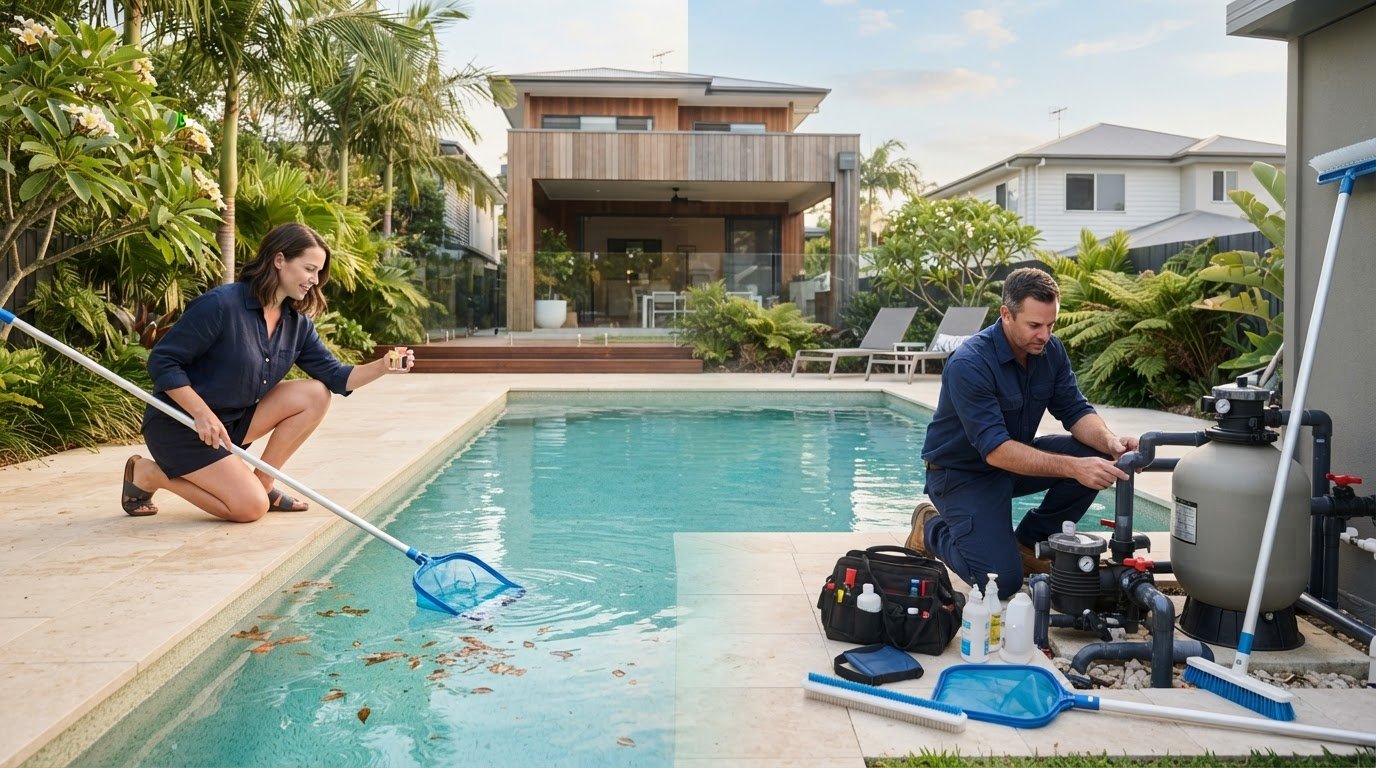
DIY pool care can suit owners with the time and confidence to keep up with routine tasks. Professional support can help when water balancing, equipment checks or regular cleaning become difficult to manage. For Brisbane pool owners asking whether professional pool cleaning is worth it, the answer depends on the time you can commit and how much of the work you want to handle yourself.
It’s understandable to wonder whether you need a service when you can skim leaves, brush surfaces and test the water yourself. But cleaning is only part of pool care: water quality and the condition of pumps and filters also need attention.
This guide compares professional pool cleaning and DIY care, including routines, water quality, flexibility and upkeep between visits. You’ll see where professional support can help, what you’ll still need to manage, and how to choose an approach that suits your pool and schedule.
Key Takeaways
- Weigh the time, equipment and chemical management DIY care requires against the convenience of professional support.
- Choose a maintenance routine that suits your pool’s debris levels, equipment and how much care you want to handle yourself.
- Make water testing and balanced chemistry part of your routine, not just surface cleaning.
- Keep up with simple tasks between service visits, such as clearing visible debris and observing how your pool equipment is running.
- Use the decision guide to identify whether a fully hands-on routine, regular servicing or occasional help best fits your pool.
Why should I hire a professional pool cleaner?
Professional care can be worthwhile when water testing, equipment checks or regular cleaning are hard to manage yourself. When choosing a pool cleaner in Brisbane, look for practical experience and ask about public liability insurance before work begins.
DIY Maintenance Costs
DIY pool maintenance gives you control over the timing, but you provide the labour, equipment and treatment products. Ongoing costs can include pool-care products, while brushes, testing equipment and a vacuum may add to the initial outlay.
The trade-off is hands-on responsibility: you need to test and balance the water, clean surfaces and keep equipment in working order. If you already have suitable tools and can stick to a routine, DIY may suit you. Starting without supplies means more setup.
Professional Service Costs
Professional service pricing depends on the pool, its condition, access, visit frequency and tasks included. The price is provided after a quote request. Unlike a professional service, a DIY supplies estimate does not account for your time.
Pool-cleaning prices and rules vary across Australia. Cleaning costs depend on the job’s scope and pool conditions, while legal requirements depend on the state and activity involved. This comparison does not set a state-specific legal requirement.
Pool Maintenance Cost Factors
Pool size, leaf load, water condition, equipment needs and cleaning frequency all affect the work involved. A pool beneath overhanging trees, for example, may need more frequent debris removal than one with fewer leaves. Clear service details help you compare a professional visit with the time and supplies needed for your own routine.
Professional cleaning can help avoid unnecessary chemical use through careful testing and water balancing, but it does not guarantee lower chemical or energy costs. Pump condition, filtration needs, pool use and treatment choices also affect ongoing consumption.
| Option | Direct cost | Time and supplies | Maintenance skills |
|---|---|---|---|
| DIY | You organise the work and equipment | You manage testing, cleaning and routine checks | |
| Professional cleaning | Depends on the pool and service scope | Cleaning tasks are handled during visits | Pool-care skills are applied to the agreed work |
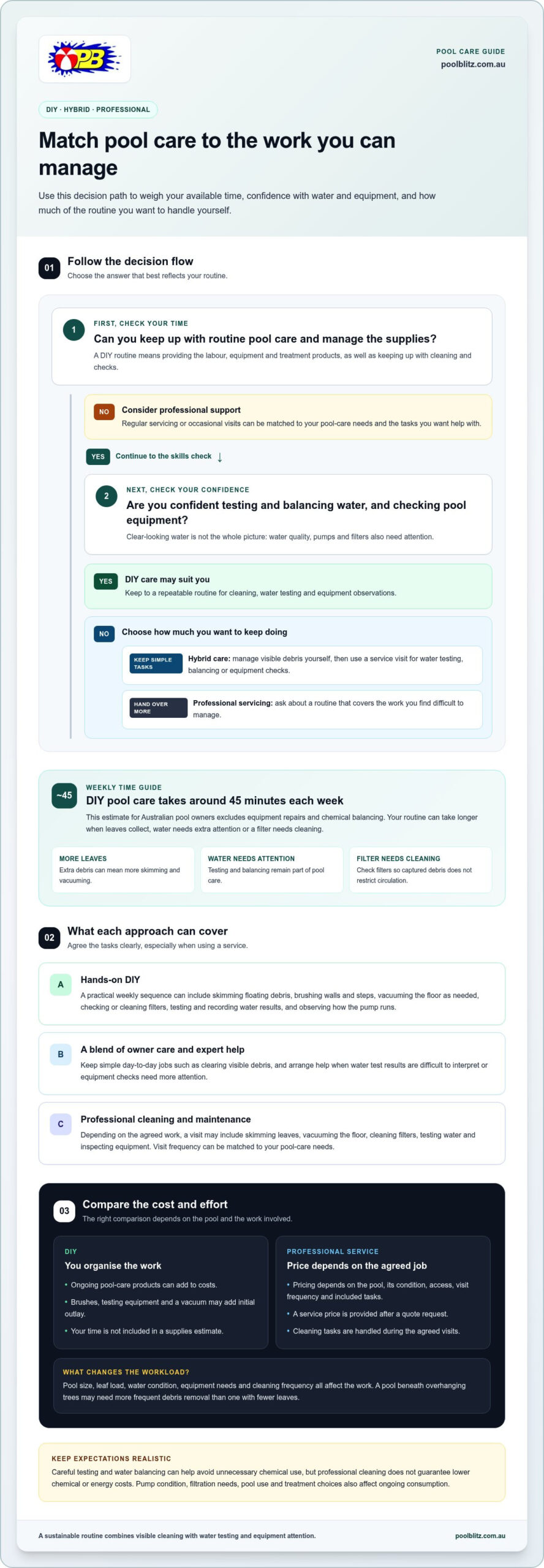
Choose DIY if you can keep up with the routine and supplies. Consider professional care if you value the time it saves, consistent support or help with water balancing.
Flexible pool cleaning and maintenance services
Pool care can follow a regular schedule, involve occasional visits or combine professional support with owner-led tasks. The right arrangement depends on your available time, the pool’s condition and which maintenance jobs you can confidently handle.
Professional pool cleaning may include skimming leaves, vacuuming the floor, cleaning filters, testing water and inspecting equipment. A pump or filter check, for example, can identify a maintenance issue that surface cleaning alone will not address. Visit frequency can be matched to your pool-care needs.
Flexibility also means booking help for a particular task rather than handing over every part of pool care. You might manage skimming and brushing, then arrange expert water balancing when test results become difficult to interpret. This keeps day-to-day care in your hands while bringing in specialist support for a more technical task.
Pool owners should maintain clean, properly treated water, but a general care routine is not the same as a single legal schedule for all of Australia. Legal obligations can depend on jurisdiction and pool context, so distinguish practical water care from a specific legal requirement.
DIY pool maintenance takes around 45 minutes each week for Australian pool owners, excluding equipment repairs and chemical balancing. The actual routine can take longer when leaves collect, the water needs extra attention or a filter requires cleaning. For example, a week with heavy tree debris adds skimming and vacuuming to the usual checks.
Some tasks are straightforward, while others call for careful testing and consistent technique. Skimming debris is a simple regular task; diagnosing a filter problem or correcting an imbalance requires more knowledge. If you manage the routine yourself, set a weekly schedule for skimming, vacuuming and brushing, and keep water tests and equipment observations organised.
Poor maintenance can contribute to bacteria, algae growth, skin irritation and equipment problems. Slippery surfaces, broken tiles and malfunctioning equipment also need prompt attention because they can create hazards around the pool. Repair pricing depends on the fault, parts and access, and is provided after a quote request.
Hiring professional support can suit owners who struggle to maintain a schedule, need help with water quality or want equipment included in the routine. A combination can work just as well: handle visible debris yourself, then use a service visit for testing and equipment checks. Explore pool-care support options if you want help shaping a routine around your pool.
Pool cleaning routines and water testing
A pool’s appearance is only one part of its condition. A reliable routine combines visible cleaning with water testing, so you assess water quality by more than clear water or a clean-looking surface.
Build a repeatable sequence around the equipment and debris your pool collects. A practical weekly routine can include these steps:
- Skim leaves and other floating debris before they sink.
- Brush the walls and steps, then vacuum the pool floor as needed.
- Clean or check filters so captured debris doesn’t restrict circulation.
- Test the water and record results before adjusting treatment.
- Observe the pump and other equipment for changes in operation.
Following the same order helps you spot changes. If the water looks cloudy after a busy weekend of swimming, for example, testing it and checking circulation gives you more useful information than adding chemicals by guesswork.
A pool owner reports spending about 15 minutes each week checking pool chemistry with a Taylor kit. The time needed depends on the test method and whether results call for further attention. Keep a simple record of readings and treatments, then compare each result with the product guidance for your pool’s treatment system.
Test and balance water before considering it safe to use. Monitoring chlorine and pH helps maintain sanitary swimming water, while inconsistent testing can leave an imbalance unnoticed. Incorrect chemistry can contribute to bacteria, algae growth, skin irritation and other illnesses, so don’t rely on appearance alone to assess water quality.
Clear water matters, but clarity does not show whether the chemistry is balanced. A pool can look inviting and still need testing; visible cloudiness can also signal that filtration, debris or water balance needs attention. Check the filters and test the water rather than treating colour as a complete diagnosis.
After heavy use, storms or a burst of leaves, check the pool and test the water if its condition changes. These events can add debris or affect the water. If a result falls outside the expected range, follow the appropriate treatment instructions and retest instead of making several unmeasured adjustments.
For consistent results, use the same testing method, follow its instructions and record the date, reading and action taken. These notes help show whether a change is isolated or recurring, such as readings that shift after swimming or debris-heavy weather. If results are difficult to interpret, expert water balancing can help you take a measured approach to pool care.
Pool water chemistry and filtration
Clear water depends on both chemical balance and functioning equipment. Consider how treatment, circulation and filtration work together instead of trying to resolve cloudy water with chemicals alone.
Start with a water test, then use the result to guide any adjustment. Managing chlorine and pH helps prevent bacteria and algae growth, while suitable treatment chemicals support water quality. Adding chemicals without testing first can leave the water unbalanced, so follow product directions and retest after treatment.
Balance matters beyond appearance. Maintaining appropriate pH levels and using suitable treatment chemicals can help protect pool surfaces and fixtures from damage. An imbalance left unnoticed, for example, can affect both the water and the materials it contacts. A consistent test-and-adjust routine gives you a clearer basis for deciding what the pool needs.
Filtration removes suspended debris from circulating water, but the pump must move water through the system. Run the pool pump daily to support circulation and filtration. If leaves or other debris are collecting, remove them and check the filter, as build-up can affect how efficiently the system operates.
- Test pool water before adding treatment chemicals.
- Use the test result and product instructions to guide adjustments.
- Run the pump daily to support circulation through the filter.
- Clear visible debris and check the filter when water clarity changes.
These steps address different causes. A chemical adjustment won’t remove leaves, and clearing debris won’t correct water balance. If the water looks dull despite a clean surface, consider both filtration and chemistry instead of repeatedly adding the same treatment.
Pool chemicals require careful handling and measured use. Keep products in their original containers, follow label instructions and avoid mixing treatments unless the directions say to do so. Choosing chemicals to suit the pool’s treatment system and test results reduces guesswork and helps keep routine care organised.
If you find water balancing difficult, professional help can assess test results and treatment needs. This can be especially useful when repeated adjustments do not improve clarity or the pool’s chemistry is hard to interpret. The aim is a measured routine, not a series of untested chemical additions.
Filtration and water chemistry also affect each other. Poor circulation can prevent treatment from moving evenly through the pool, while debris in the filter can reduce clarity. If a problem persists, check the pump, filter and water test together, then address the cause rather than just the visible symptom.
Pool care between professional visits
A professional visit does not replace the small checks that help keep your pool in order between appointments. A simple routine lets you spot changes early, clear everyday debris and note water-balancing or equipment concerns.
Begin with a visual check of the water, pool surface and surrounding area. Remove floating leaves, look for debris gathering in corners, and note changes in clarity. A pool owner can also check skimmers daily, a task one owner reports takes about 2 minutes a day. That brief look helps identify a blocked basket before debris builds up.
Run the pump daily to support circulation and filtration, and watch for changes in its operation. If the water becomes cloudy or debris remains after circulation, check the filter and remove visible material. These steps won’t resolve every underlying issue, but they can help distinguish routine cleaning from a possible equipment or water-balance problem.
Use water-test results to guide chemical adjustments rather than adding products by guesswork. Record the reading, treatment and date, then follow product instructions. If balancing becomes difficult, expert water balancing can help assess the water and treatment needs. Incorrect chemistry can contribute to bacteria and algae growth, so test the water even when it looks clear.
Small, regular jobs can make keeping your pool manageable. For a large pool, divide cleaning into 20-30 minutes of work per day rather than leaving every task until one long session. Choose the work that suits the day: skim leaves, brush a surface, clear a basket or check the water. This approach breaks up the workload without adding an unsupported schedule for every pool.
Some upkeep has its own rhythm. One pool owner reports spending 5-10 minutes per month adding salt or acid, while cleaning a pool robot takes about 5 minutes each week. Use these as examples of tasks that can sit alongside your main cleaning routine, not as a substitute for checking your own pool’s equipment and test results.
After storms, heavy leaf fall or a busy swimming session, check the skimmer and water. Remove collected debris and note any change in clarity before adjusting chemicals. This helps you avoid treating a visible problem without first checking its likely cause.
Keeping these notes also makes the next professional visit more useful: you can describe when the water changed, which tasks you completed and any equipment behaviour you observed. For help with persistent balancing questions, arrange expert water balancing as part of your pool-care plan.
Pool Blitz: Regular Pool Servicing
Pool Blitz helps Brisbane pool owners maintain a consistent routine with Regular Pool Servicing, or provides Casual Pool Servicing when occasional support suits them better. This can help when cleaning, water care and equipment checks have become difficult to keep up with, or when you want support getting back to a manageable routine.
For specific upkeep needs, Pool Blitz also offers Robotic Pool Cleaners and Repairs, Pool Chemicals and Pool Equipment Repairs. These services and products support different parts of pool care, from robotic cleaning equipment to treatment supplies and repairs. Choose the support that fits the tasks you want to keep handling yourself.
To discuss pool care that suits your routine in Brisbane, contact Pool Blitz or visit poolblitz.com.au.
Choose a pool-care routine you can sustain
Start by deciding which parts of pool care you want to manage and where support would make your routine easier to maintain. Consider whether you’re comfortable checking the water and equipment, or would prefer help maintaining consistency with those tasks. Your choice can change with your schedule, pool use or confidence with maintenance.
If you’re still weighing whether professional pool cleaning is worth it, focus on practical fit: the routine you can reliably maintain and the tasks you’d prefer experienced pool-care professionals to handle. Pool Blitz offers Regular Pool Servicing for ongoing support, Casual Pool Servicing for occasional help, and Robotic Pool Cleaners and Repairs if you’re considering automated cleaning equipment.
Contact Pool Blitz about pool care to discuss an approach that suits your pool. A manageable plan is a good place to start.
Frequently Asked Questions
How often do pools need to be cleaned?
Remove leaves and check the pool as part of your weekly routine, cleaning more often when conditions call for it. A Brisbane pool beneath trees, for example, may collect debris faster than one in a sheltered spot. Swimming, storms and visible changes in water clarity can also signal that extra attention is needed. Keep a simple routine and adjust it to what your pool collects.
How much does professional pool cleaning cost in Australia?
Professional pool cleaning costs vary with pool size, condition, access, visit frequency and the tasks included. Whether it is worth the cost depends partly on the work those factors require and how much time you want to spend maintaining the pool. The price is provided after a quote request and depends on the pool’s needs and agreed service scope.
What is included in a professional pool cleaning service?
A visit may include skimming, vacuuming, filter cleaning, water testing and equipment inspection. The tasks depend on the pool’s condition and the agreed work. A pool with leaf build-up, for example, may need more debris removal, while a circulation concern may make a pump and filter check relevant. Clarifying the tasks covered helps you understand how a service visit fits with the jobs you’ll still handle.
How often should a pool be professionally cleaned in Australia?
Professional cleaning can be arranged to suit your needs, with frequency shaped by pool use, surrounding trees, water condition and how much care you do yourself. A pool used often or exposed to falling leaves may need more attention than one used less. Review the routine when conditions change, such as after heavy debris or a busy swimming period, and adjust the balance between visits and your own upkeep.
How much does DIY pool cleaning cost compared with professional service?
If you’re asking whether professional pool cleaning is worth it, compare the service cost, which varies by pool, visit frequency and agreed tasks, with the equipment and time required for your own routine. The price is provided after a quote request. Also consider whether you can manage testing and maintenance consistently.
What problems can poor pool maintenance cause, and how much do repairs cost?
Poor maintenance can contribute to bacteria, algae growth, skin irritation and other illnesses, as well as equipment problems and hazards such as slippery surfaces or broken tiles. Repair costs depend on the fault, parts and access, and are provided after a quote request.
No responses yet