
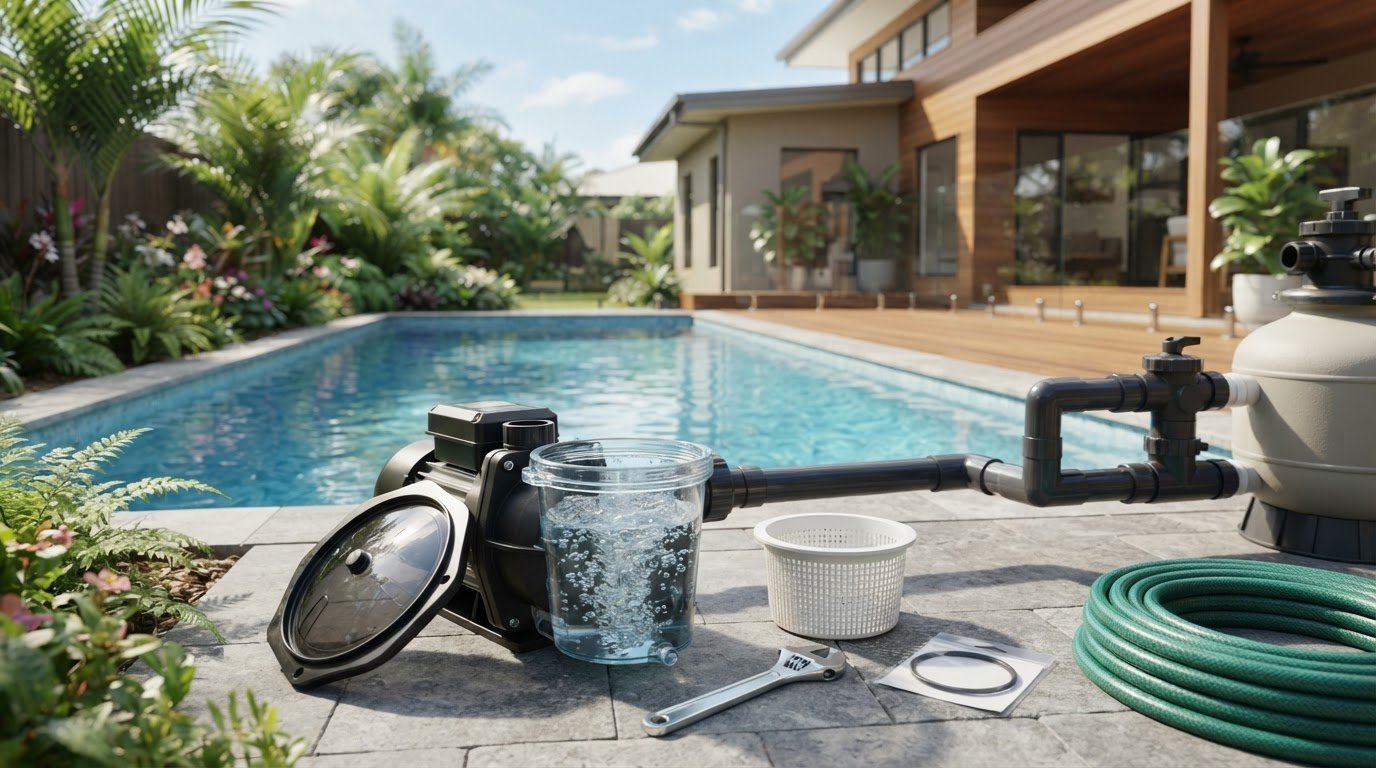
A swimming pool pump does not lose prime because of bad luck; it is always an undeniable signal that air is entering the suction line or water flow has stalled. When the motor runs loud and hot while air bubbles churn through a half-empty strainer basket, dealing with a pool pump losing prime what to do next can feel intensely stressful. We understand that sinking feeling, especially when the blistering afternoon sun threatens to turn crystal-clear water into a cloudy green mess before you can isolate the fault.
Fortunately, you rarely need an expensive equipment replacement to restore steady water circulation. You will learn the exact troubleshooting steps to diagnose suction-side leaks, determine whether a dried-out lid O-ring or a plumbing failure is to blame, and re-prime your pump safely. We will guide you through practical diagnostic checks to protect your motor from permanent heat damage and get clean water moving smoothly through your pool once again.
Key Takeaways
- Understand the hydraulic mechanics: your pool pump relies on a continuous airtight vacuum, and circulating air rather than water quickly risks motor overheating.
- When faced with a pool pump losing prime what to do first is verify your pool water sits midway up the skimmer mouth and examine the lid O-ring for flattening or debris.
- Follow a methodical re-priming sequence that begins with isolating electrical power and safely releasing tank pressure before manually charging the pump pot.
- Isolate elusive suction leaks across intake pipework and threaded male adapters using practical diagnostic methods like the garden hose test.
- Recognise when cavitation noises signal mechanical strain, helping you decide between a straightforward seal replacement and professional equipment repairs.
What Losing Prime Means for Your Pool Pump System
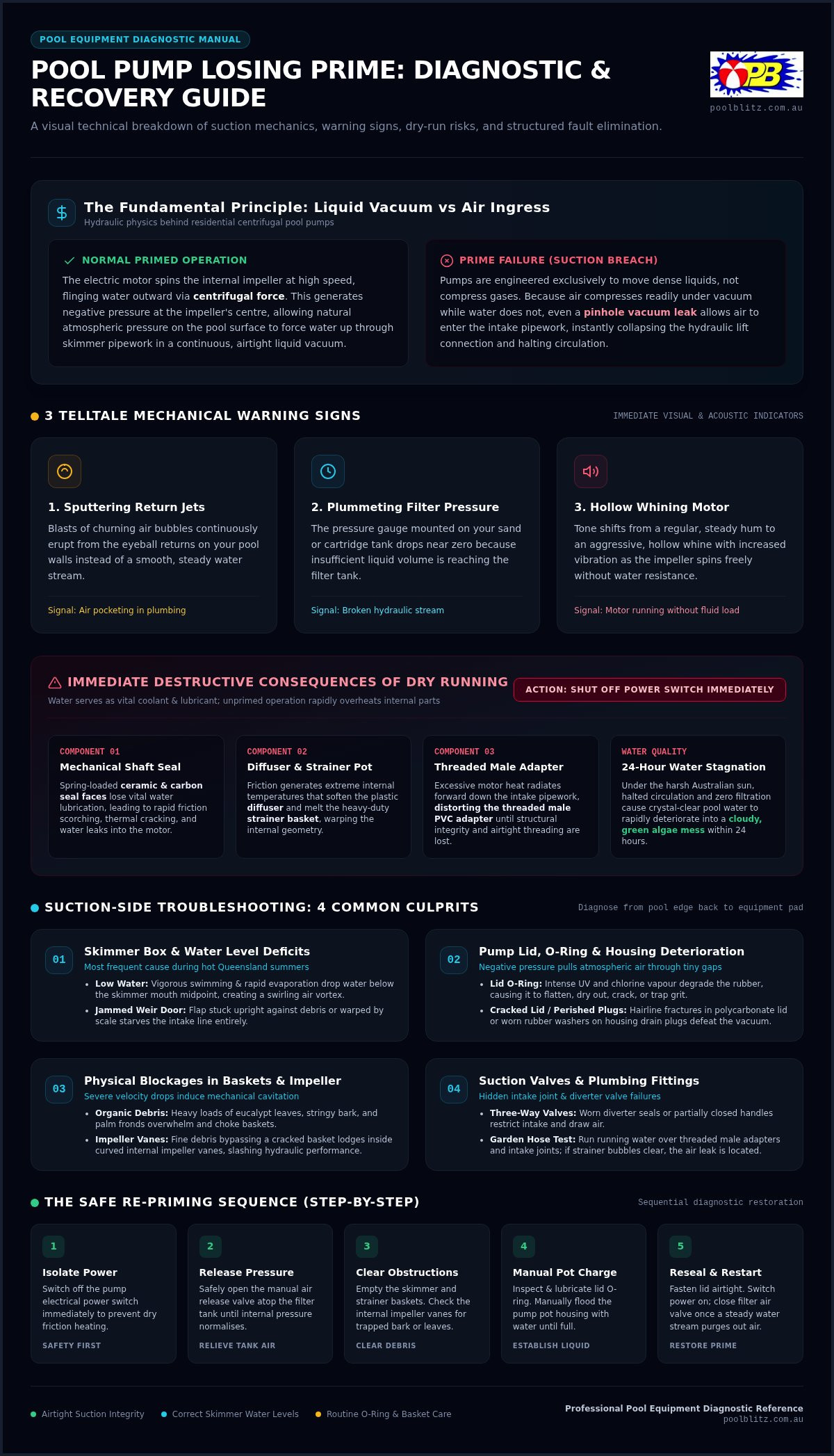
Priming simply means establishing an airtight, liquid-filled vacuum that draws pool water continuously through your filtration circuit. Residential pool pumps are designed specifically to move dense liquids, not compress air. When air enters the intake pipework, that hydraulic connection collapses. If you are staring into a dry strainer housing and wondering about a pool pump losing prime what to do, your first action must be shutting off the power switch immediately.
You can identify a failing prime long before the motor gives out entirely. Watch for these telltale mechanical signs:
- Sputtering return jets: Blasts of churning bubbles erupt from the eyeball returns on your pool walls.
- Plummeting filter pressure: The pressure gauge on your sand or cartridge tank drops near zero because water cannot reach the filter.
- A noisy, vibrating motor: The pump tone shifts from a steady hum to a loud, hollow whine as the impeller spins without water resistance.
The Mechanics of Suction and Water Circulation
To grasp why prime fails, consider how pool pumps work on a basic hydraulic level. The electric motor spins an internal impeller at high speed, throwing water outward via centrifugal force. This action creates a zone of negative pressure at the impeller’s centre, allowing natural atmospheric pressure pushing down on the pool’s surface to force water up through the skimmer pipes. Because air compresses while water does not, even a pinhole vacuum leak introduces air pockets that shatter this hydraulic lift.
Immediate Risks of Running a Pump Dry
Allowing an unprimed pump to run dry produces destructive friction in minutes. Without flowing water to act as a natural coolant, internal temperatures rapidly surge past safe operating thresholds.
The mechanical seal, seated behind the impeller on the motor shaft, relies completely on water lubrication. When run dry, the spring-loaded ceramic and carbon seal faces overheat, scorch, and crack. Continued dry running softens the internal diffuser and melts the heavy-duty pump strainer basket, leading to costly equipment repairs. In severe cases, extreme heat radiates down the intake pipe, distorting the threaded male PVC adapter until it loses structural integrity. Under the harsh Australian sun, this halted circulation quickly turns stagnant pool water dull and green within twenty-four hours.
Why Pool Pumps Lose Prime: Common Culprits Explained
When you discover your pool pump losing prime what to do first is follow a structured process of elimination. Air leaks always follow the path of least resistance on the suction side of the system, where negative pressure pulls outside air inward rather than pushing water out. By diagnosing issues methodically from the pool edge back to the equipment pad, you can uncover the fault quickly before heat compromises your motor.
Skimmer Box and Water Level Issues
Low water level remains the most common culprit behind a sudden loss of prime. During warm Queensland summers, rapid evaporation and vigorous swimming can drop the pool surface below the halfway mark of the skimmer opening. When water drops too low, the suction creates a swirling vortex that drags heavy gulps of air directly into the pipework. Similarly, a skimmer weir door jammed upright against leaves or warped by scale will starve the intake line of water, completely breaking prime within seconds.
Pump Lid, O-Ring, and Housing Deterioration
The pump lid must maintain an airtight seal against constant negative pressure. Intense ultraviolet exposure and drying chlorine vapours steadily degrade the rubber lid O-ring, causing it to flatten, dry out, or crack. If lubricant has washed away or fine grit sits trapped under the ring, air slips straight past the seal. Hairline fractures across clear polycarbonate lids, often caused by heavy-handed tightening tools or sun weathering, will also defeat the vacuum. Check the pump housing drain plugs as well; a perished rubber washer on either plug invites continuous air entry.
Blockages in Baskets, Impellers, and Valves
Physical obstructions choke intake velocity until the pump cavitates. Heavy seasonal loads of eucalypt leaves, stringy bark, and palm fronds easily overwhelm skimmer baskets, starving the pump of necessary flow. Fine debris that bypasses a cracked basket often lodges firmly inside the narrow curved vanes of the internal impeller, drastically cutting hydraulic performance. Three-way suction valves also present common failure points when internal diverter seals wear down or their handles sit partially closed. If basic cleaning does not resolve the issue, booking targeted pool equipment repairs ensures experienced technicians can pressure-test buried suction lines and clear stubborn underground blockages safely.
How to Re-Prime Your Pool Pump: A Step-by-Step Guide
Re-establishing hydraulic lift requires patience, mechanical care, and strict adherence to safety protocols. When tackling a pool pump losing prime what to do immediately is follow a sequential procedure that safeguards both your equipment and your electrical system.
Preparing the Filtration System Safely
Electrical safety comes first. Turn off the power switch on your chlorinator or timer controller, then isolate the pump completely at the wall socket. Next, relieve internal pressure by turning the air relief valve on top of your sand or cartridge filter anticlockwise. You will hear compressed air hissing out of the tank. Wait patiently until the pressure gauge needle drops fully to zero before touching the pump pot, as opening a pressurised system risks lid damage or injury.
Flooding the Pot and Resealing the Lid
Twist off the pump lid and pull out the strainer basket. Clear away any collected twigs or leaves, and reach inside to confirm no gravel sits lodged in the suction entrance. Next, flood the housing with water using a garden hose or two large buckets until water fills the pot and begins draining back down the intake pipe.
Inspect the rubber lid O-ring carefully before closing the unit. Apply a generous smear of silicone-based pool lubricant to keep the seal pliable and completely airtight; never use petroleum jelly, which quickly breaks down rubber compounds. Fasten the lid firmly hand-tight. Avoid using wrenches, mallets, or levers, as overtightening cracks the plastic casing.
Starting the Motor and Purging Trapped Air
Leave the filter air relief valve open and turn the pump back on at the main isolator. Watch through the clear lid as the impeller begins churning the flooded water forward into the filter tank. Air will vent forcefully from the filter valve until a steady, bubble-free stream of pool water shoots out, indicating that you can twist the valve shut.
Allow the system up to three minutes to purge remaining air and draw water from distant skimmer lines. If the pump strainer basket remains empty of water after three minutes, switch the power off immediately. Running the motor beyond this window without liquid flow risks scorching the shaft seal and warping internal plastics.
Advanced Suction Leak Troubleshooting: Finding the Hidden Air Source
Tracking down an evasive suction leak demands a methodical diagnostic strategy. Because suction-side plumbing operates under negative pressure, air is drawn inward rather than spraying water outward, masking the exact failure point. If you have completed the basic checks and remain uncertain about your pool pump losing prime what to do, advanced isolation methods will help pinpoint the hidden breach.
The Garden Hose Water Flow Test
The garden hose test offers the most dependable DIY method for locating microscopic air leaks. Turn on your pump and set a running hose to deliver a steady, low-pressure stream of water over specific plumbing joints. Direct the flow sequentially over the threaded male adapter at the pump inlet, the front barrel union, and the drain plugs. Watch the clear pump lid carefully. The moment the running water seals the air gap temporarily, the churning air bubbles in the strainer pot will clear completely, identifying the faulty fitting.
Checking Valves and Underground Suction Lines
Threaded PVC inlet adapters frequently suffer thermal shrinkage after running hot, loosening the connection within the pump housing and inviting persistent air draw. Beyond the inlet pipe, three-way diverter valves (such as Jandy valves) often leak air through aged stem O-rings and warped lid gaskets. You can isolate separate intake lines to test underground integrity:
- Close the main drain valve completely to draw purely from the skimmer box.
- Switch the valve setting to pull solely from the main drain while observing prime stability.
- Monitor for sudden cavitation; if prime holds on one line but fails on another, an underground fracture is likely.
When subterranean pipework shifts or cracks beneath concrete decking, booking expert pool equipment repairs Brisbane allows technicians to perform professional pressure testing and acoustic leak detection without invasive digging.
Impeller and Diffuser Inspection
Physical obstructions inside the impeller mimic air leaks by starving water flow. Turn off power at the breaker, remove the strainer basket, and carefully insert your fingers or a small curved mirror into the impeller eye. Dense palm fibres, dried gum nuts, and small pebbles easily wedge between internal vanes, creating intense cavitation that prevents full suction lift. Check that the rubber diffuser seal ring remains firmly seated and flexible. If stubborn suction failures continue to compromise your filtration system, contact our repair team to schedule an on-site mechanical inspection.
When to Call a Professional vs. Upgrading Your Pool Pump
Drawing the line between a routine DIY fix and a major mechanical overhaul protects both your pool equipment and your wallet. When dealing with a stubborn pool pump losing prime what to do ultimately depends on the severity of the damage. If chronic air ingress has left your pump running hot for days, prolonged cavitation will pit the impeller blades and destroy internal motor bearings, creating a harsh, rattling noise that no simple O-ring swap can resolve.
Complex Repairs Requiring Qualified Pool Technicians
Certain hydraulic failures demand specialised workshop tools and deep mechanical experience. Replacing a scorched mechanical shaft seal requires dismantling the pump wet end, separating the impeller from the drive shaft, and precisely seating fragile carbon-ceramic faces without contamination. Similarly, underground pipe fractures beneath concrete pool surrounds require hydrostatic pressure testing and electronic acoustic equipment to locate without tearing up your backyard. When dry running has warped the intake manifold or distorted internal diffusers, professional replumbing is essential to ensure a permanent, airtight seal.
Single-Speed vs. Energy-Efficient Variable Speed Pumps
Older single-speed pumps operate at maximum velocity at all times, placing relentless hydraulic strain on ageing fittings and struggling to maintain prime over extended pipe runs. If fixing an ageing unit will cost more than half the price of a replacement, investing in a modern variable-speed pump is the wiser long-term decision. Modern variable-speed units feature automated priming sequences that gently evacuate air from suction lines without overheating. These advanced motors consume 50% to 70% less electricity than traditional single-speed models, paying for themselves through reduced energy bills while working harmoniously with your wider pool filtration system.
Preventative Maintenance Strategies for Brisbane Pools
Brisbane’s relentless summer sun and sudden subtropical storm debris place heavy demands on pool sanitisation and filtration hardware. Applying a silicone lubricant to the pump lid O-ring and valve seals every few months preserves flexibility against UV damage and prevents sudden suction leaks. Establishing an ongoing routine with professional pool service ensures trained specialists inspect your suction vacuum, monitor motor bearings, and spot hairline leaks early. Backed by three decades of local experience, Pool Blitz provides reliable workshop repairs and comprehensive mobile maintenance to keep your pool running smoothly all year round.
Restore Reliable Water Circulation to Your Pool
Maintaining continuous water circulation is your single most important defence against stagnant, algae-ridden pool water. When facing a pool pump losing prime what to do is act swiftly, isolate the suction fault, and never let the motor spin dry. Methodical checks like balancing the water level, lubricating the lid O-ring, and clearing debris from the impeller will resolve most common priming headaches before costly friction damage develops.
If you encounter deep-seated suction leaks, strange grinding noises, or suspect underground pipe fractures, professional support restores lasting peace of mind. Serving the Brisbane pool community for over three decades, Pool Blitz provides certified repair specialists and comprehensive mobile diagnostic capabilities across all Brisbane suburbs. Book a pool equipment health check with Pool Blitz today to safeguard your filtration system and keep your swimming pool sparkling clean in every season.
Frequently Asked Questions
How long can a pool pump run dry without prime before sustaining serious damage?
Serious mechanical damage can occur in as little as two to three minutes of dry running. Without incoming water to cool the internal assembly, friction rapidly overheats the motor shaft and scorched mechanical seals. The strainer basket and diffuser can warp, while extreme thermal stress may seize internal motor bearings. Shut off electrical power immediately if water does not enter the strainer basket within this brief window.
Can a dirty pool filter cause my pump to lose prime?
Yes, an excessively clogged sand or cartridge filter can restrict circulation enough to cause prime loss. While the filter sits downstream on the pressure side, intense flow resistance creates internal backpressure that starves the pump of throughput. This disruption triggers severe cavitation, trapping churning air within the housing. If your filter tank pressure gauge sits eight to ten psi above clean baseline levels, backwashing or cleaning your filter media will restore hydraulic balance.
Why does my pool pump hold prime while running but lose it when switched off?
A pump losing prime only after powering down indicates that water is draining backwards towards the pool through an intake air leak or a failed check valve. While running, strong negative pressure keeps the water column moving forward despite tiny gaps. When the motor stops, atmospheric pressure pushes air past a perished lid O-ring, loose drain plug, or cracked pipe joint. When assessing your pool pump losing prime what to do is examine check valve flappers and suction unions.
Is it safe to use Vaseline or petroleum jelly on my pool pump lid O-ring?
No, you should never apply petroleum jelly or Vaseline to rubber pool seals. Petroleum compounds rapidly break down nitrile and synthetic rubbers, causing the O-ring to soften, swell, and lose its elastic tension. Once deformed, the ring can no longer maintain an airtight seal against high vacuum pressure. Always choose a quality silicone-based or PTFE pool lubricant to preserve rubber flexibility and prevent air leaks beneath the harsh subtropical sun.
How many times should I attempt to re-prime my pool pump before calling a professional?
You should not attempt to re-prime the system more than two or three times in succession. Repeated dry cycles subject the mechanical seal and motor windings to damaging thermal friction. If flooding the strainer pot, lubricating the lid O-ring, and clearing skimmer baskets does not re-establish full flow, a subterranean suction breach or tightly jammed impeller is likely. At that stage, contacting Brisbane equipment repair specialists prevents turning a simple fix into an expensive motor replacement.
Why are there micro air bubbles coming out of my pool return jets?
Micro air bubbles indicate a fine, continuous air leak entering the suction side of your filtration system. Unlike a catastrophic leak that empties the pump pot instantly, hairline cracks draw in small streams of air that the spinning impeller whips into a frothy stream. Common trouble spots include loosening inlet unions, dried lid gaskets, or low water levels inside the skimmer box. Left unattended, this constant aeration degrades pump performance and accelerates bearing wear.
Can a low water level in my pool cause the pump to lose prime permanently?
Low water levels will not permanently break priming ability once you refill the pool, provided the motor did not suffer heat damage while running empty. When the water surface drops below the skimmer box, whirlpool vortices draw air directly into the plumbing. To resolve this pool pump losing prime what to do is refill the pool midway up the skimmer mouth, flood the pump basket, and restart the filtration circuit. If dry friction has warped internal diffusers, professional servicing is required.
No responses yet