
Could a noisy Astral Viron pump be signalling a simple priming issue, or a fault that could worsen if you keep it running? It’s not always obvious whether the cause lies in the pump, plumbing or power supply. Astral Viron pump troubleshooting should start with safe, external checks rather than opening the equipment. This guide explains how to describe the symptom, identify your pump model and decide what to do next.
You’ll learn what to check when the pump won’t start, won’t prime, has low flow, leaks or makes an unusual noise, as well as signs that mean it’s safer to switch it off. Viron models and control instructions can differ, so confirm the model and consult its manual before following model-specific advice. We’ll also explain when to arrange a qualified pool technician to inspect the pump, plumbing or electrical supply. For Brisbane pool owners, Pool Blitz repairs pool pumps and filtration equipment.
Key Takeaways
- Start Astral Viron pump troubleshooting by noting the exact model and what the pump is doing. Instructions can vary between models.
- Check accessible areas in a safe order. Low flow may involve the water level, baskets, valves or filtration system, as well as the pump.
- Treat noises, leaks and starting problems as clues, not a definite diagnosis. Stop using the pump if you notice a burning smell, water near electrical components or repeated tripping.
- Leave electrical work and internal pump repairs to a qualified professional rather than opening the equipment yourself.
- Give a technician the model, symptom, photos and checks already completed. Brisbane owners can ask Pool Blitz about pool pump and filtration equipment repairs.
Astral Viron pump troubleshooting starts with the symptom and model
Troubleshooting means identifying possible causes before repair work begins. For an Astral Viron pump, start by recording what it’s doing and its full model designation. Instructions can differ between models, so a control-panel step that applies to one pump may not suit another. A symptom-first approach helps you describe the issue without treating an early clue as a confirmed diagnosis.
Pool pumps move water through the circulation system using centrifugal action. This brief explanation of how centrifugal pumps work can help put changes in water movement into context, but it won’t identify the cause of a fault in your equipment.
How to identify the Astral Viron model
Look for the product label on an accessible outer surface of the pump. Don’t remove covers or panels to find it. Record the complete model name and any serial information you can read, then use those details to find the matching official manual. Check the manual before attempting model-specific operating, reset or control-panel steps.
Which pump symptom are you seeing?
Be specific: is the pump silent, starting and stopping, making an unusual noise, leaking, or running while moving little water? Note when the problem began and whether it changes during operation. A symptom points to areas worth checking, but it doesn’t prove which component has failed.
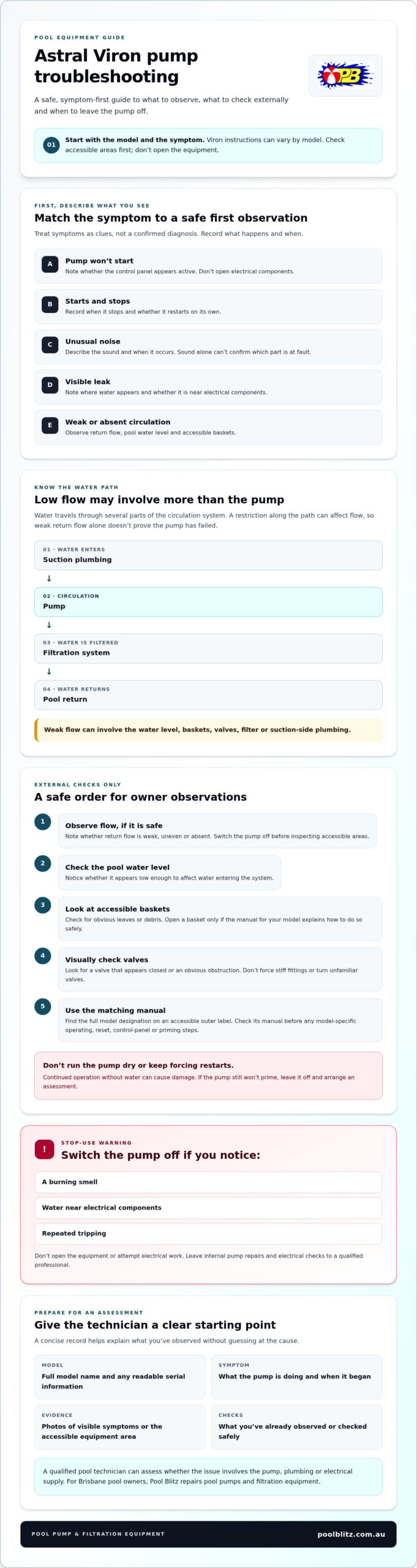
Use this quick guide to organise your observations before moving on to further checks:
| Symptom | First observation |
|---|---|
| No start | Note whether the control panel appears active. Don’t open electrical components. |
| Intermittent running | Record when it stops and whether it restarts on its own. |
| Unusual noise | Describe the sound and when it occurs. Don’t diagnose a part by sound alone. |
| Visible leakage | Note where water appears and whether the area is near electrical components. |
| Weak circulation | Observe the return flow and check the pool water level and accessible baskets. |
For Brisbane pool owners, include recent weather in your notes. After storms, check from a safe position for visible leaves or debris around accessible baskets and the pump area. This may help explain a change in flow. Don’t reach into the pump or handle electrical parts. These details, along with the model and symptom, give a pool technician a clearer starting point for assessment.
Check Astral Viron pump flow, priming and visible blockages
Weak return flow or a pump that won’t prime doesn’t automatically mean the pump has failed. The cause could be the pool water level, a basket, a valve, the filter or suction-side plumbing. Start with external observations, and stop if you find a leak near electrical components or anything you’re unsure how to handle.
What to check when the pump has weak flow or will not prime
Observe the pool and equipment while the pump is running only if it’s safe to do so. Note whether return flow is weak, uneven or absent, then switch the pump off before inspecting accessible areas. Don’t run it dry or keep forcing restarts if it won’t prime. Continued operation without water can cause damage.
- Check whether the pool water level appears low enough to affect water entering the system.
- Look at the accessible pump basket for obvious leaves or debris. Open it only if the model manual explains how to do so safely.
- Visually check for a valve that appears closed or an obvious obstruction. Don’t force stiff fittings or turn unfamiliar valves.
Once you’ve noted what you can see, follow the priming instructions in the manual for your exact Viron model. There isn’t one safe, universal priming method for every pump. If it still won’t prime, leave it off and arrange an assessment rather than repeatedly restarting it.
When a blocked filter or plumbing issue may be involved
Water travels through the suction plumbing, pump and filtration system before returning to the pool. A restriction in more than one part of that path can affect circulation, so weak flow alone can’t confirm whether the pump is at fault. For a clearer picture of how these parts work together, see the Brisbane pool filtration and health guide.
Don’t dismantle the filter or open equipment that may be pressurised. If the water level is adequate, accessible baskets look clear and visible valve positions don’t explain the change, but circulation remains poor, professional inspection is the sensible next step. Note what you observed and which checks you completed. For Brisbane owners, Pool Blitz pool pump and filtration repairs can assess equipment issues that safe external checks haven’t resolved.
These steps keep Astral Viron pump troubleshooting focused on visible, low-risk clues. They can help you assess a circulation concern without risking damage through dry running or repeated starts, but they can’t confirm the cause of a fault.
Astral Viron pump noises, leaks and starting problems: what they can indicate
A change in sound, a wet patch or a pump that won’t start is a useful clue, not a diagnosis. The cause may be within the pump or elsewhere in the pool system. Note what you can safely observe rather than guessing at a failed part. In Astral Viron pump troubleshooting, the pattern and timing of a symptom can help a technician decide what to inspect.
What unusual pump noises may mean
Compare the sound with the pump’s usual operating noise. A new rattle, hum or grinding sound, particularly if it’s getting louder, may point to a flow restriction or mechanical issue. Sound alone can’t confirm a problem with bearings, a seal, a capacitor or the motor. Note when the noise starts and whether water flow or the pump’s temperature also changes.
Switch the pump off if the noise is severe, rapidly worsening or accompanied by overheating. Don’t keep running it to see whether the sound settles. If the sound is mild and the pump otherwise appears to operate normally, record what you hear and arrange an assessment if it persists.
What to do about leaks or a pump that will not start
If you see water, observe where it appears from a safe position. Don’t remove the pump housing or touch wet electrical equipment. Water near electrical components calls for particular caution: stay clear and arrange professional assessment. If you can safely isolate the equipment without approaching a wet area, switch it off. Otherwise, keep away and seek appropriate help.
A pump that doesn’t start may have a power-supply issue or an internal electrical fault. Note whether the display appears active and whether the pump has stopped completely, but don’t open electrical parts or attempt internal repairs. If the equipment repeatedly trips, leave it off and don’t reset it repeatedly. A persistent leak or a pump that remains unable to start also warrants qualified inspection.
- Noise: Note the type of sound, when it occurs and whether it is getting worse.
- Leak: Record the visible location and keep clear if water is near electrical components.
- No start or repeated tripping: Don’t open the unit or repeatedly try to restart it.
These observations help distinguish a symptom from its possible cause and give a technician a useful starting point. For broader repair information, see Brisbane pool equipment repairs. Pool Blitz’s qualified team repairs pool pumps and filtration equipment. Brisbane owners can share the model and symptoms when asking about an assessment.
Astral Viron pump troubleshooting: owner checks and safety
Keep owner checks to what you can see and record from a safe position. Astral Viron pump troubleshooting can help you gather useful clues, but it shouldn’t involve opening the unit or testing electrical parts. A product label, visible debris or the location of a leak may help a technician assess the issue. Leave wiring and internal pump repairs to a qualified professional.
Low-risk checks to make before calling a technician
Before making external observations, consider whether it’s safe to approach the equipment. If there’s water near electrical components, a burning smell or signs of electrical trouble, stay clear and don’t touch the pump. Keep children and pets away from the equipment while you decide on the next step.
If there are no immediate safety concerns, record the complete model name, what the pump is doing and when the symptom occurs. Note visible water, debris, unusual noise or changes in circulation. You can check accessible external conditions, such as visible debris around the equipment, but follow the matching model manual and don’t remove covers or panels.
- Write down when the problem started and whether it happens every time the pump runs.
- Take photos of the product label and any visible water or debris, without moving or opening equipment.
- List the checks you’ve already tried, so they don’t need to be repeated unnecessarily.
Don’t handle wiring, bypass protective devices or work on wet electrical equipment. If you’re unsure whether a check is safe, leave it for the technician.
When to stop troubleshooting and arrange an inspection
Stop using the pump if you notice a burning smell, water near electrical parts or repeated tripping. Don’t reset a tripped device over and over, and don’t approach wet equipment to switch it off. If the pump can be isolated from a dry, safe location, do so. Otherwise, keep clear and seek appropriate help.
Arrange a professional inspection for persistent or worsening noise, recurring loss of prime, an ongoing leak or a pump that won’t start. These symptoms can have different causes. Further operation or DIY repairs may make assessment less straightforward. The pool pump repair guide offers further context on professional diagnosis.
Pool Blitz repairs pool pumps and filtration equipment in Brisbane, but doesn’t provide 24/7 emergency callouts. If safe external checks haven’t resolved the issue, contact Pool Blitz to discuss a pump repair assessment and share the model, symptoms and observations you’ve recorded.
Get Astral Viron pump repairs assessed by a Brisbane pool equipment specialist
Safe checks can clarify what you’re seeing, but they can’t confirm the underlying fault. A pump symptom may relate to the pump itself or another part of the circulation and filtration system. Assessment should come before deciding what repair or parts may be required. Your notes can help a technician focus on the right questions without relying on guesswork.
What to prepare before arranging a pump assessment
Gather a few practical details before discussing the issue. Record the full model designation from the external product label, describe the symptom in plain terms and note when it happens. For example, mention whether the pump stops during operation, loses prime after starting or makes a sound that changes over time.
- Take clear photos of the model label and any visible leak or debris, without removing covers or touching wet equipment.
- Note whether the issue followed a storm, a visible build-up of leaves, an unusual sound or a power interruption.
- List the external checks you’ve already made and whether they changed the symptom.
If the pump shows an electrical or mechanical warning sign, don’t keep restarting it to gather more information. Leave it off if it can be switched off safely, keep clear of wet electrical equipment and explain what you observed when arranging an assessment.
How professional diagnosis helps protect pool circulation
A technician can assess the pump alongside relevant filtration components, rather than treating every change in flow as a pump fault. That wider view matters because circulation depends on connected equipment working together. A professional assessment can establish what needs attention before a repair approach or parts requirement is confirmed.
Reliable circulation supports the filtration process that helps maintain clear, well-kept pool water, though no repair assessment can promise a particular water outcome. Pool Blitz is a Brisbane pool-care and equipment-repair business that has served the local community for over three decades. Its qualified team handles pool pump and filtration equipment repairs.
For a considered next step, contact Pool Blitz about your pool pump issue. Share the model, symptom, photos and checks you’ve completed so the team can discuss an assessment pathway.
Take the next step with confidence
Good Astral Viron pump troubleshooting starts with two useful details: the exact model and the symptom you can observe. Check only accessible areas and consult the matching manual before trying model-specific steps. If there’s a burning smell, water near electrical equipment, repeated tripping or a persistent fault, stop troubleshooting and arrange a professional assessment.
Weak flow or an unusual sound can point to different parts of the circulation system, so observation alone can’t confirm the cause or parts required. A technician can assess the pump alongside relevant filtration equipment and recommend the next step based on what they find.
Pool Blitz is an independent Brisbane business that has served the local community for over three decades. Its qualified team repairs pool pumps and filtration equipment. If safe checks haven’t resolved the issue, contact Pool Blitz about your pool pump issue and share the model and symptoms you’ve recorded. Clear information and an appropriate assessment can help you decide what to do next.
Frequently Asked Questions
Why is my Astral Viron pool pump not turning on?
An Astral Viron pump that won’t turn on may have a power-supply issue or an internal fault. Note whether the display or indicators appear active, but don’t touch wiring or open covers to investigate. If electrical protection trips repeatedly, or you notice a burning smell or water near electrical parts, leave the pump off and arrange professional assessment. A technician can check the cause safely before recommending repair work.
Why is my Astral Viron pump running but not pumping water?
A pump that runs without moving water may not be primed, or circulation could be restricted elsewhere in the system. Check that the pool water level appears adequate and look for obvious debris in accessible areas, such as around the pump basket. Follow the priming guidance in your exact model’s manual. Don’t run the pump dry or keep restarting it if water flow doesn’t return. The cause needs further assessment.
What should I do if my Astral Viron pump is making a loud noise?
Switch the pump off if the noise is severe, rapidly worsening or accompanied by overheating. A new rattle, hum or grinding sound can point to a flow restriction or mechanical issue, but sound alone can’t identify a failed part. From a safe position, note when the noise occurs and whether the water flow changes too. If it persists, arrange an inspection rather than opening the pump or continuing to run it.
Can I troubleshoot an Astral Viron pool pump myself?
Yes. Astral Viron pump troubleshooting can include safe external observations, such as noting the model, checking for visible debris and recording when the symptom occurs. Use the matching official manual for model-specific instructions. Don’t remove covers, handle wiring, bypass protective devices or attempt internal repairs. Stop if there’s a burning smell, water near electrical components or repeated tripping, and arrange professional help instead.
How do I find the model number on an Astral Viron pump?
Look for the product label on an accessible outside surface of the pump. Don’t remove covers or panels to find it. Record the complete model designation and any visible serial information, then use those details to find the matching official manual. The model helps ensure you’re checking the right instructions, as operating and troubleshooting steps may vary between Viron pumps.
When should I call a pool pump repairer in Brisbane?
Arrange an assessment if the pump repeatedly loses prime, has a persistent leak, makes worsening noise or won’t start after safe external checks. Leave it off if electrical protection trips repeatedly, or if there’s a burning smell or water near electrical parts. In Brisbane, Pool Blitz’s qualified team repairs pool pumps and filtration equipment. An assessment is needed to confirm the fault and whether repair or parts are required.
No responses yet