
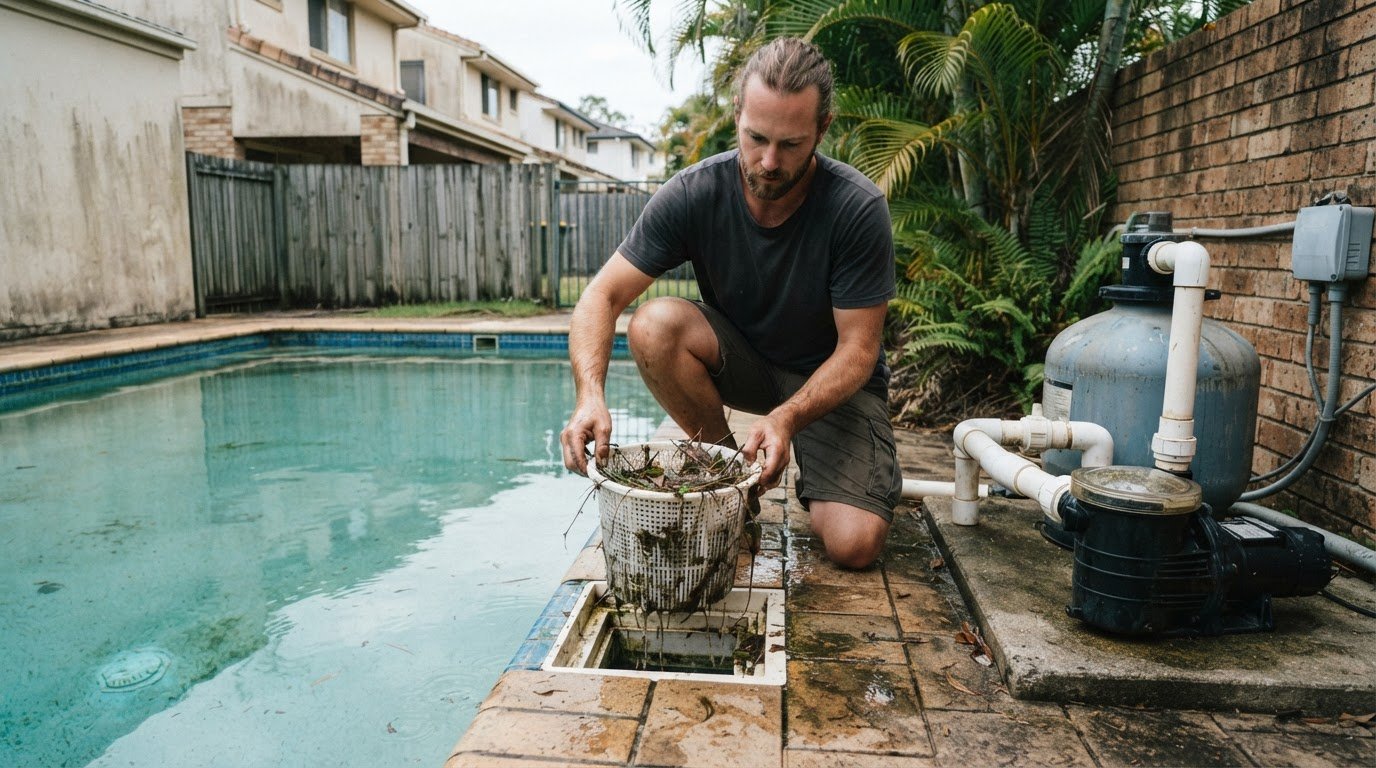
A pool’s condition can begin to change within days without regular care. If you’re wondering what happens if you don’t maintain your pool, the water can become cloudy, algae can take hold, and unbalanced chemistry can affect surfaces and equipment. The longer problems are left, the more work may be needed to restore clear, balanced water.
A pool may look clean while its chemistry or circulation is out of balance. Clear water alone does not confirm that it is properly sanitised. Regular attention helps catch changes early and prevents everyday wear from becoming a larger maintenance issue.
This guide explains how missed care can affect water quality, swimmers, pool surfaces and equipment, and how algae and bacteria can develop. It also covers routine maintenance, including testing and balancing water, removing debris and keeping filtration working properly.
Key Takeaways
- Test and balance pool water regularly; chemistry changes can affect clarity, sanitising and surface condition.
- Watch for unusual equipment sounds, leaks or performance changes, as neglected filters and baskets can strain circulation.
- Low sanitiser and poor circulation can give algae and other contaminants an opportunity to grow, especially in warm weather.
- Build routine care around removing debris, brushing surfaces, cleaning baskets and filters, and checking water chemistry.
Water chemistry and surface damage
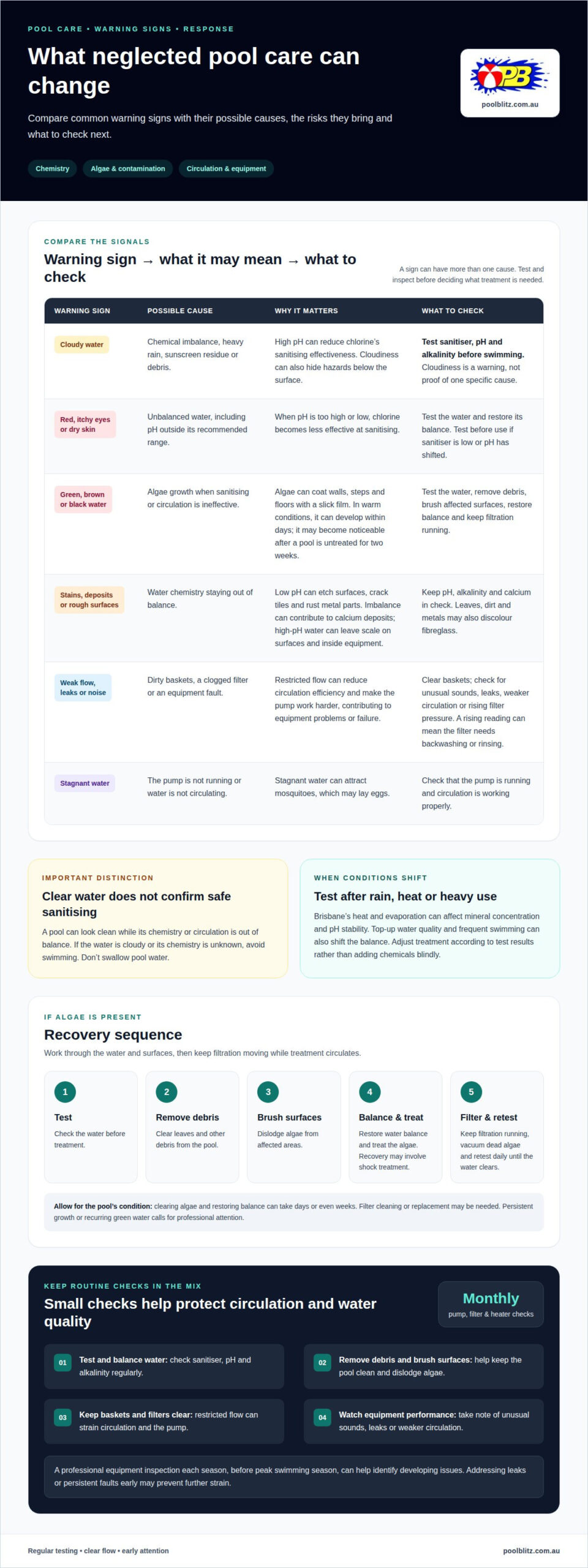
Pool water chemistry can shift within days when care is neglected, so there’s no reliable waiting period before swimming becomes unsafe. If sanitiser levels fall or pH moves outside its recommended range, test the water before use and restore its balance.
Water balance and swimmer irritation
Water balance involves sanitiser, pH and alkalinity. When pH is too high or low, chlorine becomes less effective at sanitising. Unbalanced water can also leave swimmers with red, itchy eyes or dry, irritated skin. Regular testing can reveal a chemical shift before discomfort or poor sanitation becomes apparent.
Cloudy water and chemical imbalance
Cloudy water can signal a chemical imbalance, but heavy rain, sunscreen residue and debris can also cloud a pool. High pH can reduce chlorine’s effectiveness, allowing contaminants to persist. Cloudiness can also hide hazards below the surface. Treat it as a warning, not proof of a specific cause, and test sanitiser, pH and alkalinity before swimming.
Brisbane’s heat puts extra pressure on water chemistry. Evaporation concentrates minerals and can affect pH stability. Top-up water quality and frequent swimming can also shift the balance. After rain, heat or heavy use, test the water and adjust treatment according to the results rather than adding chemicals blindly.
When sanitiser is inadequate, bacteria, viruses and parasites can grow in pool water. Contaminated water may expose swimmers to E. coli, Cryptosporidium or Giardia. Swallowing it can lead to diarrhoea, nausea, vomiting or stomach cramps. Avoid swimming if the water is cloudy or its chemistry is unknown, and don’t swallow pool water.
Water chemistry also affects pool finishes. Low pH can etch surfaces, crack tiles and rust metal parts, while imbalances can contribute to calcium deposits at the waterline. Leaves, dirt and metals may discolour fibreglass. Keeping pH, alkalinity and calcium in check helps limit staining and deterioration that can become costly to address.
Corrosion and scale damage to pool surfaces and equipment
Acidic water can corrode metal components, while high-pH water can form scale on surfaces and inside equipment. Restoration costs depend on the pool’s condition, the work required and any equipment damage; pricing depends on the case and is given after a quote request. Stagnant water can attract mosquitoes, which may lay eggs when the pump isn’t running or water isn’t circulating.
Corrosion and scale formation
Corrosion is the deterioration of metal parts, while scale is mineral buildup on pool surfaces or inside equipment. Both can develop when water chemistry remains imbalanced, causing problems beyond appearance. Acidic water can corrode metal components; high-pH water can leave deposits along the waterline and inside equipment. Persistent imbalance can also etch or roughen plaster finishes, making them harder to maintain.
Damage to structures and equipment
Neglected maintenance can damage pool structures, pumps, filters and plumbing, particularly when debris restricts water flow or chemical levels remain unsuitable. A clogged filter reduces circulation efficiency and can force the pump to work harder. Over time, this strain may contribute to equipment problems or failure, interrupting circulation and making water quality harder to manage.
Changes in equipment performance can signal a developing issue. Unusual sounds, leaks or weaker circulation need attention before a small fault affects other components. A rising filter pressure reading can mean the filter needs backwashing or rinsing. Dirty baskets can also restrict flow, so keeping them clear helps the filtration system work as intended.
A professional equipment inspection each season, before peak swimming season, can help identify developing issues. Monthly checks of the pump, filter and heater can also reveal unusual wear or changes in performance. The right maintenance depends on the equipment’s condition and inspection findings; addressing a leak or persistent fault early may prevent further strain.
If equipment performance changes or a leak appears, get help with pool equipment concerns before circulation problems worsen.
Algae and bacterial growth
Without effective sanitising and circulation, algae can turn pool water green, brown or black within days. Brisbane’s warm conditions can favour algae growth, particularly when routine care lapses.
Algae growth and slippery surfaces
Algae can coat pool walls, steps and floors, creating a slick film underfoot. That slippery surface can make entering, leaving or moving around the pool less secure. Algae may become noticeable after a pool is left untreated for two weeks, while warm weather and poor filtration can accelerate growth. Brushing surfaces helps dislodge algae so circulation and treatment can address it.
Bacteria and pool contamination
Bacteria can multiply when sanitiser levels are inadequate, and algae can create conditions for harmful bacteria to thrive. Human skin, hair and sweat introduce bacteria into pool water; leaves and other debris add further contamination. Incorrect pH can reduce chlorine’s sanitising effectiveness, even when chlorine is present. That’s why testing chlorine and pH together matters: green water is not just an appearance problem.
Recovering a green or algae-filled pool
Recovery starts with testing the water, removing debris and brushing affected surfaces. Restore the water balance, treat the algae and keep filtration running so treatment can circulate. Depending on the pool’s condition, recovery may involve shock treatment, algae removal and filter cleaning or replacement.
As algae dies, vacuum it out to help prevent it clogging the system. Retest the water daily until it clears, adjusting treatment according to test results rather than adding chemicals blindly. Removing algae and restoring water balance can take days or even weeks. Persistent growth or recurring green water calls for professional attention.
Routine pool maintenance
Routine care combines water testing, cleaning and circulation checks. Each task helps catch a different problem before it becomes harder to manage.
For Australian pool owners, maintenance means keeping water and equipment in good condition, alongside following the pool-safety requirements that apply in their state or territory. Test water weekly in summer. In winter, testing fortnightly to monthly may suit conditions.
Start with the water. Test sanitiser, pH and alkalinity, then adjust treatment according to the results. Pool use, heat, rain and top-up water can all affect balance, so an earlier test won’t tell you today’s readings. Avoid adding several chemicals without testing first, as this can make adjustments less predictable.
Cleaning removes material that can feed contamination or block circulation. Skim leaves before they sink, brush walls, steps and other surfaces, and vacuum the floor weekly. After a Brisbane storm or windy day, check for fresh debris. In autumn, falling leaves can add to the cleaning load.
Keep water moving. Clean skimmer and pump baskets to prevent blockages, and clean or rinse the filter when its pressure rises. A clogged filter can reduce efficiency and make the pump work harder. Inspect the pump, filter and heater monthly for unusual wear or changes in performance.
Seasonal care matters beyond summer. During winter, ongoing water checks and circulation help limit stagnant water and algae growth. Before spring swimming begins, a deeper clean, equipment inspection and water balancing can prepare the pool for heavier use. Pool owners who manage routine tasks themselves can also arrange a professional pool evaluation each year.
For a consistent schedule of testing, cleaning and equipment checks, arrange regular pool care.
Pool Blitz
Pool Blitz helps Brisbane pool owners manage the effects of missed maintenance and keep care on track. Regular Pool Servicing supports ongoing cleaning and water care, while Casual Pool Servicing can help when a pool needs attention after a lapse or before swimming resumes.
For water concerns, Pool Blitz supplies Pool Chemicals to support appropriate treatment. Robotic Pool Cleaners and Repairs can also help with routine debris removal and cleaner surfaces. The right support depends on whether the main issue is water balance, accumulated debris or a cleaner that needs repair.
If your pool has become cloudy, developed algae or needs a more consistent care routine, contact Pool Blitz to discuss the next step.
Make pool care part of the plan
Understanding what happens if you don’t maintain your pool can change how you plan for its care. Rather than waiting for visible trouble, make pool maintenance part of looking after your outdoor space. A consistent routine helps prevent care from becoming a last-minute task, while occasional servicing can suit times when your routine has slipped or your pool needs extra attention.
Pool Blitz offers Regular Pool Servicing and Casual Pool Servicing, as well as Robotic Pool Cleaners and Repairs. The right support depends on your pool’s needs and how you prefer to manage its upkeep. Planning around swimming seasons, regular use and changing conditions can make care easier to maintain over time.
Choose a manageable next step and give pool care a place in your routine. Contact Pool Blitz for pool care to discuss support for your pool.
Frequently Asked Questions
What Happens If You Don’t Maintain Your Pool?
If you don’t maintain your pool, small changes can build into water-quality, surface and equipment problems. Debris can settle, circulation can suffer and algae may spread, making the pool harder to restore. In Brisbane’s warmer periods, a lapse in care can favour algae growth. A neglected pool may need more than routine cleaning, particularly if algae keeps returning or equipment performance changes.
What happens to pool water if it is not maintained?
Pool water can lose clarity and develop visible algae as debris accumulates and sanitiser becomes ineffective. Rain, windblown leaves and frequent swimming can change the water’s needs, so its condition may shift even if it looked clear earlier. A strong chlorine smell or slimy feel can be warning signs. Appearance alone cannot confirm water quality; testing is needed to assess the water.
What health risks can come from swimming in a neglected pool?
Swimming in contaminated water can expose people to germs and lead to illness or irritation. Swallowing pool water is one possible route to stomach symptoms, while contact may irritate the skin, eyes, nose or ears. Avoid swimming if water is cloudy or visibly contaminated, and keep anyone who is sick out of the pool. Don’t swallow pool water, even when it looks clear.
What damage can neglected pool water cause to the pump, filter and pool surface?
Neglected water and restricted circulation can contribute to corrosion, mineral deposits and equipment wear. A clogged filter can make a pump work harder, while persistent imbalance may roughen finishes or leave scale around the waterline. Watch for leaks, unusual equipment sounds or changes in performance. These signs can help distinguish a water-care issue from a mechanical problem that needs attention.
How often should a swimming pool be cleaned and tested in Australia?
Clean a swimming pool at least weekly, and test the water weekly during summer. Over winter, testing fortnightly to monthly may suit changing conditions. Brisbane pools may also need attention after heavy rain, windy weather or increased use, when debris and water balance can shift. Skimming, brushing, basket cleaning and circulation checks complement testing, but each pool’s needs depend on its use and surroundings.
No responses yet