
A pool can look clear and still need one more decisive check. To understand how to treat mustard algae in a pool, focus on thorough cleaning, balanced water and sustained chlorine treatment, then confirm the result with an overnight chlorine test. A loss of 1 ppm or less, alongside clear water and clean walls, is evidence that treatment is complete.
It’s understandable to wonder whether mustard algae is harmful to people and whether it’s safe to swim. The practical concern is that visible growth can return after brushing, and a clean-looking surface alone doesn’t confirm that treatment has worked. A thorough, sustained treatment process can help address mustard algae.
This guide explains how pool cleaning and water balancing fit into treatment, how to assess the pool before swimming, and what an overnight chlorine test can tell you. You’ll also learn how circulation, brushing and sanitising pool items can help reduce the chance of the algae returning.
Key Takeaways
- Mustard algae can cling to pool surfaces and equipment, so effective treatment needs more than brushing visible patches away.
- Balanced water and properly cleaned filters support chlorine treatment and help restore clear pool water.
- An overnight chlorine loss test helps assess treatment progress; a loss of 1 ppm or less, with clear water and clean walls, is evidence treatment is complete.
- Consistent water chemistry, circulation and brushing can help reduce the chance of algae returning.
How professionals clean filters and balance water chemistry when treating mustard algae
Effective treatment combines clean filtration, balanced pool water and thorough brushing. Professionals keep water moving while removing algae from surfaces and filter media.
-
How professionals run the filter during treatment
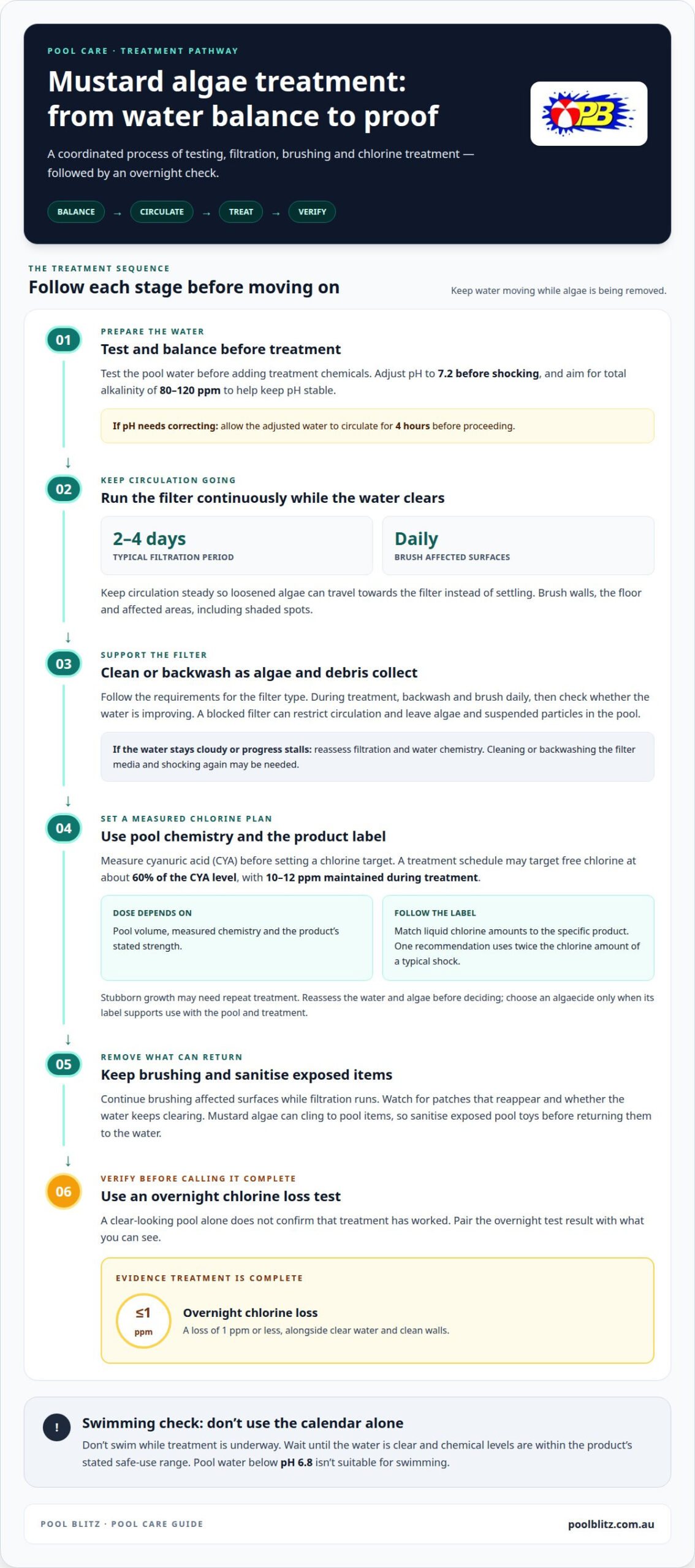
Run the pool filter continuously until the water clears, typically for 2-4 days. Check that circulation remains steady and the filter is capturing loosened algae rather than allowing debris to settle. Professionals brush affected surfaces daily while filtering, helping dislodge attached growth so circulation can carry particles towards the filter. A cleaner surface alone doesn’t show that spores have been removed, so filtration continues while the water clears.
-
How professionals clean the pool filter
Clean or backwash the filter as algae and debris collect, following the requirements for its filter type. During treatment, backwash and brush the pool daily, then assess whether the water is improving. If it remains cloudy or unchanged, cleaning or backwashing the filter media and shocking the pool again may be needed. A blocked filter can restrict circulation, leaving algae and suspended particles in the water.
-
Balance the water before treatment
Test pool water before adding treatment chemicals, then adjust pH to 7.2 before shocking. Aim for total alkalinity between 80 and 120 ppm, which helps keep pH stable during treatment. Professionals allow the adjusted water to circulate for 4 hours before proceeding if a pH correction is needed. Accurate testing matters: chemistry that is out of balance can reduce the effectiveness of chlorine and complicate treatment.
-
Brush surfaces and assess progress
Brush the pool walls, floor and other affected surfaces while the filter runs. Pay close attention to shaded areas and visible growth, as brushing loosens algae for filtration. Track whether the water is clearing and whether patches reappear. If progress stalls, reassess filtration and water chemistry instead of relying on brushing alone. This coordinated approach helps remove material that could otherwise remain in the pool.
Is Mustard Algae Harmful to Humans?
Mustard algae alone doesn’t establish a specific health risk, but visible growth means the pool needs treatment. Don’t swim while treatment is underway. Follow the chemical label and wait until testing shows the water is ready.
- Look for yellow, powdery-looking patches on the pool floor or walls, especially in shaded areas. Mustard algae can resemble dirt or pollen, so appearance alone isn’t enough. A professional brushes the patch and checks whether it returns in the same place; mustard algae may reappear within 24 hours.
- Identify the material by considering both its appearance and behaviour. Loose dirt or pollen may shift or disperse during brushing, while mustard algae can cling to surfaces and return after being disturbed. A stain may remain fixed rather than brush away. These clues help avoid treating every yellow mark as algae.
- Assess the pool water and free chlorine alongside the visible growth. Mustard algae is resistant to chlorine, so a single chlorine reading or a clear patch after brushing doesn’t confirm that treatment has worked. Also check whether the filter needs backwashing and whether the water is clearing consistently.
- Don’t use the calendar alone to decide when swimming can resume. The wait depends on the treatment used, its label directions and the pool’s test results. The water must be clear, and treatment chemical levels must be within the product’s stated safe-use range. Pool water below pH 6.8 isn’t suitable for swimming.
- Consider the whole swimming environment, not just the visible patch. Mustard algae can cling to swimsuits, toys and pool equipment, allowing spores to return if items aren’t sanitised. During summer, recurring yellow growth calls for a professional assessment of surfaces, circulation and water balance. A professional pool water assessment can help identify what needs attention.
Confirming treatment success with an overnight chlorine loss test
Professionals pair a measured chlorine treatment with clear visual and overnight test results. Pool volume, cyanuric acid (CYA) and the product label guide each treatment decision.
- Measure CYA before setting a chlorine target. A mustard algae treatment schedule may target free chlorine at about 60% of the CYA level, with 10-12 ppm maintained during treatment. The professional considers the pool’s measured chemistry and treatment plan together, rather than treating one chlorine reading as suitable for every pool.
- Calculate liquid chlorine against the pool’s volume and the product’s stated strength. Use liquid chlorine amounts only as a guide, and calculate the dose for the pool’s volume and the product’s stated strength. These volume-based amounts must be matched to the specific product label.
- Shock the pool using a measured dose, then maintain the treatment chlorine target while filtration runs. One treatment recommendation uses twice the chlorine amount of a typical shock. Stubborn growth may need a repeat treatment; professionals reassess the water and algae before deciding.
- Choose an algaecide by checking its label for pool compatibility and directions, rather than assuming one product suits every surface or treatment. Chlorine treatment, brushing and filtration address the algae; an algaecide may form part of the plan when its label supports that use.
- Remove remaining algae through brushing and filtration, and sanitise exposed pool toys before returning them to the pool. Choose Australian pool chlorine and algaecide products by considering pool volume, measured CYA, product strength and label instructions. Account for equipment compatibility during high-chlorine treatment, too.
- Record free chlorine after sunset, then test again before sunrise. A loss greater than 1 ppm overnight indicates chlorine is still being consumed. A loss of 1 ppm or less, together with clear water and clean walls, is evidence treatment is complete. The overnight result confirms more than appearance alone.
Preventing algae through chemistry, circulation and brushing
Prevention relies on steady chlorine levels, circulation and regular attention to pool surfaces. During treatment, combine brushing with filtration, then maintain routine pool care.
-
How professionals maintain shock-level chlorine to help prevent algae
Maintain the treatment chlorine target while mustard algae is present, then return to a consistent prevention level once treatment is complete. Free chlorine of 3-4 ppm is recommended for prevention; during treatment, the target is 10-12 ppm. Professionals test and adjust levels against the pool’s chemistry, rather than adding chemical by guesswork. A shock treatment isn’t a substitute for ongoing testing and circulation.
-
How professionals brush pool surfaces and fittings
Brush walls, steps, corners and fittings thoroughly so attached growth is dislodged, not merely hidden from view. During treatment, affected surfaces should be brushed at least twice a day. A brush test also helps distinguish algae from a stain: algae may loosen and return, unlike a fixed mark. Professionals check shaded spots and fittings, where missed patches can undermine treatment.
- Keep water moving with regular circulation. Running the pump for 8-12 hours daily supports circulation, while a timer set for only six hours can leave conditions that favour algae returning. Professionals also check that circulation reaches corners and other low-flow areas, rather than relying on clear-looking water as the sole sign of effective coverage.
- After brushing, vacuum loosened algae out of the pool, using waste mode where appropriate to remove debris rather than send it back through filtration. Check the floor and wall junctions again afterwards. If yellow patches return, arrange another assessment instead of assuming the remaining mark is harmless dirt or a stain.
- Disinfect exposed accessories to reduce the chance of carrying spores back into the pool. Pool accessories can be treated in a solution of 1 cup of liquid chlorine per 10 litres of water; items that cannot be soaked can be sprayed and dried in direct sunlight. Wash swimsuits and towels separately and thoroughly. Arrange expert water balancing to support consistent chemistry and prevention.
Pool Blitz
Pool Blitz can help when mustard algae keeps returning or pool chemistry and filtration need professional attention. Regular or casual pool servicing supports ongoing care, while expert water balancing helps address the chemistry involved in algae treatment.
For maintenance between visits, Pool Blitz also offers pool chemicals and pool equipment repairs. These services and products can support a considered treatment plan, from balancing the water to resolving equipment issues that affect circulation. The right next step depends on what’s happening in your pool and whether you need ongoing servicing or help with a specific concern.
Contact Pool Blitz to discuss your pool and the support you need.
Set your pool up for lasting care
Mustard algae treatment is also an opportunity to establish a pool-care routine that suits how the pool is used. Knowing how to treat mustard algae in a pool helps you recognise when recurring growth calls for more than a one-off clean, and when ongoing attention to equipment and water care can support a better-maintained pool.
Pool Blitz offers Regular Pool Servicing and Casual Pool Servicing, as well as robotic pool cleaner sales and repairs. Whether you’re looking for continuing support or help with a specific pool concern, contact Pool Blitz to discuss the next step for your pool.
Contact Pool Blitz for pool help and take the next step towards a cleaner, more inviting pool.
Frequently Asked Questions
How do professionals identify mustard algae in a swimming pool?
Professionals assess the growth’s colour, texture, location and behaviour rather than relying on colour alone. Yellow, dusty-looking patches that return in the same area after brushing can indicate mustard algae. To decide how to treat mustard algae in pool water, they also consider the pool’s chemistry and inspect several surfaces, since a single mark may be dirt or staining. Comparing observations across the floor, walls and shaded spots helps build a clearer assessment.
What causes mustard algae in pools and where does it hide?
Mustard algae can take hold when chlorine and circulation aren’t well maintained. A pump timer running for only six hours is one condition that can help it return, and a reading around 2 ppm chlorine is an example of a pool where growth may still appear. Check shaded wall sections, steps and fittings. Spores can also travel back in on swimsuits, toys and pool equipment.
How do professionals brush, vacuum and clean pool filters after mustard algae treatment?
Professionals match filter cleaning to the filter type and remove loosened algae without sending it straight back into the pool. For cartridge and DE filters, one treatment method is an overnight soak in a 1:10 liquid chlorine solution. After brushing, vacuuming to waste can carry settled debris out of the pool. Filter care and waste removal work together, but each must suit the pool equipment.
How does professional pool servicing prevent algae with regular water chemistry and maintenance?
Professional servicing can help identify changes in water balance, circulation or equipment before they become persistent pool problems. In Brisbane, Pool Blitz provides regular pool servicing and expert water balancing, tailored to the pool’s condition and maintenance needs. Recurring service can also reveal patterns, such as repeated chemistry shifts or a circulation issue, so pool care addresses the cause rather than just visible growth.
How do professionals tell mustard algae from yellow pool dust?
Use a brush test alongside an inspection of where the material settles. Loose yellow dust may disperse or move when disturbed, while mustard algae can cling to a surface and return to the same spot. Deciding how to treat mustard algae in pool water also depends on how the mark behaves across different areas. This helps distinguish algae from dust, dirt or a fixed stain.
No responses yet