
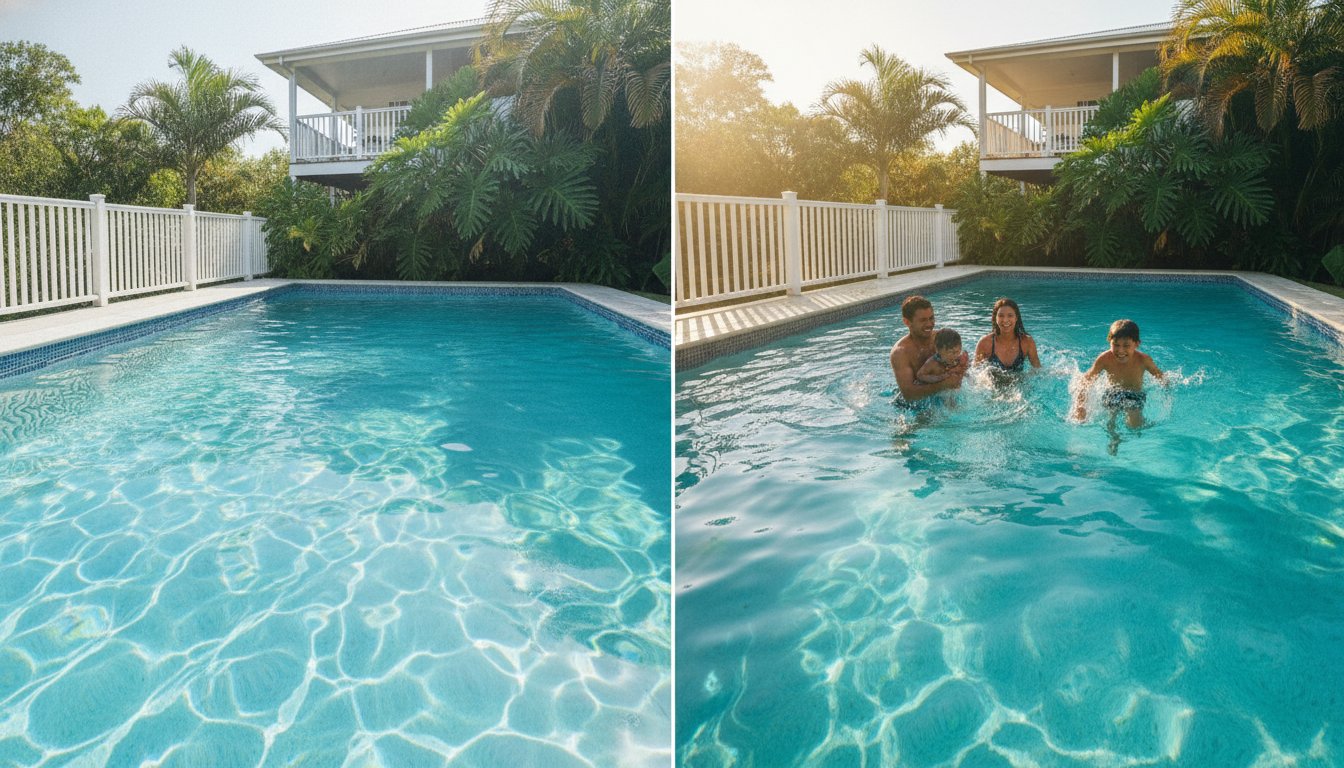
The very sunshine that makes a Brisbane summer iconic is often the silent architect of your pool’s chemical downfall. Many local owners find themselves frustrated when they discover their pool ph level high brisbane issues are recurring despite constant maintenance, leading to cloudy water and itchy skin. It’s a common struggle in our subtropical climate where high evaporation rates and local water characteristics often push the balance out of reach. We know how much you value the relief and peace of mind that comes with a safe, healthy swimming environment for your family.
This expert guide will show you exactly why Brisbane’s unique weather patterns cause these frequent pH spikes and how you can restore your water to its ideal state. We’ll walk you through the essential steps to manage alkalinity, protect your expensive filtration equipment from damaging scale, and ensure your chlorine actually does its job. By understanding the science behind the “why,” you can move away from guesswork and enjoy the crystal-clear results that only a professionally balanced pool can provide.
Key Takeaways
- Discover why maintaining a pH between 7.2 and 7.6 is essential for swimmer comfort and how Brisbane’s subtropical heat naturally drives these levels upward.
- Understand the common technical causes behind a pool ph level high brisbane homeowners often face, including the natural byproducts of saltwater chlorination.
- Learn to identify early warning signs of an imbalance, such as dull water and calcium scale, to prevent permanent damage to your pool’s filtration system.
- Follow a step-by-step guide to safely using liquid or dry acids to restore crystal-clear water and ensure your chlorine is working at its peak.
- Explore how expert water balancing can save you time and money by protecting expensive pumps and pool interiors from long-term chemical wear.
Understanding High Pool pH in the Brisbane Climate
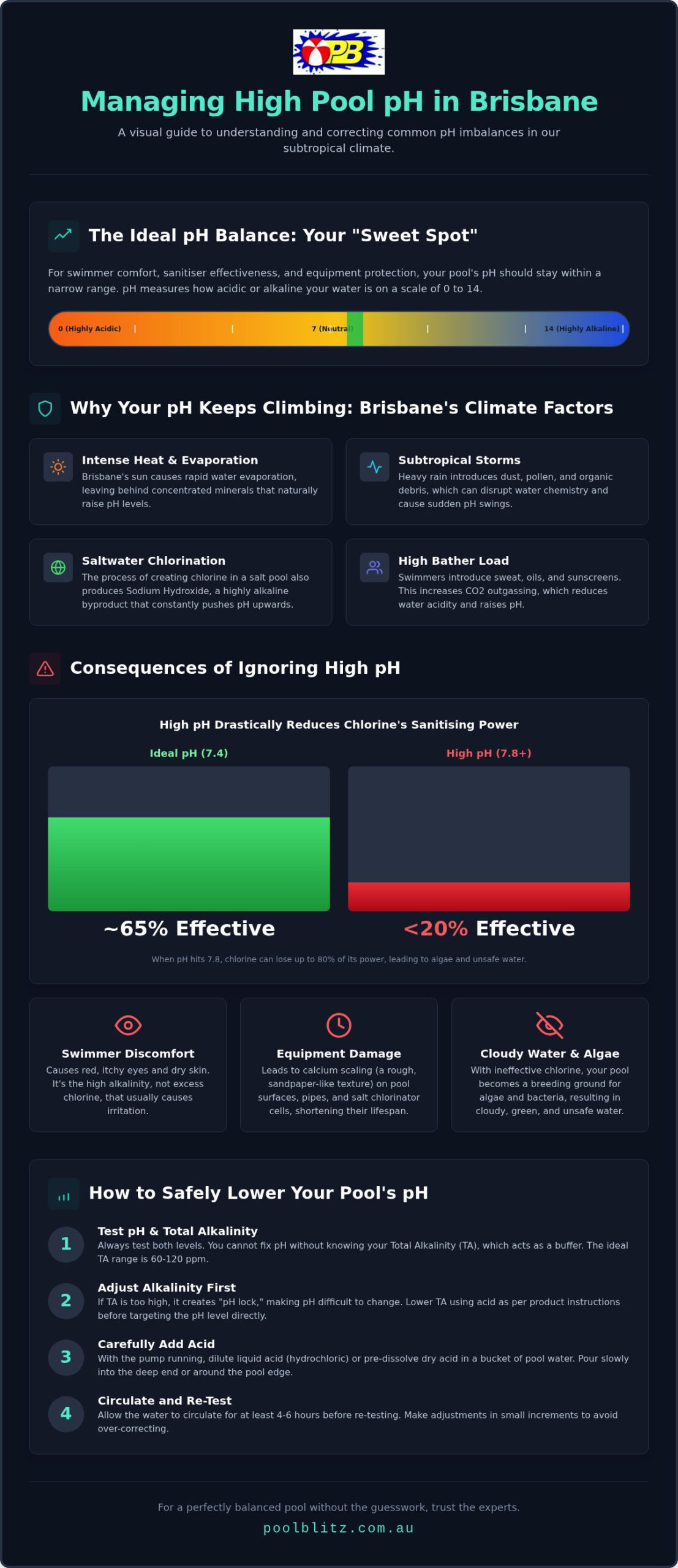
Maintaining a healthy pool starts with mastering the delicate balance of pH. In technical terms, pH measures how acidic or alkaline your water is on a scale from 0 to 14, with 7 being neutral. For our local conditions, the ideal range for a pool ph level high brisbane owners should aim for is between 7.2 and 7.6. This specific window isn’t just a suggestion; it’s the “sweet spot” that ensures your sanitiser works effectively while keeping the water gentle on your skin and your equipment.
Brisbane’s intense summer heat plays a significant role in shifting this balance. As temperatures soar, water evaporates rapidly from the surface, leaving behind a higher concentration of minerals that naturally pull the pH upward. When you add our frequent subtropical storms into the mix, the situation becomes more complex. Heavy rain washes dust, pollen, and organic debris into the water, which can deplete your pool’s natural buffers and cause sudden chemistry swings that are difficult to manage without experience.
Why pH Matters for Your Brisbane Pool
When your pH climbs too high, your chlorine becomes significantly less effective. In fact, established principles of pool water sanitation show that once pH hits 7.8 or higher, chlorine can lose up to 80% of its sanitising power. This creates an open invitation for algae blooms, often resulting in a “green pool” event that requires expensive recovery chemicals. Many swimmers complain of red eyes or itchy skin and assume there’s too much chlorine in the water. Usually, the opposite is true. That stinging sensation is typically caused by high pH levels that have made the water too alkaline. Over time, this imbalance also leads to calcium scaling, which leaves a sandpaper-like texture on pool interiors and shortens the lifespan of salt chlorinator cells.
The “River City” Factor: Local Water and pH
The water we use to fill our pools in Brisbane has its own unique chemical fingerprint. Depending on the suburb and the source of your mains water, you may start with a high level of total alkalinity that makes the pH stubborn to move. Local landscaping choices also influence your water chemistry. Many Brisbane homes feature concrete surrounds or limestone pavers that can leach alkaline minerals into the pool during rain or heavy splashing. Managing these environmental variables is a core part of professional pool maintenance in Brisbane. Having a seasoned expert monitor these shifts ensures your pool remains a source of relaxation rather than a constant chemical puzzle.
The Science of the Spike: Why Your pH Keeps Climbing
Saltwater pools are the standard for many Queensland homes, providing a soft and silky swimming experience. While these systems offer great convenience, the electrolysis process that generates chlorine also produces sodium hydroxide as a natural byproduct. This substance is highly alkaline, which means your salt chlorinator is essentially a “pH machine” that pushes levels upward every hour it’s in operation. This is a primary reason why a pool ph level high brisbane homeowners frequently observe isn’t necessarily a sign of a faulty system, but rather a predictable result of how salt pools function in our climate.
Environmental factors and usage patterns also play a significant role in chemical volatility. Carbon dioxide (CO2) acts as a mild acid in your water, helping to keep the pH down. When CO2 escapes through a process called outgassing, the acidity drops and the pH levels rise. This effect is often amplified during school holidays when high bather loads introduce sweat, body oils, and sunscreens into the water. These organic contaminants force your sanitisation system to work harder, which further accelerates the upward shift in pH. Following established pool maintenance guidelines helps you recognise that these pressures require proactive adjustments to keep the water clear and safe for your family.
Total Alkalinity acts as the “anchor” for your pH levels, providing the necessary buffer to prevent rapid and unpredictable fluctuations.
Total Alkalinity: The pH Buffer
You simply cannot fix a pH issue effectively without first addressing your water alkalinity. If your alkalinity is too high, it creates a condition known as “pH lock,” where adding acid seems to have almost no effect on your test results. For most Brisbane pools, we recommend maintaining an alkalinity range of 60 to 120 ppm, depending on whether your pool has a concrete or fibreglass finish. Keeping this buffer within the correct parameters is the secret to long-term water stability and the protection of your expensive filtration equipment.
Aeration and Water Features
Many local pools feature beautiful waterfalls, deck jets, or infinity edges that define the Brisbane outdoor lifestyle. While these features look stunning, they significantly increase aeration by exposing more water surface area to the air. This rapid movement speeds up the outgassing of CO2 and drives your pH levels higher much faster than a still pool. Solar heating systems can also contribute to this trend, as warmer water naturally encourages quicker chemical changes and holds less dissolved gas. We suggest running your decorative water features only when you’re actually using the pool to help maintain a more stable chemical balance. If you’re finding it difficult to manage these constant shifts, our team at Pool Blitz can help you fine-tune your equipment settings for better results.
Consequences of Ignoring High pH Levels
High pH isn’t just a number on a test kit; it’s a condition that actively degrades your swimming experience and the health of your property. When you’re dealing with a pool ph level high brisbane sun often highlights the most obvious symptom: a loss of that inviting, crystal-clear clarity. Instead of a sparkling oasis, your water looks dull, flat, or even milky. This happens because high alkalinity and pH cause minerals like calcium to become insoluble, essentially turning into tiny particles that float in the water and cloud your view. It’s a frustrating sight for any homeowner who takes pride in their outdoor space.
Beyond the aesthetics, ignoring these levels leads to a cycle of wasted money and chemical frustration. You might find yourself adding more and more chlorine to combat cloudy water or early signs of algae, but because the pH is out of range, the sanitiser remains dormant. This inefficient chemical use significantly inflates your seasonal maintenance costs without actually solving the underlying problem. You’re effectively fighting the water rather than balancing it, which is both exhausting and expensive over a long Brisbane summer.
Equipment Longevity and Scale
The internal components of your pool filtration systems are particularly vulnerable to high pH environments. When the water becomes too alkaline, calcium begins to deposit itself on any warm surface, which is why salt chlorinator cells are often the first to fail. These white, crusty deposits bridge the gap between the plates, forcing the unit to work harder and eventually burning out the electronics. Even your pool pump isn’t safe. Scale can build up around the mechanical seal, causing it to crack and leak over time. If you have already noticed these white deposits or your equipment has become noisier, it might be time to look into expert pool equipment repairs in Brisbane to prevent a total system failure.
Swimmer Discomfort and Safety
We often hear from parents about “too much chlorine” causing red eyes after a weekend pool party. In reality, this burning eyes phenomenon is usually caused by chloramines, which form much more readily when the pH is high and the chlorine is struggling to sanitise. High pH also strips the natural protective oils from human skin, leaving swimmers feeling itchy and dry once they hop out of the water. There is also a genuine safety concern to consider. Reduced water clarity makes it difficult to see the bottom of the deep end, which is a significant risk during busy gatherings where visibility is paramount for supervising children.
How to Lower Pool pH Safely: A Step-by-Step Guide
Restoring balance to your water requires a methodical approach rather than a reactive one. You should never add chemicals to your pool without a fresh, accurate test result from that same morning. For those managing a pool ph level high brisbane homeowners often experience, accuracy is your best tool for avoiding a frustrating chemical roller coaster. Once you’ve confirmed your levels are above 7.6, you can begin the correction process with confidence.
You have two primary choices for lowering pH: Liquid Hydrochloric Acid (also known as Muriatic Acid) or Dry Acid (Sodium Bisulphate). Liquid acid is fast-acting and highly cost-effective for larger pools, while dry acid is often preferred for its ease of storage and handling. Both are effective, but liquid acid requires a steadier hand to avoid splashes. To ensure even distribution and prevent damage to your pool’s interior, use the “dilute and pour” method. Fill a plastic bucket with pool water first, add the measured acid to the bucket, and pour the mixture around the deep end perimeter while the pump is running. Always allow the water to circulate for 4 to 6 hours before re-testing or allowing anyone to swim.
Calculating the Correct Dosage
Knowing your pool’s total volume in litres is essential before you open any chemical containers. A 50,000-litre family pool requires a vastly different dose than a 15,000-litre plunge pool, and guessing can lead to expensive mistakes. It’s always better to be conservative and add slightly less than the calculated amount, as over-correcting can lead to acidic water that eats away at your heater and pump seals. For a precise readout and professional guidance, visiting a north Brisbane pool care specialist can take the stress out of your weekend maintenance routine.
Safety Protocols for Handling Acid
Handling concentrated pool chemicals demands your full attention and the right protective equipment. You must always add acid to water, never water to acid, to prevent a dangerous chemical reaction that can cause violent splashing. Wear safety glasses, chemical-resistant gloves, and enclosed shoes every time you work with these substances. In Brisbane’s high-heat environment, store your chemicals in a cool, well-ventilated area away from direct sunlight. This prevents dangerous fuming in garden sheds and keeps the chemicals stable for longer. If you’re finding it difficult to keep your water balanced, you can arrange a professional water balancing service to restore your peace of mind.
Professional Water Balancing: The Pool Blitz Advantage
While home test strips provide a quick snapshot of your water, they often lack the precision required to maintain a truly stable environment. Achieving a perfect balance involves more than just reacting to a pool ph level high brisbane sun has exacerbated; it requires a comprehensive understanding of how different chemicals interact. At Pool Blitz, we take a holistic approach by focusing on the “Big Three” of water chemistry: pH, Total Alkalinity, and Calcium Hardness. By standardising these three pillars, we create a chemical foundation that remains resilient against the sudden storms and heatwaves typical of our local climate.
Trusting a professional for your water balancing does more than just keep the water clear. It acts as a proactive insurance policy for your most expensive equipment. When your water is perfectly balanced, your pool pumps run more efficiently and the delicate internal components of your robotic pool cleaners are protected from the corrosive effects of improper chemistry. This methodical care extends the lifespan of your filtration system, ensuring you don’t face the stress of premature equipment failure during the height of the swimming season.
Why Choose Pool Blitz for Your Brisbane Pool?
We bring over 30 years of experience directly to your gate, offering a level of seasoned authority that only comes from decades of serving the Brisbane community. Our mobile service is designed for your convenience, eliminating the need for you to lug heavy water samples or chemical drums across town. We don’t just fix the immediate problem; we use premium-grade chemicals that are specifically selected for their longevity and stability. This professional-grade approach ensures your water stays swimmable for longer, giving you the peace of mind that your family is jumping into a safe and healthy environment.
Beyond pH: Total Pool Health
A healthy pool is a complete ecosystem where chemistry and mechanical performance work in harmony. If your water has become unmanageable or you’ve noticed a persistent pool ph level high brisbane issue that won’t go away, a casual pool service can provide the “chemical reset” your pool needs to get back on track. Our expertise also extends to robotic pool cleaner repairs and filtration health, allowing us to identify and fix small mechanical issues before they become costly repairs. Whether you need a one-off balancing or regular maintenance, we are here to act as the dependable partner your pool deserves. Book your Brisbane pool service with Pool Blitz today and enjoy the clarity that comes with professional care.
Enjoy a Clearer, Healthier Swim This Summer
Mastering your pool’s chemistry shouldn’t be a source of constant weekend stress for your family. We’ve explored how Brisbane’s unique subtropical climate and intense evaporation rates create a persistent challenge for local homeowners. By focusing on the vital relationship between pH and Total Alkalinity, you can successfully break the cycle of cloudy water and ensure your chlorine remains effective. Proactively managing a pool ph level high brisbane residents often face is the most reliable way to safeguard your expensive filtration system from permanent calcium scale damage.
Our team brings over 30 years of local experience directly to your gate, providing professional mobile water testing and precise chemical delivery tailored to your specific pool type. We’re specialists in equipment-saving water chemistry that keeps your pumps and robotic cleaners in peak condition for many seasons to come. Get your pool water perfectly balanced by the Brisbane experts at Pool Blitz and reclaim the joy of a pristine swimming environment. You deserve a sparkling, healthy oasis that’s always ready for a refreshing dip under the Queensland sun.
Frequently Asked Questions
Why does my pool pH keep going up every week in Brisbane?
Brisbane’s high temperatures and intense UV radiation are the primary culprits for constant chemical shifts. Intense heat causes water to evaporate rapidly, which concentrates alkaline minerals and drives levels up. Additionally, the constant operation of salt chlorinators in our climate naturally produces sodium hydroxide as a byproduct. This combination makes managing a pool ph level high brisbane homeowners experience a weekly task rather than a monthly one.
Is it safe to swim in a pool with high pH levels?
It isn’t immediately dangerous, but swimming in water with a high pH is far from ideal. High alkalinity significantly reduces the sanitising power of your chlorine, allowing bacteria and algae to grow more easily in the warm Brisbane sun. Swimmers will likely experience stinging red eyes and dry, itchy skin because the water is no longer compatible with the natural pH levels of human eyes and skin.
How much hydrochloric acid do I need to lower my pool pH?
Your required dose depends on your pool’s total volume and current alkalinity. For a standard 50,000-litre pool, you might need approximately 500ml of hydrochloric acid to lower the pH by 0.2, but this is only a general estimate. You should always add acid in small, diluted stages and re-test after several hours of circulation. Over-correcting can lead to acidic water that corrodes your expensive pump seals and heater internal components.
Can high pH cause cloudy water in my swimming pool?
High pH is a leading cause of dull or milky water in Queensland pools. When levels climb above 7.8, minerals like calcium fall out of suspension and float as tiny particles that block light. This creates a cloudy appearance that ruins your pool’s aesthetic appeal. Beyond the look, these particles eventually settle as hard scale on your tiles and can significantly clog your filtration system.
What is the difference between pH and Total Alkalinity?
pH measures the current acidity of your water, while Total Alkalinity acts as the “anchor” that keeps that measurement stable. If your alkalinity is out of range, your pH will either bounce around or become incredibly difficult to adjust with acid. Keeping your alkalinity between 80 and 120 ppm provides the necessary buffer to prevent the rapid chemical spikes often seen in a pool ph level high brisbane owners struggle to manage.
How long should I wait to swim after adding acid to the pool?
You should wait at least 4 to 6 hours after adding acid before allowing anyone to swim. This period ensures the pump has enough time to circulate the chemicals and achieve a uniform balance throughout the entire pool. Jumping in too early can expose swimmers to concentrated pockets of acid, which might cause skin irritation or damage swimwear. Always perform a quick check with a test kit before the kids dive in.
Will a salt chlorinator cause my pH to rise?
Most salt chlorinators naturally push pH levels upward as a byproduct of the electrolysis process. As the cell generates chlorine, it also creates sodium hydroxide, which is a highly alkaline substance. Because Brisbane pools often require long filtration cycles during the summer months, this constant production of alkalinity makes regular acid additions a necessary part of your maintenance routine to keep the water clear and safe.
Can heavy Brisbane rain affect my pool pH level?
Heavy subtropical rain is actually slightly acidic, which can initially lower your pH, but the real issue is dilution. Significant rainfall washes away your protective chemical buffers and introduces organic debris like dust and garden soil. As your sanitiser works to neutralise these new contaminants, the water chemistry can shift rapidly. We always recommend a professional water test after a big storm to ensure your balance is restored properly.
No responses yet