
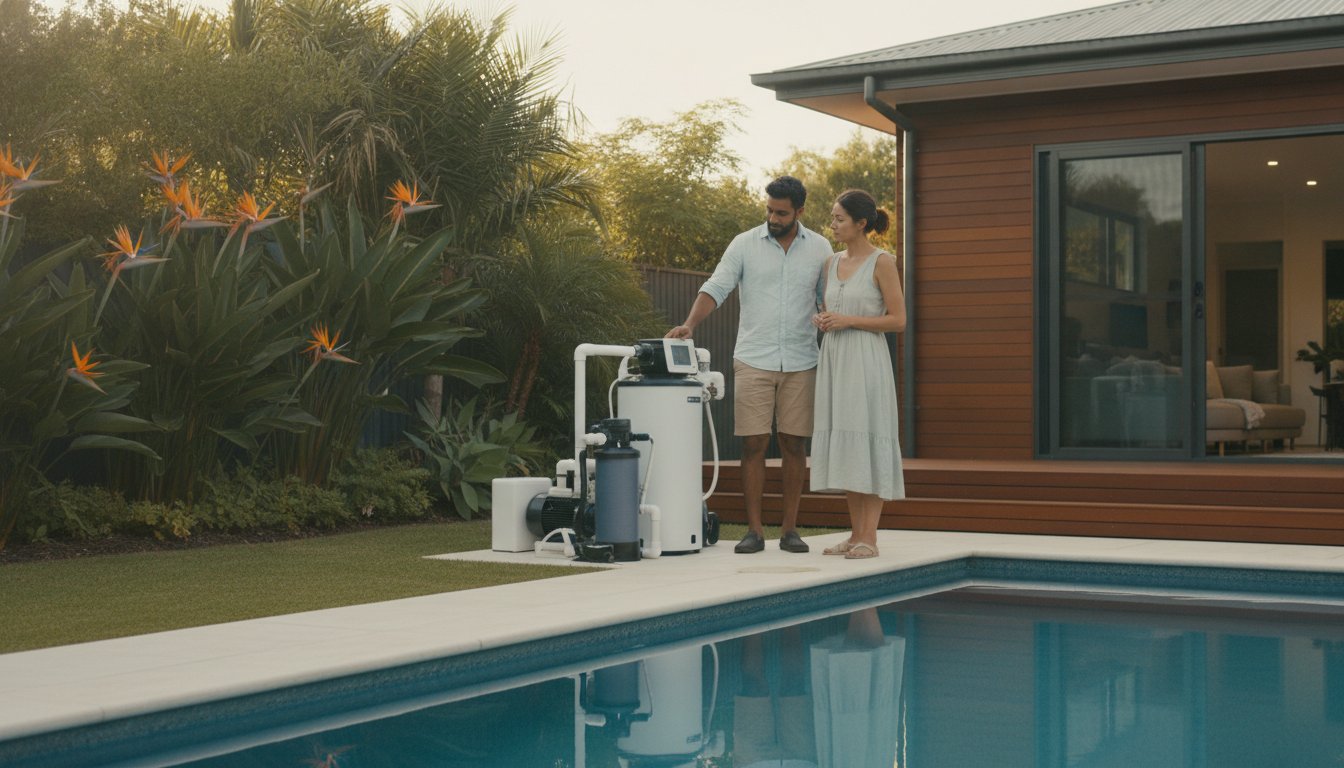
That flashing red light on your pool control box isn’t necessarily a sign that your system is destined for the scrap heap, even if it feels like a disaster during a humid January afternoon. Many salt water chlorinator problems brisbane residents encounter are actually symptoms of environmental stress rather than terminal mechanical failure. It’s a common frustration to find your water turning a dull shade of green just as the weekend barbecue begins, leaving you worried about both the safety of the swimmers and the potential cost of a total equipment replacement.
We understand that maintaining a pristine pool in our sub-tropical climate is a significant commitment, and you deserve the peace of mind that comes with reliable hardware. This guide provides a clear path to identifying the most frequent chlorinator faults, from calcified cells to confusing sensor errors, so you can make informed decisions about repairs. We’ll explore how local water chemistry impacts your system’s longevity and show you how a precise diagnosis can save you from the expense of a brand-new unit. By the end of this article, you’ll know exactly how to restore that sparkling clarity and keep your equipment running efficiently for years to come.
Key Takeaways
- Identify why Brisbane’s unique sub-tropical climate and heavy summer storms are often the root cause of salt water chlorinator problems brisbane homeowners encounter.
- Master straightforward diagnostic methods, such as the “Bucket Test,” to distinguish between a simple water chemistry imbalance and a genuine hardware fault.
- Learn the professional approach to cleaning chlorinator cells that preserves the delicate plate coatings and extends the lifespan of your equipment.
- Understand the “7-Year Rule” and when it is more cost-effective to repair a control box PCB rather than committing to a full system replacement.
- Realise how expert water balancing acts as a protective shield for your hardware, preventing the premature cell burnout common in neglected pools.
Understanding Your Salt Water Chlorinator: Brisbane’s Most Hardworking Asset
Think of your salt water chlorinator as a mini chlorine factory that operates right in your backyard. Instead of you manually adding liquid or granular chlorine, this system uses a scientific process to generate sanitiser on demand. In the humid, sub-tropical climate of South East Queensland, salt pools are the gold standard for comfort and convenience. They provide a softer water feel that is gentler on the skin and eyes, which is a significant benefit when you are swimming daily during a sweltering Brisbane summer.
How Electrolysis Keeps Your Pool Sanitised
The heart of the system is a process called electrolysis. As pool water containing dissolved salt passes through the electrolytic cell, a low-voltage electrical current converts the chloride ions into pure chlorine gas. This gas dissolves instantly to sanitise your water, killing bacteria and algae before they can take hold. A fascinating aspect of how salt water chlorination works is that it is a closed-loop cycle. Once the chlorine has done its job, it reverts back into salt, waiting to be converted again. The efficiency of this process is measured by the chlorine production rate, which is the amount of chlorine the system can generate expressed in grams per hour.
The Anatomy of a Salt Water Chlorinator System
A standard system consists of two primary components: the electrolytic cell and the power pack. The cell is the clear plastic housing containing the metallic plates where the chemistry happens, while the power pack is the control box mounted on the wall. This box regulates the electrical flow and monitors vital statistics through various sensors. These sensors track water flow, salt concentration, and temperature to ensure the system operates safely. While these systems are robust, they are not immune to the elements.
Brisbane’s local water conditions present unique challenges, particularly with water hardness and the frequent storm cycles that can dilute salt levels overnight. When these components fall out of sync, you’ll likely encounter expert pool equipment repairs Brisbane homeowners often require to get back on track. High humidity can also impact the delicate electronics inside the power pack, leading to the common salt water chlorinator problems brisbane families face. Understanding this interplay between your hardware and the local environment is the first step toward maintaining a healthy, sparkling pool.
The Top 5 Salt Water Chlorinator Problems in Brisbane Pools
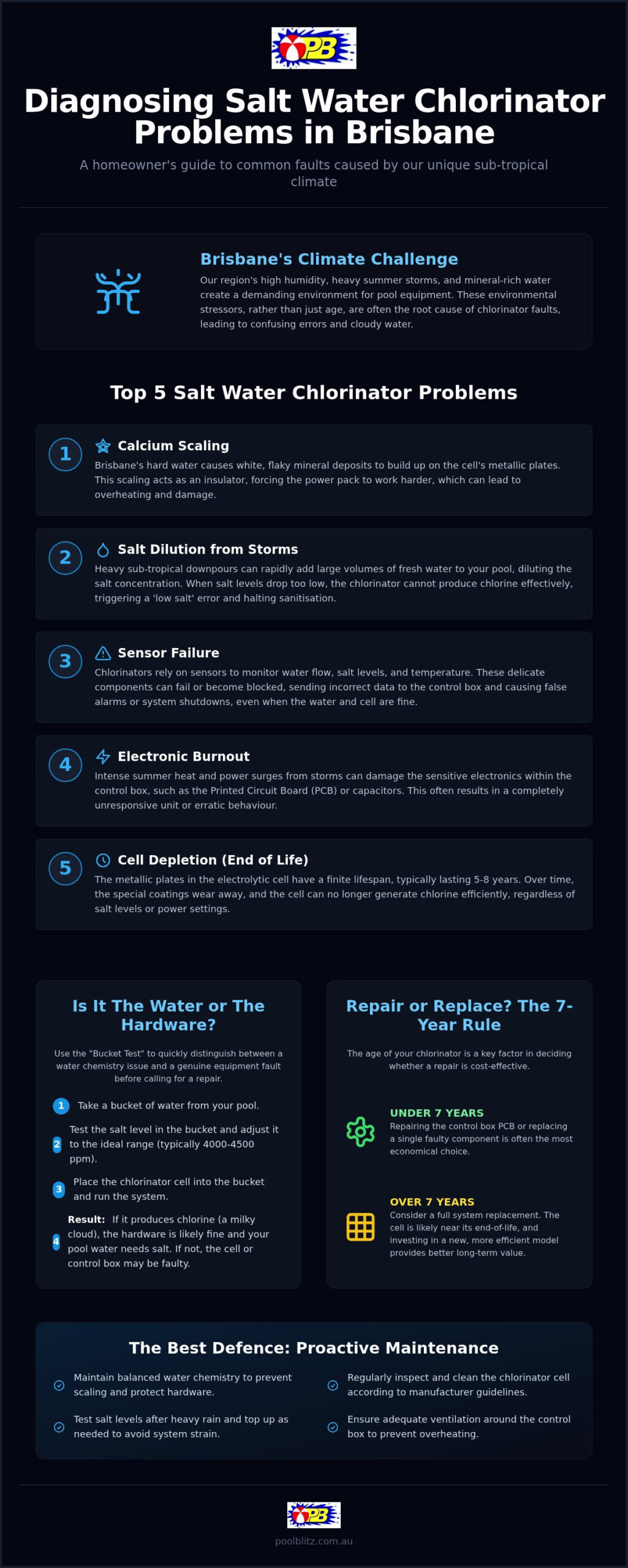
Brisbane’s environment is notoriously demanding on pool hardware. While modern 2026 smart chlorinators offer sophisticated diagnostics compared to the older analogue units of the past, they are still susceptible to the same environmental stressors. Identifying salt water chlorinator problems brisbane homeowners face usually comes down to five primary culprits. These range from simple chemical imbalances to terminal hardware failures that require a professional eye to diagnose correctly.
- Calcium scaling: Hard water deposits that insulate the cell plates.
- Salt dilution: Low concentrations caused by heavy summer downpours.
- Sensor failure: Faulty flow or salt sensors triggering false error codes.
- Electronic burnout: Damage to the PCB or capacitors caused by extreme heat or power surges.
- Cell depletion: The natural end of the electrolytic plates’ lifespan.
Calcium Scaling and Hard Water Issues
Brisbane’s local water supply often carries a high mineral content, which leads to rapid calcium build-up on the cell plates. You’ll recognise this as white, flaky deposits wedged between the metallic grids inside the clear cell housing. Scaling is more than a visual nuisance; it creates electrical resistance. To compensate, the power pack must work significantly harder to pass a current through the plates, which often leads to the internal components overheating. Keeping your pool within essential water chemistry parameters is the most effective way to prevent this build-up and protect your investment.
The Impact of Brisbane Tropical Storms on Salt Levels
A single afternoon storm in South East Queensland can dump enough water to significantly dilute your pool’s salt concentration. Most systems operate best between 4,000 and 5,000 ppm, but a heavy rain event can quickly push this below the operational threshold. This creates the “Salt-Chlorine Paradox” during the storm season. You might see a “Low Salt” warning, but adding more salt isn’t always the correct response. If the water is particularly cold or the cell is slightly scaled, the sensor may give a false low reading. Over-salting the pool to “fix” a warning light can eventually lead to high-amp errors that damage the control box circuitry.
If your system is throwing erratic codes after a storm, a professional assessment is often safer than a DIY guess. Our team at Pool Blitz provides expert water balancing to ensure your salt levels are precise, protecting both your water clarity and your expensive hardware from unnecessary stress. Whether you’re dealing with a stubborn “No Flow” message or a suspected burned-out PCB, understanding these local factors is the key to a long-lasting chlorination system.
Diagnosing the Fault: Is it the Cell, the Box, or the Water?
When faced with salt water chlorinator problems brisbane homeowners often assume the worst. It’s a natural reaction to fear a costly replacement the moment the pool water begins to cloud. However, a structured approach to diagnosis often reveals that the system is simply reacting to an external imbalance rather than suffering from a terminal hardware fault. Before you decide your equipment is destined for the scrap heap, it’s essential to determine whether the issue lies with the electrolytic cell, the control box, or the chemistry of the water itself.
The first step is the “Eyeball Test.” When your system is running at 100% capacity, you should see a fine, milky mist of bubbles inside the clear cell housing. This is the chlorine gas being generated in real time. If the water inside the cell remains perfectly clear while the pump is active, production has stalled. For a more definitive answer, we often use the “Bucket Test.” By taking a water sample directly from a return jet while the chlorinator is running and comparing it to a sample from the opposite end of the pool, you can confirm if the cell is actually contributing sanitiser to the water.
Modern 2026 digital units are designed to be more communicative than their predecessors, but their messages require careful interpretation. A “Low Volts” warning usually indicates that the power pack is struggling to push current through the plates, which is frequently caused by heavy calcification or a failing internal transformer. Conversely, a “Check Cell” light is a broader alert that triggers when the system detects a drop in conductivity, often because the salt level has fallen or the plates have reached the end of their functional life.
Hardware vs. Chemistry: A Process of Elimination
Isolating the cause of a failure requires a methodical process of elimination. You should first confirm that your salt and pH levels are within the ideal range, as even a perfectly functional chlorinator cannot sanitise water effectively if the pH is too high. Once the chemistry is verified, inspect the cell for physical damage or white calcium deposits on the plates. Finally, examine the control box for any “burnt” plastic smells or an unresponsive display, as these symptoms point toward a failure in the printed circuit board that requires professional attention.
Professional Water Balancing: The Secret to Diagnosis
Home test strips are helpful for routine maintenance, but they often lack the precision needed for complex troubleshooting. A professional lab test provides a detailed mineral profile that is essential for an accurate diagnosis. In many instances, expert water balancing can “fix” a system that appears to be broken. For example, if your stabiliser (cyanuric acid) levels are too low, the harsh Brisbane sun will consume chlorine as fast as the cell can produce it. This often leads owners to believe their hardware has failed when the water chemistry is actually the only problem.
Step-by-Step Maintenance: Extending Chlorinator Life in the Heat
Proactive maintenance is the most effective way to prevent the salt water chlorinator problems brisbane residents frequently encounter during the peak of summer. In our sub-tropical climate, your equipment works significantly harder than it would in cooler regions. Taking a few deliberate steps each month can add years to the life of your cell and prevent the need for an early system replacement.
The Correct Way to Clean Your Chlorinator Cell
Cleaning your cell is a delicate balance. While removing calcium is necessary, over-cleaning with harsh acid can strip the precious ruthenium coating from the plates, effectively killing the cell. Follow these steps for a safe result:
- Step 1: Turn off the pump and the power pack to isolate the cell from the electrical current.
- Step 2: Submerge the plates in a diluted acid solution or a dedicated salt cell cleaner. Wait for the fizzing to stop, which indicates the calcium has dissolved.
- Step 3: Rinse the unit thoroughly with a garden hose. Never use a screwdriver or any metallic tool to scrape the plates. Even a small scratch on the coating can lead to rapid plate failure.
Beyond the cell plates, you must protect the control box electronics. Brisbane’s intense afternoon sun can bake internal capacitors, while local pests like ants and geckos are notorious for seeking warmth inside the housing and shorting out the circuit board. Ensure the box is shaded where possible and check for any signs of insect activity regularly.
Seasonal Adjustments for South East Queensland
The demands on your pool change dramatically with the calendar. A runtime that works in July will result in a green pool by mid-January. During the peak of summer, your system may need to run for 8 to 10 hours daily to maintain a safe chlorine residual, whereas 4 to 5 hours is often sufficient in the cooler months. If you’ve hosted a large pool party, use the “Boost” or “Super Chlorinate” mode to temporarily increase production and handle the higher bather load. For a comprehensive guide on managing your equipment throughout the year, a detailed seasonal checklist is an invaluable resource for Brisbane homeowners. If you’re unsure about your salt levels or the health of your cell, the team at Pool Blitz can provide a professional health check to ensure your system is ready for the heat. Regular salt level monitoring, ideally keeping it between 4,000 and 5,000 ppm, is your best defence against unnecessary hardware stress.
Professional Repair vs. Replacement: Making the Right Call
Deciding whether to salvage your current system or invest in a new one is a crossroad every pool owner eventually faces. While many retailers are quick to suggest a total replacement, a more methodical approach can often save you hundreds of dollars. Many salt water chlorinator problems brisbane residents encounter are centered in the control box, where a faulty printed circuit board (PCB) or a blown capacitor can be replaced for a fraction of the cost of a brand-new unit. We believe in transparency and stability, which is why we prioritise a precise diagnosis before recommending any major expenditure.
The “7-Year Rule” serves as a helpful benchmark for Brisbane homeowners. In our harsh sub-tropical environment, an electrolytic cell typically has a functional lifespan of three to seven years, depending on how diligently the water has been balanced. If your cell is six years old and showing signs of plate depletion, investing in a repair for the power pack may be a false economy. Conversely, a three-year-old system with a minor electronic fault is almost always worth repairing. When replacement is necessary, we advise caution regarding generic cells. While they appear cheaper upfront, they often lack the high-grade ruthenium coating found in genuine parts, leading to a much shorter lifespan and potential compatibility issues with your existing hardware.
The Hidden Costs of DIY Guesswork
Attempting a DIY fix on complex chlorination equipment carries risks that extend beyond a simple electrical shock. An incorrectly installed cell or a mismatched power setting can create back-pressure or chemical spikes that necessitate a more extensive pool filtration system repair. There is also the matter of your manufacturer’s warranty. Most premium brands require professional installation to keep the warranty intact, meaning a “handyman” approach could leave you unprotected if the unit fails again. Our team specialises in pool equipment repairs, ensuring every component is calibrated to work in harmony with your pump and filter.
Trusting the Seasoned Authority
Pool Blitz has been a fixture in the Brisbane community since 1994, acting as a protective steward for thousands of local pools. Our philosophy is simple: we diagnose first and replace only when it is the most cost-effective long-term solution for you. This commitment to reliability is why our regular pool servicing is so highly valued. By catching minor fluctuations in salt levels or early signs of scaling during a routine visit, we can prevent the terminal failures that lead to green water and expensive bills. If you are unsure about the health of your system, don’t leave it to chance.
Book a chlorinator health check with Pool Blitz.
Restoring Clarity to Your Brisbane Pool
Maintaining a healthy pool in our sub-tropical climate doesn’t have to be a source of constant stress. By understanding the common salt water chlorinator problems brisbane homeowners face, you can distinguish between a simple chemistry imbalance and a genuine hardware fault. Whether it’s managing calcium scaling or adjusting runtimes for the summer heat, small proactive steps go a long way in protecting your equipment. Your pool is a significant investment, and with the right care, it will provide years of enjoyment for your family.
As a local family-owned and operated business serving the community since 1994, we believe in providing a stable and reliable service that prioritises repair over replacement whenever possible. Our team consists of experts in diagnosing and repairing Astral and Zodiac systems, ensuring your pool remains a safe and sparkling sanctuary. Don’t let a confusing error code or cloudy water ruin your weekend. Take the guesswork out of your maintenance and trust the seasoned experts to handle the technical details.
Book a Professional Chlorinator Diagnosis with Pool Blitz
We are here to act as the seasoned stewards of your property, giving you the relief of knowing your equipment is in professional hands. Enjoy the peace of mind that comes with a perfectly balanced, crystal-clear swimming experience every day of the year.
Frequently Asked Questions
How long should a salt chlorinator cell last in Brisbane?
A salt chlorinator cell in Brisbane typically lasts between three and seven years. This lifespan depends heavily on how well you maintain your water chemistry and the quality of the cell itself. In our humid climate, cells work harder during the long summer months, which can lead to faster plate depletion if the pool is neglected. Regular professional servicing ensures your cell operates within its ideal parameters, maximising its functional life.
Why is my chlorinator showing a “Low Salt” light when I just added salt?
A “Low Salt” warning doesn’t always mean you need more salt. It is often triggered by a calcified cell, cold water temperatures, or a failing sensor within the unit. Adding salt prematurely can lead to high-conductivity issues that damage your control box circuitry. If you’ve recently added salt and the light remains on, it’s a clear sign of salt water chlorinator problems brisbane residents should have professionally diagnosed to avoid hardware damage.
Can I still use my pool if the chlorinator is broken?
You can still use your pool while the chlorinator is offline, provided you manually maintain the chlorine levels. You must add liquid or granular chlorine to keep the water sanitised and safe for swimmers. However, you should never swim if the water appears cloudy or green. It’s best to resolve the fault quickly to avoid a total algae bloom that requires a more expensive green pool recovery service.
How often should I clean my salt chlorinator cell?
Most Brisbane pool owners should inspect and clean their chlorinator cell every three to six months. During the peak of summer, when calcium build-up is more aggressive due to high temperatures, you might need to check it monthly. If you have particularly hard water, more frequent cleaning with a diluted acid solution is necessary to prevent the power pack from overheating while trying to push current through scaled plates.
What is the “No Flow” error, and how do I fix it?
The “No Flow” error indicates that the system doesn’t detect enough water moving through the electrolytic cell housing. This is usually caused by a dirty skimmer basket, a clogged pump basket, or a filter that needs backwashing. If your baskets and filter are clean but the error persists, the flow sensor itself may be faulty. Checking these simple mechanical points first can often save you the cost of a service call.
Is it cheaper to repair or replace a pool chlorinator control box?
Repairing a control box is frequently more cost-effective than a total replacement, especially if the unit is less than five years old. Components like the printed circuit board or capacitors can often be replaced by a qualified technician for a fraction of the cost of a new system. Our team focuses on diagnosing the specific fault first, ensuring you don’t spend money on a new unit when a professional repair is possible.
Does a salt chlorinator work during the Brisbane winter?
Salt chlorinators definitely work during the Brisbane winter, but they are less efficient in cooler water. Low water temperatures increase electrical resistance, which means the cell produces less chlorine gas than it does in the height of summer. You should reduce your pump runtime and production percentage during the winter months to reflect the lower bather load and decreased UV light, which helps preserve the life of your cell plates.
Why does my chlorinator cell keep getting white crusty build-up?
White crusty build-up is calcium carbonate scaling, which occurs when your pH or calcium hardness levels are too high. This is one of the most common salt water chlorinator problems brisbane pools face due to our local water supply. Expert water balancing is the only way to stop this cycle. If your pH isn’t kept in check, the scaling will return within weeks of cleaning, eventually causing terminal damage to the cell coating.
No responses yet