
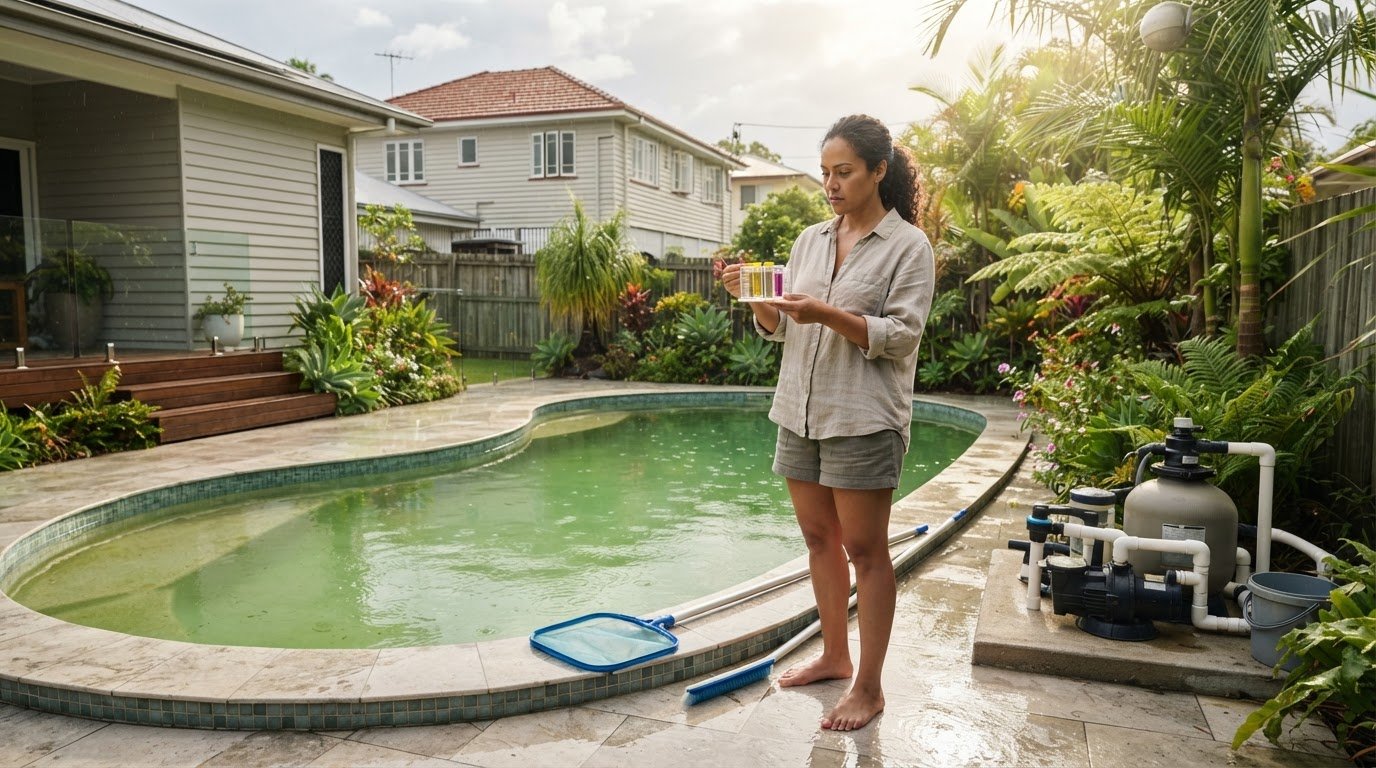
What if treating a greenish pool before testing it is what’s keeping the water from clearing? A sudden colour change can point to algae, but metals in the water or poor circulation and filtration may also be involved. Until the water is clear and sanitiser levels are confirmed, keep swimmers out.
It’s understandable to want to add a treatment straight away, especially when you’re unsure whether the water is safe or your pump and filter are working properly. But a reliable recovery starts by identifying the likely cause, then checking the water and equipment before choosing what to do next.
This guide explains what can turn pool water green, how to investigate the colour change and which practical steps can help restore clarity. You’ll also learn why brushing, filtration and balanced water care matter, when further testing is useful, and how a pump or filter inspection can help if circulation is part of the problem.
Key Takeaways
- A greenish pool can have several causes, so colour alone won’t tell you whether algae is present or the water is safe.
- Brisbane’s heat, rain, sunlight and debris can increase pool-care demands and contribute to conditions that favour algae.
- Before treating a greenish pool, test the water and check baskets, skimmer, pump operation and visible filter condition.
- Follow a careful recovery sequence: clean, circulate, treat according to test results and retest, while following chemical labels.
- If readings are confusing, the water stays green or circulation seems poor, expert water balancing or an equipment assessment can help.
What does a greenish pool mean, and is it safe to swim?
A greenish pool has a visible green tint, but colour alone can’t identify the cause. Algae is a common possibility, particularly when sanitisation isn’t keeping growth in check. Metals in the water, water-balance issues or a combination of factors can also affect its appearance.
Colour is a clue, not a safety test. Green water doesn’t confirm that algae is present, and clear-looking water doesn’t prove sanitiser levels are suitable. Pause swimming until the water is clear enough to assess and testing confirms it’s properly sanitised. If you can’t clearly see the pool floor, swimmers and objects in the water may be harder to spot, making swimming less safe.
Diagnose the cause before adding pool chemicals. The wrong treatment can miss the problem or complicate recovery. Use test results to guide treatment rather than relying on appearance alone. For background on the processes involved in keeping water healthy, see Proper pool sanitation.
Green tint, cloudy water, or a full algae bloom?
A slight tint may leave the water mostly clear, while suspended particles can make it look hazy or milky. A more established algae problem may show as widespread green cloudiness, visible growth on surfaces or slippery patches. These signs help describe what you’re seeing, but they can’t identify the cause with certainty.
Limited visibility matters for both safety and diagnosis. If the floor or fittings are difficult to see, don’t swim while you investigate. Also avoid assuming that colour points to one specific treatment. Water testing can help distinguish a sanitisation issue from other possible causes.
Could metals or water balance be involved?
Algae is a frequent suspect when pool sanitisation has fallen short, but it isn’t the only explanation for a green appearance. Imbalanced water can affect treatment performance, and metals in the water may also contribute to discolouration. The shade itself can’t reliably tell you which factor is responsible.
Check test results alongside anything that’s changed recently, such as the water source, a treatment or pool equipment. This context can help narrow down what to investigate before choosing a response. If the results are unclear, expert water balancing can offer a more measured next step than adding chemicals by guesswork.
Why does pool water turn green in Brisbane?
Algae is a common cause of green pool water when sanitisation and other water conditions allow it to grow. The colour can also follow a combination of pressures: warm weather may encourage algae, rain can alter water balance, and leaves or other garden debris add material the pool system must remove. No single hot day or downpour proves algae is present. Look at the water and equipment together, then use test results to narrow down the cause.
Algae, sunlight, and Brisbane weather
Brisbane’s subtropical climate brings heat, humidity and a storm season from November to March. Warm conditions and sunlight make consistent pool care important, while heavy rain can dilute or otherwise change the water. Wind and storms may also wash leaves, dust and other organic matter into the pool. These changes can place extra demand on sanitisation and filtration, but they’re clues to investigate, not a diagnosis by themselves.
Think about what happened before the colour changed. Did rain leave debris in the water? Has the pool had strong sun and heat, or has routine care been missed? These details can guide testing, but don’t treat based on weather alone.
Water balance and circulation clues
Test the water, including pH and chlorine, and interpret the readings using current product guidance. A result outside the recommended range may affect how well the water is sanitised, so don’t assume adding more chlorine is the answer without checking first.
Next, consider whether water is moving through the system properly. A pump that isn’t operating as expected, reduced run time, full skimmer or pump baskets, or a filter that needs attention can limit circulation and filtration. If the water remains cloudy or develops a green tinge, check these basics alongside the test results. The Brisbane pool filtration and pool health guidance explains why effective filtration matters.
Clear water depends on sanitation, balanced water and effective filtration working together. Pool Blitz helps Brisbane pool owners with expert water balancing and pool equipment repairs when test readings are difficult to interpret or equipment may be contributing. Find out more about Brisbane pool servicing and maintaining your pool.
How to clear a greenish pool: a safe step-by-step approach
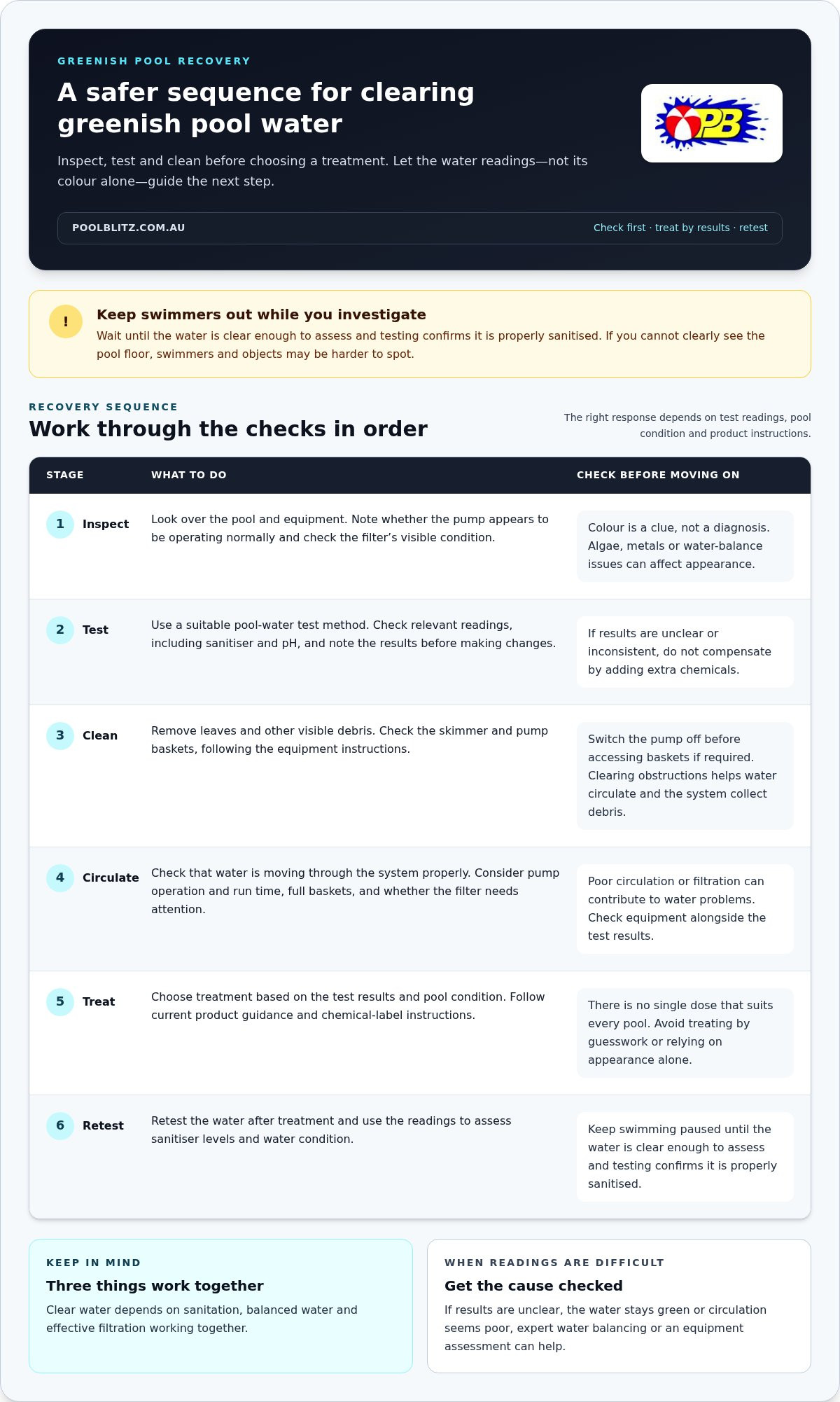
A measured recovery is safer and more effective than adding chemicals by guesswork. Work through the steps in order: inspect the pool and equipment, test the water, remove debris, restore circulation, select treatment based on the results, then retest. The right response depends on the readings, the pool’s condition and the product instructions, so there’s no single dose that suits every pool.
Test and clean before choosing a treatment
Start with the evidence. Use a suitable pool-water test method to check relevant readings, including sanitiser and pH, and note the results before making changes. If the results are unclear or inconsistent, don’t try to compensate by adding extra chemicals. A professional water assessment can help identify what needs attention.
Next, remove leaves and other visible debris. Check the skimmer and pump baskets, following the equipment instructions and switching the pump off before accessing baskets if required. Look at the filter’s visible condition and note whether the pump appears to be operating normally. Clearing obstructions helps the system circulate water and collect debris effectively.
Circulate, treat, and reassess carefully
Once you’ve checked the system, run the filtration according to its instructions and watch whether water is moving as expected. Choose a treatment only after considering the test results and likely cause. Read the product label for directions, handling precautions and instructions about adding or applying the chemical.
Never mix pool chemicals. Use each product only as directed, and don’t improvise doses or combine treatments to speed things up. If you’re unsure what a test result means, pause and seek water-balancing guidance before adding anything else.
- Inspect: Check the water, baskets, pump operation and visible filter condition.
- Test: Record readings before treatment so you have a clear basis for your next step.
- Clean and circulate: Remove debris, clear baskets as instructed and run the filtration system correctly.
- Treat and retest: Follow the relevant product label, then test again before considering swimming.
Keep the pool closed to swimmers while visibility is poor or sanitisation hasn’t been confirmed. Retest after treatment and continue cleaning or filtration as indicated by the results and product guidance. Don’t rely on colour alone to decide the water is ready.
If you can’t interpret the readings or your greenish pool isn’t responding, expert water balancing can clarify the next step. Learn about Brisbane pool water-balancing support when testing or recovery feels uncertain.
Greenish pool fixes: mistakes to avoid and signs to check
A quick chemical fix can seem tempting, but adding more chlorine without testing may not address the cause of the colour change. If water balance is off, circulation is poor or the original diagnosis was wrong, repeated treatment may leave the underlying issue unresolved. Test first, then use a treatment that matches the results and follow its label carefully.
Pool chemicals need careful handling. Never mix different products. Follow label directions for application and safety, and keep swimmers out until the water is clear enough to assess and testing confirms it’s suitable for swimming. A pool that looks better isn’t necessarily ready.
Why does my pool stay green after treatment?
If the water remains green, the treatment may not have matched the cause, or the application instructions may not have been followed. Circulation may also be incomplete, leaving parts of the pool poorly treated or debris in the system. Before repeating a chemical application, review the original test results and product directions. Then check whether water is moving properly and whether the filter needs attention.
Keep a simple record of test readings, treatments and changes in appearance. This makes it easier to see whether the pool is improving and helps avoid adding products without a clear reason. If readings are confusing or the colour persists, professional water balancing can help pinpoint what needs attention.
When should you suspect a pump or filter issue?
Reduced water movement, unusual pump operation or cloudiness that lingers despite appropriate water care are reasons to inspect the circulation and filtration system. These signs don’t prove that a particular component has failed, and colour alone can’t diagnose equipment. Check baskets and the visible filter condition, and note any change in pump performance. For more on assessing equipment concerns, read the Brisbane pool equipment repair guidance.
Persistent colour changes call for checking both water results and equipment performance. If your greenish pool stays cloudy or treatment hasn’t worked, Pool Blitz provides expert water balancing and pool equipment repairs in Brisbane. Read more about Brisbane pool equipment support and the steps involved in addressing the problem.
When should Brisbane pool owners get professional help?
Get experienced support if test readings are confusing, the water remains green after treatment or the same colour change keeps returning. Repeated chemical additions without understanding the results can make it harder to identify what the pool needs. A professional assessment can help make sense of the water’s condition and guide a measured recovery instead of relying on guesswork.
When water balancing support can help
Uncertain readings or recurring discolouration are good reasons to seek water-balancing guidance. An experienced assessment can consider test results alongside the pool’s condition and recent treatment, helping identify whether water balance or another factor needs attention. Brisbane pool owners can also choose regular or casual pool servicing for ongoing or occasional support.
Professional help is also useful if you’ve followed product directions but aren’t seeing progress. The next step may depend on what the readings show, so avoid repeating a treatment simply because the water still looks off. Pool Blitz has supported the Brisbane community for over three decades, providing pool servicing and expert water balancing to help owners work towards clear, well-maintained water.
When to arrange an equipment inspection
Arrange an inspection if the pump isn’t circulating water normally, water movement seems reduced or filtration performance appears to have dropped. Persistent cloudiness can also be a reason to look more closely at the system. These signs don’t confirm a particular fault, and a green tint alone can’t diagnose equipment, but an assessment can help determine whether pool pump or filtration repairs are needed.
A greenish pool that won’t clear may need both water and equipment assessed. If you’re unsure how to interpret the test results or suspect circulation is compromised, Pool Blitz provides Brisbane pool servicing, water balancing and equipment repairs. See the options for Brisbane pool servicing and water balancing to understand the next step.
Restore clear water with a confident next step
A greenish pool can have more than one cause, so colour alone isn’t enough to decide what treatment it needs or whether it’s safe to swim. Start with water testing and a check of circulation and filtration, then choose treatment according to the results and product directions. Keep swimmers out until the water is clear enough to assess and sanitisation is confirmed.
If the colour persists or readings are hard to interpret, professional water balancing can help clarify what to do next. If the pump isn’t circulating normally or filtration seems reduced, an equipment assessment may reveal a contributing issue. A careful, step-by-step approach helps you work towards clear water without relying on guesswork.
Pool Blitz is an independent Brisbane business that has served the local community for over three decades. Its qualified pool-care team provides water balancing and equipment repairs, offering practical support when pool recovery becomes unclear. Arrange Brisbane pool servicing and water-balancing support with Pool Blitz to take the next step towards a pool you can enjoy with confidence.
Frequently Asked Questions
Is it safe to swim in a greenish pool?
Don’t swim until the water is clear enough to assess and testing confirms sanitisation is suitable. Colour alone can’t show whether algae is present or whether the water is safe, and poor visibility can make it harder to see people or objects underwater. Test the water and investigate the cause of the discolouration first. If you can’t interpret the results, seek professional water-balancing guidance before reopening the pool.
Can I clear a greenish pool by adding chlorine?
Chlorine may be part of the treatment, but adding it without testing isn’t a reliable fix. The right response depends on water readings and the likely cause of the colour change. Check the product label and use only the treatment suited to your results. Never mix pool chemicals or repeat doses by guesswork. If readings are unclear, pause and get water-balancing advice before adding more.
Why is my pool green but the water is clear?
Clear water with a green tint can have causes other than a visible algae bloom, including metals in the water or water-balance issues. Appearance alone can’t identify which explanation applies. Test the water and consider recent changes, such as a different water source or pool treatment, before choosing a remedy. If the tint persists despite appropriate care, a professional assessment can help narrow down the cause.
How long does it take to clear a greenish pool?
There’s no set recovery time because it depends on the cause, the pool’s condition, water-test results and how well the filtration system is working. A mild tint and a widespread algae problem may need different responses. Follow treatment labels, maintain filtration as directed and retest to track progress. Don’t swim until the water is clear enough to assess and sanitisation has been confirmed as suitable.
What should I test when my pool turns green?
Start by checking chlorine and pH with a suitable pool-water test method, and follow the test kit instructions carefully. Those readings help show whether sanitisation or water balance may need attention, but they may not explain every cause of discolouration. Consider recent changes to the pool or water source, too. If results are confusing, expert water balancing in Brisbane can help guide the next step.
Can rain make a pool turn green?
Rain can contribute to changing pool conditions, but it doesn’t prove that algae is present. Heavy rain may affect water balance, while wind and storms can bring leaves and other debris into the pool. In Brisbane, weather and seasonal conditions can increase pool-care demands. After rain, remove debris, check the water with a suitable test and make treatment decisions based on the results rather than the weather alone.
Why is my pool still green after cleaning the filter?
Cleaning the filter may improve filtration, but it won’t necessarily correct the cause of green water. The treatment may not match the problem, water readings may still need attention, or circulation may remain reduced because of another equipment issue. Check test results, water movement, baskets and pump operation, and follow filter instructions. If the green colour or cloudiness persists, a Brisbane pool equipment assessment and water-balancing review may help.
No responses yet