
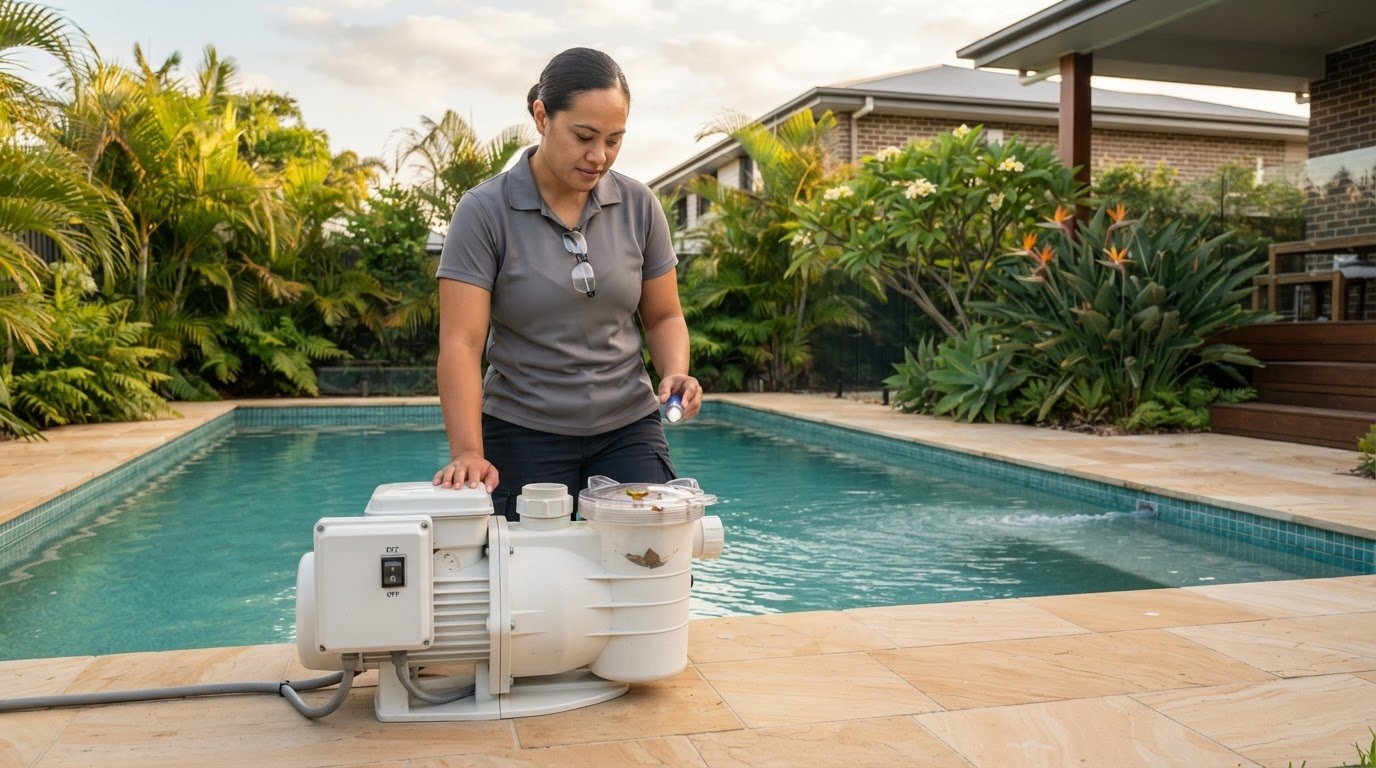
A humming pool pump isn’t always a sign that the motor has failed, but it’s a sound you shouldn’t ignore. If you’re asking, “why is my pool pump humming?”, start by checking whether it starts and whether water is still moving through the system.
A pump that hums but won’t start may have a failed capacitor, but a blocked impeller, seized motor or worn bearings can also be responsible. Low water levels, blocked baskets and air leaks are other possibilities. The sound alone can’t confirm the cause, so note whether circulation is normal, weak or stopped.
This guide explains what different noises and circulation symptoms may indicate, and which basic checks you can do safely. Never open the motor housing or handle wiring. If the pump keeps humming without circulating water, switch it off rather than letting it strain. Pool Blitz’s qualified team repairs pumps and filtration equipment across Brisbane, helping restore dependable circulation when a repair is needed.
Key Takeaways
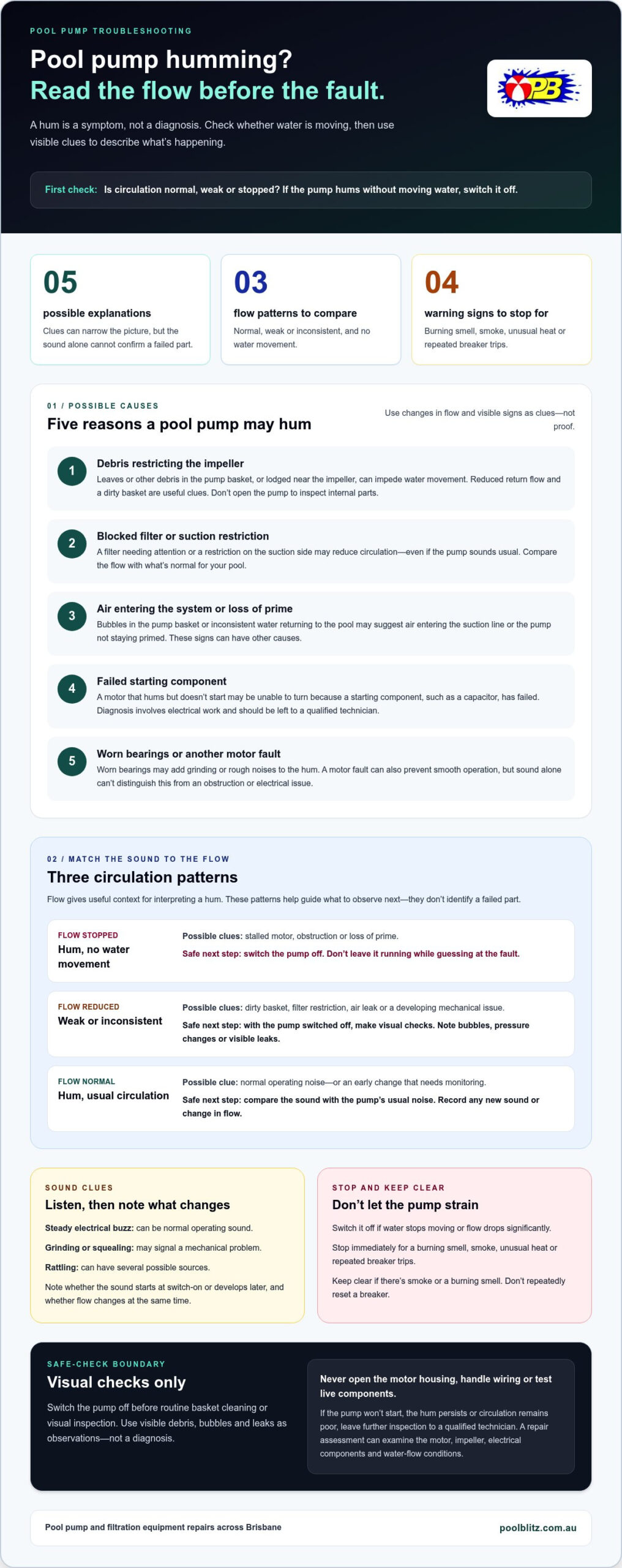
- To understand why is my pool pump humming, compare the noise with whether water is circulating normally, weakly or not at all.
- A hum can have several possible causes. Use changes in flow and visible debris as clues, not proof of a faulty part.
- Start with the pump switched off and limit DIY checks to safe visual inspections and routine basket cleaning with power isolated.
- Stop troubleshooting if the pump won’t start, the humming persists or circulation remains poor. Further inspection may be needed.
- A qualified pump repair assessment can examine the motor, impeller, electrical components and water-flow conditions.
Why is my pool pump humming, and should I switch it off?
A hum is a symptom, not a diagnosis. If you’re wondering why is my pool pump humming, first check whether water is moving through the return jets and whether the sound is new. A steady motor sound can be normal. A pronounced electrical buzz, especially with little or no circulation, suggests the pump may be struggling to start or move water.
Most pool pumps use a rotating impeller to move water, following the principle of a centrifugal pump. If the motor is trying to run but water isn’t circulating, continued operation can put extra strain on the equipment. If the pump hums without moving water, switch it off. Don’t leave it running in the hope that it will clear itself.
What does a humming pool pump sound like?
A steady electrical buzz differs from grinding, rattling or a high-pitched squeal. Grinding or squealing may signal a mechanical problem, while rattling can have several possible sources. Note whether the sound starts as soon as the pump switches on or develops after it has been running. Also note whether water flow changes at the same time. These observations help describe the problem, but sound alone can’t identify a failed part.
Can you keep running a humming pool pump?
Only if it’s operating normally and water is circulating as expected. If flow stops or drops significantly, switch the pump off rather than allowing it to strain. Stop immediately if you notice a burning smell, smoke, unusual heat or repeated breaker trips. Keep clear of the equipment if there’s smoke or a burning smell, and don’t reset a breaker repeatedly.
Never open the motor housing, touch wiring or test live components. If the pump won’t start, the humming continues when it next operates, or circulation remains poor, leave further checks to a qualified technician. A pump repair assessment can help identify the cause without risking injury or adding damage through guesswork.
What causes a pool pump to hum? Five likely explanations
A humming sound can point to several different problems, but it can’t confirm which part has failed. Compare the noise with what you can observe: has water flow dropped, is there visible debris, or has a new grinding or rattling sound appeared? Most pool pumps spin an impeller to move water, so anything that prevents the motor starting or stops water moving freely may be relevant.
- Debris restricting the impeller: Leaves or other debris in the pump basket, or lodged near the impeller, can impede water movement. Reduced return flow alongside a dirty basket is a useful clue, but don’t open the pump to inspect internal parts.
- A blocked filter or suction restriction: A filter that needs attention or a restriction on the suction side may reduce circulation, even if the pump is making its usual sound. Compare the flow with what’s normal for your pool. For more on filtration and flow, see this Brisbane pool filtration guide.
- Air entering the system or loss of prime: Bubbles in the pump basket or inconsistent water returning to the pool may suggest air is getting into the suction line or the pump isn’t staying primed. These signs can have other causes, so treat them as clues rather than a diagnosis.
- A failed starting component: A motor that hums but doesn’t start may be unable to turn because a starting component, such as a capacitor, has failed. The components and checks depend on the pump model. Diagnosis involves electrical work and should be left to a qualified technician.
- Worn bearings or another motor fault: Worn bearings may add grinding or rough noises to the hum. A motor fault can also prevent smooth operation, but the sound alone can’t distinguish this from an obstruction or an electrical issue.
A note on electrical faults
Electrical faults can’t be safely confirmed by listening or looking at the outside of the pump. The NFPA’s National Electrical Code is a US reference, not Australian electrical guidance. Internal electrical checks should be left to a qualified technician. Don’t open the motor, handle wiring or test live components.
If the hum comes with poor flow, debris or a new mechanical noise, note those details and stop using the pump if circulation fails. Pool Blitz’s qualified team repairs pool pumps and filtration equipment in Brisbane. Find out about pool pump repairs if the noise persists or the pump won’t start.
How to match the humming sound to your pool pump symptoms
Water flow gives useful context for interpreting a hum, but it can’t identify a failed part on its own. Use the patterns below to decide what to observe next, not to diagnose or dismantle the pump.
| Sound or symptom | Possible cause | Safe next step |
|---|---|---|
| Humming with no water movement | A stalled motor, obstruction or loss of prime are possibilities. | Switch the pump off. Don’t leave it running while guessing at the fault. |
| Humming with weak or inconsistent flow | A dirty basket, filter restriction, air leak or developing mechanical issue may be affecting circulation. | With the pump switched off, make only safe visual checks. Note bubbles, pressure changes or visible leaks. |
| Humming with normal circulation | The sound may be normal operating noise, or an early change that needs monitoring. | Compare it with the pump’s usual sound. Record any new noise or change in flow. |
Humming with no water movement
Stopped circulation is the clearest reason to switch the pump off. A motor that can’t start, an obstruction or loss of prime could each be involved, but these are possibilities rather than a diagnosis. Don’t keep the pump running while trying different guesses. Note when the hum starts and whether the pump moves any water. If safe basic checks don’t restore flow, arrange a repair.
Humming with weak flow or unusual noise
Reduced flow alongside a hum may be consistent with a dirty basket, a filter restriction or air entering the system. A new grinding or rattling sound can also point to a developing mechanical issue. With the pump off, note whether you can see bubbles in the pump basket, a change on the pressure gauge or a visible leak. Don’t dismantle equipment to investigate. For an overview of repair considerations, read this Brisbane pool equipment repairs reference.
If circulation has stopped, leave the pump off and record what you observed, including whether the noise began at start-up or later. A general troubleshooting guide to common pool pump problems offers additional maintenance context, but it can’t confirm the cause in your system. Persistent humming, poor flow or a pump that won’t start calls for qualified inspection. Pool Blitz’s Brisbane team repairs pool pumps and filtration equipment to help restore dependable circulation. Learn about pool pump repair if the symptoms continue.
What safe checks can you do before calling for pool pump repairs?
If you’re still asking why is my pool pump humming, keep your checks visual and routine. Don’t try to identify a fault by opening the motor or handling electrical parts. If the pump has stopped circulating water, leave it switched off while you inspect what’s safely accessible.
Start with isolation and simple visual checks
Follow these steps in order. If you notice smoke, a burning smell, damaged cabling or unusual heat, don’t approach the equipment to continue checking.
- Switch the pump off. Use its normal control. If it’s safe and you know which one it is, isolate power at the designated switch before routine maintenance. Don’t touch switches or equipment that are wet or damaged.
- Observe from a safe distance. Note whether water is returning to the pool, whether the pump basket appears to contain debris, and whether you can see bubbles or water leaking around the equipment. Don’t remove covers to look inside.
- Check the pump basket only when safely isolated. If you’re familiar with routine basket cleaning, follow the pump’s usual instructions and keep clear of electrical components. Don’t force a tight lid, fitting or stuck part.
- Look for an obvious valve issue. Check whether an accessible valve appears closed, but don’t force it. Leave any uncertain or stiff valve alone and record what you noticed.
- Make a note of the symptoms. Record when the humming starts, whether flow is weak or absent, and any visible bubbles, leaks or pressure changes. This gives the technician useful context.
Know when DIY troubleshooting should stop
Stop immediately if there’s a burning smell, smoke, unusual heat, damaged cabling or repeated tripping of electrical protection. Don’t keep resetting a breaker. Leave the area if you see smoke or suspect an electrical fault, and arrange qualified help.
Capacitor, bearing and impeller repairs aren’t routine homeowner checks. Don’t remove motor covers, touch wiring, test live components or force a jammed part. If the pump still hums, won’t start, trips protection or fails to circulate after safe visual checks, arrange a qualified inspection rather than trying another fix.
For more on the next repair steps, see this pool pump repair guide for Brisbane owners. Pool Blitz’s qualified team repairs pool pumps and filtration equipment in Brisbane. Learn about Pool Blitz pool pump repairs to have the cause assessed and work towards restoring dependable circulation.
When should you arrange pool pump repair in Brisbane?
Arrange a repair if the humming persists, the pump won’t start or pool circulation remains poor after safe, basic checks. A pump that continues humming without moving water should stay switched off until it’s assessed. If you’re still wondering why is my pool pump humming, a qualified technician can investigate instead of relying on sound alone.
An inspection can assess the motor, impeller, electrical components and water-flow conditions. These parts and symptoms can be connected, so checking the pump as a system helps identify what’s affecting circulation and what work is appropriate. Pool Blitz is an independent Brisbane pool-care business with a qualified team that repairs pumps and filtration equipment.
Repair or replacement: what determines the next step?
A humming noise by itself doesn’t mean the pump needs replacing. The right next step depends on the pump’s condition, the fault identified and the equipment’s age. Diagnosis gives a technician a clearer basis for recommending a repair or discussing whether replacement is appropriate, rather than making a decision from one symptom. If persistent equipment trouble has you rethinking your setup or exploring modern construction ideas, custom builders like whitespools.com illustrate how tailored pool design incorporates reliable plumbing and circulation from the start.
What information helps a pool pump repair assessment?
A few observations can help the technician understand what’s happening before inspecting the equipment. Only note details you can see or record safely. Don’t remove covers or handle wiring.
- Make and model: Read the label if it’s visible without opening the pump or moving unsafe equipment.
- When the noise began: Note whether humming started suddenly, occurs at start-up or develops after the pump has been running.
- Water movement: Record whether flow is normal, weak or stopped, and whether it changed at the same time as the noise.
- Other changes: Mention any breaker trips, visible leaks, bubbles or unusual sounds. Include recent debris build-up or maintenance if relevant.
This information doesn’t replace an inspection, but it can help establish a useful starting point. Avoid switching the pump back on just to recreate the sound, particularly if it wasn’t circulating water or showed an electrical warning sign.
If the pump continues to hum or won’t circulate, Pool Blitz can help Brisbane owners with pool pump repairs and a practical path towards dependable water flow. Learn about help with a humming pool pump.
Get your pool circulation back on track
A hum is a clue, not a diagnosis. If you’re asking why is my pool pump humming, consider the sound alongside water flow and other visible symptoms rather than guessing at a faulty part. Keep checks to safe visual observations and routine basket care with power isolated.
If circulation has stopped, the pump won’t start or the humming persists, switch it off and arrange a qualified assessment. A technician can investigate the motor, impeller, electrical components and water-flow conditions to determine the next step.
Pool Blitz’s qualified team repairs pool pumps and filtration equipment in Brisbane, helping pool owners work towards dependable circulation. Arrange a pool pump repair assessment with Pool Blitz and take the next step towards a quieter, smoothly running pool.
Frequently Asked Questions
Why is my pool pump humming but not pumping?
A pool pump that hums without moving water may have a stalled motor, blockage, restricted flow, or electrical or mechanical fault. The sound alone can’t confirm which part is responsible. Switch the pump off rather than letting it continue to run, and don’t open the motor housing. If safe, basic checks don’t restore normal flow, arrange a qualified inspection to identify the cause.
Is it safe to leave a pool pump humming?
If the pump is humming but not circulating water, switch it off. Continued operation may worsen an equipment fault. Keep clear and don’t investigate internal components if you notice smoke, a burning smell, unusual heat, damaged cabling or repeated breaker trips. Don’t repeatedly reset a tripping breaker. Arrange qualified help to assess the pump and its electrical components before putting it back into operation.
Can I fix a humming pool pump myself?
You can do limited checks, such as switching the pump off and isolating power before looking for debris in an accessible pump basket. Follow the equipment instructions for routine cleaning. Don’t remove the motor cover, touch wiring, test live components or force a jammed part. If the pump still hums, won’t start or has poor flow, stop troubleshooting and arrange a qualified repair assessment.
Could a blocked pool pump basket cause humming?
A basket clogged with leaves or other debris can restrict water flow and may contribute to pump problems. Switch the equipment off and isolate power before checking an accessible basket, then clean it according to the pump instructions. If the humming continues or circulation doesn’t return, the cause may lie elsewhere, such as the impeller, filter, motor or electrical components. Don’t dismantle the pump to investigate.
Why does my pool pump hum and trip the breaker?
A humming pump that trips the breaker may have an electrical fault, a motor problem or another condition causing the circuit protection to operate. Leave the pump off, and don’t repeatedly reset the breaker or open the housing. If you notice heat, smoke, a burning smell or damaged wiring, keep clear and arrange a qualified assessment. Electrical contractors such as Banner Power note that repeated tripping often points to underlying circuit overloads or sub-board faults that require professional testing. A technician can inspect the pump and its electrical components safely.
How do I know whether my pool pump needs repair or replacement?
A humming sound alone isn’t enough to decide whether a pump needs replacing. The identified fault, the pump’s condition and its age all inform the next step, so diagnosis should come first. Persistent humming, failed starts, poor circulation or repeated breaker trips are reasons to arrange an assessment rather than continuing to operate the pump. Pool Blitz’s Brisbane team repairs pool pumps and filtration equipment.
Can a dirty pool filter make the pump hum?
A dirty or restricted filter can affect water flow and may contribute to pump symptoms, but humming can also stem from a motor, impeller or electrical fault. Check the filter using its normal maintenance procedure, with the pump switched off as directed by the equipment instructions. If the noise or poor circulation continues, arrange an inspection instead of assuming the filter is the only cause.
No responses yet