
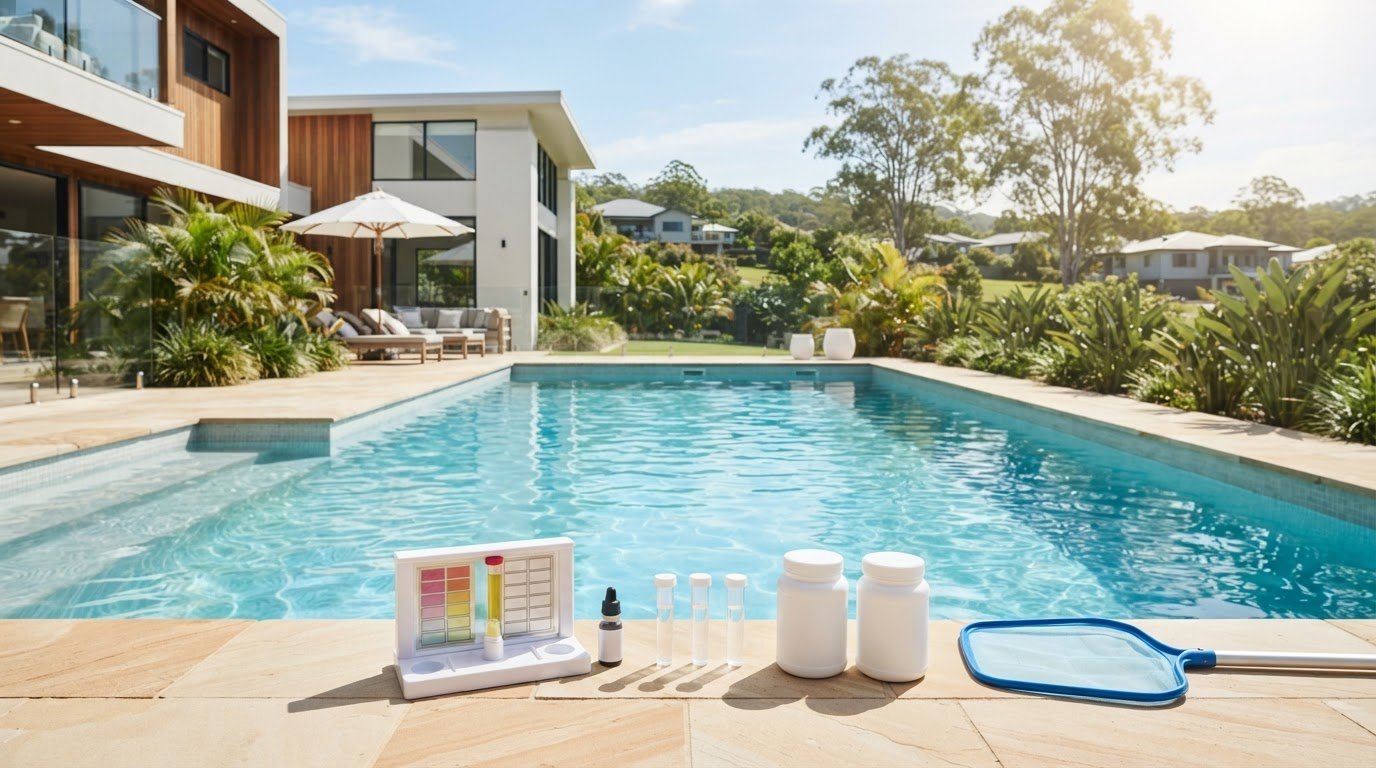
In Brisbane, pool chlorine can feel like a moving target, especially through summer. You add chemicals, yet the water turns cloudy or green, your eyes sting, or a strong smell lingers. Each extra dose takes effort without necessarily fixing the cause. Which type of chlorine suits your pool, and how can you stop it disappearing in the heat?
The key is to treat chlorine as part of your water balance, not a set-and-forget fix. Brisbane’s strong UV can use up chlorine quickly, while pH and stabiliser levels affect how well it sanitises. Check these factors regularly to make maintenance more straightforward, support clear water and create a safer swimming environment for your family.
This guide covers the main types of pool chlorine, how stabiliser and pH affect its performance, and what to check when water quality slips. Pool Blitz provides Brisbane pool servicing, water balancing and equipment repairs. Use the steps below to build a practical routine and recognise when professional water balancing can help.
Key Takeaways
- Compare liquid, granular and tablet pool chlorine to find a format that suits your pool care routine.
- Learn why Brisbane’s strong sun can quickly deplete unstabilised chlorine, and how stabiliser helps protect it.
- Test regularly to spot when chlorine or pH needs attention before water quality declines.
- A strong chlorine smell can signal a water balance issue rather than a clean pool.
- Careful water balancing helps protect pool equipment and reduce the risk of filtration problems.
What is Pool Chlorine and Why is it Essential for Brisbane Pools?
Clear water needs more than good filtration. Pool chlorine is the main chemical sanitiser used to control bacteria and algae, helping keep swimming water safe when properly maintained. It also reacts with contaminants such as sweat and other organic matter. Chlorine is continually used up in these reactions, so testing helps show when the water needs attention.
Chlorine’s activity is often discussed in two forms. Free chlorine is the portion available to sanitise the water, while combined chlorine has already reacted with contaminants, forming chloramines. For an overview of how chlorine disinfects water, see the Water chlorination process.
The Difference Between Sanitising and Oxidising
These jobs are related, but they’re not the same. Sanitising means destroying living organisms, including bacteria and algae. Oxidising means breaking down non-living organic contaminants, such as sweat and residues introduced by swimmers. Chlorine helps with both, but the amount available to sanitise falls as it reacts with contaminants. A single dose is no substitute for ongoing testing.
Brisbane pools need attentive care through hot, sunny weather. UV exposure can break down unstabilised chlorine, while frequent swimming introduces contaminants and increases chlorine demand. Humidity itself doesn’t consume chlorine, but warm conditions and busy pool days make consistent water checks especially worthwhile. Rather than simply adding more, keep the water balanced so chlorine can do its job.
Why Chlorine “Smells”: Debunking the Myth
A strong chemical smell isn’t a reliable sign of a clean pool. It often comes from chloramines, which form when chlorine reacts with contaminants, and can be associated with stinging eyes or irritated skin. Combined chlorine is less effective as a sanitiser than free chlorine, so odour may point to a water balance issue rather than healthy, well-sanitised water. Testing helps distinguish available free chlorine from the combined amount.
Breakpoint chlorination is the controlled addition of chlorine to oxidise chloramines and other contaminants, helping restore a suitable free-chlorine residual.
Knowing the difference between active and combined chlorine makes troubleshooting clearer. Don’t rely on smell or appearance alone. Regular testing and careful water balancing help maintain effective sanitisation and protect pool equipment from poor chemical balance.
Comparing Chlorine Types: Liquid, Granular, and Tablets
Pool chlorine comes in several forms, each with different handling needs and effects on water balance. Liquid chlorine, granular products and tablets are common options for Australian pools. The common types of chlorine used in water treatment show why the chemical form matters. Choose based on how quickly you need to treat the water, how you prefer to dose it and how closely you monitor stabiliser.
Salt-water chlorination isn’t a chlorine-free system. A chlorinator uses electrolysis to convert dissolved salt into chlorine, which sanitises the pool before eventually returning to salt. The system produces chlorine as it operates, so the cell and water balance still need attention. For help with equipment faults, explore expert pool equipment repairs in Brisbane.
Liquid Chlorine (Sodium Hypochlorite)
Liquid chlorine acts quickly and can be useful for treating algae-affected water or raising chlorine rapidly as part of a shock treatment. It has a high pH, so repeated use can push pool pH upwards and add to balancing work. Test the water and follow product directions rather than dosing by guesswork.
Heat and sunlight can also reduce liquid chlorine’s potency during storage. Keep it sealed and in a cool, shaded place, following the label’s safety instructions. This format can suit quick dosing, but requires careful storage and pH monitoring.
Granular Chlorine and Tablets (Stabilised)
Stabilised granular chlorine commonly contains dichlor, while trichlor is typically formed into tablets. Both contain cyanuric acid, which helps shield chlorine from sunlight. That can be useful in a sunny Brisbane backyard, but stabiliser accumulates as these products are used. If it climbs too high, chlorine can become less effective, sometimes described as “stabiliser lock”. Test stabiliser before relying on repeated doses.
Tablets provide a steady, convenient way to feed chlorine over time, while granular products let you measure and add a dose as needed. Neither is automatically cheaper overall: convenience, product use and the water-balance adjustments required all matter. Follow the product label. Don’t place tablets directly in a skimmer unless the product and equipment instructions specifically allow it, as concentrated chemicals can affect pool components. A compatible floating dispenser may be an alternative for tablets.
Each format has trade-offs. Pool Blitz provides water balancing and pool equipment repairs to help take the guesswork out of choosing and managing chemicals. Visit Pool Blitz for pool care support.
The Brisbane Heat Factor: Managing Chlorine Demand and UV Degradation
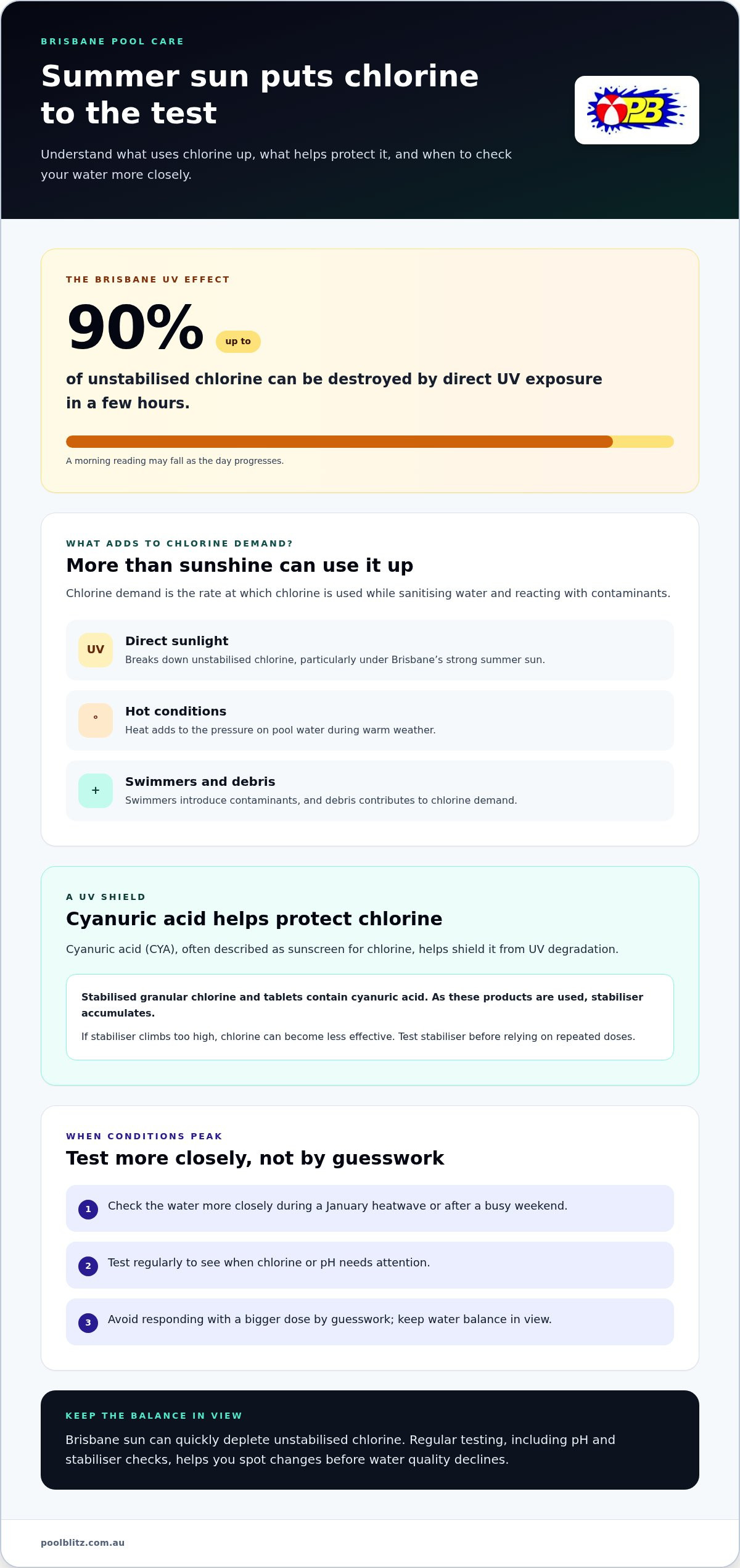
Brisbane’s summer sun puts extra pressure on pool water. Direct UV exposure can destroy up to 90% of unstabilised chlorine in a few hours, so a reading that looks adequate in the morning may fall as the day progresses. Heat, swimmers and debris add to chlorine demand, the rate at which chlorine is used up while sanitising water and reacting with contaminants. During a January heatwave or after a busy weekend, test more closely rather than adding a bigger dose by guesswork.
Cyanuric acid (CYA), often described as sunscreen for chlorine, helps shield it from UV degradation. It can help chlorine last longer outdoors, but more isn’t always better. Brisbane pool owners need to balance UV protection with keeping chlorine effective.
The Ideal Stabiliser Levels for South East Queensland
For an outdoor pool in Brisbane, aim to keep CYA in the 30–50 ppm range. Test it periodically, particularly if you regularly use stabilised chlorine products. Unlike chlorine, stabiliser can accumulate. Adding more without checking may push levels too high, reducing chlorine’s effectiveness even when a test shows chlorine is present.
If testing shows CYA is too high, a partial drain and refill can lower it by replacing some pool water with fresh water. Make changes gradually and retest, rather than draining the pool completely or trying to correct the balance blindly.
Managing Chlorine During High Bather Loads
A pool party brings more than extra splashing. Swimmers introduce sweat, sunscreen and other organic material, which use up sanitiser. After heavy use, test the water and follow product directions for any dose or shock treatment. Don’t assume the usual routine is enough. Retest before swimming to ensure the water is appropriately balanced.
Summer storms also deserve a quick check. Rain can dilute pool water, while wind-blown debris and runoff may add contaminants and shift water balance, including alkalinity. Once conditions are safe, clear out debris, run the filtration system and test the water before adjusting chemicals. Make one measured correction at a time, then retest.
Steady monitoring helps you respond to changing conditions without over-treating the pool. Use a seasonal pool-care routine to guide your checks, and consider professional water balancing to help keep chlorine effective and protect equipment from the effects of poor chemical balance.
How to Safely Dose and Maintain Your Pool’s Chlorine Levels
A measured routine is safer and more reliable than adding chemicals by eye. In Brisbane, test at least weekly, and check more often during hot weather or after heavy swimming. High pH can reduce chlorine’s sanitising effectiveness, so a chlorine reading alone doesn’t tell the whole story. Aim to keep pool pH between 7.2 and 7.6, and follow product directions for every adjustment.
The 5-Step Dosing Routine
- Test the water. Check free chlorine, pH and total alkalinity with a suitable test kit. Record the results to spot changes over time.
- Adjust pH first. If pH is outside the recommended range, correct it according to the chemical label. Allow the water to circulate as directed, then retest before dosing chlorine.
- Calculate the dose. Use your pool’s volume in litres and the product’s label directions. The same amount won’t necessarily apply to liquid, granular and tablet products, or products of different strengths.
- Add chemicals safely. With the filtration system running, distribute the measured product as its label directs. Avoid pouring concentrated chemicals in one spot.
- Check the result. Allow the product to circulate for the period stated on the label, then retest before making another adjustment or swimming.
Granular products need particular care around vinyl liners and other surfaces that may be damaged by concentrated chemicals. Only pre-dissolve a product if its label instructs you to. Use a clean, dedicated bucket, add the chemical to water rather than water to the chemical, and follow the label’s mixing and application directions. Never pour a concentrated solution directly onto a liner.
Safety and Storage Essentials
Pool chemicals can react dangerously if handled or stored incorrectly. Never mix different types of chlorine or combine pool chemicals, as incompatible products can cause fire, explosion or hazardous fumes. Keep each product in its original, clearly labelled container, sealed and separated from other chemicals. Store them in a cool, dry, well-ventilated place away from children, direct sunlight and hot sheds, where heat can affect the product and increase handling risks.
Wear gloves and protective eyewear when handling concentrates, and follow the product label for safe handling, dosing and storage. If chemicals spill, don’t try to clean them up by mixing in another product. Follow the label’s spill guidance.
Accurate dosing depends on more than the chlorine reading; pH and alkalinity matter too. Pool Blitz provides expert water balancing and pool chemical guidance through professional pool servicing.
Beyond the Bucket: Why Professional Water Balancing Beats DIY
Keeping a pool healthy involves more than adding chlorine. pH, alkalinity, stabiliser and other water conditions interact, so correcting one reading without understanding the rest can create another problem. Pool chlorine may seem like the obvious fix for cloudy or green water, but repeated dosing can waste chemicals and leave the cause unresolved if the underlying balance is off.
Water that remains poorly balanced can also affect pool surfaces and equipment over time. Corrosive or scale-forming conditions may put added strain on components, including pumps and filtration systems. Learn more about how water quality can affect equipment in this guide to pool filtration system repair in Brisbane.
The Cost of Guesswork
More chlorine isn’t automatically better. Excessive or poorly controlled chemical levels can be harsh on pool components, including heat pumps and robotic cleaners, while incorrect balance can contribute to corrosion or other equipment problems. If a pool turns green, restoring it may take several carefully managed steps: identify the cause, correct the water and check that the filtration system is working effectively. Preventative testing helps catch developing imbalances before they become a larger clean-up job.
Home test strips are handy for routine checks, but readings can be harder to interpret when a result is borderline, strips are old or damp, or several water factors are out of range. Professional water testing considers the broader balance and can help prevent a cycle of adding chemicals, seeing little change and adding more. Pool Blitz provides Brisbane pool servicing, water balancing and equipment repairs.
Let Pool Blitz Handle the Chemistry
With regular servicing, water balance is checked as part of a consistent care routine, rather than left until the pool looks cloudy or equipment shows signs of trouble. That attention can help support equipment longevity and reduce the chemical guesswork that makes pool ownership feel like a chore. A planned pool-service routine can help keep your pool ready for a swim.
For professional water balancing and pool care in Brisbane, contact Pool Blitz.
Keep Your Brisbane Pool Clear and Ready to Enjoy
Healthy pool water depends on more than choosing a chlorine product. Brisbane’s sun can increase chlorine demand, while pH and stabiliser levels influence how well your sanitiser works. Regular testing, careful dosing and safe chemical handling help you respond to changing conditions and avoid guesswork.
Getting the balance right can also help protect pool equipment from the effects of poor water chemistry. Pool Blitz is a Brisbane-based pool servicing business providing expert water balancing and pool equipment repairs. With a consistent care routine, you can spend less time troubleshooting cloudy water and more time enjoying a clean, comfortable swim.
For professional support with your pool’s water balance, book a professional pool water balance with Pool Blitz.
Frequently Asked Questions
How much chlorine should I add to my pool every week in Brisbane?
There’s no fixed weekly dose. It depends on your pool’s volume, current test results, sunlight and how often people swim. Test free chlorine and pH at least weekly, then use the product label to calculate any dose for your pool volume. For residential pools, a general free chlorine range is 1.0–3.0 ppm; Brisbane pool advice often favours 2.0–3.0 ppm to help account for strong UV. Test more often during heavy use or hot weather.
Why is my pool still green even though I added chlorine?
Green water can persist if chlorine isn’t working effectively or the cause hasn’t been addressed. Check free chlorine, pH and stabiliser, then inspect circulation and filtration. High pH or excessive stabiliser can reduce chlorine’s effectiveness, while poor circulation, algae and debris may require cleaning alongside carefully measured treatment. Brush affected surfaces, remove debris and keep the filter operating as directed. If the water stays green, professional water balancing can help identify what’s out of balance.
Can I swim immediately after adding liquid chlorine?
No. Don’t assume the pool is ready for swimming immediately after dosing. Follow the product label for application, circulation and re-entry instructions, as products and doses differ. Keep swimmers out while concentrated chemical is being added, and allow the water to circulate as directed. Test the water before swimming and make sure chlorine and pH are within the recommended range. If you’re unsure about the result, wait and seek professional water-balancing advice.
What is the difference between stabilised and unstabilised chlorine?
Stabilised chlorine contains cyanuric acid, which helps protect chlorine from sunlight and can suit outdoor pools exposed to Brisbane’s UV. Dichlor and trichlor are common stabilised forms. Unstabilised chlorine has no built-in cyanuric acid, so sunlight can deplete it more quickly, but it won’t add to stabiliser levels. Test cyanuric acid if you regularly use stabilised products, because excessive stabiliser can make chlorine less effective.
How does a salt chlorinator actually work?
A salt chlorinator is still a chlorine system. It uses electrolysis to convert dissolved salt in the pool water into chlorine, which sanitises the water as it circulates. The chlorine eventually returns to salt as part of the ongoing process. You still need to test and balance the water, and maintain the chlorinator so it can produce chlorine effectively. If output seems low, water testing and equipment checks can help identify the cause.
What happens if my pool chlorine levels are too high?
Excessively high chlorine can irritate swimmers’ eyes and skin, and may be harsh on pool surfaces or equipment. Don’t add more chemicals to correct it without testing, and keep people out of the water until readings are within the appropriate range for your pool and product guidance. Follow the product label and retest after the water has circulated as directed. If levels remain high or you’re unsure how to adjust them, seek expert water-balancing help.
Why does my pool water feel “hard” or irritate my skin?
A hard-water feel or skin irritation can have several causes, so the sensation alone can’t identify the problem. High calcium hardness may contribute to scale, while pH outside the ideal 7.2–7.6 range or poorly balanced sanitiser can affect swimmer comfort. Brisbane source water generally has moderate calcium hardness of 80–120 mg/L, which can contribute to calcium build-up over time. Test the water balance before making adjustments.
How often should I have my pool water professionally balanced?
There isn’t one interval that suits every pool. The right frequency depends on your test results, pool use, weather, equipment and how consistently you maintain the water between visits. Brisbane’s summer sun and heavy swimming can change chlorine demand, so keep up regular home testing and consider professional balancing when readings are difficult to manage or keep stable. Pool Blitz provides regular and casual pool servicing, with water balancing tailored to pool conditions.
No responses yet