
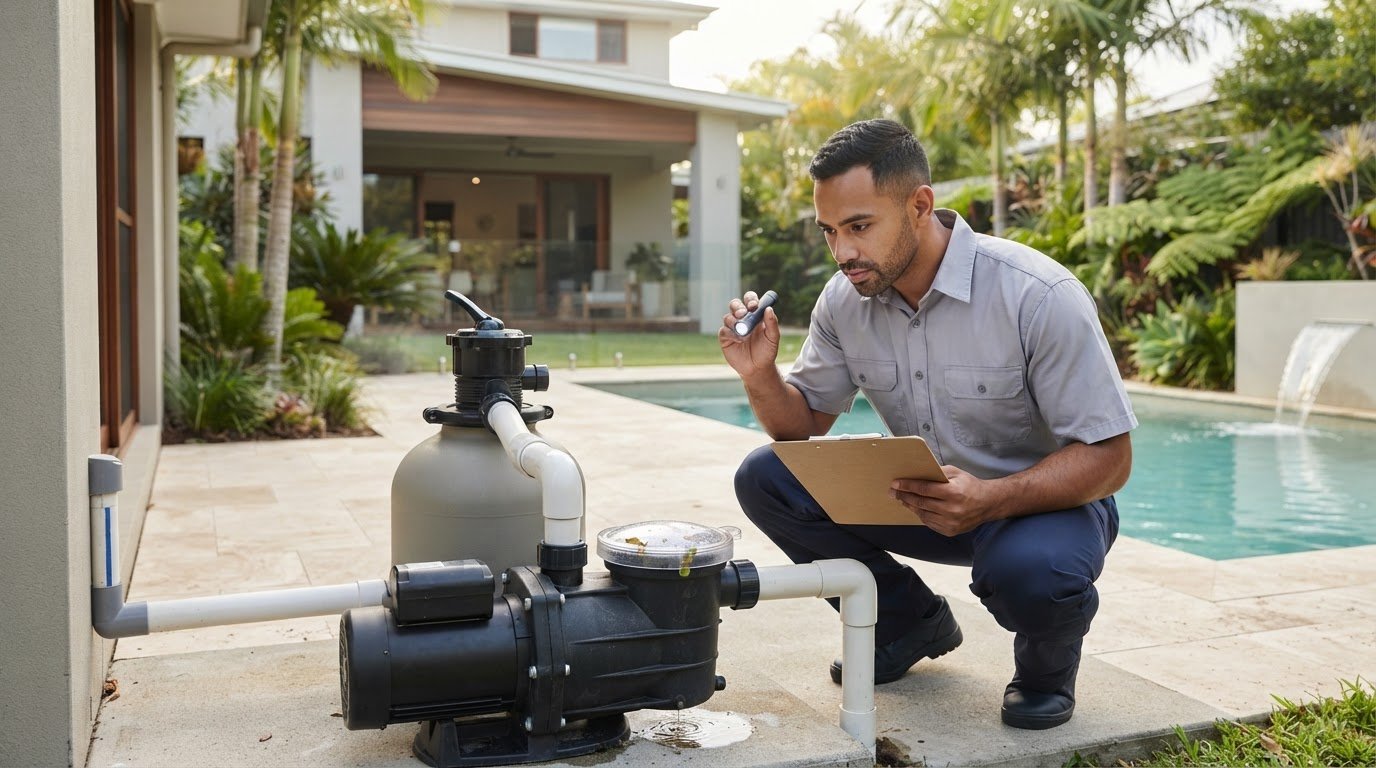
A noisy, vibrating pool pump or weak water flow can make replacement seem like the obvious next step. But the signs you need a new pool pump aren’t proof that the pump has reached the end of its life. A blocked basket, dirty filter or air leak can cause similar symptoms, so check the wider system before deciding.
If your water is cloudy, the pump sounds unusual or circulation has lost its usual strength, it’s reasonable to wonder whether the pump is failing or another fault is to blame. This checklist covers common warning signs, simple checks that may help rule out other causes, and practical points to weigh when comparing repair with replacement.
A qualified assessment can help clarify what’s happening. Pool Blitz is an independent Brisbane pool-care business with more than three decades of local experience. Its qualified team repairs pool pumps and filtration equipment. A careful diagnosis can help you choose a suitable next step and keep your pool equipment working reliably.
Key Takeaways
- Use the signs you need a new pool pump checklist to record unusual noise, leaks, weak flow, shutdowns or failure to start.
- Before arranging an assessment, note what the pump is doing. Check only simple, accessible items with the equipment switched off, and don’t open electrical components.
- Compare repair and replacement by considering the diagnosed fault, whether it keeps returning and how well the pump performs. Don’t rely on one symptom alone.
- Gather details about your pool and equipment, the pump model, its symptoms and any past repairs to make a technician discussion more useful.
- Share your observations when requesting an assessment so an equipment repair team can help you consider the next step.
Signs You Need a New Pool Pump: What to Check First
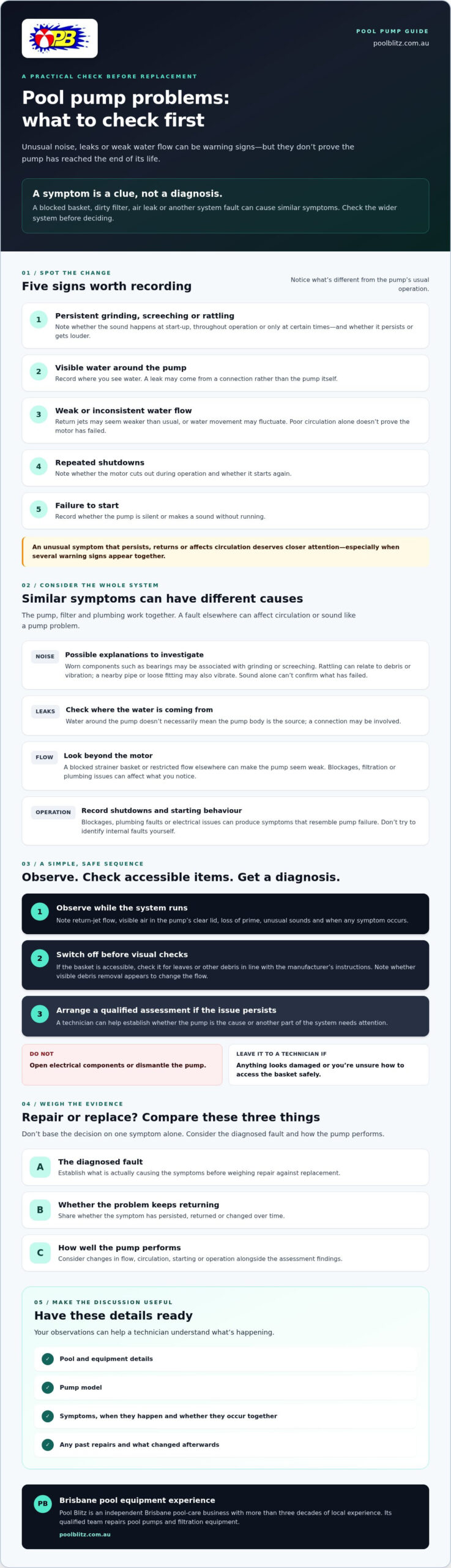
A symptom is a reason to investigate, not proof that your pool pump needs replacing. Similar warning signs can come from the pump, filter, a blockage or another part of the system. Note what you’re seeing before settling on a cause. Treat the signs you need a new pool pump as clues to follow up, not a replacement checklist you can diagnose at a glance.
Start by noting changes you can observe:
- Persistent grinding, screeching or rattling: A new or increasingly harsh sound is different from the steady operating noise you’re used to.
- Visible leaks: Look for water around the pump, but don’t assume the pump itself is the source.
- Weak or inconsistent flow: Return jets may seem weaker than usual, or water movement may fluctuate.
- Repeated shutdowns: Note whether the motor cuts out during operation and whether it starts again.
- Failure to start: Record whether the pump is silent or makes a sound without running.
Arrange a professional assessment if an unusual symptom persists, returns or affects circulation, especially when several warning signs appear together.
Is unusual noise a sign your pool pump is failing?
Persistent grinding or screeching may be associated with worn components such as bearings, while rattling can relate to debris or vibration. These are possibilities, not a diagnosis. A nearby pipe or loose fitting may also vibrate, and the sound alone can’t confirm what has failed. For a simple overview of how pumps work, it helps to know that mechanical parts move water through the system. Identifying a fault still requires checking the equipment.
Note when the noise happens: at start-up, throughout operation or only at certain times. Record whether water flow or clarity has changed as well. A sound that persists, gets louder or comes with reduced performance deserves closer attention.
What do leaks, weak flow and frequent shutdowns tell you?
Water around the pump, inconsistent movement at the pool returns and a motor that repeatedly cuts out are all reasons to investigate. Note whether the symptoms happen together or independently. For example, weak flow without noise may have a different cause from weak flow alongside rattling and repeated shutdowns.
Blockages, plumbing faults or electrical issues can produce symptoms that resemble pump failure. A leak may also come from a connection rather than the pump body. Record what you can see and when it happens, but don’t open electrical components or try to identify internal faults yourself. A qualified assessment can help establish whether the pump is the cause or another part of the system needs attention.
Diagnose Pool Pump Problems Before You Replace the Unit
Before deciding whether the signs you need a new pool pump point to replacement, follow a simple, safe sequence: observe the symptoms, check only accessible items, then arrange a qualified assessment if the issue persists. This helps separate clues from conclusions and gives a technician useful information.
Poor circulation does not, by itself, prove the pump motor has failed. A blocked strainer basket or restricted flow elsewhere can make the pump seem weak, even when the underlying cause is outside the motor.
Check the strainer basket and water flow safely
First, note what the system is doing while it runs. This might include reduced flow from the return jets, visible air in the pump’s clear lid or repeated loss of prime. Then switch off the equipment before carrying out any visual checks. If the pump basket is accessible, check it for leaves or other debris in line with the manufacturer’s instructions. Don’t dismantle the pump or open electrical components. If anything looks damaged or you’re unsure how to access the basket safely, leave it to a qualified technician.
Record whether removing visible debris appears to change the flow, but don’t treat that observation as a full diagnosis. Note when air or weak flow returns and whether the pump has trouble maintaining prime. These details can help a specialist assess the fault without you handling internal parts.
Separate pump symptoms from filtration and plumbing issues
The pump, filter and plumbing work together to circulate pool water, so a restriction in one part can affect what you notice elsewhere. If your filter has a pressure gauge, record its reading only if the gauge is fitted and easy to read. Note whether the reading changes alongside the flow symptoms, rather than treating it as proof of a pump fault. For more background on how these components work together, see the Ultimate Brisbane Pool Filtration & Health Guide.
Keep your notes concise: when the issue began, what you observed, whether symptoms happen together, and whether checking accessible debris made a difference. This context can help distinguish a pump concern from a filtration or plumbing problem. If you’d like an experienced local team to assess pool equipment, Pool Blitz’s pool equipment repairs are one option to consider.
If an assessment points towards replacement, the US-based ENERGY STAR certified pool pump information offers context on energy-efficient models. Treat it as a general reference rather than Australian product guidance, and check local requirements and product details when comparing options.
Repair or Replace a Pool Pump? Compare the Evidence
A noisy or weak pool pump may still have a repairable fault. The useful question isn’t just whether the pump is showing warning signs. Consider what caused them, whether the fault is isolated and how the equipment performs once the cause is addressed. A qualified assessment should identify the problem before replacement is recommended.
| What to compare | Repair may be worth investigating | Discuss replacement |
|---|---|---|
| Fault scope | The issue appears limited to one identifiable fault, subject to assessment. | Damage appears extensive, or several parts may be affected. |
| Recurrence | The problem is new or hasn’t returned after previous attention. | Faults keep recurring, or repairs haven’t resolved the symptoms. |
| Observed performance | Circulation and operation are otherwise consistent, or performance may improve after the fault is addressed. | Poor performance persists, or the pump repeatedly stops or struggles to operate. |
Use this comparison to guide a discussion, not as a remote diagnosis. A technician can check whether the pump is responsible or whether a fault elsewhere in the system is affecting its performance.
When may a pool pump repair be worth investigating?
An isolated symptom, such as a new noise or a pump that intermittently cuts out, can be a reason to request a repair assessment. It doesn’t guarantee that repair is possible or suitable. Share the current symptoms, when they occur and any previous repair records. Mention whether the same issue has returned. That history helps the technician consider the fault in context.
When should replacement be discussed?
Repeated failures, persistent poor performance or extensive damage are reasons to ask whether replacement should be considered. The pump’s age, repair history and availability of suitable parts may also inform the decision, but none is an automatic rule. First establish the cause, then weigh the likely repair against the condition and performance of the whole unit.
If replacement is being considered, energy use can be one factor when comparing options. ENERGY STAR certified pool pump information discusses efficiency benefits, but it comes from a US programme, so treat it as general background rather than Australian product guidance. For local context on equipment repairs, see Expert Pool Equipment Repairs Brisbane: The 2026 Homeowner’s Reference.
Pool Pump Replacement Checklist for Brisbane Owners
Before discussing replacement, gather a clear picture of your pool and equipment. Useful details can help a technician consider whether a different pump would suit the existing setup. The signs you need a new pool pump are only part of the decision. Compatibility with the full filtration system and site requirements matters too.
What information should you gather before choosing a replacement?
Use this checklist to prepare for a conversation with a technician:
- Pool size and setup: Note the approximate pool dimensions or capacity if known, the type of pool and any relevant equipment connected to the circulation system.
- Current pump details: Photograph the pump label and record any visible brand, model or specification information. Don’t remove covers or touch electrical components to find it.
- Operating symptoms: Write down what happens, when it began and how often it occurs. Include changes in noise, water movement, leaks, start-up or shutdown behaviour.
- Repair and maintenance history: List previous repairs and recent maintenance, with dates if you have them. Mention whether a fault returned after work was carried out.
- Site conditions: Note where the pump is installed, its exposure to sun or weather, nearby trees or other sources of debris, and how often the pool is used.
These details help frame the discussion, but they don’t confirm that a particular replacement will fit. Ask a qualified technician to check suitability against the existing filtration equipment, plumbing and site requirements before choosing a pump.
How can Brisbane conditions affect your assessment?
Brisbane pools and equipment sit in varied backyard settings. Rather than assuming local weather caused a pump fault, describe the conditions at your property. Note whether the equipment is exposed, whether leaves or other debris collect nearby, and how pool use changes through the year. These details can help a technician understand the operating context without treating climate as a diagnosis.
For seasonal advice, look for current, locally relevant Brisbane pool maintenance guidance and check that it reflects your pool and equipment. A general tip may not apply to every site, so use it as background rather than a substitute for an equipment assessment.
Once you’ve gathered the details, you can request a pool pump assessment from Pool Blitz. Its qualified team repairs pool pumps and filtration equipment, and can consider your notes as part of a broader equipment discussion.
Get a Pool Pump Assessment from a Brisbane Equipment Specialist
If pump symptoms persist, a qualified assessment can help clarify whether the fault is in the pump or another part of the circulation system. Before making contact, gather the details you’ve observed. This lets the discussion start with a clear picture of what’s happening, rather than a guess based on one symptom.
- Symptoms: Describe changes in noise, leaks, water flow, start-up or shutdown behaviour, and when they occur.
- Pump details: Share the visible make, model and specifications from the label, if available. A photo can be useful.
- Repair history: Note any previous work or maintenance and whether the same problem has returned.
- Pool setup: Include information about your pool and connected filtration equipment that may help the technician understand the system.
What to expect from a pool pump assessment
A technician can inspect the pump and consider how connected filtration or plumbing issues may contribute to the symptoms. The aim is to understand what’s affecting performance before discussing a course of action. Ask what has failed, what evidence supports that finding and whether repair options are available. You can also ask how the pump’s condition and repair history factor into a replacement recommendation.
An assessment doesn’t mean replacement is inevitable. The signs you need a new pool pump are prompts to investigate. A considered diagnosis can help establish whether repair or replacement is the more appropriate next discussion. Timing and the work required depend on the circumstances, so confirm these directly when arranging an assessment.
Arrange local help when pump symptoms persist
Pool Blitz is an independent Brisbane pool-care business with more than three decades of local experience. Its qualified team repairs pool pumps and other pool equipment, including filtration systems. Sharing your observations and equipment details gives the team useful context without assuming in advance what the fault is or what outcome is suitable.
If you’re in Brisbane and persistent pump symptoms are making the next step unclear, contact Pool Blitz to discuss pool equipment repairs. A professional assessment can help bring the cause into focus before you commit to a purchase.
Talk to Pool Blitz about pool equipment repairs
Make Your Next Pool Pump Decision with Confidence
Noise, leaks, weak circulation or repeated shutdowns are reasons to investigate, not automatic proof that replacement is needed. The signs you need a new pool pump can also point to a blockage, filtration issue or another fault, so a clear assessment matters. Share the pump details, symptoms and repair history, then compare the likely repair options with the equipment’s condition and performance.
Pool Blitz is an independent Brisbane business that has served the local community for more than three decades. Its qualified team offers pool pump and equipment repairs, helping pool owners consider their options before committing to a purchase.
If pump problems persist, talk to Pool Blitz about a pool pump assessment. Understanding the cause can bring clarity to the repair-or-replace decision and help you move forward with greater confidence.
Frequently Asked Questions
What are the most common signs you need a new pool pump?
Common warning signs include persistent grinding or screeching, visible leaks, weak or inconsistent water flow, repeated shutdowns and a pump that won’t start. These symptoms mean the equipment needs investigation, but they don’t automatically prove replacement is necessary. A blocked basket, filtration restriction or plumbing fault can produce similar effects. Note when each symptom occurs and whether several happen together, then arrange a qualified assessment if problems persist.
Can a noisy pool pump be repaired, or does it need replacing?
A noisy pool pump may be repairable, so sound alone isn’t enough to decide on replacement. Persistent grinding, screeching or rattling may relate to bearings, debris or vibration, but only an inspection can establish the cause. Record when the noise happens and whether circulation or starting has changed. If the sound is getting worse or keeps returning, have the pump assessed rather than opening it or trying to repair internal parts yourself.
How do I know if poor pool circulation is caused by the pump?
Poor circulation doesn’t by itself confirm a pump fault. Look for observable clues such as debris in an accessible strainer basket, air in the pump lid or a readable filter pressure gauge, following equipment guidance and switching the system off before visual checks. Restricted plumbing or filtration can also affect return flow. Avoid opening electrical components. If the cause remains unclear, ask a qualified technician to assess the pump and connected system.
Is it safe to keep running a leaking pool pump?
Don’t ignore a leak, particularly if water is near electrical components or the leak is worsening. If it’s safe and dry to do so, switch off the equipment using its normal control. Don’t touch wet electrical equipment or open the pump. A leak may come from a connection or another part, so don’t assume the pump body has failed. Arrange a qualified assessment to identify the source before continuing normal operation.
What happens if I keep using a pool pump that keeps shutting off?
Repeated cut-outs may indicate a fault that needs attention. Restarting the pump repeatedly without understanding the cause could worsen the problem. The cause may be electrical, mechanical or related to restricted flow, so shutdowns alone can’t identify what has failed. Note how long the pump runs before stopping and whether it restarts, then switch it off if the behaviour continues. Have it assessed before relying on it for normal circulation.
Should I repair or replace an older pool pump?
Age is one factor, not an automatic reason to replace a pump. Consider the diagnosed fault, repair history, whether problems keep recurring, observed performance and availability of suitable parts. A qualified assessment should identify the cause before replacement is recommended and help you compare repair options with the pump’s overall condition. Share previous repair records and current symptoms so the decision is based on evidence, not age alone.
Can a blocked pump basket cause symptoms that look like pump failure?
Yes. Debris in the pump strainer basket can restrict water flow and make circulation appear weak, even if the motor isn’t the source of the problem. Switch off the equipment before any visual check, and inspect only accessible items in line with the manufacturer’s guidance. Don’t dismantle the pump or handle electrical parts. If clearing visible debris doesn’t resolve the symptoms, or they return, arrange an assessment to check for other causes.
No responses yet