
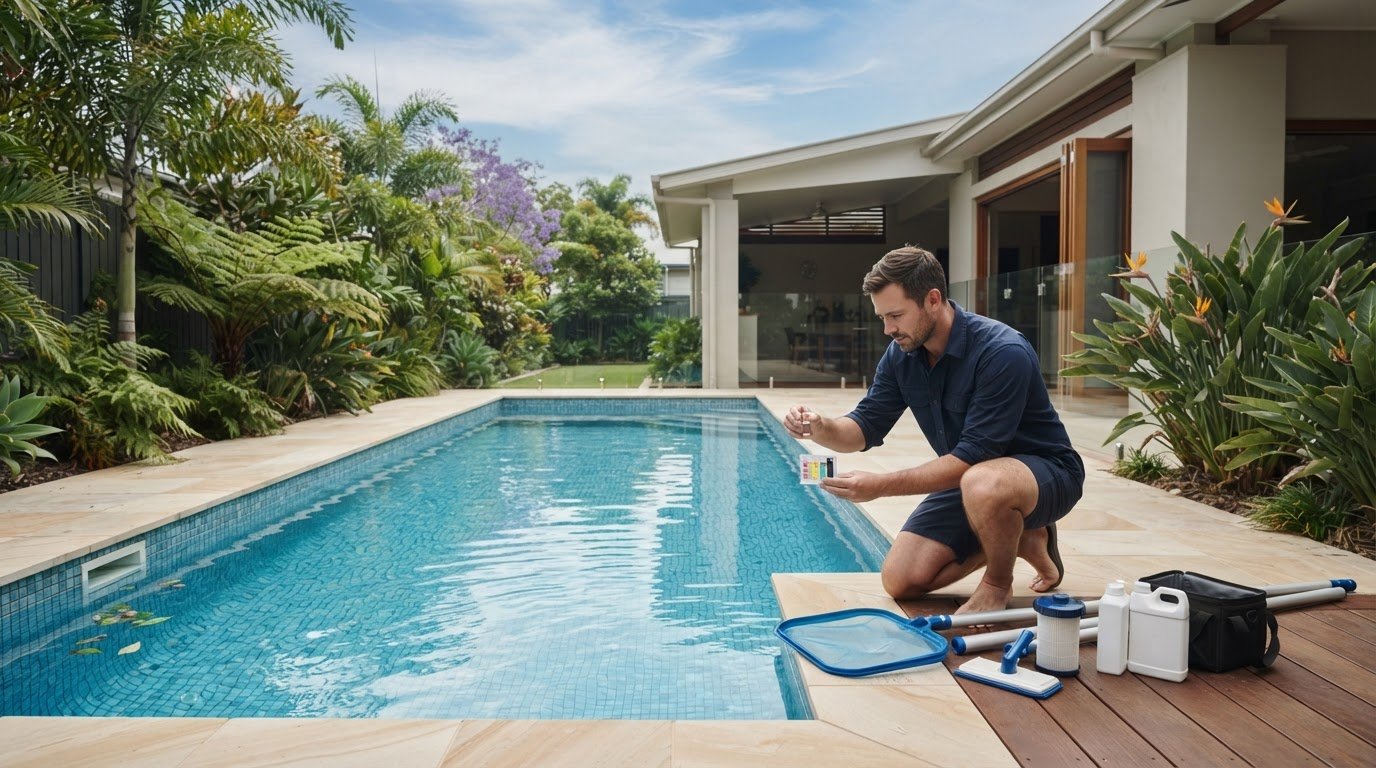
Could a pool that needs little attention in winter require closer care once Brisbane’s heat, storms and swimming season arrive? If you’re asking “how often should a pool be serviced in brisbane”, there isn’t one calendar interval that suits every pool. The right frequency depends on how often the pool is used, what’s falling into it, and how reliably its water and equipment are holding up.
It’s understandable to want a clear routine. Leave checks too long and the water can become cloudy or unbalanced; arrange professional visits more often than needed and you may not know what you’re gaining. Brisbane’s changing conditions can affect water quality, so a sensible servicing rhythm should adapt rather than stay the same all year.
This guide will help you set a practical starting point for routine pool checks and professional servicing, recognise when weather, heavy use or equipment concerns call for extra attention, and decide whether regular or casual expert help suits your pool. Pool Blitz offers regular and casual servicing, expert water balancing and support with pool equipment concerns, giving Brisbane pool owners a local point of reference as they plan their pool care.
Key Takeaways
- There’s no universal answer to how often should a pool be serviced in brisbane. Match professional visits to your pool’s use, surroundings and how closely you monitor it.
- Keep up with routine owner checks between professional visits, and pay closer attention when heat, storms, debris or heavier swimming put extra demands on the pool.
- Compare weekly, fortnightly and monthly servicing by considering your pool’s conditions and the time you can give it yourself.
- Cloudy water, unusual changes or equipment concerns are prompts to investigate, not signs to ignore until the next scheduled visit.
- Record water checks and recurring issues to spot patterns and refine a routine that suits your Brisbane home.
How often should a pool be serviced in Brisbane? Start with a practical routine
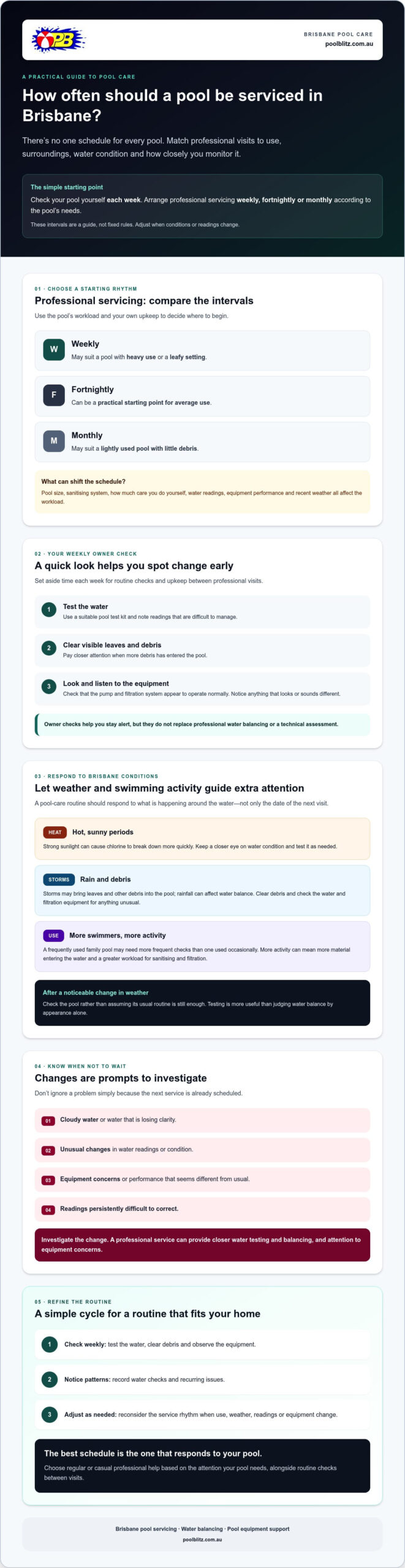
There’s no single service interval that suits every Brisbane pool. A useful starting point is to check your pool yourself each week, while arranging professional servicing weekly, fortnightly or monthly according to its condition, use and surroundings. These are starting points, not fixed rules. Water quality, equipment performance and recent weather can all mean your routine needs adjusting.
What is a sensible starting frequency for pool care?
Set aside time each week to look over the water and equipment. Test the water with a suitable pool test kit, remove visible leaves and debris, and check that the pump and filtration system appear to be operating normally. Regular checks help you notice changes early, but they don’t replace a more thorough service.
For professional visits, weekly servicing may suit a pool with heavy use or a leafy setting. Fortnightly can be a practical starting point for average use, while monthly may suit a lightly used pool with little debris. Pool size, its sanitising system and how much care you provide yourself also affect the workload. Treat these intervals as a guide, then adjust if water readings become difficult to manage or conditions change.
Brisbane’s hot, sunny periods and storms can add to pool-care demands, so a schedule that works in quieter conditions may need closer attention after challenging weather. If you’re unsure how sanitation, filtration and water balance work together to support healthy conditions in swimming pools, understanding the basics can make your routine easier to manage.
What is the difference between a pool check and a service visit?
A quick owner check is about observation and routine upkeep. Test the water, clear surface debris and note whether the equipment sounds or looks different from usual. If something seems unusual, investigate rather than assuming you know the cause.
A professional service can provide a closer assessment, including water testing and balancing, and attention to equipment concerns. This can be particularly helpful if readings are persistently difficult to correct, the water is losing clarity, or equipment doesn’t seem to be performing as expected. Checks between visits help you stay alert, but they aren’t a substitute for professional water balancing or technical assessment.
If you’re weighing up ongoing care against help for a particular issue, read more about regular versus casual pool servicing. Pool Blitz offers both options, along with expert water balancing and pool equipment support, so you can choose an approach that fits your pool and the attention it needs.
How Brisbane weather and pool use change your servicing schedule
A pool-care routine should respond to what’s happening around the water, not just the date of the next scheduled visit. Brisbane’s heat and strong sunlight can cause chlorine to break down more quickly. Storms may bring leaves and other debris into the pool, while rainfall can affect water balance. After a noticeable change in weather, check the pool rather than assuming its usual routine is still enough.
When Brisbane heat, storms, and debris call for extra attention
During hot, sunny spells, keep a closer eye on water condition and test it as needed. After a storm, remove debris and check the water and filtration equipment for anything out of the ordinary. Rain and contamination can affect water balance, but the extent varies from pool to pool. Testing is more useful than making assumptions based on appearance alone.
Water quality depends on several factors working together. The Better Health Channel’s guide to the five keys to maintaining water quality explains how filtration, chlorination and chemical balance contribute to pool water care. If your pool’s readings or clarity change after a weather event, investigate and adjust your routine where needed.
How swimming frequency and pool surroundings affect maintenance
A family pool used frequently, especially when more swimmers are in the water, may need more frequent checks than a pool used occasionally. More activity can mean more material entering the water and a greater workload for the sanitising and filtration systems. A pool beside trees may also collect leaves and other debris, while an exposed pool can be affected by windblown material.
Cooler weather or a quieter swimming period can be a chance to reassess the workload, not stop routine care. Keep checking water condition and equipment, then consider adjusting professional servicing if the pool remains stable and is used less. If conditions change again, review the schedule. For more local seasonal pointers, explore Brisbane pool care and seasonal tips.
So, how often should a pool be serviced in brisbane? Let its use, surroundings, water readings and response to recent weather guide the answer. If you’d like a local perspective on water balancing or pool equipment concerns, Brisbane pool-care support is available from Pool Blitz, an independent business with more than three decades of local experience.
Weekly, fortnightly, or monthly pool servicing: how to compare your options
The right interval depends on how much attention your pool needs and how much you can manage between professional visits. As a guide, weekly servicing may suit pools with heavy use or recurring challenges, fortnightly visits can be a starting point for average use, and monthly servicing may suit pools that are lightly used and easier to maintain. These are options to assess, not guarantees of clear water or trouble-free equipment.
| Professional visit frequency | May suit | Owner involvement between visits |
|---|---|---|
| Weekly | Frequently used pools, high swimmer numbers, heavy debris or recurring water-balance concerns. | Continue visual checks and water testing; report changes or equipment concerns between visits. |
| Fortnightly | Pools with average use and water conditions that remain manageable between services. | Take an active role in routine checks, water testing and keeping debris under control. |
| Monthly | Lightly used pools with limited debris and a consistent record of stable water condition. | Be prepared to handle regular checks and respond if readings or conditions change before the next visit. |
This comparison is a starting framework, not a rule for every pool. The best way to decide how often should a pool be serviced in brisbane is to look at its pattern over time: whether water readings stay manageable, how quickly debris accumulates, and whether the equipment is operating as expected.
When might more frequent professional servicing make sense?
Consider closer professional attention if the pool has a high swimming load, water-balance issues keep returning, or leaves and other debris build up quickly. The same applies if you notice ongoing concerns with a pool pump, filtration system or other equipment. A professional assessment can help investigate repeated problems rather than treating each change as an isolated event.
When could a less frequent visit suit a well-maintained pool?
An owner who checks the water, tests it regularly and keeps on top of debris may be able to manage a lightly used pool with fewer professional visits. That doesn’t mean leaving the pool unchecked. Continue observing its condition and equipment between appointments. Review the arrangement if swimming increases, weather changes, readings become harder to manage or the pool’s condition stops staying consistent.
Whatever interval you choose, professional servicing and owner checks have different roles. A visit doesn’t replace ongoing observation, and regular checks don’t rule out the need for expert water balancing or equipment attention. Treat the schedule as adjustable, guided by what the pool is telling you.
Signs your Brisbane pool needs servicing sooner than planned
Your pool doesn’t have to wait for its next scheduled visit if something changes. Cloudy or discoloured water, an unusual smell, debris that keeps returning, or equipment behaving differently are reasons to check what’s happening. These signs don’t identify a specific fault on their own, but they do tell you not to rely on the calendar alone.
Water and cleanliness changes that should prompt a check
- Cloudy or discoloured water: Test the water and check whether the filtration system appears to be working as usual. Appearance alone can’t confirm the cause.
- An unusual odour: Check the water balance rather than assuming the pool simply needs more chemicals.
- Persistent debris: If leaves or other material build up again quickly after cleaning, check the surroundings and filtration, and consider whether your routine is keeping pace.
- Repeated difficulty balancing the water: Record your test results and seek advice if readings remain hard to manage.
Avoid adding chemicals by guesswork. Test first, follow the product directions, and seek professional advice if the readings or water condition remain concerning. For more context on the relationship between filtration and water quality, see this guide to Brisbane pool filtration and water health.
Equipment changes that may justify an earlier service
Pay attention to changes from your equipment’s usual operation. Unusual pump noise, reduced water circulation or a visible leak around equipment are prompts to investigate, not proof of a particular fault. Note when the change started and whether it continues. Those details can help a professional assess the issue.
If equipment appears unsafe to use, stop using it and seek qualified help rather than attempting a repair yourself. Pool pumps and filtration systems are important parts of pool operation, so persistent changes deserve attention. This overview of pool equipment repairs for Brisbane owners may help you understand what to consider.
One unusual reading or a brief change doesn’t automatically mean your regular schedule is wrong. But if the same water or equipment symptoms return, review how often you check the pool and whether the service interval suits its current use and conditions. If you’re unsure how often should a pool be serviced in brisbane after recurring problems, a local professional can help assess water balance or equipment concerns. Discuss persistent pool concerns with Pool Blitz, which offers servicing, expert water balancing and pool equipment repairs.
Build a pool servicing routine that works for your Brisbane home
A workable pool-care routine starts with your pool, not a preset calendar. Track how often it’s used, what collects in and around it, and how its water and equipment respond to changing conditions. A simple record makes it easier to see whether your current approach is working or needs a professional review.
A simple process for setting and reviewing your service frequency
Use these steps to shape a routine that fits your household:
- Assess use: Note how often people swim and whether use changes during holidays or warmer periods.
- Observe conditions: Record nearby trees, recurring debris and notable weather that may affect the pool.
- Check the water: Log test results and changes in clarity or colour, rather than relying on appearance alone.
- Review equipment: Note changes in pump noise, circulation or other equipment behaviour.
- Set and reassess your routine: Choose a professional visit pattern that matches what you observe, then review it when seasons, use or water condition change.
A notebook or phone note is enough. For example, if test results become harder to manage after busy swimming periods, or debris regularly builds up between visits, record the pattern and use it to guide your next decision. This gives a pool professional useful context and helps you avoid treating every issue as a one-off.
When professional pool servicing can make care easier
Regular servicing can suit owners who want consistent support with water balancing and pool equipment concerns. Casual servicing may be a better fit if you generally manage the routine yourself but need targeted professional input, such as help with persistent water-balance concerns. If a pump, filtration system or robotic pool cleaner needs attention, seek support suited to that equipment issue.
There’s no single answer to how often should a pool be serviced in brisbane for every home. Review your notes alongside water-test results, pool use and equipment observations, then adjust the arrangement if the pool’s needs change. Pool Blitz is an independent Brisbane pool-care business with more than three decades of local experience, offering regular and casual servicing, expert water balancing and pool equipment repairs.
If you’d like to discuss a suitable arrangement for your pool, talk with Pool Blitz about pool servicing.
Set a pool-care routine with confidence
The best answer to how often should a pool be serviced in brisbane depends on your pool’s use, surroundings and condition. Treat weekly, fortnightly or monthly professional visits as possible starting points, then adjust as water-test results, equipment performance and weather show what your pool needs. Regular owner checks remain important between visits, even when professional servicing is part of your routine.
Keep a simple record of swimming activity, water readings and recurring concerns. Those notes can help you decide whether ongoing servicing, occasional expert input or support with water balancing and equipment is the right fit.
Pool Blitz is an independent Brisbane business that has served the local community for more than three decades, offering regular and casual servicing, water balancing and pool equipment support. Talk with Pool Blitz about a pool servicing routine that suits your home and pool-care needs.
With a routine you can review and adapt, you can take the guesswork out of pool care and enjoy greater confidence in the water.
Frequently Asked Questions
How often should a pool be serviced in Brisbane during summer?
In Brisbane summer, weekly or fortnightly professional servicing can be a useful starting point, depending on swimming load, debris and water stability. Heat and strong sunlight can cause chlorine to break down more quickly, while storms may add debris or affect water balance. Keep checking the pool between visits and test after heavy use or notable weather. Adjust the interval if readings become difficult to manage.
Is weekly pool servicing necessary in Brisbane?
No, weekly professional servicing isn’t necessary for every Brisbane pool. It may suit pools with heavy swimmer numbers, frequent use, lots of falling debris or recurring water-balance concerns. A lightly used pool with stable water and an owner who keeps up with checks may need less frequent professional visits. Treat weekly servicing as an option to consider based on the pool’s needs, not a universal requirement or guarantee.
Can I maintain my pool myself between professional services?
Yes. You can handle routine checks between professional visits by testing the water, removing visible debris and observing whether the pump and filtration system appear to be working normally. Keep a record of readings and any changes, and avoid adding chemicals by guesswork. DIY care can help you spot issues early, but persistent water-balance problems or equipment concerns may need professional assessment.
How often should I check my pool water?
Check and test your pool water at least weekly as a practical starting routine, and check sooner if there’s heavy swimming, a storm or a noticeable change in water clarity. Regular testing gives you more useful information than appearance alone, since clear-looking water doesn’t confirm that its balance is right. Follow your test kit instructions, keep a record of results and seek advice if readings are repeatedly difficult to manage.
What happens if a pool is not serviced often enough?
If a pool goes unchecked for too long, water balance can become difficult to manage and the water may turn cloudy or develop algae. Debris can also build up, while equipment changes may go unnoticed. These outcomes aren’t inevitable, but they’re reasons to keep up with checks and respond to changes. If problems keep returning despite your efforts, review the routine and consider professional water balancing or equipment support.
Does rain mean I need to service my pool sooner?
Not automatically, but check the pool after significant rain. Rainfall may dilute pool chemicals, and storms can bring leaves and other debris into the water. Clear visible debris, test the water and observe whether the filtration system is operating as usual. Use the results to decide whether further attention is needed rather than adding chemicals by guesswork. If readings remain difficult to correct, consider seeking professional advice.
Should I choose regular or casual pool servicing?
Regular servicing may suit you if you’d like consistent professional support with water balancing and pool-care needs. Casual servicing can be a practical option if you usually manage routine checks yourself but want targeted help or an expert assessment. Consider how stable your water readings are, how much time you can give the pool and whether equipment concerns keep recurring. Pool Blitz offers both regular and casual servicing in Brisbane.
No responses yet