
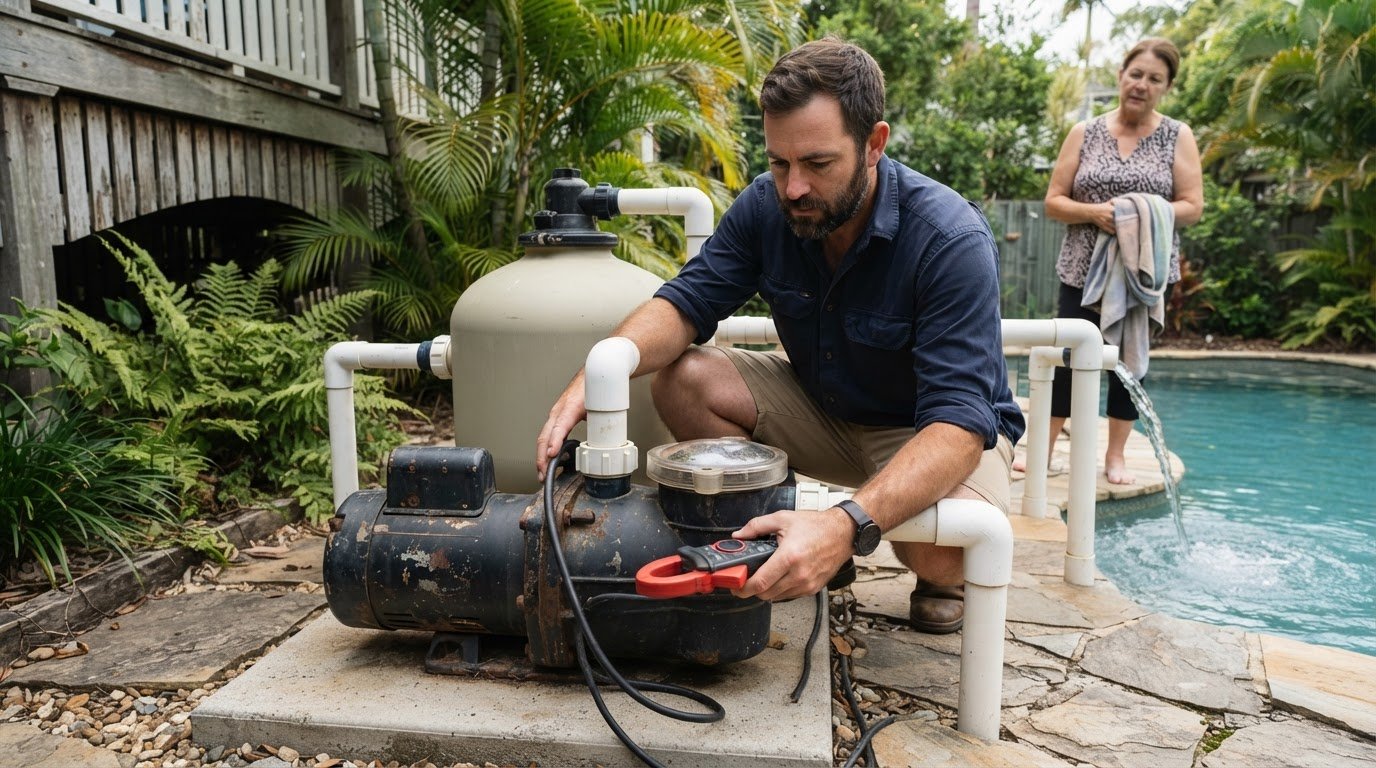
A pool pump’s age can matter as much as the fault. At 10 or 12 years old, replacement is worth considering, while a pump under 5-7 years old with a minor fault may be more cost-effective to repair. A Sandgate pool pump specialist can assess the pump’s condition and help you weigh the options.
A noisy motor, weak water flow or a pump that won’t start can disrupt filtration, but it doesn’t automatically mean the whole unit needs replacing. The right decision depends on the pump’s age, the fault and how well it suits your pool.
This guide explains how pump lifespan, repair needs and operating style shape that decision. You’ll learn which signs to look for, what affects pump selection and how regular care can help maintain performance, so you can choose a practical next step with more confidence.
Key Takeaways
- Weigh a pump’s age and the fault before choosing repair or replacement; a minor issue in a newer unit may be worth repairing.
- Learn which signs can point to wear and how routine servicing may help maintain pump performance over time.
- Understand how pool size, circulation needs and chlorination type influence the pump that suits your setup.
- Find out how Pool Blitz’s pump and servicing offerings can help when your equipment needs attention.
Pool Pump Repairs vs Replacement – What’s the Smarter Choice?
Repair suits some faults, while replacement may make more sense for an ageing or unsuitable pump. In Brisbane, the decision depends on the pump’s age, fault, condition and your pool’s requirements.
Repair and Replacement Options
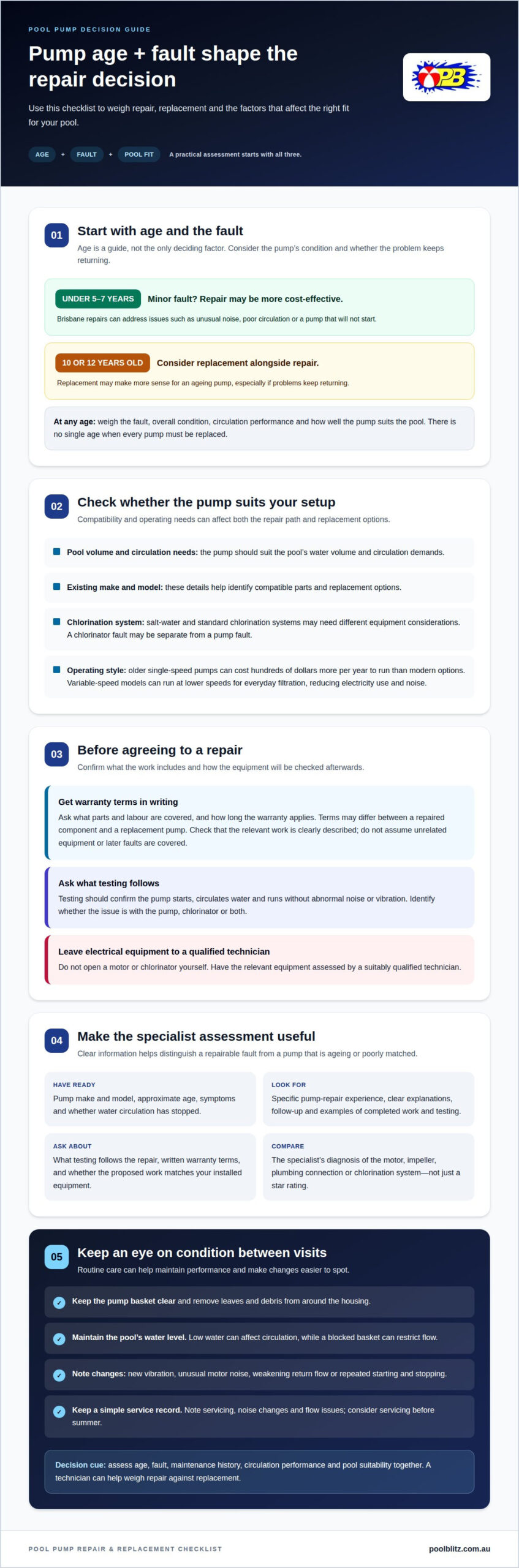
Brisbane repairs can address faults such as unusual noise, poor circulation or a pump that won’t start. A pump under 5-7 years old with a minor fault may be more cost-effective to repair. For pumps over 10 or 12 years old, consider replacement alongside repair, especially if problems keep returning.
There isn’t one pool pump brand that suits every Sandgate swimming pool. The existing make and model, pool volume, circulation needs and chlorination system all influence compatible parts and replacement options. A Sandgate pool pump specialist can assess these details before recommending a path. Older single-speed pumps can also cost hundreds of dollars more per year to run than modern options.
Warranty and Testing
Before booking repairs, ask what the written warranty covers, including parts and labour, and how long it applies. Terms can differ between a repaired component and a replacement pump, so make sure the relevant work is described clearly. Don’t assume a repair warranty covers unrelated pool equipment or later faults.
Testing should confirm that the pump starts, circulates water and runs without abnormal noise or vibration. Chlorinator faults may involve separate equipment, so identify whether the issue is with the pump, chlorinator or both. Electrical components require careful handling. Don’t open a motor or chlorinator yourself; have the relevant equipment assessed by a suitably qualified technician.
Specialist Experience and Reviews
When comparing specialists, look for specific examples of pump repairs, clear explanations and follow-up, rather than relying on a star rating alone. Experience matters when diagnosing whether a fault lies in the motor, impeller, plumbing connection or chlorination system. Look for details about completed work, testing and how the specialist explains repair versus replacement.
Before booking, have the pump’s make and model, symptoms and approximate age ready. Ask what testing follows the repair and whether warranty terms will be provided in writing. Specialists’ brand ranges vary, so confirm that the proposed repair or replacement matches your installed equipment. These details help you compare service scope and make a practical decision for your pool.
Business contact details and opening hours
When arranging a pump repair, share the details that help identify the job: your Sandgate address, pump make and model, fault symptoms, and whether water circulation has stopped. A photo of the equipment label can help distinguish a pump issue from a heating or chlorination problem.
Attendance timing depends on the technician’s schedule, travel route and work required. A straightforward inspection differs from a replacement that needs compatible equipment, so include the issue and pool setup when arranging a visit. This helps set a practical appointment window without assuming an immediate arrival.
Same-day attendance is not automatic, and 24/7 emergency callouts are separate from routine pool servicing. If the pump has stopped, explain how that affects swimming and water circulation when making the booking. For a non-urgent fault, a planned appointment can allow time to assess whether repairs or replacement suit the equipment.
Check a business listing for clear opening hours and contact channels so you can plan an enquiry. Make sure its services include pool equipment repairs, not just general pool care. If the work is part of a heating or maintenance project, mention that too, as it may affect which equipment needs assessment.
Before submitting an enquiry, gather the pump model, a concise fault description and your preferred appointment times. Include access details, such as a side gate or equipment enclosure, so the visit can be planned efficiently. For ongoing care between repairs, regular pool servicing information can help you consider a scheduled maintenance option.
Pool pump lifespan
A pump’s service life depends on its condition, workload and ongoing pool care, not age alone. A correctly matched pump circulating a swimming pool’s water may remain serviceable longer than equipment working under strain. Regular servicing helps extend the life of pool equipment and can help avoid costly replacement.
Small maintenance steps matter. Keep the pump basket clear, remove leaves and debris from around the housing, and maintain the pool’s water level. Low water can affect circulation, while a blocked basket can restrict flow. These checks help the pump operate as intended and make changes easier to spot.
Listen for changes as part of routine care. New vibration, unusual motor noise or weakening return flow can signal a developing issue. If the pump starts and stops repeatedly, note when it happens and whether circulation changes. These details give a technician useful context when assessing the pump.
The right fit also affects wear over time. A pump needs to suit the pool’s water volume and circulation demands. Salt-water and standard chlorination systems may require different equipment considerations. Variable-speed models can run at lower speeds for everyday filtration, reducing electricity use and noise.
For a Brisbane pool, consider arranging servicing before summer, when consistent circulation is especially useful. During the year, keep a simple record of servicing, noise changes and flow issues. That history can help distinguish gradual decline from a sudden fault, supporting a more informed repair or replacement decision.
There’s no single age at which every pump must be replaced. A technician can consider its operating condition, maintenance history, circulation performance and suitability for the pool. Regular servicing supports informed decisions and helps owners address problems before they disrupt pool use.
Which pool pump specialists service Sandgate, Queensland?
For Sandgate pool owners, local proximity can help when arranging a pump assessment, but distance alone doesn’t establish service coverage. Nearby suburbs provide useful location references: Deagon is 1.5 km from Sandgate, Shorncliffe 1.8 km, and Brighton 2.5 km. The right specialist is one whose work covers your address and includes pool pump diagnosis, repairs or replacement.
Choose a service focused on pool equipment rather than general property maintenance. Pump expertise matters because poor circulation can involve the motor, basket, plumbing or another part of the filtration system. Before arranging a visit, describe the symptoms, share the pump’s make and model, and explain whether water is still flowing. These details help identify whether the issue concerns the pump or connected equipment.
Other nearby location references include Boondall at 3.1 km, Brighton Eventide at 3.6 km, Taigum at 4.0 km, and Bracken Ridge at 4.3 km. Nudgee Beach is 4.6 km away, while Fitzgibbon is 4.8 km from Sandgate. These distances help put nearby suburbs in context; they don’t indicate which businesses service each address.
Compare specialists by the work they describe, how they explain repair versus replacement, and whether they test the pump after repairs. Ask for clear information about the assessment, parts and any repair warranty. For electrical concerns, don’t open the pump or chlorinator yourself; describe the fault and leave equipment testing to a suitably qualified technician.
For a pool pump issue in Sandgate, share your suburb, pump details and symptoms through the online enquiry form. A precise description helps direct the enquiry towards the equipment needing attention.
Pool Blitz: Pool Pumps
Pool Blitz helps Sandgate pool owners with pump repairs and replacement options. Its pool pumps and pool equipment repairs provide practical support when circulation falters or equipment needs attention.
If the pump is still working but the pool needs ongoing care, regular or casual pool servicing can help maintain the wider setup. Pool Blitz also provides robotic pool cleaner sales and repairs when cleaning equipment needs separate attention.
Share the pump’s symptoms and details to explain what your pool needs. Contact Pool Blitz to discuss your pool pump or servicing requirements.
Keep Your Pool Ready for the Season Ahead
A pool system works as a whole, so deciding what to do about a pump is also an opportunity to consider how you want to care for your pool. A Sandgate pool pump specialist can help you discuss the equipment and ongoing support that suit your routine.
Pool Blitz offers regular and casual pool servicing for different maintenance needs, as well as robotic pool cleaners and repairs. These services support care beyond the pump itself, whether you’re planning routine attention or dealing with a cleaner that needs repair.
Think about the outcome you want next: reliable circulation, a considered replacement, or a maintenance plan that fits your schedule. A clear conversation can help shape that next step without rushing the decision. Contact Pool Blitz today to discuss your pool’s needs and move forward with confidence.
Frequently Asked Questions
How Long Should a Pump Last?
Pool pumps don’t all reach replacement age at the same time. A pump over 10 or 12 years old is worth assessing for replacement, while a minor fault in a pump under 5-7 years old may make repair the more cost-effective option. The decision also depends on operating condition, maintenance history and whether the pump suits the pool’s circulation needs.
What pool pump repair and installation services are available in Sandgate?
Pool pump support can include diagnosing faults, repairing equipment and selecting a suitable replacement. Pool Blitz provides pool equipment repairs and pool pumps. The right pump depends on the pool’s water volume, circulation requirements and chlorination system. Electrical connections need separate consideration, so selection and installation work should account for the existing equipment and site setup.
What are the signs a pool pump needs repair or replacement?
Changes in water movement can be an early clue: look for air bubbles returning to the pool, inconsistent flow or a pump that repeatedly stops during operation. Dampness around connections or visible casing damage also warrants attention. Note when the change began and whether it affects filtration. A technician can use those observations to assess the pump and connected equipment.
Are there Queensland regulations or electrical safety requirements for pool pump installation?
Pool pump installation involves electrical equipment near water, so electrical connections need careful handling by a qualified professional. Don’t open wiring compartments or attempt electrical repairs yourself. Have a suitably qualified electrician manage the electrical work and assess the installation against the requirements that apply to your property in Queensland. Keep the pump’s installation information available, as it can help identify the equipment and its connection needs.
Do local specialists advise on energy-efficient pumps and rebates in Queensland?
A specialist can explain how pump type and operating settings affect everyday use. Variable-speed pumps can run at lower speeds for routine filtration, reducing electricity use and noise. Pool size and circulation needs still guide the choice. Rebate eligibility depends on the terms of a particular scheme, so consider any rebate separately from selecting equipment that suits your pool.
No responses yet