
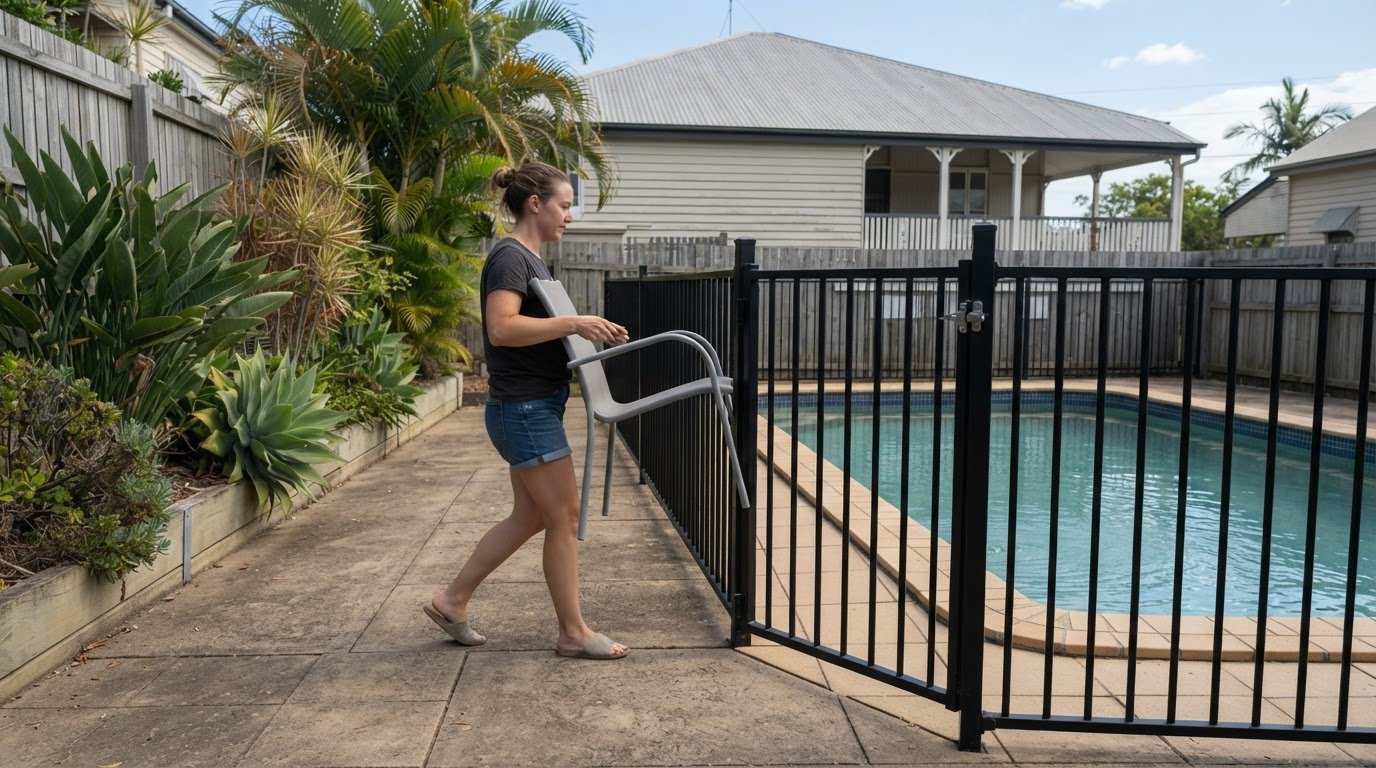
A clean-looking pool isn’t enough to pass a rental inspection. Preparing a pool for a rental inspection in Brisbane starts with having the right pool safety certificate in place. In Queensland, a certificate lasts one year for a shared pool and two years for a non-shared pool. An owner must have a current certificate before entering a new or renewed lease for a property with a non-shared pool.
It’s understandable to want a clear picture of what the inspection covers and what may add to the cost. Inspection fees vary, and you may need to budget for repairs or a reinspection if the pool doesn’t pass first time. This guide explains how certificates work, how tenants can help maintain pool safety, common inspection failures and costs to factor in, so you can prepare with a clearer understanding of what’s required.
Key Takeaways
- For a non-shared pool, the owner needs a current safety certificate before entering a new or renewed lease.
- Keep pool gates securely closed and clear climbable objects from the barrier’s non-climbable zone, including the 900 mm area outside it.
- Common inspection checks include barrier height, gaps beneath the fence and gate latches, so small faults can affect the result.
- Budget for possible follow-up costs as well as the initial inspection, since a failed inspection may require repairs and a reinspection.
How do I get a pool safety certificate?
For a rental property, the owner arranges a pool safety inspection and obtains a certificate from a pool safety inspector. The certificate and any required repairs need attention before a tenancy begins or is renewed.
Rental pool safety requirements
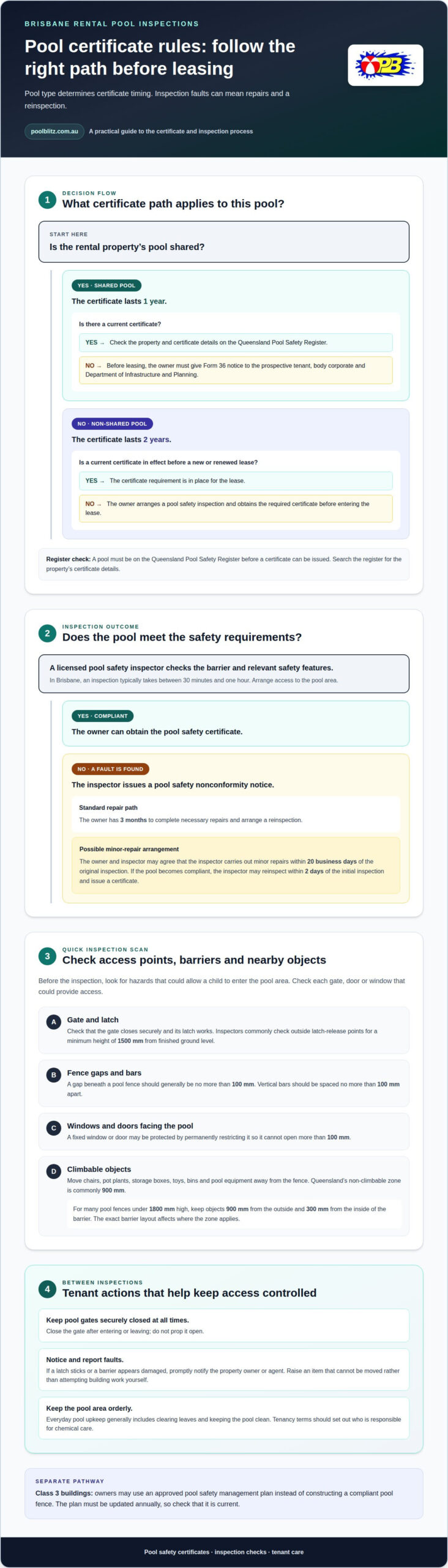
Queensland rental properties with pools must meet pool safety requirements, including holding the certificate required for the pool type. A certificate lasts one year for shared pools and two years for non-shared pools. Before entering a new or renewed lease for a property with a non-shared pool, the owner must ensure a certificate is in effect.
To check a certificate, search the Queensland Pool Safety Register for the property and its certificate details. A pool must be on the register before a certificate can be issued. Queensland property owners must also meet health and safety laws, including the Residential Tenancies and Rooming Accommodation Act 2008, according to Queensland Legislation.
For a shared pool without a current certificate, the owner must give Form 36 notice to the prospective tenant, body corporate and Department of Infrastructure and Planning before leasing. This makes the shared-pool arrangement and its certificate status clear.
Class 3 buildings have a separate pathway: owners may use an approved pool safety management plan instead of constructing a compliant pool fence. The plan must be updated annually, so its current status matters alongside the pool area’s safety arrangements.
A licensed pool safety inspector assesses the barrier and other relevant safety features. In Brisbane, an inspection typically takes between 30 minutes and one hour; arranging access to the pool area helps the inspection proceed.
Inspection failures and repairs
If the inspector identifies a problem, they issue a pool safety nonconformity notice. The owner has 3 months to complete necessary repairs and arrange a reinspection. For example, repairs may address fencing or a gate that does not meet the required safety standard.
An owner and inspector may agree that the inspector will carry out minor repairs within 20 business days of the original inspection. If the pool becomes compliant, the inspector may reinspect it within 2 days of the initial inspection and issue a certificate. Otherwise, the owner must request a reinspection within 3 months after receiving the notice.
Tenant responsibilities for pool gates and climbable objects
Tenants in Queensland can help keep pool access controlled by closing gates and moving nearby objects that could create climbing points. These everyday actions help the pool barrier continue to meet safety standards between inspections.
Tenant care of gates and barriers
Queensland tenants and other occupiers must keep gates giving access to a pool securely closed at all times. Close the gate after entering or leaving, and don’t prop it open. Check during everyday use that the gate and latches appear to work as intended. If a latch sticks or the barrier appears damaged, promptly notify the property owner or agent so the issue can be assessed.
Tenants generally handle everyday pool upkeep, such as clearing leaves and keeping the pool clean. The tenancy terms should set out who is responsible for chemical care. These routine tasks don’t replace the owner’s responsibility for required safety arrangements, but they help keep the pool area orderly and usable.
Identifying climbable objects
A climbable object is something a child could use as a foothold or handhold to get over a pool barrier. Examples include a chair, pot plant, storage box or poolside equipment positioned beside the fence. Queensland’s non-climbable zone is commonly 900 mm, and objects within it can undermine the barrier’s protective function.
For many pool fences under 1800 mm high, objects should be kept 900 mm from the outside and 300 mm from the inside of the barrier. These clearances help prevent everyday items from becoming a step-up route into the pool area. The exact barrier layout affects where the zone applies.
Keeping the non-climbable zone clear
Keep movable items out of the relevant zone, including furniture, toys, bins and equipment. After using the pool, store chairs and accessories away from the fencing rather than leaving them beside it. This simple habit helps prevent avoidable climbing opportunities between inspections.
If a poolside item cannot be moved, or a gate or barrier appears faulty, raise it with the property owner or agent rather than attempting building work yourself. For a separate fault with pool equipment, pool equipment repairs may be relevant; equipment repairs don’t replace attention to barrier safety.
Inspection checks and common failures
Before the inspection, look for hazards that could allow a child to enter the pool area. Check each access point, the barrier, nearby climbable objects and any window that opens towards the pool.
Checking pool access points
A pool access point is any gate, door or window that could provide entry to the pool area. A licensed pool safety inspector checks that barriers and access points meet the relevant safety standard, so a fault at one entrance can affect the inspection result.
Check that the gate closes securely and that its latch works. Inspectors commonly check outside latch-release points for a minimum height of 1500 mm from finished ground level. A gap beneath a pool fence should generally be no more than 100 mm, while vertical bars should be spaced no more than 100 mm apart.
Windows and doors opening towards the pool can also matter. A fixed window or door may be protected by permanently restricting it so it cannot open more than 100 mm. These details can be easy to overlook when attention stays on the main gate.
Removing climbable hazards
Climbable hazards include objects that could help a child get over or through a pool barrier. Move items such as chairs, pot plants, storage boxes and equipment away from fencing. Queensland guidance commonly uses a 900 mm non-climbable zone, with clearances depending on the barrier’s position and design.
Also look for features attached to or beside the fence, including rails or large branches that could provide footholds. For many barriers under 1800 mm high, objects should be kept 900 mm from the outside and 300 mm from the inside. Clear these areas before the inspection.
For shared pools, owners must display a current certificate near the property’s main entrance or at a gate or door accessing the pool. In a body corporate setting, confirm that the certificate is visible to residents and prospective tenants before leasing. The Queensland Pool Safety Register also records pool certificates, helping owners check a pool’s certificate status.
Pool inspection costs in Brisbane
Brisbane pool safety inspection costs depend on whether the pool is residential or shared, and whether a reinspection is needed. When preparing a pool for a rental inspection in Brisbane, budget for the inspection fee and any separate certificate charge. Published prices for Brisbane City, Moreton Bay Regional Council and Redland City Council offer a comparison, while inspectors set their own fees for full inspections.
These prices include travel within the service area, inspection of additional gates and GST if applicable. Pool safety inspectors don’t have a set charge for a full inspection, so fees can vary.
The certificate charge is separate from the inspection fee.
A failed inspection can increase the overall cost if repairs are needed before a certificate is issued, followed by a reinspection. Repair costs depend on the defect and work required: a fencing fault may require different work from a simple adjustment. Owners should budget separately for the inspector’s fee, certificate charge and repairs.
For preparing a pool for a rental inspection in Brisbane, start with the pool type, then account for the certificate charge and possible reinspection. If the pool passes first time, the reinspection fee won’t apply. For regular upkeep between inspections, explore regular pool servicing to help keep the pool in good condition.
Pool Blitz
Pool Blitz can help keep the pool clean and its equipment in good working order as you prepare for a rental inspection. Regular or casual pool servicing supports ongoing upkeep, while pool equipment repairs address faults affecting pool operation. Pool chemicals are also available to help maintain water balance.
These services complement the safety steps above; pool care and equipment maintenance don’t replace a pool safety inspection or required barrier repairs. If an inspector identifies a fencing or gate issue, it still needs to be addressed through the appropriate repair process. For day-to-day pool condition concerns, Pool Blitz provides practical support tailored to the maintenance task.
Contact Pool Blitz to discuss the pool care or equipment support you need.
Make pool care part of your rental planning
Use the time before a lease begins to organise pool care alongside the property’s other maintenance. Keeping a simple record of servicing, equipment issues and outstanding work helps owners and property managers clarify responsibilities throughout the tenancy. It also gives tenants a practical reference for day-to-day upkeep. For interstate investors travelling to Brisbane to coordinate property maintenance and tenant handovers, private transfer providers like blackgrandeurchauffeur.com can provide efficient transport between appointments.
Preparing a pool for a rental inspection in Brisbane is easier when routine maintenance isn’t left until inspection time. Pool Blitz offers regular and casual pool servicing, as well as robotic pool cleaner sales and repairs, to support ongoing pool care. These services complement, but don’t replace, the separate pool safety inspection and any required barrier work.
For help with pool maintenance or robotic cleaner repairs, contact Pool Blitz about your pool. A considered maintenance plan can help you move into the next stage of renting with greater clarity.
Frequently Asked Questions
What are the penalties for noncompliance?
Queensland pool safety law penalties can reach A$16,500 for an individual and A$82,500 for a corporation. On-the-spot fines may also apply. These consequences make it important for owners and body corporates to address safety issues, keep required records current and act on notices within the stated timeframe.
What pool safety rules apply to rental properties in Brisbane, Queensland?
Rental pool arrangements should be checked against applicable safety requirements, and owners may need to ensure relevant documentation is in place before leasing. For shared pools without a current certificate, Form 36 notice must be given to the prospective tenant, body corporate and Department of Infrastructure and Planning before leasing. Tenants can record the pool’s condition using the Entry condition report, Form 1a.
How can I check whether a Brisbane pool fence meets Queensland safety standards?
A visual check can identify obvious concerns, but it doesn’t replace assessment by a pool safety inspector. Look for a barrier at least 1200 mm high, a bottom gap generally no greater than 100 mm, and vertical bars no more than 100 mm apart. Also consider the fence’s surroundings: nearby structures or objects can create footholds, even when the barrier itself appears intact.
What pool barriers, gates, latches and CPR signs should be checked before a rental inspection?
Check that the barrier has no visible damage, gates close securely, and latches operate without sticking. An outside latch-release point is commonly checked for a height of at least 1500 mm from finished ground level. Confirm a compliant CPR sign is present and readable near the pool. For shared pools, the current safety certificate must also be displayed where residents can readily see it.
Who is responsible for pool maintenance and safety in a Brisbane rental: landlord or tenant?
The owner is responsible for ensuring the rental property meets pool safety requirements and has the required certificate. Tenants generally handle everyday upkeep, such as removing leaves and keeping the pool clean. The tenancy terms should set out who is responsible for chemical care. For example, the agreement can clarify who arranges routine chemical maintenance, while safety-related concerns about the barrier should be raised with the owner or property manager.
What should tenants clean and prepare around a pool before a property inspection?
Clear leaves and rubbish from the pool, tidy the surrounding area and put away items that could provide a climbing foothold near the barrier. Keep access gates closed, and report a gate that won’t latch or any visible fence damage to the property manager. If you’re moving in, record the pool’s visible condition and existing concerns on the Entry condition report, Form 1a.
No responses yet