
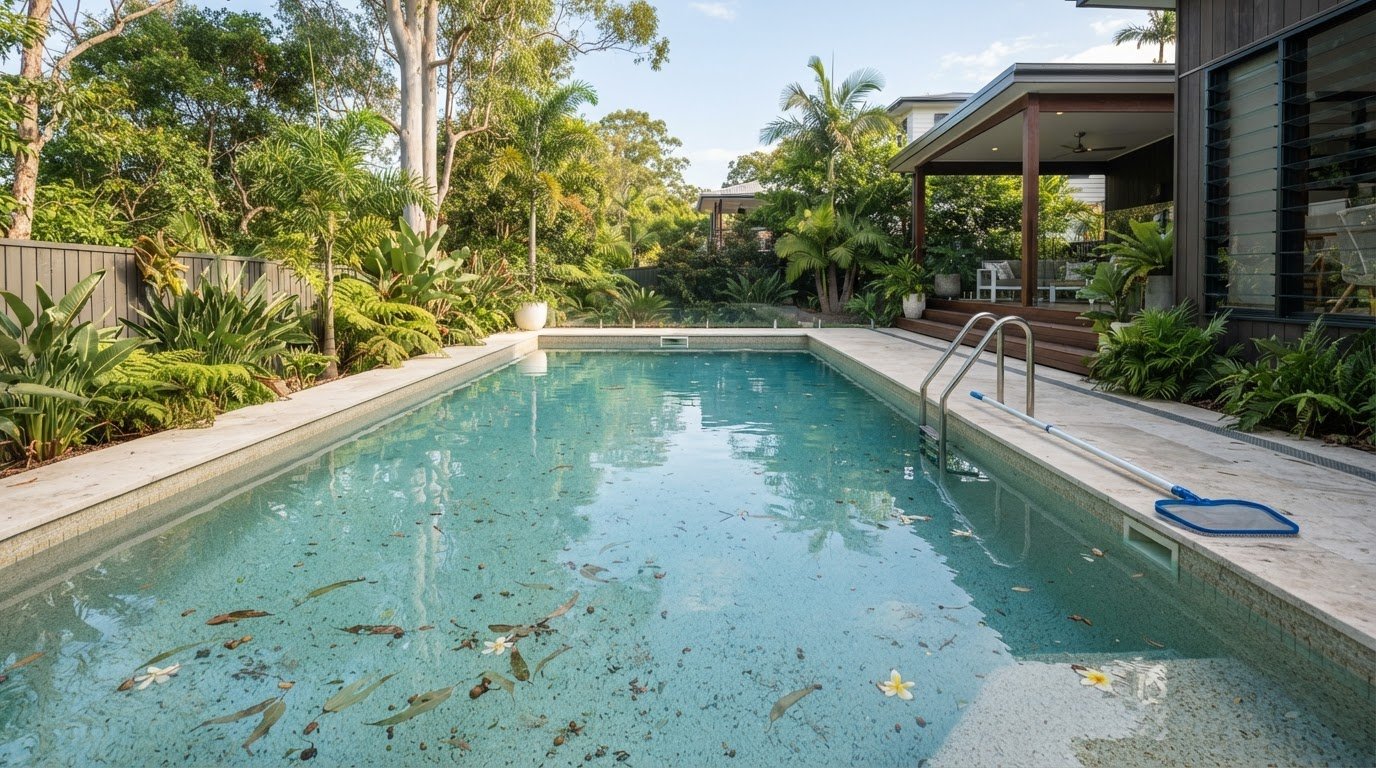
A pool vacuum isn’t always the quickest or most suitable way of removing leaves and debris from pool bottom. The right method depends on what has settled there: a pool-safe leaf rake can gather larger leaves, while fine dirt may need vacuuming.
If leaves and grit have slipped past the surface skimmer, you’re not alone. Brisbane’s wind and rain can send fresh debris into the water just after you’ve cleaned. Choosing the right tool helps clear the floor without scattering debris or putting unnecessary strain on equipment.
This guide explains how to match your cleaning method to the debris and your pool setup. You’ll also learn how to clean methodically, what recurring build-up might indicate about your equipment or filtration, and when routine pool servicing could help.
Key Takeaways
- Match the tool to the debris: use a leaf rake for larger leaves and another method for finer dirt.
- When removing leaves and debris from pool bottom, clear the surface first so loose material is less likely to settle again.
- Notice where debris gathers and how quickly it returns, particularly after wind or rain.
- Repeated cleaner trouble, poor debris collection or persistent floor build-up can be a reason to inspect your equipment.
- A one-off clean may be enough for occasional debris, while recurring build-up may call for pool servicing or equipment attention.
Why leaves and debris collect on your pool bottom
Pool-bottom debris is material that has dropped below the surface and escaped routine skimming. It can include broad leaves, seed pods, insects and fine dirt, but each behaves differently. Large leaves may stay intact and be easy to gather. Seed pods can lodge in corners, insects may be difficult to spot, and fine dirt can settle as a thin layer across the floor.
Brisbane pools can collect debris from nearby trees and garden beds, especially when the weather changes. Wind can blow leaves and seed pods into the water, while rain may wash smaller particles from surrounding areas. A clean pool can have fresh material on the floor after a change in conditions.
Removing leaves and debris from pool bottom promptly helps restore a tidy appearance and limits how much loose material remains in the water to circulate towards the skimmer and filtration system. Organic matter is also part of broader pool hygiene: the overview of Swimming pool sanitation discusses how waste removal and filtration contribute to maintaining pool water.
How debris reaches the floor of a swimming pool
Heavier particles and waterlogged leaves sink, while water movement can carry lighter debris until it settles on a step, in a corner or in an area with weaker circulation. Pool shape, landscaping and water movement all influence where it collects. A built-in step may trap leaves, for example, while a tree beside one side of the pool may mean that area receives more debris. Note where material gathers to identify the pattern.
Wind and rainy weather can bring in another load between routine cleans. Even when the surface looks clear, fine dirt and small fragments may drift down or settle in areas with less water movement. A concentrated pile may point to a regular entry point or resting place, while a thin layer across the floor is more likely to be fine material.
When settled leaves need more than surface skimming
A surface net collects floating material, not leaves already resting on the floor. As organic matter builds up, it can make the pool look untidy and leave more debris to manage during cleaning. If the same areas keep collecting material or the floor stays dirty after cleaning, check whether your equipment is collecting effectively and whether water is circulating as expected.
- Leaves: Broad pieces are easy to see, but can sink or gather against walls and steps.
- Seed pods: Smaller, heavier pieces may settle quickly or collect in corners.
- Insects: Some float at first, while others sink, so check both the surface and floor.
- Fine dirt: It can spread widely and may need a different method from larger debris.
What you’re removing, where it settles and whether it returns can help distinguish an occasional clean-up from a recurring equipment or circulation concern.
Choose the right tool to remove leaves and debris from a pool bottom
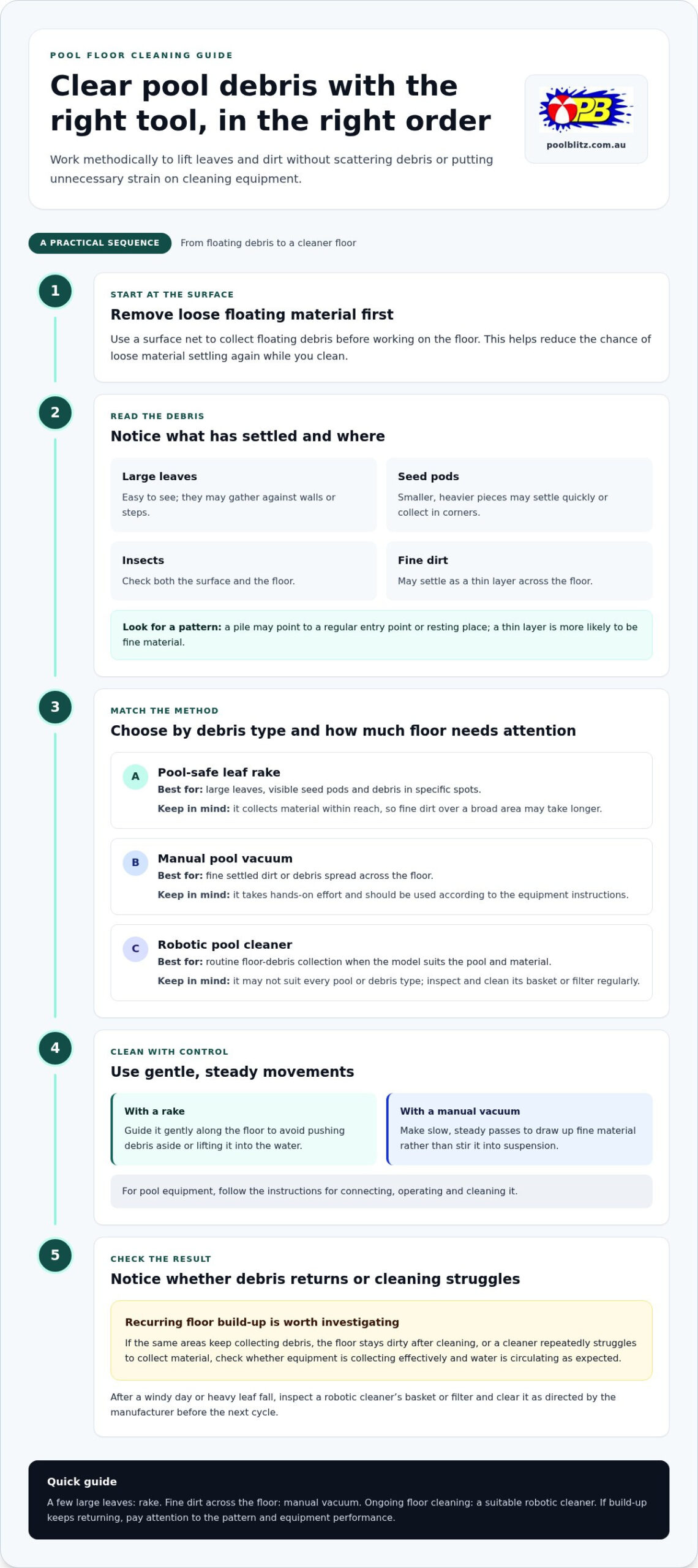
The best tool depends on the type and amount of debris, and how much of the floor needs attention. A pool-safe leaf rake gives you direct control over larger material. A manual vacuum can collect finer dirt spread across a wider area. A robotic cleaner may help with regular floor cleaning if it suits your pool and the debris it needs to collect.
Consider the amount as well as the type of debris. A few visible leaves may be quicker to collect by hand than to set up a cleaner for. Fine sediment across the floor can be harder to gather without stirring it up. Follow your pool equipment instructions for connecting, operating and cleaning it.
Leaf rake or manual vacuum: which suits the debris?
Use a pool-safe leaf rake for larger leaves and visible seed pods you can collect directly. Guide it gently along the floor rather than sweeping quickly, which can push debris aside or lift it into the water. For fine dirt spread across the floor, manual vacuuming may be more suitable. Use slow, steady passes to draw the material up rather than stir it into suspension.
Leaf rake
Best for: Large leaves, seed pods and visible debris in specific spots.
Practical limitation: It collects material within reach of the rake, so fine dirt over a broad area may take longer to remove.
Manual pool vacuum
Best for: Fine settled dirt or debris spread across the floor.
Practical limitation: It takes hands-on effort and should be used according to the equipment instructions.
Robotic pool cleaner
Best for: Routine collection of floor debris when the model suits the pool and material present.
Practical limitation: It may not suit every pool or type of debris, and its basket or filter needs regular inspection and cleaning.
These tools aren’t interchangeable. A rake is straightforward for a few large leaves; vacuuming may be more practical for fine material, while a suitable robotic cleaner can assist with ongoing floor cleaning. If you’re comparing cleaner types and features, the robotic pool cleaner buying guide offers broader selection advice.
When a robotic pool cleaner may help
A robotic cleaner can collect floor debris, but its performance depends on the model, pool layout and material being collected. Check its basket or filter regularly, especially after a windy day or heavy leaf fall. A full or dirty collection basket can affect cleaning, so clear it as directed by the manufacturer before the next cycle.
If a cleaner repeatedly struggles to collect material or the floor remains dirty after a cycle, the equipment may need attention. Pool Blitz provides robotic pool cleaner repairs and pool servicing to help address persistent cleaning concerns.
How to remove leaves and debris from your pool bottom step by step
A measured approach helps lift debris without scattering it or putting unnecessary strain on cleaning equipment. Before removing leaves and debris from pool bottom, choose a pool-safe rake, manual vacuum or robotic cleaner suited to what has settled. Work methodically from the shallow end towards areas with heavier deposits.
- Prepare your tools and check the water. Choose equipment suited to the debris and check that it’s in sound condition. Keep your footing secure at the pool edge, and don’t enter water you can’t see clearly. Set up and operate powered equipment only as directed in its instructions.
- Clear the surface first. Use a surface net to remove floating leaves and other loose material before cleaning the floor. This reduces the chance of surface debris sinking as you work and gives you a clearer view of what remains below.
- Locate the settled material. From the edge, look across the floor and note where leaves or dirt have gathered. Check steps, corners and areas behind fittings, where debris can be less obvious. Starting at the shallow end helps you work in a controlled way towards heavier deposits.
- Choose a suitable removal method. Collect larger, visible leaves with a pool-safe leaf rake. For fine dirt spread over the floor, use a manual vacuum if it suits your pool setup. A robotic cleaner is another option when it suits your pool and the debris. Follow the cleaner’s operating instructions, including guidance for setup and use.
- Move slowly across the floor. Work in steady passes, overlapping each area slightly rather than making quick, sweeping movements. If fine material starts drifting into the water, pause and let it settle before continuing. For a concentrated pile of leaves, approach gently and gather it without pushing it towards a corner or drain.
- Check the result and clean the equipment. Look over the floor again, especially around steps, corners and other places where debris collects. Inspect the relevant cleaner basket or filter, then remove debris and clean it according to the manufacturer’s directions. Store or disconnect equipment as instructed, and check that the floor looks clear before finishing.
Take your time with the final check. If material remains in a patch, make another careful pass with the method best suited to it rather than trying to clear everything in one sweep. Controlled cleaning helps protect your equipment and gives you a clearer view of the pool floor.
What to do when leaves keep returning to the pool floor
Cleaning removes debris, but it can’t stop fresh leaves or dirt arriving from nearby trees and changing Brisbane weather. Wind may blow material in, while rain can wash debris from surrounding areas. Rather than repeating the same clean-up without a plan, observe when and where debris returns, then adjust your routine to suit.
Reduce repeated leaf build-up around the pool
Check the pool after windy or rainy weather as well as during your usual routine. Regular surface skimming can catch floating leaves before they sink, while a quick look at the floor shows whether another clean is needed. If debris gathers in one spot, focus on that area instead of automatically cleaning the entire floor each time.
- Note the conditions: Record whether debris appears after wind, rain or a particular weather change.
- Look for a pattern: Notice if material repeatedly gathers near steps, corners or the side closest to vegetation.
- Track how quickly it returns: Compare the pool after a clean with what you find at your next check.
- Adjust the effort: Skim more often when leaves are floating; use a floor-cleaning method once material has settled.
This simple record helps distinguish an occasional burst of debris from a steady source. It also makes your routine more targeted: if only one area collects leaves, focus your checks there, while a broad layer of dirt may call for attention across more of the floor. For a wider schedule that includes the rest of your pool care, use the Brisbane pool maintenance guide as a reference.
Check whether equipment needs attention
If debris remains after you’ve used a suitable method, look for a practical equipment issue before repeating the clean. Check whether a cleaner basket or filter is clogged, and observe whether water appears to circulate poorly. These signs don’t identify a cause on their own, but they can indicate that the cleaning setup or filtration needs a closer look.
Persistent floor build-up alongside recurring cleaner trouble is different from leaves returning after a windy afternoon. Clean baskets and filters as directed by the equipment instructions, then note whether debris collection improves. If circulation still looks poor or your cleaner repeatedly struggles, the cause may involve more than nearby trees. Pool equipment repairs and servicing can help assess ongoing concerns. The pool filtration and health guide explains how filtration fits into overall pool care.
Pool Blitz provides pool servicing in Brisbane for recurring debris and other pool-care needs.
When Brisbane pool owners may need professional cleaning or equipment help
A small amount of debris after a windy afternoon is usually manageable with suitable cleaning equipment and a careful clean. But if the floor repeatedly builds up soon after cleaning, or a cleaner struggles to collect debris, it may be time to look beyond another rake or vacuum pass. A consistent approach to removing leaves and debris from pool bottom should leave the floor clearer; recurring problems deserve a closer look.
DIY cleaning or professional pool servicing?
DIY cleaning can suit owners who can safely reach the debris and have equipment appropriate for the pool and material. Professional servicing may help when deposits keep returning, routine care is difficult to fit in, or the pool needs broader attention alongside cleaning. Pool Blitz provides regular and casual pool servicing in Brisbane, including water balancing as part of its pool-care offering.
Consider the pattern, not just one untidy day. If a one-off clean restores the pool and debris only returns after weather brings in more, your usual routine may be enough. If floor build-up persists despite appropriate cleaning, or keeping up with debris has become a repeated challenge, regular or casual servicing can help manage ongoing pool care. Pool Blitz is an independent Brisbane pool-care business with more than three decades of local experience.
When a pool cleaner or filtration system needs attention
Repeated cleaning problems can point to an equipment concern, but debris alone doesn’t identify a fault. Notice whether the cleaner repeatedly misses material, whether its basket or filter becomes clogged, or whether water appears to circulate poorly. Check and clean components according to their instructions. If the same issues continue, an equipment assessment can help identify what needs attention.
Pool Blitz repairs robotic pool cleaners, pumps and filtration systems. This can be a practical next step if a cleaner repeatedly stops collecting debris effectively or visible circulation problems persist. Explore the pool equipment repairs reference for more context on equipment concerns. Avoid assuming that replacing a cleaner will solve recurring floor deposits; the cause may need to be assessed across the equipment and pool-care routine.
- A one-off clean is likely manageable when debris is visible, limited and responds to a suitable cleaning method.
- Consider servicing when deposits keep returning or regular pool care is becoming difficult to maintain.
- Look into equipment support when a cleaner repeatedly struggles, debris collection stays poor or circulation appears weak.
Pool Blitz offers regular and casual servicing, as well as repairs for robotic cleaners, pumps and filtration systems.
Make pool care easier to stay on top of
A clear pool floor is easier to maintain when cleaning is part of a steady routine rather than a response to a build-up of debris. Keep an eye on how quickly leaves return and adjust your checks to suit the conditions around your pool. This makes removing leaves and debris from pool bottom more manageable and helps you spot when your usual approach needs attention.
If keeping up with pool care is becoming difficult, or recurring debris is raising questions about your equipment, expert support can help you plan a practical next step. Pool Blitz assists with pool care and equipment needs, so you can spend less time troubleshooting and more time enjoying a tidy pool.
Book pool servicing and equipment support with Pool Blitz to take the next step towards a pool that’s easier to look after.
Frequently Asked Questions
How do you remove leaves from the bottom of a swimming pool?
Use a pool-safe leaf rake to lift leaves gently from the floor, working from the pool edge where you can do so safely. For a compact pile, lower the rake beside it and draw the leaves into the net rather than pushing through them. If leaves are tangled together, collect them in smaller amounts to avoid spilling them back into the water. Follow the tool’s instructions.
Can a pool vacuum pick up leaves from the bottom?
Yes, a pool vacuum may pick up leaves if it’s suitable for your pool and the size of the debris. Large or tightly packed leaves can be harder to collect than smaller pieces, so remove bulky material with a rake first if the vacuum appears to struggle. Check the vacuum’s instructions and collection basket during cleaning, and stop if debris is blocking the equipment.
Is it better to use a leaf rake or a robotic pool cleaner?
For a few visible leaves in one area, a leaf rake is often the simpler choice because you can target them straight away. A robotic cleaner may be more convenient for routine floor cleaning, provided its model suits your pool and the debris. Consider how much material is present and whether you want a quick manual clean or ongoing equipment-assisted cleaning.
How often should I remove leaves from my pool?
There isn’t one schedule that suits every Brisbane pool. Check it often enough to catch floating leaves before they sink, and inspect the floor after windy or rainy weather, particularly if trees or garden beds are nearby. If the pool stays clear between checks, your routine may be adequate. A noticeable increase in debris is a cue to clean sooner and reassess the pattern.
What happens if leaves are left on the pool bottom?
Leaves left on the floor can make the pool look untidy and may break down over time, adding organic material to the water. Loose debris can also be moved around by circulation and end up in other parts of the pool or filtration system. Removing a build-up early helps keep the floor presentable and avoids leaving accumulated material in the water for longer than necessary.
Why does dirt remain on my pool bottom after cleaning?
Dirt may remain if fine particles were stirred up during cleaning, if the tool didn’t collect them effectively, or if circulation is weak in that area. When removing leaves and debris from pool bottom, match the tool to the material, then check whether the same patch reappears after particles settle. Inspect cleaner baskets and filters as directed; ongoing poor collection may warrant an equipment or servicing check.
No responses yet