
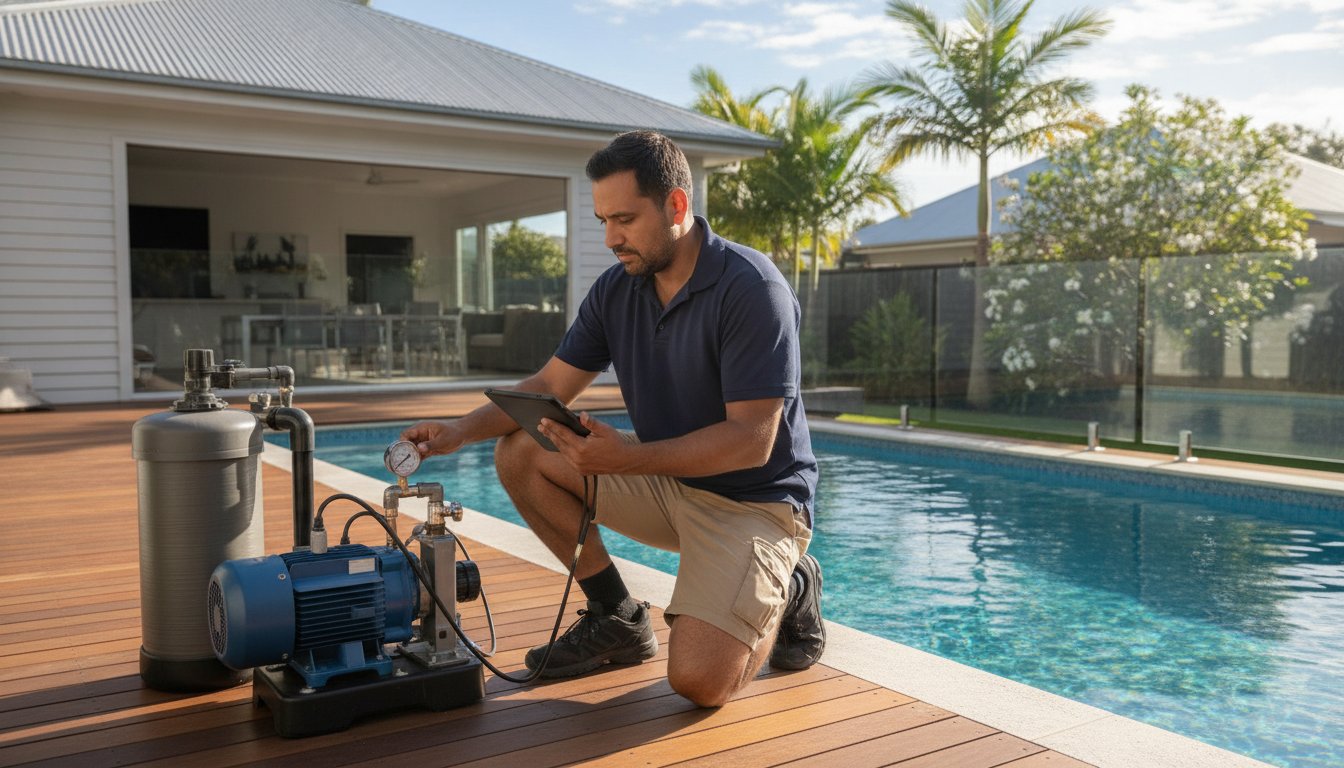
A pool safety certificate might keep the council happy, but it won’t stop your pump from seizing in the middle of a sweltering January heatwave. While many homeowners confuse a legal barrier check with a mechanical health assessment, the reality is that a thorough pool equipment inspection Brisbane is what truly keeps your water crystal clear and your energy bills manageable. Most locals rightfully prioritise safety, yet the frustration of an unexpected equipment failure can quickly turn a backyard sanctuary into a source of stress.
You deserve the relief of knowing your hardware is operating with total precision and efficiency. This professional guide provides the essential 2026 checklist to help you avoid costly breakdowns and understand the true condition of your pool’s heart. We’ll examine the critical health markers for your pump, filtration system, and robotic cleaner; giving you a clear path toward lower running costs and the long-term stability of your investment.
Key Takeaways
- Distinguish between legal safety compliance and mechanical health. A safety certificate keeps your fencing legal, but a mechanical audit ensures your water remains clean and clear.
- Identify early warning signs of hardware fatigue. Learning to spot issues like bubbles in the return line can prevent a minor repair from escalating into a total system failure.
- Optimise your energy efficiency with a professional pool equipment inspection Brisbane. Regular diagnostics ensure your pump and filter aren’t drawing unnecessary power during peak periods.
- Avoid inheriting costly mechanical issues during a property purchase. A dedicated pre-purchase inspection provides peace of mind by uncovering the true condition of the existing pool hardware.
- Prepare for the Queensland summer with an annual September audit. Checking your system’s “heart” before the heat arrives ensures a trouble-free swimming season for your family.
Beyond Compliance: Why Brisbane Equipment Inspections Matter
Most homeowners in South East Queensland are well-acquainted with the mandatory pool safety certificate, yet this legal document only tells half the story. While a safety inspector ensures your gates latch and your signage is visible, they aren’t trained to listen for the high-pitched bearing whine of a struggling motor. A dedicated pool equipment inspection Brisbane moves past basic compliance to focus on the mechanical heart of your backyard, ensuring your investment remains a source of joy rather than a financial drain. It’s the difference between being legally allowed to swim and having a pool that’s actually fit for swimming.
Safety vs. Performance: Which do you need?
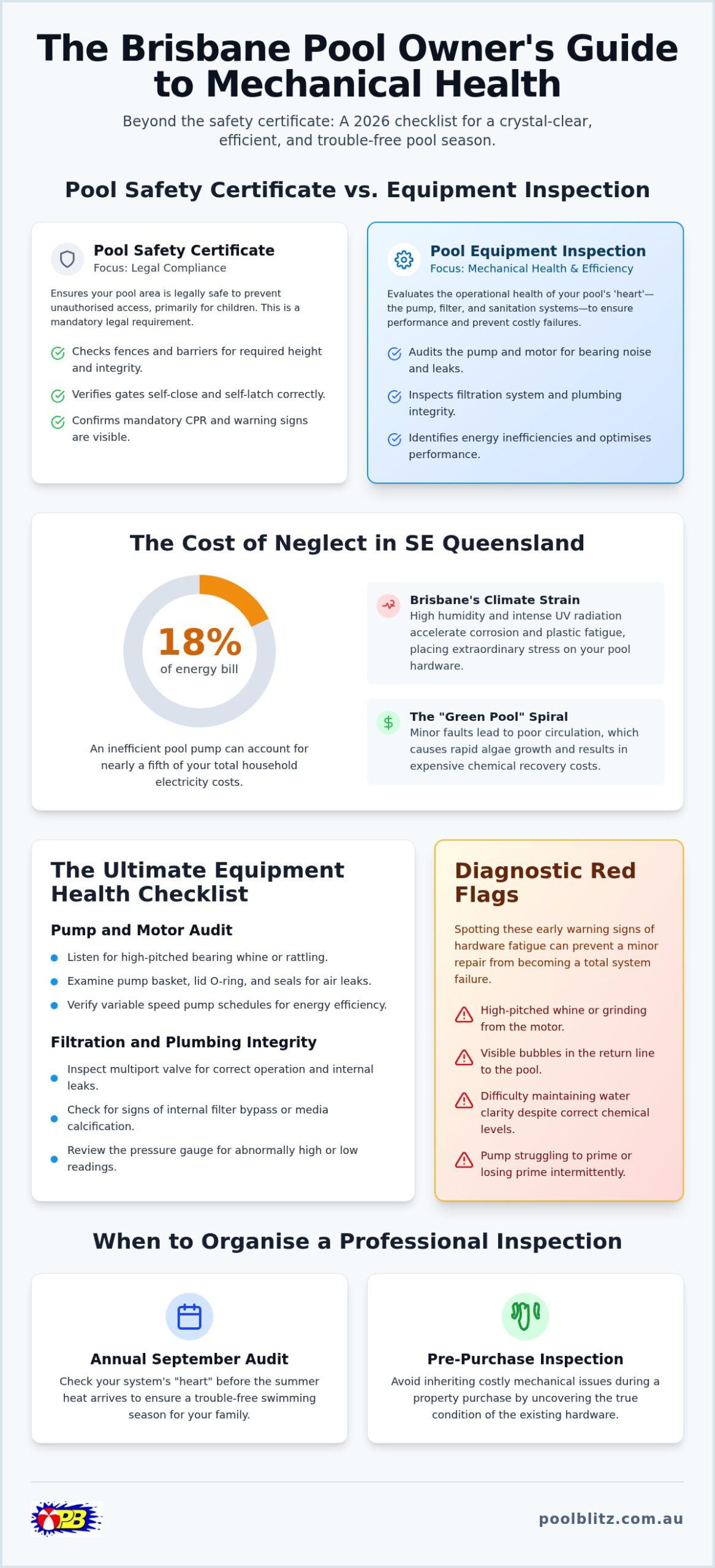
Safety inspections are narrow in scope; they prioritise the prevention of unauthorised access through rigorous checks of fences, latches, and CPR charts. In contrast, an equipment inspection evaluates the operational health of your pump, filtration system, and chlorination cycle. You shouldn’t rely on a safety certifier to diagnose a dying pump motor, as their expertise doesn’t extend to hydraulic efficiency or electrical draw. A professional mechanical audit identifies hidden issues like pump seal leaks or internal filter bypasses that a standard safety check would naturally overlook. By separating these two processes, you ensure your pool is both safe for children and mechanically sound for the long term.
The Cost of Neglect in SE Queensland
Brisbane’s unique climate places an extraordinary burden on pool hardware that southern states simply don’t experience. High humidity levels accelerate the corrosion of motor bearings, while intense UV radiation can cause plastic components to become brittle and prone to cracking. When a minor equipment fault goes unnoticed, it often triggers the “Green Pool” spiral, where poor circulation leads to rapid algae growth and expensive chemical recovery costs. Preventative maintenance serves as the primary shield against the sudden mechanical stress caused by Brisbane’s intense summer storm damage. Investing in a regular pool equipment inspection Brisbane allows you to catch these fatigue markers early, protecting your wallet from the shock of a total system replacement.
Operational efficiency also has a direct impact on your household budget. With Brisbane electricity tariffs reaching as high as 45 cents per kilowatt-hour, an outdated or poorly maintained pump can account for nearly 18% of your total energy bill. Modern pool sanitation methods rely on consistent, efficient water flow to keep the environment healthy. When your filter is calcified or your pump is struggling, you’ll find yourself spending more on corrective chemicals to compensate for poor mechanical performance. A precisely tuned system runs for fewer hours while delivering superior water clarity, providing you with the peace of mind that your pool is running at peak efficiency.
The Ultimate Pool Equipment Health Checklist
A structured diagnostic approach is the only way to ensure every component in your pool shed is functioning as intended. A professional pool equipment inspection Brisbane goes beyond a cursory glance; it involves a methodical review of the hydraulics, filtration, and sanitisation hardware that keeps your water safe for the family. By following a clear checklist, you can identify minor wear before it transforms into a major expense. This systematic process protects your hardware and ensures your water chemistry remains balanced year-round.
The Pump and Motor Audit
The pump is the heart of your system, and its health dictates the performance of every other component. During an inspection, you should listen closely for a high-pitched bearing whine or the rattling sound of cavitation, as these often signal that the motor is under extreme stress. We also examine the pump basket, lid O-ring, and mechanical seals for any signs of air leaks that could lead to a loss of prime. For those using modern variable speed pumps, we verify that your schedules are programmed for maximum energy efficiency, ensuring you aren’t wasting power during the cooler months.
Filtration and Plumbing Integrity
Your filter’s primary job is to remove debris, but its internal integrity is what matters most. We inspect the multiport valve for ease of operation and check for internal leaks that might be sending filtered water straight to the waste line. While Queensland’s pool safety standard focuses on the perimeter of your pool, a mechanical audit looks at the pressure gauges to determine if your sand, glass, or cartridge media is overdue for a deep clean or replacement. We also look for hairline cracks in PVC plumbing, which are often caused by the subtle ground movement common in Brisbane’s clay-heavy soils.
Robotic Cleaner and Accessory Check
A common oversight in standard maintenance is the health of your automated helpers. We assess the drive belts, brushes, and filter canisters on robotic units to ensure they are picking up debris effectively rather than just wandering aimlessly. If you are looking to upgrade your cleaning setup, our Best Robotic Pool Cleaner Brisbane: 2026 Expert Buying Guide offers a deep dive into the latest technology. Finally, we check pool lights for water ingress and perishables like cable seals to prevent electrical faults. If your equipment is showing signs of age, our team can provide pool equipment repairs to restore your system’s reliability and peace of mind.
Diagnostic Red Flags: Spotting Equipment Fatigue Early
Identifying mechanical wear before it leads to a catastrophic failure is the hallmark of a proactive homeowner. While a professional pool equipment inspection Brisbane provides a definitive health report, you can often spot the early warning signs of fatigue just by observing your system’s daily performance. Catching these red flags early doesn’t just save you from the frustration of a green pool; it protects your budget from the high costs associated with emergency replacements during the peak of the Brisbane summer.
One of the most telling signs of a suction-side leak is the presence of persistent bubbles in the return line. When air is drawn into the system through a perished O-ring or a hairline crack in the pump lid, it disrupts the hydraulic pressure required for effective filtration. If you notice air pockets dancing in your pool’s return jets, it’s a clear signal that your pump is working harder than it should. This unnecessary strain can quickly lead to overheating and internal damage if the source of the air ingress isn’t promptly addressed.
White, crusty calcium build-up on your hardware is another significant indicator of underlying issues. This scaling often points to a chronic chemical imbalance that, if left unchecked, will eventually seize moving parts and calcify your filter media. Similarly, you should monitor your water clarity after a heavy storm. If your sand filter is channelling, water creates narrow paths through the media rather than being filtered evenly. This results in fine debris being blown straight back into the pool, rendering your filtration cycle almost entirely ineffective.
Auditory and Visual Warning Signs
Your ears are often the first diagnostic tool you’ll use. A high-pitched screeching or a heavy grinding noise is the unmistakable death knell of failing motor bearings, usually caused by a slow-leaking mechanical seal that has allowed water to enter the motor housing. You should also regularly check the ground beneath your pump for water pooling. While some moisture is expected in Brisbane’s humidity, consistent puddles usually indicate a failing seal or a cracked housing that requires professional attention. When your water remains cloudy despite perfect chemical levels, the issue is almost certainly mechanical fatigue within the filtration system.
Water Chemistry and Equipment Interaction
The relationship between your water chemistry and your hardware is deeply intertwined. Low pH levels are particularly aggressive, as they can corrode copper heat exchangers and eat away at the delicate internals of your pump. High levels of stabiliser (cyanuric acid) can also lead to chlorine lock, where your chlorinator cell appears to be working, but the chemical concentration prevents the chlorine from actually sanitising the water. For a deeper look at managing these issues, our Expert Pool Equipment Repairs Brisbane: The 2026 Homeowner’s Reference offers comprehensive advice on maintaining system longevity. Taking a proactive stance today ensures your pool remains a reliable retreat for years to come.
When to Organise a Professional Inspection
Timing your pool equipment inspection Brisbane is just as important as the diagnostic itself. While regular maintenance keeps things ticking over, there are critical moments when a professional set of eyes is non-negotiable to prevent a small oversight from becoming a major capital expense. Whether you’re moving into a new home or preparing for the intensity of a Queensland summer, understanding these milestones ensures your hardware remains reliable and efficient. It’s the most effective way to maintain the long-term stability of your backyard sanctuary.
The Pre-Purchase Equipment Audit
Standard building and pest inspections focus on termites and structural integrity, but they rarely venture into the technical nuances of the pool shed. We often see buyers inherit thousands of dollars in repairs because a seller used ‘band-aid’ fixes to mask deep-seated issues. These temporary solutions might include over-chlorinating to hide a failing sanitiser or using temporary sealants on a cracked pump housing. A dedicated equipment report allows you to negotiate these repair costs before the settlement is finalised, giving you the clarity needed to ensure you aren’t buying a lemon. This professional intervention acts as a protective steward for your new property investment.
Seasonal and Event-Based Checks
An annual ‘Pre-Summer Audit’ in September is the primary defense for Brisbane pools. This timing allows you to identify fatigue in your pump or chlorinator before the heavy bather load of the Christmas holidays arrives, ensuring your system doesn’t fail when you need it most. Beyond the seasons, major SE Queensland rain events can cause motor flooding or electrical surges that aren’t always immediately obvious to the untrained eye. Checking the system after a storm prevents motor burnout and ensures your water chemistry hasn’t been completely compromised by runoff. Our North Brisbane Pool Care: The Ultimate 2026 Maintenance Roundup provides more context on managing these local environmental challenges throughout the year.
Even for the most dedicated DIY pool owners, a ‘Casual Service’ check-up acts as a professional safety net. It’s a chance to have a seasoned authority verify your water balancing and equipment health without the need for a permanent contract. This approach combines modern methodology with established service values, giving you the peace of mind that your DIY efforts are on the right track. If you’re unsure about the current state of your hardware, now is the ideal time to book a professional pool equipment inspection Brisbane to secure your system’s performance.
Trust the Brisbane Experts: The Pool Blitz Advantage
Choosing a partner for your pool equipment inspection Brisbane involves more than just finding a technician with a checklist. It requires a relationship with a team that carries over three decades of local historical experience. At Pool Blitz, we’ve positioned ourselves as the seasoned authority in mechanical diagnostics, combining a deep respect for traditional service values with an innovative approach to modern technology. We act as protective stewards for your property, ensuring that every pump, filter, and robotic cleaner operates with the precision required for long-term stability.
Comprehensive Diagnostics and Repairs
Our approach is fundamentally different from a general safety certifier. While others focus solely on the perimeter fence, our technicians are trained to assess the intricate internal workings of your hardware. We don’t just identify a fault and leave you with a problem; we offer the comprehensive repair solution. As authorised dealers for leading filtration brands, we have direct access to genuine spare parts for systems like Astral and Zodiac. This ensures that your repairs are performed to a high standard of excellence using components designed for longevity. We remain deeply committed to honest advice, always choosing to repair a component whenever possible rather than simply pushing for a new sale.
Your Local Partner in Pool Health
Reliability is built through consistent care rather than one-time interventions. Our regular servicing plans are designed to include ongoing equipment monitoring, allowing us to catch the subtle markers of fatigue before they escalate. We place a significant emphasis on expert water balancing, as maintaining the correct chemistry is the most effective way to protect your equipment’s internal components from premature corrosion. For a more detailed look at maintaining a pristine environment, our Ultimate Brisbane Pool Filtration & Health Guide offers a thorough explanation of the processes involved. This proactive methodology reflects the smooth, trouble-free experience we promise to provide to every Brisbane household.
When you engage our team for a pool equipment inspection Brisbane, you’re gaining a dependable partner dedicated to your pool’s longevity. We understand the unique challenges of the local climate and use that knowledge to keep your hardware running at peak efficiency. It’s about providing the clarity and safety that results from professional intervention, giving you the peace of mind to simply enjoy your pool without the worry of what’s happening behind the shed door.
Securing Your Pool’s Future Performance
Maintaining a pristine backyard retreat requires more than just a compliant fence; it demands a deep understanding of the mechanical systems that keep your water clear. By moving beyond basic safety certificates and adopting a methodical health checklist, you can identify early warning signs like suction leaks or bearing wear before they become catastrophic. Whether you’re navigating a property purchase or preparing for the upcoming swimming season, a thorough pool equipment inspection Brisbane ensures your hardware operates with maximum efficiency and reliability.
As a seasoned authority with over 30 years of local experience, Pool Blitz acts as a protective steward for your investment. Our status as a specialist robotic cleaner repair centre and authorised dealer for major equipment brands means we provide the precision care your system deserves. You can book your professional pool equipment inspection with Pool Blitz today to secure the long-term stability of your pool. We look forward to helping you enjoy a trouble-free summer in the sun.
Frequently Asked Questions
Does a pool safety certificate include an equipment inspection?
No, a pool safety certificate is purely focused on barriers, gates, and CPR signage to meet legal requirements. It doesn’t assess whether your pump is about to seize or if your filter media is calcified. A professional pool equipment inspection Brisbane is a separate mechanical audit designed to ensure your hardware is running at peak efficiency. This check prevents the frustration of a green pool during a heatwave.
How much does a pool equipment inspection cost in Brisbane?
While specific costs vary based on the complexity of your setup, a professional audit is a vital investment in your property’s stability. These inspections are designed to identify early wear in your pump, filter, and chlorinator before they lead to expensive emergency repairs. Investing in preventative maintenance is far more cost-effective than a total system replacement caused by unchecked mechanical fatigue. It ensures your backyard sanctuary remains a trouble-free environment.
What is the most common equipment failure in Brisbane pools?
Failing pump motor bearings are the most frequent issue we encounter in South East Queensland. Brisbane’s high humidity and intense summer heat accelerate the degradation of mechanical seals, allowing water to enter the motor housing. This leads to the characteristic high-pitched screeching that signals impending failure. Other common problems include calcified chlorinator cells and “channelling” in sand filters, both of which significantly reduce the effectiveness of your pool’s daily filtration cycle.
Can I do my own pool equipment inspection?
You can certainly perform basic visual checks, such as looking for leaks or listening for unusual noises. However, a professional pool equipment inspection Brisbane involves technical diagnostics that are difficult for DIY owners to replicate. Seasoned experts use specialised knowledge to identify internal issues like hydraulic imbalances or electrical draw irregularities. Having a professional verify your hardware provides the peace of mind that your system is stable and safe for long-term operation.
Should I get the pool equipment inspected before buying a house?
Absolutely, because a standard building and pest inspection almost always excludes the pool’s mechanical health. Buyers often discover expensive faults like cracked filter tanks or dying robotic cleaners only after they’ve moved in. A pre-purchase audit provides a clear understanding of the equipment’s condition, allowing you to negotiate repair costs before settlement. This proactive step ensures you aren’t inheriting a “lemon” that will require immediate capital expenditure or a total system overhaul.
How long does a professional equipment inspection take?
A professional equipment inspection typically takes between 45 and 90 minutes to complete thoroughly. The duration depends on the complexity of your system, including whether you have heating, advanced automation, or robotic cleaning units. Our technicians work methodically through every component in your pool shed to ensure nothing is overlooked. This steady pace allows for a logical assessment of your system’s hydraulics and filtration integrity without rushing the diagnostic process or missing vital fatigue markers.
Will an inspection help reduce my pool’s electricity bill?
Yes, an inspection is a powerful tool for lowering your monthly running costs. Since a pool pump can account for up to 18% of a typical Australian household’s electricity bill, ensuring it runs efficiently is vital. We verify that variable speed pumps are programmed correctly for Brisbane’s climate and check for hydraulic restrictions that force the motor to work harder. Optimising these settings can lead to significant annual savings on your total energy expenses.
What happens if my pool equipment fails during a storm?
Storms can cause motor flooding or electrical surges that lead to immediate mechanical failure. If your equipment stops working after a major South East Queensland rain event, it’s essential to have a professional check for internal water damage or blown capacitors. Running a compromised motor can lead to a total burnout, which is far more expensive than a timely repair. A post-storm audit ensures your system is safe to restart and continue operating effectively.
No responses yet