
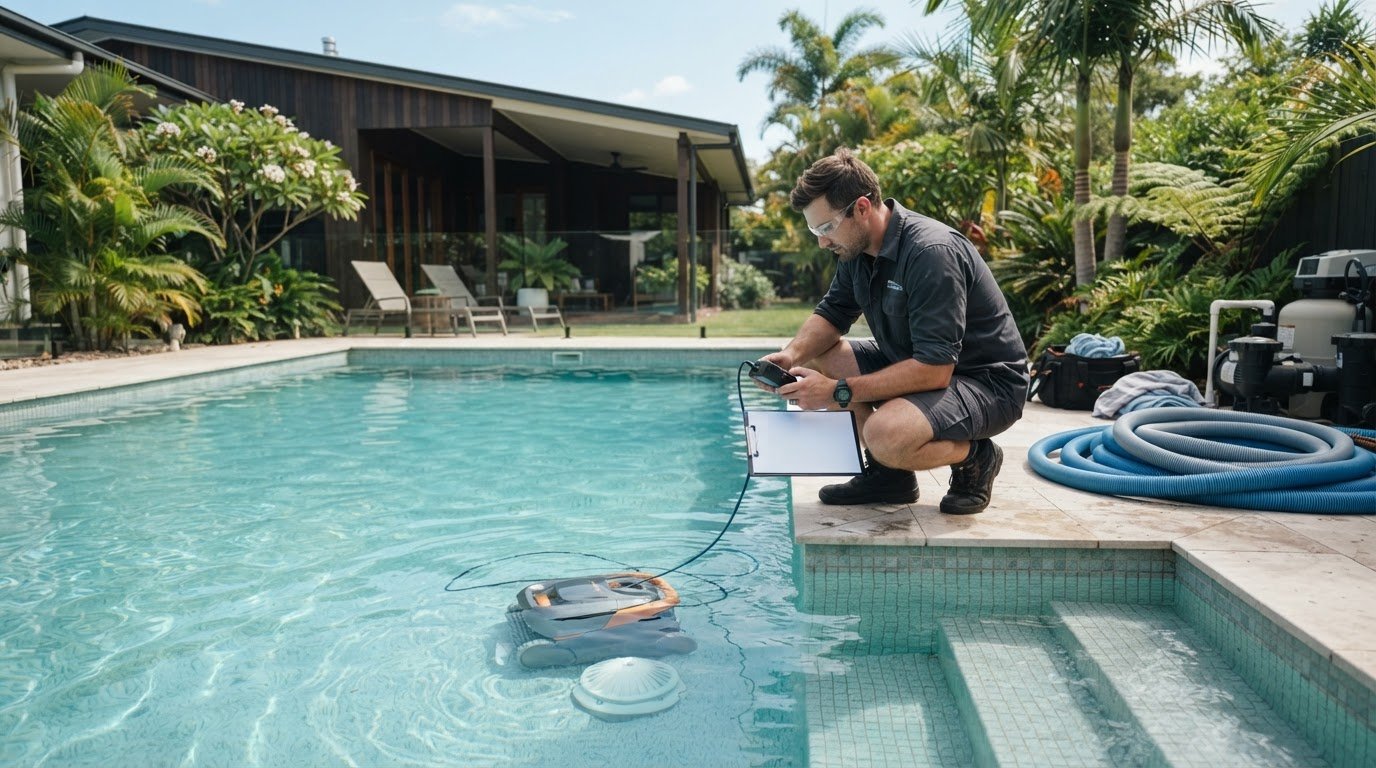
You walk out to your backyard expecting a shimmering oasis, only to find your expensive robotic cleaner huddled in the same corner for the third time this week. It’s incredibly frustrating to see a premium piece of equipment fail to perform, especially when you’re left manually scrubbing the spots it missed. If your pool cleaner keeps getting stuck, you’re likely worried about potential motor damage or the hidden costs of a replacement. We understand that your time is valuable and your pool should be a place of relaxation rather than a source of constant maintenance tasks.
The truth is that a sticking cleaner is usually a symptom of a specific flow issue or a physical obstacle rather than a total mechanical failure. We promise to help you identify exactly why your cleaner is hanging up, providing you with the clarity needed to fix the issue yourself or recognise when a professional repair is necessary. This 2026 diagnostic checklist will guide you through a methodical inspection of your pool plumbing, wear parts, and robotic settings to ensure your cleaner completes every cycle unattended. We’ll explore the common culprits found in Australian pools, from domed drain covers to the stiff hoses caused by our intense Queensland sun.
Key Takeaways
- Learn how to differentiate between a simple environmental hang-up and a genuine mechanical failure to save yourself unnecessary stress.
- Follow our structured diagnostic checklist to determine exactly why your pool cleaner keeps getting stuck on common obstacles like main drains or steps.
- Discover tailored solutions for both suction and robotic models, ranging from checking diaphragm health to calibrating internal drive sensors.
- Implement a simple weekly maintenance routine that preserves your equipment’s longevity and protects sensitive components from chemical wear.
- Recognise the critical warning signs that indicate a professional repair is required to avoid further damage or voiding your manufacturer’s warranty.
Common Hang-up Hotspots: Why Your Cleaner Stops
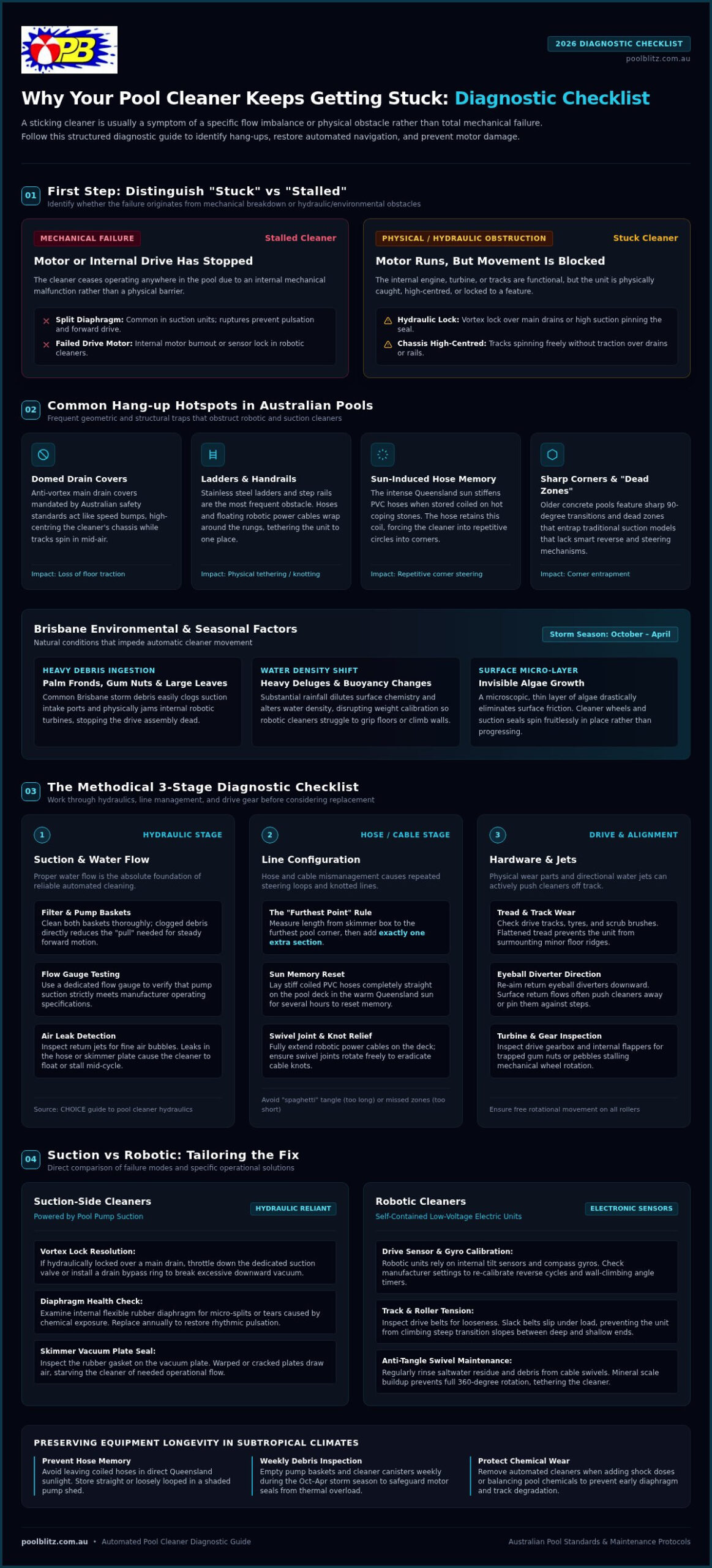
When your pool cleaner keeps getting stuck, it’s essential to distinguish between a “stuck” unit and a “stalled” one. A stalled cleaner usually suggests a mechanical failure, such as a split diaphragm or a failed drive motor, whereas a stuck cleaner is physically obstructed by the pool’s environment. Understanding the automated pool cleaner mechanisms helps you pinpoint whether the issue lies within the machine’s internal drive or external factors like suction levels. In many Brisbane backyards, the intense subtropical sun contributes to “hose memory.” This occurs when PVC hoses become stiff and retain their coiled shape after being stored on hot coping stones, forcing the cleaner into repetitive circles that inevitably lead to a corner. A vortex hang-up is a specific suction cleaner issue where the unit becomes hydraulically locked over a main drain due to excessive downward pressure.
The Geometry of Your Pool
The physical design of your pool often dictates where a cleaner will struggle to navigate. Sharp corners and “dead zones” in older concrete pools frequently trap traditional suction models that lack sophisticated steering. While robotic units are more agile, high-seated, anti-vortex main drain covers mandated by Australian safety standards can act like speed bumps. These domed covers often high-center the cleaner’s chassis, leaving the drive tracks spinning in mid-air without any traction. Stainless steel ladders and handrails remain the most frequent obstacles for automatic cleaners, as hoses and power cables easily tangle around the rungs, effectively tethering the machine to a single spot.
Environmental Obstacles
Brisbane’s unique environment presents several seasonal challenges for automated equipment. During the storm season from October to April, heavy debris like palm fronds, gum nuts, and large leaves can easily jam internal turbines or clog intake ports. Significant rainfall also alters water density and buoyancy, which might cause a finely tuned robotic cleaner to lose its grip on the floor or struggle to climb walls. If you notice your cleaner slipping or spinning, it may not be a mechanical fault. A thin, invisible layer of algae growth on the pool surface can drastically reduce the traction of robotic tracks and suction seals, causing the unit to spin fruitlessly in one position instead of completing its cycle.
The Ultimate Diagnostic Checklist for Stuck Cleaners
Restoring your pool to its pristine state requires a methodical approach to troubleshooting. If your pool cleaner keeps getting stuck, running through a structured checklist helps you identify the root cause without wasting time on trial and error. We recommend starting with the most common hydraulic issues before moving to mechanical inspections of the drive system.
Testing the Suction and Flow
Your pump provides the essential energy for any suction cleaner. A sluggish cleaner is often the direct result of a dirty filter or a clogged pump basket, which reduces the “pull” necessary for movement. You should use a flow gauge to ensure the suction levels meet the manufacturer’s specific requirements. If you notice air bubbles returning to the pool, you likely have an air leak in the hose or at the skimmer plate, which causes the unit to float or stall mid-cycle. Proper water flow is the foundation of a reliable system, and according to this CHOICE guide to pool cleaners, maintaining these hydraulic balances is key to preventing most common hang-ups.
Hose and Cable Management
Navigation issues are frequently caused by poor hose or cable setup. To measure the correct length, use the “furthest point” rule: the hose should reach from the skimmer box to the most distant corner of the pool, plus one extra section. A hose that is too long will inevitably tangle into “spaghetti,” while one that is too short will prevent the unit from reaching the deep end. For suction cleaners, you can remove stubborn coils by laying the hose sections straight in the warm Brisbane sun for several hours to reset their memory. Robotic units require similar attention to their power cables. You must regularly untangle the “tangle knot” by fully extending the cable on the deck to ensure the swivel joints can rotate freely during the cleaning cycle.
Once you’ve addressed the hydraulics and hoses, inspect the drive train and physical obstacles. Check for worn brushes, tracks, or wheels that may have lost their grip on the pool surface. You should also adjust your eyeball diverters to ensure the return water flow isn’t pushing the cleaner away from its intended path or pinning it against a wall. If these steps don’t resolve the issue, it may be time to consider robotic pool cleaner repairs to address deeper internal faults or drive motor failures.
Suction vs. Robotic: Tailoring the Fix
The most effective solution for a stalling unit depends heavily on the specific drive mechanism of your equipment. While a suction cleaner is at the mercy of your pool’s hydraulics, a robotic unit relies on its own internal logic and independent motors. Understanding these fundamental differences ensures you aren’t applying a fix that fails to address the core problem. Each technology has unique failure points that can cause a disruption in the cleaning cycle.
Fixing Suction Cleaner Hang-ups
Suction units are highly sensitive to fluctuations in water pressure and flow. You should regularly inspect the automatic regulator valve, as this component maintains the steady rhythm required for consistent movement. If your pool cleaner keeps getting stuck, it might be due to improper flow rates that don’t align with ENERGY STAR pool pump flow standards, particularly if you’ve recently switched to an energy-efficient variable speed pump. Additionally, check the internal diaphragm for small tears or lodged debris. In Queensland’s harsh climate, these rubber components typically have a lifespan of 12 to 24 months before they lose the elasticity needed to pulse the unit forward. Worn skirts or foot pads also contribute to hangups, as they lose the airtight seal required to navigate over raised drain covers or climb vertical walls.
Troubleshooting Robotic Stalls
Robotic cleaners are sophisticated, independent machines, but they are not immune to environmental traps. If your robot stops climbing or stalls mid-floor, the first priority is cleaning the onboard filter canisters. A full basket reduces the downward thrust required for the tracks to grip the pool surface, causing the unit to lose traction. You should also examine the “caterpillar” tracks and drive pulleys for signs of stretching or missing teeth, which leads to slipping during the cycle. Modern robots occasionally suffer from intelligent navigation glitches where the internal algorithm becomes trapped in a loop by complex pool shapes. A simple power cycle or a professional sensor recalibration often resolves these electronic hangups without the need for replacement parts.
Pressure-side cleaners require a different approach, focusing on the booster pump and the tail sweep. You must ensure the booster pump provides adequate pressure to drive the wheels while checking that the tail sweep isn’t tangling with the main delivery hose. If your older equipment consistently fails despite these checks, it may be time to consider an upgrade. Modern cordless robotic units eliminate the swivel cord tangles that plague traditional models, although they require diligent battery management to avoid being stranded in deep zones. Comparing the sticking frequency of your current unit against modern alternatives can help you decide if a professional repair or a new investment is the most cost-effective path forward.
Preventative Maintenance for Brisbane Pools
Maintaining a reliable cleaning cycle requires more than just troubleshooting active faults. If your pool cleaner keeps getting stuck, establishing a proactive maintenance routine is the most effective way to ensure long-term stability and equipment health. In Brisbane’s subtropical climate, environmental factors like high UV exposure and rapid debris accumulation from gum trees and palm fronds can quickly overwhelm even the most sophisticated systems. A simple weekly “health check” involves emptying the skimmer and pump baskets, inspecting the unit for lodged debris, and checking for any signs of track or seal wear before they lead to a total stall.
Water Chemistry and Equipment Life
The chemical balance of your water plays a vital role in the physical integrity of your cleaning gear. While essential for hygiene, excessively high chlorine levels will eventually perish the plastic and rubber components of your unit, leading to brittle hoses and cracked diaphragms. Maintaining the correct water alkalinity is equally important for preserving the elasticity of suction seals and robotic tracks. Proper calcium hardness levels also prevent the pool walls from becoming excessively “slippery,” which ensures your cleaner retains the grip needed to navigate vertical surfaces without sliding into a corner. These factors are directly linked to the overall performance of your pool filtration system, as balanced water reduces the strain on every component.
Physical Pool Adjustments
Small physical modifications to your pool environment can drastically reduce the frequency of hang-ups. Installing “ladder guards” is a highly effective way to deflect the cleaner’s hose or cable before it becomes entangled in the rungs. If your unit frequently beaches itself on the main drain, upgrading to a low-profile, anti-vortex cover can eliminate the geometry issues that cause high-centering. You should also regularly trim overhanging vegetation, such as eucalyptus branches or palm fronds, to decrease the debris load entering the water. This proactive approach, combined with regular pool servicing in Brisbane, ensures that your equipment operates in an environment designed for success rather than frustration.
During the cooler winter months, correct storage is essential for preventing “hose memory” and warping. You should never leave suction hoses coiled on the hot deck; instead, store them straight in a shaded area to maintain their flexibility. Taking these small, methodical steps will protect your investment and keep your backyard oasis ready for use at a moment’s notice. If you’ve noticed your equipment struggling despite these adjustments, we invite you to book a professional equipment inspection to ensure everything is operating at peak efficiency.
When to Call the Brisbane Repair Experts
If your pool cleaner keeps getting stuck despite following every diagnostic step, the issue may lie deep within the unit’s electronics or mechanical drive. Identifying signs of internal motor failure or a burnt-out circuit board requires more than a visual inspection. You might notice the unit stops mid-cycle without any physical obstruction; perhaps it emits a faint humming sound while remaining stationary. Attempting a “DIY” robotic repair is often tempting, but it carries significant risks, including the potential to void your manufacturer’s warranty. Entrusting these complexities to a professional ensures your investment is protected and restored to its original specifications.
Professional Diagnostic Services
When you bring a unit to us, we perform a comprehensive “bench test” to isolate the exact fault. This methodical process allows our technicians to evaluate the power supply, cable integrity, and motor block performance under controlled conditions. We prioritise the use of genuine spare parts to ensure longevity and maintain the high standard of excellence your equipment deserves. In many cases, a casual service visit or a targeted component replacement is far more cost-effective than purchasing a completely new cleaner. Our goal is to extend the life of your gear through precision and industry-literate care.
Peace of Mind for Brisbane Owners
For over 30 years, Pool Blitz has acted as a protective steward for Brisbane’s backyard pools. Our qualified team specialises in robotic pool cleaner repair, combining modern methodology with established service values. We understand that a functioning cleaner is essential for the clarity and safety of your swimming environment. As an authorised dealer for leading hardware brands, we handle even the most complex pool equipment repairs with quiet confidence and neighborly reliability. Every repair and maintenance task we undertake is backed by the Pool Blitz guarantee, providing you with the relief of knowing the job has been handled by seasoned experts. If your equipment is no longer performing as it should, Contact Pool Blitz for expert cleaner repairs today and let us restore the trouble-free experience you deserve.
Restoring Your Pristine Backyard Oasis
A swimming pool should be a source of relaxation, not a recurring maintenance headache. By following a methodical diagnostic checklist, you can usually determine why your pool cleaner keeps getting stuck and implement a lasting solution. Whether the issue is a simple hydraulic imbalance or a physical obstruction like a domed drain cover, taking proactive steps ensures your equipment operates at peak efficiency. It’s often the small adjustments to flow and pool geometry that make the biggest difference in performance.
As a seasoned authority since 1994, Pool Blitz brings over 30 years of experience to every backyard in Brisbane. We are dedicated robotic repair specialists who understand the unique challenges of our subtropical climate. Every service we provide includes expert water balancing to protect your equipment rubber and ensure a safe swimming environment. If your DIY efforts haven’t restored your cleaner’s performance, it’s time to let the experts handle the technical heavy lifting. Book a Professional Pool Cleaner Diagnostic in Brisbane today to reclaim your weekend. We’re here to provide the peace of mind that comes with a perfectly maintained pool.
Frequently Asked Questions
Why does my pool cleaner always get stuck on the steps?
Your cleaner likely gets stuck on the steps because it lacks the water depth to remain submerged or the geometry of the step corner traps the unit. When the cleaner sucks in air at the surface, it loses the prime necessary for movement. You can often resolve this by installing a ladder guard or adjusting your return jet “eyeballs” to push the cleaner away from the shallow shelf. This ensures the unit stays in deeper water where it can navigate freely.
Can I leave my robotic pool cleaner in the pool all the time?
You should not leave your robotic cleaner in the pool permanently as constant exposure to chlorine and UV rays will perish the internal seals and plastic housing. While these machines are designed for underwater use, they require a fresh water rinse and shaded storage between cycles to maintain their longevity. Removing the unit after its cycle also prevents it from becoming a trip hazard or interfering with swimmers during your backyard recreation time.
How do I stop my pool cleaner hose from tangling?
To stop your hose from tangling, you must ensure you have the correct number of sections and that your swivel joints are rotating freely. A hose that is too long will naturally coil into “spaghetti” during operation. You should check each section for “hose memory” and regularly lay the entire length straight on the deck in the sun. This process resets the PVC and prevents the unit from circling in the same spot because the pool cleaner keeps getting stuck in loops.
Why is my suction pool cleaner moving so slowly?
A slow suction cleaner usually indicates a hydraulic issue such as a dirty filter, a clogged pump basket, or an air leak in the hose. If your pump isn’t providing the required flow, the unit won’t have the “pulse” needed to move across the floor. You should also inspect the internal diaphragm for small tears. Even a tiny split can significantly reduce the unit’s speed and climbing ability, causing it to stall during its daily cleaning routine.
Is it worth repairing an old robotic pool cleaner or should I buy new?
Determining whether to repair or replace depends on the specific fault and the age of your machine. Most high-end robotic cleaners are designed to be modular, meaning we can often replace a single motor or circuit board for a fraction of the cost of a new unit. If your chassis and tracks are in good condition, a professional repair is a sustainable choice. We recommend a bench test to provide a clear diagnostic before you commit to a new purchase.
How often should I replace the brushes on my pool robot?
You should typically replace the brushes on your pool robot every one to two years, depending on the surface of your pool and how often you run the unit. Worn brushes lose the friction required to scrub algae and climb vertical walls effectively. You can check for wear by looking at the height of the bristles or rubber slats; if they appear flattened or uneven, they are no longer providing the traction necessary for a comprehensive clean.
Does the type of debris in Brisbane affect my pool cleaner performance?
Yes, the specific debris found in Brisbane backyards, such as gum nuts, palm fronds, and eucalyptus leaves, can significantly impact performance. These heavy, fibrous materials often lodge in suction diaphragms or jam the internal turbines of robotic units. During the storm season from October to April, it’s essential to check your cleaner’s intake more frequently. This proactive maintenance prevents mechanical jams that occur when your pool cleaner keeps getting stuck on large organic matter.
What is “hose memory” and how do I fix it?
Hose memory refers to the tendency of PVC hoses to retain a coiled shape after being stored in a tight circle or left in the hot sun. This stiffness prevents the hose from straightening out in the water, which forces the cleaner into repetitive circular patterns. To fix this, lay the individual hose sections straight on your pool coping or driveway during a warm day. The heat will soften the plastic, allowing it to “reset” into a straight, flexible state.
No responses yet