
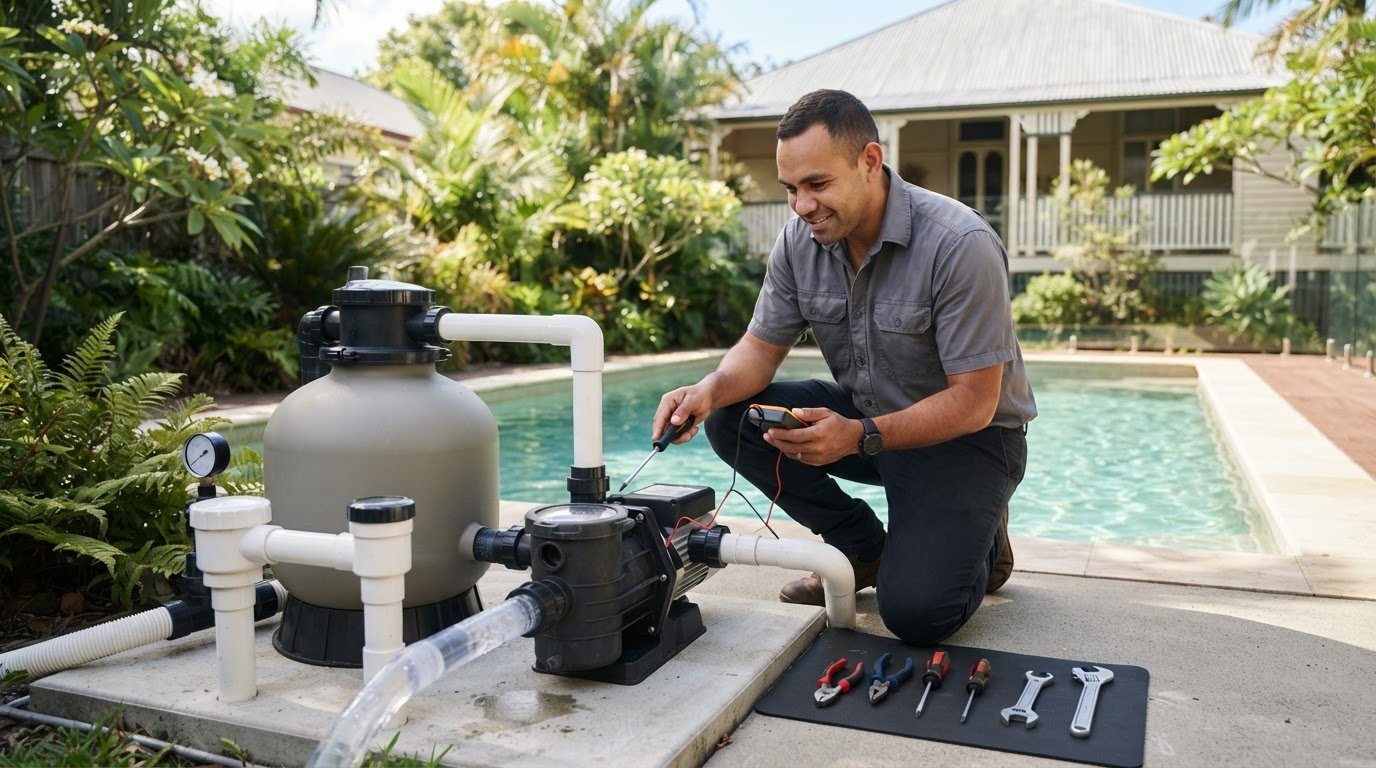
A pump’s age alone doesn’t determine whether it needs replacing. Pool pumps have no fixed lifespan: their longevity depends on condition, use and maintenance. If your pump becomes noisy, loses performance or stops working, a north Brisbane pool pump specialist can assess whether repair or replacement is the more practical option.
It’s reasonable to want a clear answer before choosing between repair and replacement. An assessment can distinguish a repairable fault from signs that a new pump may be more suitable. Regular servicing can also help keep pool equipment operating as it should.
This guide explains what can affect pump lifespan, the warning signs to watch for, and how repairs, servicing and installation fit into the decision. You’ll also learn what a diagnosis involves and what to consider when choosing the next step for your pool.
Key Takeaways
- A pump’s age is only part of the repair-or-replace decision; its condition, performance and running costs also matter.
- Variable-speed pumps can run at lower speeds for everyday filtration, reducing electricity consumption and noise.
- Aquamech Services recommends pool pump servicing every 3-4 years. Regularly clean the pump basket and pay attention to changes in noise or vibration.
- A structured diagnosis can help identify whether the issue lies with the pump or another part of the pool system before repairs or replacement are considered.
- Replacing a pump or chlorinator involves more than selecting equipment; compatibility with the pool’s existing setup is an important consideration.
Pool Pump Repairs vs Replacement – What’s the Smarter Choice?
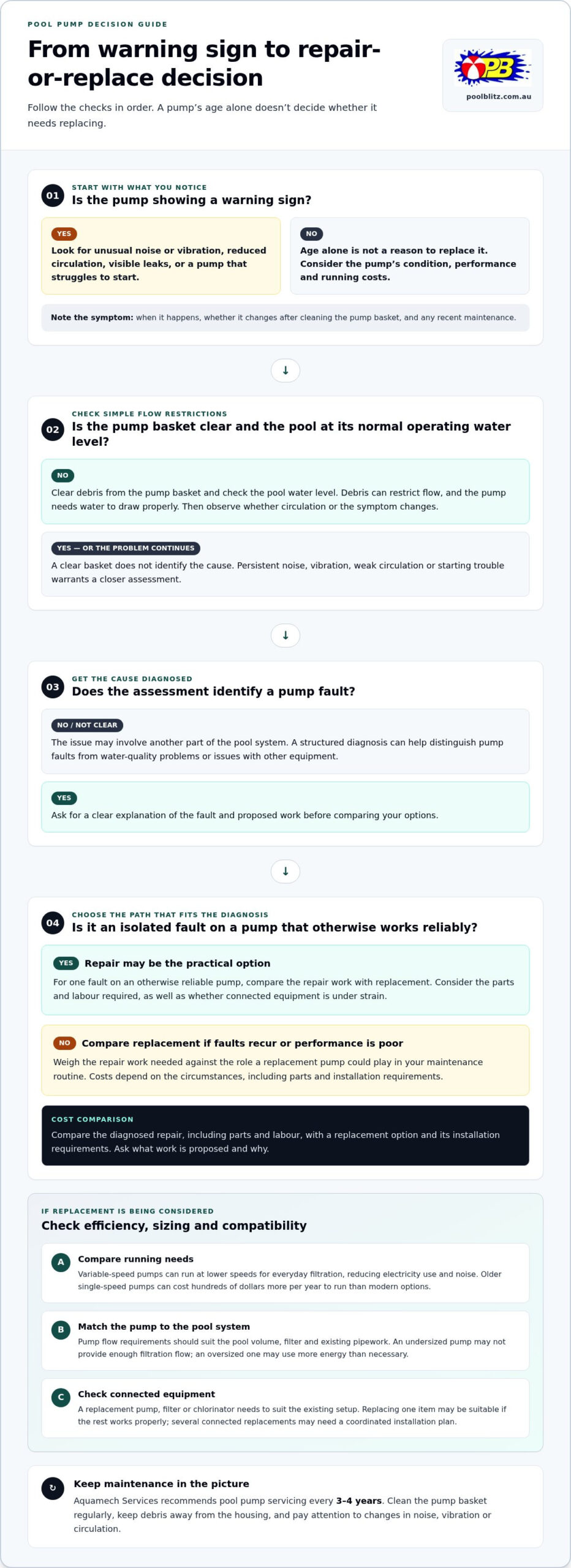
Choose between repair and replacement by weighing the diagnosed fault, the pump’s condition and your pool’s filtration needs. Repair may suit an isolated issue, while recurring faults or poor performance can make replacement worth considering.
Repair Costs and Replacement Decisions
Start with a diagnosis, then compare the repair work with a replacement option. Consider the fault, parts and labour required, and whether connected equipment is also under strain. Costs depend on the circumstances, including the parts and installation requirements.
For example, repairing one fault on a pump that otherwise works reliably may be more practical than replacing the whole unit. If faults keep recurring, compare the repair work needed with the role a replacement pump would play in your maintenance routine. Ask for a clear explanation of the diagnosis and proposed work before deciding.
Energy-Efficient and Variable-Speed Pumps
Variable-speed pumps can run at lower speeds for everyday filtration, which can reduce electricity use and noise. Older single-speed pumps can cost hundreds of dollars more per year to run than modern options. In Queensland, whether an energy-efficient pump is worthwhile depends on its purchase and installation requirements, how you use it, and the energy savings over time.
To choose a pump size, match its flow requirements to your pool volume, filter and existing pipework. An undersized pump may not provide enough flow for filtration, while an oversized one may use more energy than necessary. Share details about your pool and equipment so a specialist can consider the whole system.
Signs of Pump Failure
Watch for unusual noise or vibration, reduced circulation, visible leaks, or a pump that struggles to start. These signs can indicate a fault, but they don’t identify its cause. Note when the symptom occurs and whether it changes after you clean the pump basket.
Persistent problems, recurring breakdowns or poor circulation despite a clear basket warrant a closer assessment. A specialist can inspect the pump and related equipment, then explain whether repair will address the fault or replacement better suits the system. Share the symptoms and any recent maintenance steps to help guide the diagnosis.
Replacement and Installation Options
Replacing a pump, filter or chlorinator means matching the equipment to the existing setup. Check how each component connects with the others, including flow requirements and pipework. Replacing one item may be suitable if the remaining equipment works properly; replacing several connected items may call for a coordinated installation plan.
Before installation, identify which components need replacing and how they work together. For example, match a new pump to the filter’s requirements and ensure a replacement chlorinator suits the pool system. A north Brisbane pool pump specialist can assess the equipment, explain the options and plan a compatible installation to support clear, sparkling water.
Pump servicing frequency and maintenance advice
In Brisbane, a simple maintenance routine helps keep pool equipment free of debris and working effectively. Check around the pump regularly and schedule professional servicing, particularly before summer, when pool use often increases.
Aquamech Services recommends servicing a pool pump every 3-4 years to help it run efficiently and extend its lifespan. Brisbane pool owners are also advised to book routine pump servicing before summer, giving the system attention ahead of the warmer swimming season. A service can assess the pump’s condition and identify maintenance needs before they affect circulation.
Between services, listen for changes in pump noise or vibration. A new rattle, louder hum or unusual vibration is worth investigating. Clean the pump basket regularly and keep leaves and debris away from the pump housing. These steps help prevent obstructions and make changes in operation easier to notice.
Water level matters, too. Keep the pool at its normal operating level so the pump can draw water properly. If circulation weakens, check the water level and basket before assuming the pump has failed. A basket packed with leaves, for example, can restrict flow, while debris around the housing can obstruct the equipment.
Regular pool cleaning supports pump care because leaves, dirt and other debris move through the circulation system. Use a pool cleaner for routine floor and wall cleaning, and remove floating leaves before they gather near the skimmer. Include the filter in your maintenance routine: a dirty filter can affect circulation, so watch for changes in water flow and cleaning performance.
A monthly pool-cleaning plan can help organise tasks such as clearing debris, checking the basket and observing pump operation. Use the routine to note unusual sounds, vibration or changes in circulation. If a pool cleaner needs attention or debris keeps accumulating, adjust the cleaning routine to suit your pool’s surroundings and use.
Service coverage varies by suburb, so check that your North Brisbane suburb is within the service area. Emergency callouts, warranties and free quotes are separate service terms, not automatic parts of routine maintenance. Consider these terms separately from the work itself when deciding on a servicing arrangement.
For ongoing pool care, regular pool servicing can help keep cleaning and equipment checks on a consistent schedule, alongside your own basket and debris checks.
Pump diagnosis, testing and electrical tagging
A reliable diagnosis distinguishes pump faults from water-quality problems and issues with other pool equipment. Start by noting the symptom, such as weak return flow, a pump that won’t start, or cloudy water despite circulation. These clues help guide an inspection, but they don’t identify the cause on their own.
A pump assessment can check whether the unit starts, runs steadily and moves water through the filter. The technician can inspect visible connections, the pump basket, signs of leaks and unusual operating sounds. Weak returns, for example, may indicate restricted flow rather than a failed motor. A clear explanation should separate observed faults from possible causes before repair work is chosen.
Electrical testing and tagging are separate from checking water flow. A tag indicates an electrical item’s inspection or test status; it doesn’t show whether the pump is circulating water properly. Likewise, a pump that sounds normal hasn’t necessarily undergone electrical testing. Keep the equipment accessible and tell the person assessing it about recent changes, such as intermittent starting or a tripped switch.
Water testing adds another part of the diagnosis. Recommended pool-water ranges are pH 7.2 to 7.6, total alkalinity 80 to 120 ppm, and chlorine concentration 1 to 3 ppm. A test result helps show whether chemicals or circulation may be contributing to water problems. Clear readings don’t rule out a mechanical fault, so consider water results alongside pump operation and filter condition.
Adjust total alkalinity before pH because alkalinity buffers and stabilises pH. This order can help avoid repeated pH adjustments when the underlying issue is the water’s buffering balance. Use a reliable test result to guide chemical adjustments, then retest after treatment. If water remains cloudy, note whether the pump is running and circulation is reaching the pool consistently.
When arranging a diagnosis, describe the symptoms, when they occur and what you’ve already checked. Include water test results, recent chemical additions and any changes in pump sound or flow. Ask for the findings to distinguish electrical testing, hydraulic performance and water balance, rather than treating them as one test. This gives you a clearer basis for deciding which pool equipment needs attention.
Pool pump repairs, sales and installation in Brisbane
Brisbane pool pump work may involve diagnosing a fault, repairing equipment or fitting a replacement. The right approach depends on the pump, the pool’s circulation setup and the condition of connected equipment.
Pump Repairs
A repair assessment starts with the symptom, such as a pump that won’t start, leaks or fails to move water as expected. A technician can inspect the pump and its connections to identify whether the issue relates to the motor, a blockage or another component. The diagnosis clarifies what the repair involves.
Before work begins, describe when the fault occurs and whether it is constant or intermittent. Clear access around the pump helps the technician inspect it; removing loose leaves from the surrounding area also makes visible checks easier. Pool equipment repairs can address a specific fault without replacing components that still work.
Pump Sales and Installation
A replacement pump needs to suit your pool’s filtration requirements and connect with the existing pipework and filter. Share details such as the pool layout, current pump and any circulation problems. This information helps identify an appropriate option, rather than choosing equipment by appearance alone.
Installation involves removing the old pump, positioning the replacement and connecting it to the pool system. The setup should then be checked for leaks and water flow through the filter. If a chlorinator or other equipment is part of the system, its connection and compatibility should also be considered. Coordinated installation helps the equipment work together.
Pool pump sales and installation decisions should account for how the pool is used. A pool used frequently, for example, may have different circulation needs from one used occasionally. Discussing your usage helps match equipment to practical maintenance needs, rather than assuming every Brisbane pool needs the same setup.
North Brisbane Specialist Coverage
North Brisbane pool owners should look for a specialist whose service area includes their suburb and whose work covers the equipment fault. Before arranging a visit, provide your suburb, pump symptoms and equipment details. This gives the service team useful context and helps clarify whether the work involves repair or replacement.
A pump making an unfamiliar sound, for example, may need an inspection, while a unit that no longer operates may require a different assessment. A technician can explain the work involved and whether removing or replacing equipment is appropriate. Clear information about the pool and fault helps establish a practical next step for repair or installation.
Pool systems in Australia vary according to their equipment and installation, so pump selection should reflect the filter and pool setup. An appropriate repair or replacement can help maintain the wider system, with circulation remaining central to clean, inviting water.
Which pool pump specialists service North Brisbane?
For North Brisbane pool pump work, choose a Brisbane-based specialist whose service area includes your suburb and whose services match the fault. Before arranging a visit, note your suburb, pump make and model, and the symptom, such as weak circulation or intermittent starting. These details help clarify whether the job needs diagnosis, repair or replacement.
In your first conversation, describe what the equipment is doing rather than assuming what has failed. A pump that runs but moves little water, for example, may need a different assessment from one that won’t start. Share when the issue began, whether it happens continuously and any recent maintenance. This gives the specialist useful context before inspecting the system.
When comparing proposed work, look for a clear explanation of the fault and the steps involved. A useful assessment distinguishes the pump from connected equipment such as the filter or chlorinator. If replacement is proposed, ask how the option suits your existing pool setup. If repair is proposed, understand which component needs attention and how the work addresses the reported symptom.
- Service area: Give your suburb and confirm it falls within the North Brisbane coverage area.
- Problem details: Describe noise, leaks, starting issues or reduced water flow.
- Equipment information: Note the pump model and any connected filtration equipment.
- Work scope: Understand whether the recommendation is testing, repair or replacement.
For example, if your pump stops and restarts, note when it happens and whether circulation changes. If the pump runs steadily but return flow is poor, describe that instead. In either case, report what you observed rather than treating a symptom as a confirmed diagnosis.
Service terms are separate from technical suitability. Don’t assume emergency callouts, warranties or free quotes are standard features of every pool service. First consider the fault, proposed work and whether the specialist covers your North Brisbane suburb. Clear information makes it easier to understand what the service includes before work proceeds.
Prepare for an inspection by keeping access to the equipment clear and removing loose items around the pump. Have any previous repair notes or equipment details ready. If a filter or chlorinator is part of the concern, mention it at the outset to help frame a complete assessment.
For help with a pool pump issue, arrange pool equipment repairs and describe the symptoms and your North Brisbane suburb.
No particular specialists are identified as offering all three. Confirm emergency callouts, warranty coverage and whether quotes are free with each specialist before arranging work.
Pool Blitz: Regular Pool Servicing
Pool Blitz provides regular pool servicing to help keep ongoing pool care on track. Choose this service for routine attention to cleanliness and water care, rather than waiting until maintenance is overdue. For occasional support, casual pool servicing offers another way to address your pool-care needs.
Pool Blitz also offers robotic pool cleaners and repairs, as well as pool chemicals. These can support cleaning and water maintenance alongside your regular routine. A robotic cleaner can assist with pool cleaning, while suitable chemicals form part of water care.
Choose the support that suits your pool-care needs, then contact Pool Blitz to discuss regular or casual servicing.
Keep your pool care moving forward
A pool benefits from a considered care routine, not a string of last-minute fixes. Choose a practical next step based on what you need now: ongoing attention, help with a cleaner or support with pool equipment. A north Brisbane pool pump specialist can help address pump concerns as part of your wider pool-care plan.
Pool Blitz offers regular and casual pool servicing, along with robotic pool cleaners and repairs. These options suit different routines, whether you want ongoing pool care or help with a robotic cleaner. A routine that fits how you use your pool can make maintenance easier to manage throughout the year.
For a calm starting point, consider the pool-care support that best matches your current needs. Contact Pool Blitz about your pool pump and take the next step towards a well-cared-for pool.
Frequently Asked Questions
How Long Should a Pump Last?
There’s no single lifespan for every pool pump. Use, maintenance, installation conditions and the surrounding environment all affect how its condition changes over time. A new leak or increasing difficulty operating, for example, warrants attention whatever the pump’s age. Record recurring faults and repairs: that history can help distinguish an isolated issue from declining reliability when planning your next step.
What pool pump repair and installation services are available in North Brisbane?
North Brisbane pool owners can arrange pump fault diagnosis, equipment repairs and replacement pump installation with Pool Blitz. The work can include inspecting the existing setup, identifying the problem and fitting equipment suited to the pool system. If you’re considering a repair, note whether the pump still operates and what symptoms appear. These details help establish whether the job involves a component repair or a full pump replacement.
How much does pool pump repair cost in Brisbane?
Pool pump repair pricing depends on the fault and is provided after a quote request; parts, labour, access and the repair scope affect the cost. A simple component issue differs from work requiring several parts or further investigation. Share the pump’s symptoms and model details when requesting a quote. A written description of the proposed repair can help you understand what the quoted work covers.
What is the cost to replace a pool pump in Brisbane, including installation?
Replacement costs depend on the pump selected and installation scope. Equipment compatibility, removal and any connection changes affect the work. Before comparing options, clarify whether the quote covers removing the existing unit, fitting the replacement and checking system operation. That way, you can compare the full installation scope, not just the pump.
Which pool pump brands and models do North Brisbane specialists service?
Pool Blitz repairs all makes and models of pool equipment, so you’re not limited to a particular pump brand or model range. To help identify the unit, provide its make and model from the pump label, along with a brief description of the fault. If the label is worn or difficult to read, a clear description of the pump and its symptoms is still a useful starting point.
Do pool pump installations in Queensland need to meet electrical or plumbing requirements?
Yes, pool pump installation needs to account for applicable electrical and plumbing requirements in Queensland. The relevant work depends on what the installation changes, such as electrical connections, pipework or both. Before work begins, establish which parts of the system are included. This helps clarify how the pump will connect with your pool’s existing equipment and services.
No responses yet