
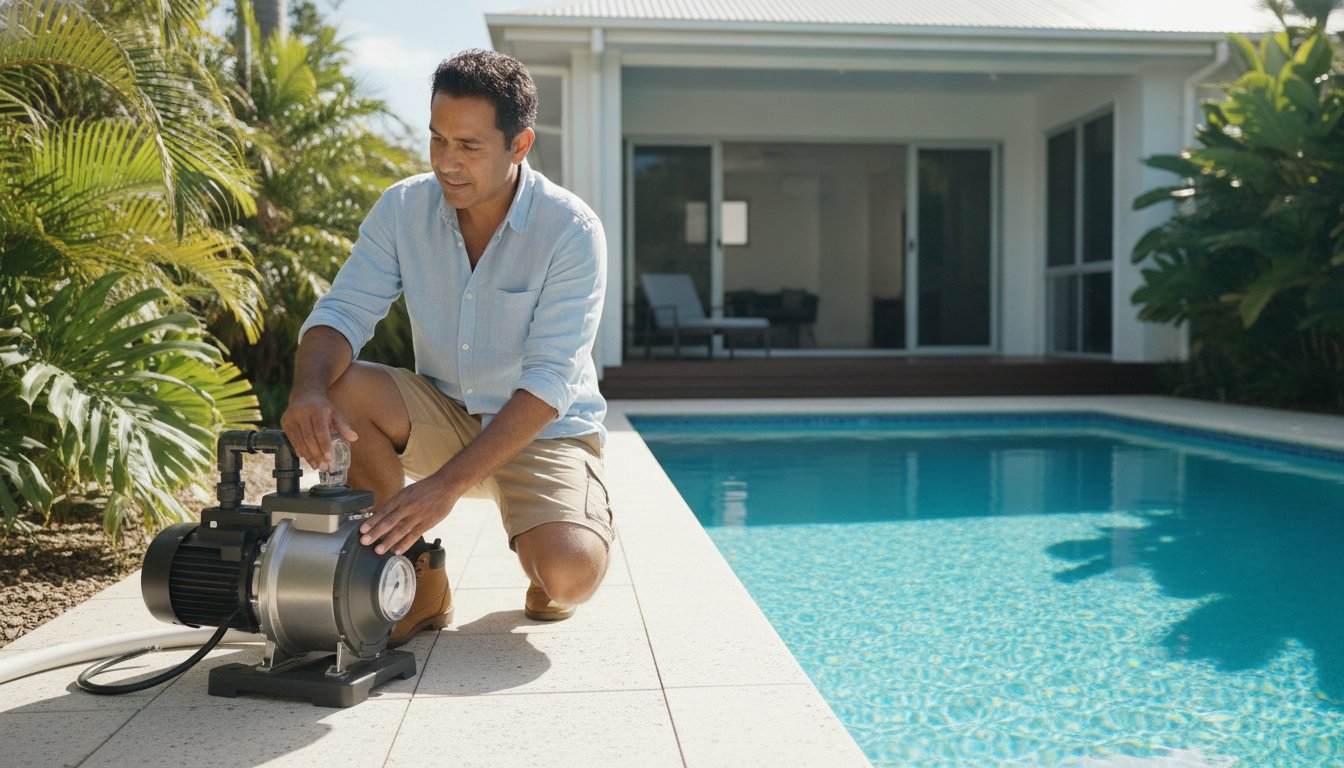
You wake up to a piercing screech echoing across the backyard, only to realise it isn’t the local kookaburras, but your pool equipment crying out for help. When you’re dealing with a pool pump not priming brisbane weather doesn’t give you much time before the water loses its clarity and the algae begins to take hold. It’s a common frustration for many local homeowners who fear that a noisy motor or a loss of suction inevitably leads to a massive A$1,500 replacement bill. You deserve a quiet, reliable system that doesn’t keep the neighbours awake or cause unnecessary stress during the height of summer.
We understand the pressure of maintaining a healthy swimming environment under our intense Queensland sun. This guide provides the professional clarity you need to identify, troubleshoot, and resolve common pump issues with the confidence of a seasoned expert. We’ll walk you through practical steps to restore your system’s flow and efficiency; ensuring your pool remains a safe, sparkling centrepiece for your home while protecting your long-term investment. From simple seal checks to understanding modern energy standards, you’ll gain the knowledge to keep your equipment running smoothly for years to come.
Key Takeaways
- Learn to distinguish between simple debris blockages and critical mechanical failures by identifying warning signs like the ‘screech’ of bearing wear or motor humming.
- Master the correct technique for troubleshooting a pool pump not priming brisbane homeowners often face during the high-evaporation summer months.
- Understand the ‘Halfway Rule’ to decide whether a professional repair is cost-effective or if an energy-efficient upgrade is the smarter long-term choice for your backyard.
- Gain the confidence to safely isolate your equipment and perform basic inspections on key components like the impeller and mechanical seals without risking further damage.
- Discover how a professional diagnostic prevents the frustration of trial-and-error repairs, ensuring your filtration system remains a reliable steward for your water quality.
Recognising the Warning Signs: Is Your Pool Pump Crying for Help?
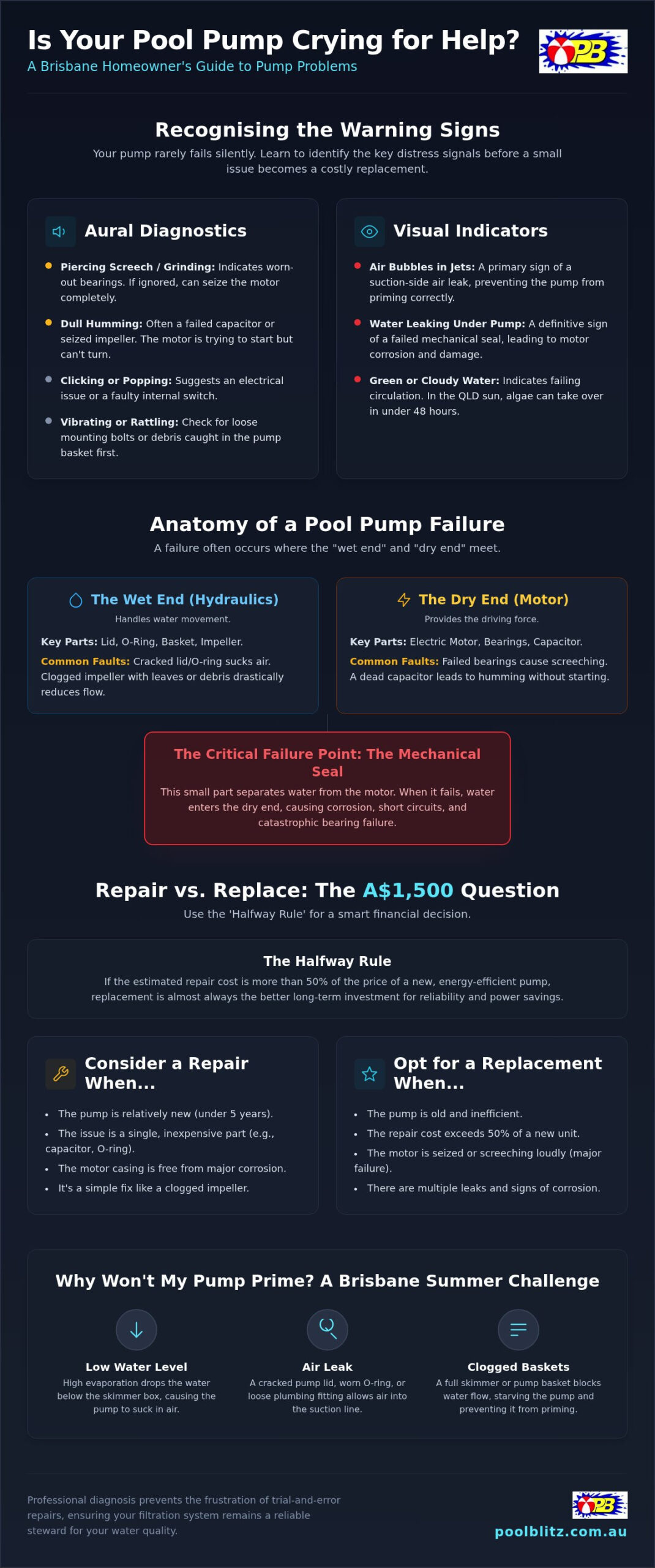
A pool pump is the heart of your filtration system. When it begins to fail, it rarely does so in silence. For many homeowners, the first indication of trouble is a change in the acoustic landscape of their backyard. A screeching or grinding noise usually signals that the internal bearings have reached the end of their functional life. This “screech of death” is particularly disruptive in quiet Brisbane suburbs where the sound echoes off fences and brickwork. If you ignore this sound, the friction-generated heat can eventually melt the plastic components or seize the motor entirely.
Aural Diagnostics: Decoding Pump Noises
Different sounds point to specific mechanical failures. A loud screeching indicates worn bearings, while a dull humming often suggests a failed capacitor or a seized impeller. When the motor attempts to start but cannot turn, it produces a low-frequency buzz that can lead to overheating. Understanding how centrifugal pumps work helps clarify this; the motor requires a functional electrical start to begin the rotation that moves your water. You might also hear clicking or popping, which often points toward electrical issues or a faulty centrifugal switch within the motor housing. If the unit is vibrating or rattling, check for loose mounting bolts or debris caught inside the pump basket before assuming the motor is dead.
Visual Indicators of Pump Distress
Visual cues provide a clear roadmap for troubleshooting. If you notice air bubbles dancing in the return jets or visible under the clear pump lid, you likely have a suction-side leak. This is a primary reason for a pool pump not priming brisbane residents often face after heavy tropical storms or during periods of high evaporation when water levels drop below the skimmer box. A leak in the suction line introduces air into the system, preventing the vacuum needed to pull water from the pool.
Keep a close eye on the area directly beneath the pump. Water leaking around the shaft is a definitive sign that the mechanical seal has failed. In our humid climate, this moisture leads to rapid corrosion on the motor casing. If left unaddressed, the salt or chlorine in the water will eat through the metal, causing permanent damage. Finally, pay attention to the water clarity itself. Sluggish water movement or a “green pool” warning means your circulation is failing. Under the intense Queensland UV, a lack of flow can see algae take over your pool in less than 48 hours, turning a simple pump fix into a costly chemical recovery mission.
The Anatomy of a Pool Pump: Understanding the Culprits
To effectively manage equipment health, you must understand the clear division between the pump’s “wet end” and “dry end”. The wet end is where the hydraulics happen, housing the basket, impeller, and diffuser that move your pool water. Conversely, the dry end consists of the electric motor that provides the driving force. A failure in the mechanical seal, which sits precisely where these two worlds meet, is often the culprit behind motor damage. If this seal fails, water enters the motor housing, leading to short circuits and expensive bearing failures.
The Hydraulic Path
The journey of water through your pump begins at the lid and basket. This area is the most common site for a pool pump not priming brisbane homeowners encounter. If the lid O-ring is cracked or the lid itself has a hairline fracture, the pump will suck air instead of water. Once past the basket, the water reaches the impeller. This spinning component is the heart of the system, but it’s also a magnet for debris. Even a small piece of a robotic cleaner’s track or a cluster of gum leaves can clog the impeller vanes, significantly reducing flow and putting immense strain on the motor.
Modern pumps are designed to meet strict energy conservation standards, which has led to more sophisticated impeller and diffuser designs. These parts must work in perfect harmony to create the pressure needed for effective filtration. If you suspect a blockage or notice a drop in pressure, our team at Pool Blitz can provide a precise diagnostic to clear the path without damaging delicate internal plastics.
The Motor and Electrical Components
The dry end of your pump is a complex assembly of electrical parts built for longevity. Every morning, a start capacitor provides the necessary electrical jolt to get the motor spinning. In our harsh Brisbane climate, the cooling fan at the rear of the motor is critical. It must remain clear of spider webs and dust to prevent thermal overload during a 40-degree January afternoon. Brisbane’s frequent summer storms also pose a risk. Electrical surges can easily fry a capacitor or damage motor windings, leaving you with a pump that hums but refuses to turn.
- Mechanical Seals: The critical barrier preventing water from reaching the electrical motor.
- The Diffuser: Works with the impeller to convert velocity into water pressure.
- Capacitors: Electrical components that can fail due to age or power fluctuations.
Troubleshooting Common Issues: A Step-by-Step Recovery Plan
Safety is the non-negotiable first step when inspecting your filtration equipment. Before you even touch the pump lid, ensure you isolate the power at the main electrical box to prevent the motor from starting unexpectedly while your hands are near moving parts. Once the system is safe, you can address the most frequent hurdle: a total loss of suction. If you find your pool pump not priming brisbane summers can be particularly unforgiving; the intense heat often dries out rubber seals, leading to air ingress that breaks the vacuum required for water movement.
How to Prime Your Pump Like a Pro
Pump priming is the process of manually removing air from the internal system to create the necessary vacuum for consistent water suction. To do this correctly, follow these steps:
- Step 1: Turn off the system at the box and close any suction or return valves to keep water in the lines.
- Step 2: Remove the lid and fill the strainer box with water from a garden hose until it reaches the very top.
- Step 3: Reseal the lid firmly, ensuring the O-ring is lubricated with a silicone-based grease and is free of any grit or sand.
Once the lid is secure, open the valves and restart the motor. You should see water begin to swirl in the basket within thirty to sixty seconds. If the water fails to move, you may be diagnosing common motor problems or a deeper air leak that requires professional attention.
Clearing the Impeller and Baskets
If the pump primes but the flow remains weak, a blockage is the likely culprit. Brisbane’s local vegetation, such as jacaranda seeds or gum twigs, can easily bypass a cracked basket and lodge themselves in the impeller vanes. You can often reach into the wet end with the power isolated to feel for these obstructions. For more stubborn debris, a stiff wire or a bent coat hanger can be used to gently dislodge material from the centre of the impeller.
Always check your skimmer box for “ghost” blockages, such as a stuck weir door or a heavy accumulation of leaves, which can mimic a pump failure by starving the system of water. For a deeper look at managing the unique debris patterns in our local area, our guide on North Brisbane pool care offers seasonal advice for keeping your intake lines clear. If the blockage persists after these checks, a soapy water test on the intake pipes can help identify tiny cracks that are sucking in air, effectively “killing” the prime before it can start.
Repair vs. Replace: Making the Right Call for Your Brisbane Pool
Deciding between a professional repair and a full replacement often comes down to a simple calculation we call the ‘Halfway Rule’. If the quoted cost to fix your current unit exceeds 50% of the price of a brand new model, your money is usually better spent on an upgrade. For a pool pump not priming brisbane weather conditions can accelerate internal wear, making a 10-year-old motor a risky candidate for expensive overhauls. While a quality repair can often buy you several more years of reliable service, you must weigh this against the availability of spare parts for older Australian brands like Davey or Onga in 2026.
When to Fix Your Current Pump
Many common pump failures are surprisingly affordable to resolve when caught early. Minor leaks, failed capacitors, and noisy bearings are considered high-value repairs that restore your system’s performance without the need for a total overhaul. If your pump housing is structurally sound and the motor windings are healthy, a professional diagnostic is the most cost-effective path forward. You can find detailed guidance on these solutions through our Expert Pool Equipment Repairs Brisbane reference guide. Maintaining a high-quality existing system is often the most sustainable way to ensure long-term water clarity and peace of mind.
When It Is Time to Say Goodbye
There are specific mechanical failures where the “parts cannon” approach simply isn’t logical. If your motor windings have burned out or the pump housing has developed structural cracks, the unit has reached the point of no return. These issues present safety risks and permanent pressure loss that a simple seal change cannot fix. Upgrading also offers a significant return on investment through modern energy efficiency standards. A 5-star rated variable-speed pump can use 55% less energy than an old 1-star single-speed model. Over the course of just a few Brisbane summers, the reduction in your electricity bill can effectively pay for the cost of the new unit.
If you’re unsure whether your equipment has another season left in it, contact the team at Pool Blitz for an honest, professional assessment of your pump’s longevity and performance.
Professional Servicing: Restoring Peace and Clarity to Your Backyard
A professional diagnostic provides the structural clarity needed to avoid the costly “parts cannon” approach. Many homeowners mistakenly purchase several replacement components before realising the root cause is a hidden plumbing defect or a simple air leak. At Pool Blitz, we’ve served as a seasoned authority in the local industry since 1994. Our three decades of experience allow us to approach every repair with a focus on longevity and reliable performance; ensuring your backyard remains a sanctuary rather than a source of stress. When dealing with a pool pump not priming brisbane residents often find that a professional eye identifies issues that DIY inspections miss, saving both time and unnecessary expense.
The Value of a Seasoned Expert
Expert technicians look beyond the motor to identify underlying plumbing issues that cause pumps to burn out prematurely. Cavitation, caused by restricted suction or poorly designed pipework, can vibrate a pump to pieces from the inside out despite the motor appearing healthy. We focus on properly sealing every joint and valve to prevent future air leaks that compromise your system’s vacuum. It is also vital to ensure your pool filtration system is perfectly matched to your pump’s power. An oversized pump forced through a small filter creates backpressure that shortens the lifespan of your equipment and degrades your water quality.
Preventative maintenance acts as a protective steward for your property. By integrating pump repairs with expert water balancing, we create a healthy swim environment that protects the internal metals of your heater and salt cell from corrosive chemical imbalances. Regular servicing allows us to catch small mechanical seal leaks before they reach the motor bearings, effectively stopping a major failure before it starts. This proactive methodology reflects the smooth, trouble-free experience we promise to every local family.
Booking Your Brisbane Pump Service
Preparing for a service call is a straightforward process that helps us provide the most efficient resolution. Please have your pump brand and model number ready, along with a brief description of the symptoms, such as unusual noises or a loss of prime. This information allows our technicians to arrive with the likely spare parts required for your specific unit. You can enjoy the peace of mind that comes with a professional warranty on all repairs, backed by a business that has stood by its work for over thirty years. Organise a professional pump check with the Pool Blitz team today.
Restoring Your Backyard Sanctuary
Maintaining a crystal-clear pool in our intense Queensland climate requires more than just skimming leaves; it demands a filtration system that operates with precision and reliability. By understanding the warning signs of mechanical distress and applying the ‘Halfway Rule’ for repairs, you can protect your investment and avoid the anxiety of a green pool. If you find your pool pump not priming brisbane conditions often mean you have a limited window before water quality declines, so identifying the root cause early is essential to prevent minor leaks from turning into major motor failures.
Since 1994, we’ve served as a stable guide for local homeowners, positioning ourselves as specialist equipment repairers rather than just general cleaners. Our expertise across all major brands, including Astral, Davey, and Onga, ensures your equipment receives comprehensive care tailored to its specific engineering. Don’t let equipment frustration keep you from enjoying your water. Get your pool pump fixed by Brisbane experts; contact Pool Blitz today. With a professionally maintained system, you can return to what matters most: enjoying a safe, sparkling pool with your family and friends.
Frequently Asked Questions
Why is my pool pump making a loud screeching noise?
A loud screeching noise is typically the result of internal bearing failure within the motor. These bearings are designed to run smoothly; however, once the mechanical seal fails and allows chlorinated water into the motor housing, they begin to rust and grind. If you ignore this sound, the friction generates intense heat that can melt the surrounding plastic components. We recommend shutting down the system immediately to prevent a simple bearing replacement from turning into a total motor failure.
How much does it typically cost to fix a pool pump in Brisbane?
The cost to repair a pool pump in Brisbane depends on the specific failure and the price of parts for your particular model. Minor fixes like replacing a capacitor or a mechanical seal are generally cost-effective; however, extensive motor rewinds or bearing overhauls involve more labour and technical precision. You should weigh any repair quote against the price of a new energy-efficient unit. A professional diagnostic ensures you invest in the most reliable long-term solution for your pool.
Can I run my pool if the pump is leaking water from the bottom?
You should not run your pump if you notice water pooling directly beneath the motor housing. This leak indicates that the mechanical seal has failed, which is the only barrier protecting the electrical motor from water damage. Running the system in this state allows moisture to enter the dry end, which can lead to a short circuit or catastrophic bearing failure. It is safer to leave the system off until a technician can replace the seal and inspect the housing.
How do I know if my pool pump motor is burnt out or just seized?
A burnt-out motor often produces a distinct acrid smell and will immediately trip your electrical safety switch when powered on. Conversely, a seized motor usually produces a dull humming sound as the electricity flows to the windings, but the shaft remains stationary due to physical obstruction or rusted bearings. If you encounter a pool pump not priming brisbane experts can test the internal windings to determine if the motor is salvageable or requires a complete replacement.
Is it worth repairing a 5-year-old pool pump in Queensland?
Repairing a five-year-old pump is usually a wise investment for high-quality brands like Astral or Davey, which often have a lifespan of ten years or more. If the pump housing is in good condition and the repair cost remains well below the price of a new unit, replacing the bearings or seals can restore it to near-new performance. However, if the motor windings are damaged, you might consider upgrading to a modern variable-speed model for better energy efficiency.
What happens if I don’t fix a noisy pump immediately?
Ignoring a noisy pump leads to total mechanical failure and potential damage to your entire filtration system. The vibration from worn bearings can cause hairline cracks in the pump housing, leading to permanent pressure loss and safety hazards. Additionally, the increased electrical draw of a struggling motor will spike your power bills. In a quiet Brisbane suburb, the persistent screeching can also lead to noise complaints from neighbours, making an immediate repair the best neighbourly choice.
How can I tell if the pump problem is electrical or hydraulic?
You can distinguish between these issues by observing how the system reacts when switched on. Electrical problems usually manifest as a tripped circuit breaker, a humming motor that won’t spin, or a total lack of power. Hydraulic issues are characterised by the motor running normally while the pump basket remains empty or full of air bubbles. When you have a pool pump not priming brisbane weather often causes hydraulic failures by drying out the lid O-ring or lowering the water level.
Why does my pool pump keep losing its prime after a storm?
Storms often cause pumps to lose prime because of heavy debris blockages in the skimmer box or the pump basket. If the intake line becomes restricted by gum leaves and twigs, the pump cannot pull enough water to maintain its vacuum. Additionally, the intense humidity following a Brisbane tropical storm can cause tiny air leaks in older PVC joints to expand. Checking for a blockage in the skimmer weir door is a vital first step after any heavy rain event.
No responses yet