
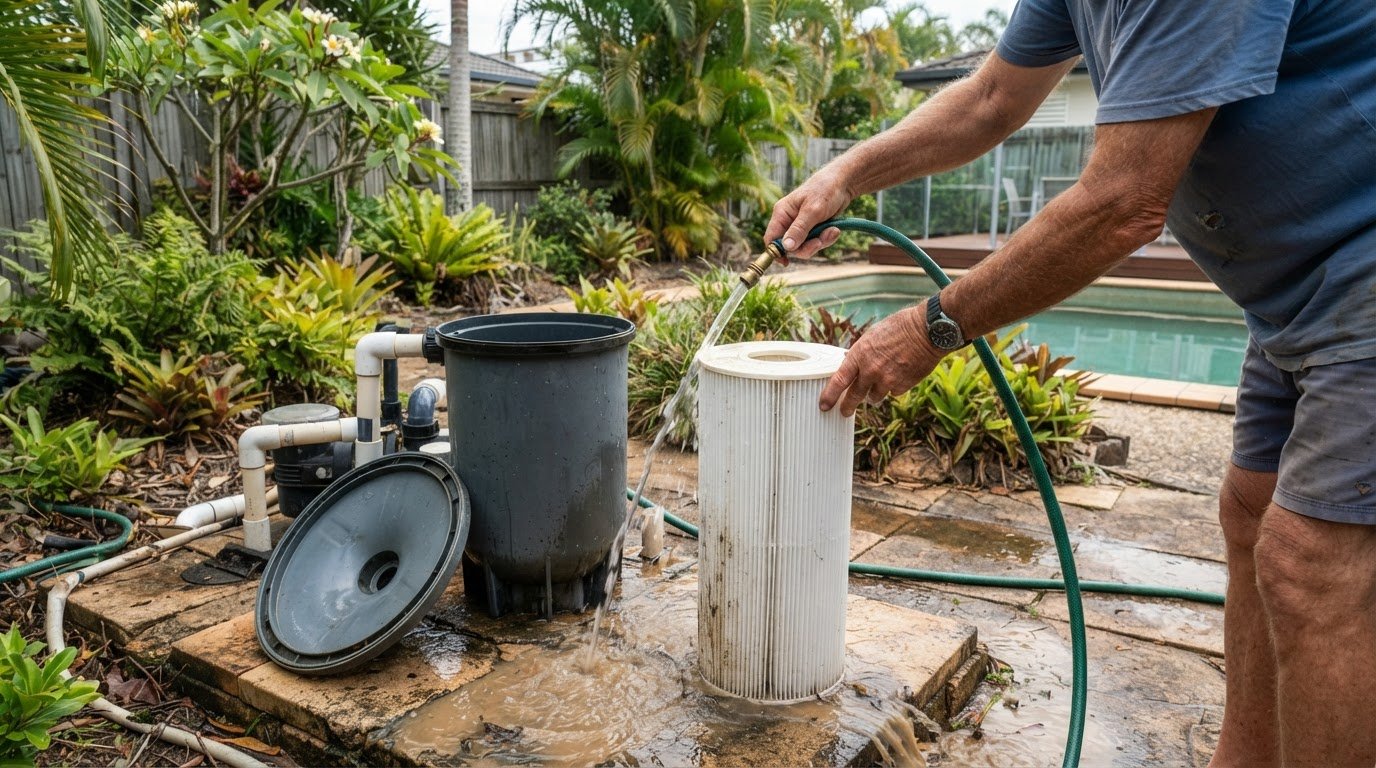
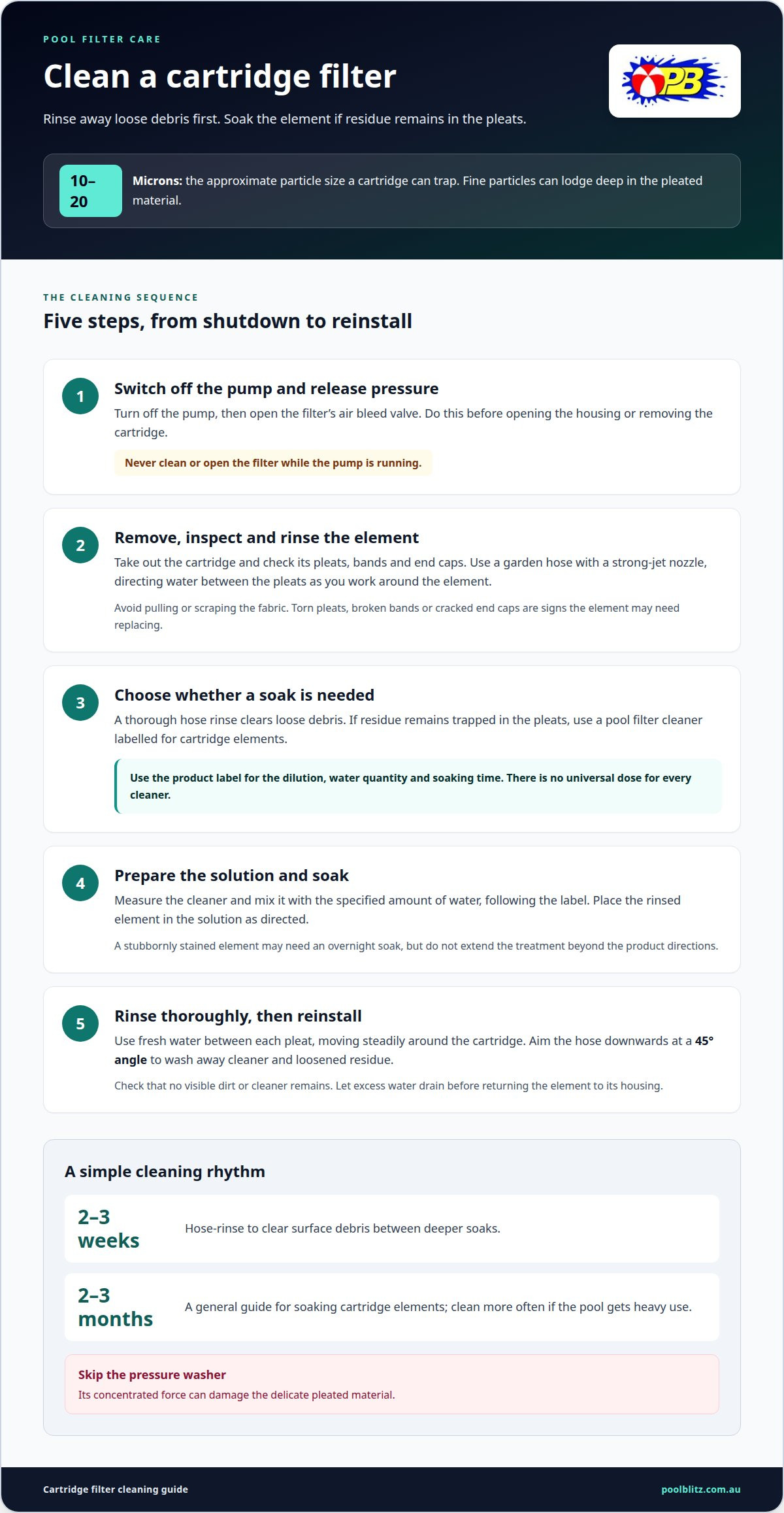
Cleaning a cartridge filter involves rinsing away loose debris, then soaking the element if residue remains. To learn how to clean a cartridge filter, switch off the pump and release pressure through the filter’s air bleed valve. Remove the element and hose between its pleats, then soak it in pool filter cleaner according to the product label. Rinse thoroughly before reinstalling.
It’s easy to focus on the visible dirt, but fine particles can lodge deep in the pleated material. A cartridge traps particles around 10-20 microns, so a thorough clean helps remove build-up the initial rinse may leave behind. This guide explains what a cartridge does, how to rinse and soak its elements, and how to measure cleaning solution without guessing. You’ll also learn what to look for when deciding whether a rinse is enough or a deeper soak is due.
Key Takeaways
- Learn what a cartridge element does and which signs can mean it’s time to replace it.
- Use a careful hose rinse to clear debris from between the pleats before soaking the element.
- Find out how to choose and dose a cartridge cleaning solution without guessing.
- Understand why a pressure washer can damage delicate filter pleats and what to use instead.
What is a pool filter cartridge?
A cartridge filter uses pleated fabric to capture debris as pool water passes through it. Cartridge elements can trap particles around 10-20 microns, while most sand filters catch particles larger than 20-30 microns. A cartridge is cleaned by rinsing its element; a sand filter is cleaned by backwashing. Never clean a filter while its pump is running: switch off the pump and open the air bleed valve before removing the cartridge.
- Identify the filter type before choosing a cleaning method. A cartridge filter contains a removable pleated element, while a sand filter holds filter media in a tank. Cleaning methods differ: rinse a cartridge element, but backwash a sand filter. Using the wrong method won’t properly clear debris from the filter.
- Record the filter’s clean starting pressure after a thorough clean. Use that reading as a baseline when monitoring pressure during operation. A cartridge element generally needs cleaning when pressure rises 20 kPa above its clean starting pressure. This signal helps distinguish normal operation from a filter restricted by accumulated debris.
- Inspect the element during each clean, checking its pleats, bands and end caps. Replace it if pleats are torn, bands are broken or end caps are cracked. These visible faults can affect how the element sits and filters water, so another rinse won’t repair the damage.
- Plan for cartridge replacement every 2-3 years, or sooner in a poor environment. Pool debris and conditions affect how quickly an element wears, so use its condition alongside its age. If pressure remains 30-40 kPa above its starting pressure, or its lowest post-clean reading, replacement may also be needed.
- Keep the sand-filter schedule separate from the cartridge schedule. Pool filter sand should be replaced by a professional service technician every 3 to 5 years. A sand filter’s media is not a cartridge element, so rinsing a cartridge or tracking its replacement age won’t address worn sand.
- Shut down the pump and release system pressure before opening a filter housing. Turn off the pump, then open the filter’s air bleed valve before removing the element. This sequence prevents the filter from remaining pressurised during access, making it essential preparation for cartridge inspection and cleaning.
Soaking and rinsing cartridge elements
Rinse first to remove loose debris, then soak the element to loosen residue trapped in its pleats. NSW Health distinguishes cartridge cleaning, which involves removing and hosing the cartridge, from cleaning a sand or media filter by backwashing.
Remove and rinse the cartridge
- Turn off the pump, open the filter’s air bleed valve to release pressure, then remove the cartridge. Rinse away surface debris with a garden hose fitted with a strong-jet nozzle, directing water between the pleats rather than across their edges. Work around the element so trapped leaves and grit are flushed out. Avoid pulling or scraping the pleated material, which can tear during handling.
Soak the cartridge elements
- After the initial rinse, place the element in a suitable pool filter cleaning solution. Cartridge elements are generally soaked every 2-3 months, or more often if the pool gets heavy use. Follow the cleaner’s label for its dilution and soaking instructions; a stubbornly stained element may need to soak overnight. Don’t assume a longer soak will improve results, as the product directions determine the appropriate treatment.
Rinse the cartridge elements
- Remove the element from the solution and rinse it thoroughly with fresh water before reinstalling it. Direct the hose between each pleat at a downward 45° angle, moving steadily around the cartridge to wash out cleaner and loosened residue. Avoid a pressure washer: its concentrated force can damage the pleated material. Check for remaining dirt and cleaner before returning the element to the filter housing.
Hose-rinsing every 2-3 weeks can help clear surface debris between deeper soaks. If pool debris keeps collecting despite regular filter care, robotic pool cleaners and repairs can help address another part of the cleaning routine.
Cartridge filter cleaning solution and dosage
- Choose a pool filter cleaner labelled for cartridge elements. A hose rinse removes loose material, while a soak helps treat residue that remains within the pleats. Don’t substitute a general household cleaner: use a product intended for pool filter cleaning, and follow its label for preparation and use.
- Read the product label before measuring anything. Dosage can differ between cleaning solutions, so there isn’t one universal amount to use for every product. Check the stated dilution, water quantity and soaking directions, then measure the cleaner accurately. Guessing the dose can leave the solution too weak for its intended use or unnecessarily concentrated.
- Prepare the cleaning solution in a container that can hold the cartridge element. Add the measured cleaner to the specified amount of water, following the order and mixing directions on the label. Make enough solution to cover the element as directed; a partly submerged cartridge may not receive even treatment across its pleats.
- Place the previously rinsed element into the prepared solution for the label’s stated soaking period. A stubbornly stained cartridge may need an overnight soak, but don’t extend the treatment beyond the product directions. The cleaner’s instructions take priority because products can differ in concentration and recommended contact time.
- Lift the cartridge out carefully and rinse it thoroughly with fresh water before reinstalling it. Direct water between the pleats to remove loosened residue and cleaning solution. Keep rinsing until the water runs clear and no visible cleaner remains; then let excess water drain before returning the element to its housing.
- Keep the product label available for future cleans. Record the cleaner used and its measured dose alongside the filter’s maintenance notes, so the same product can be prepared consistently next time. If you change cleaners, read the new label from the beginning rather than carrying over the previous product’s dilution or soaking instructions.
Can you clean a cartridge filter with a pressure washer?
No. Use a garden hose instead: concentrated pressure can damage the cartridge’s pleated material, even if the element looks sturdy. Follow these steps to clear debris without forcing water through the fabric.
- Switch off the pool pump before opening the filter housing. Release trapped system pressure through the air bleed valve, then remove the cartridge carefully. A pressure washer is not a suitable shortcut, since its force can strain pleats and affect how the element filters water.
- Start with a visual inspection of the dry cartridge. Look for pleats that are flattened, split or pulled out of shape, along with debris lodged between folds. A damaged element needs more than a forceful rinse; directing a pressure washer at a tear can worsen the damage rather than restore its filtering surface.
- Fit a strong-jet nozzle to a garden hose, then rinse the cartridge from top to bottom. Aim between the pleats at a downward 45° angle, and move around the full circumference. This approach directs water along the folds, helping flush out loose dirt without the concentrated force of a pressure washer.
- Keep the hose nozzle at a sensible distance and let the water do the work. Don’t press the nozzle against the fabric or scrape stubborn dirt with a hard tool. If debris remains, continue rinsing between the pleats instead of increasing pressure; a stubborn stain may call for a cartridge-cleaning soak.
- Check the rinse water and pleats as you work. Continue until loose debris and visible residue have washed away, paying particular attention to folds that held leaves or fine grit. If the element remains stained, use a pool filter cleaner according to its label rather than using a pressure washer to force residue out.
- Before reinstalling, rinse away any remaining cleaner and inspect the cartridge again. A pressure washer can make damage harder to spot by flattening pleats or worsening existing wear. If you’re unsure whether the element is damaged, get help with pool equipment repairs before putting it back into service.
Pool Blitz: Robotic Pool Cleaners and Repairs
Pool Blitz sells and repairs robotic pool cleaners for owners whose robot needs attention or who are considering one for routine pool cleaning. A robotic cleaner can support your cleaning routine, but the cartridge filter still needs its own rinse and soak. If filtration remains poor after cleaning, Pool Blitz also repairs pool equipment, helping address faults that a hose rinse cannot resolve.
For broader pool care in Brisbane City and surrounding suburbs, Pool Blitz also provides regular and casual pool servicing and supplies pool chemicals. These options suit different needs, from ongoing maintenance to occasional support. Contact Pool Blitz to discuss the pool equipment repairs or servicing that fit your needs.
Make filter care part of your pool routine
A simple maintenance record can make future decisions clearer. Note when you cleaned the cartridge, what the element looked like, and whether debris returned soon afterwards. These observations can help distinguish a routine clean from a recurring filtration or equipment concern.
Knowing how to clean a cartridge filter gives you a practical starting point, but you don’t need to manage every pool issue alone. If the element is damaged, the filter continues to struggle, or you’d prefer support with ongoing pool care, choose help that fits the problem. For busy trade technicians and maintenance businesses working out in the field, tools such as oscarpicksup.com ensure incoming customer calls are answered automatically around the clock. A considered next step can keep maintenance organised and make it easier to enjoy a clean, well-cared-for pool.
Contact Pool Blitz for pool filter help and discuss the support that suits your pool. With a clear plan for the next step, you can keep pool care moving forward with confidence.
Frequently Asked Questions
How Often Should You Clean Cartridge Elements?
Rinse cartridge elements every 2-3 weeks, and plan a deeper soak every 2-3 months. These are different levels of cleaning: rinsing clears surface debris, while soaking helps loosen residue that remains between pleats. A pool with heavy use may need more frequent soaking. Keep a note of each clean and inspect the element, since visible build-up can signal it needs attention sooner.
How do you clean a cartridge pool filter step by step?
To clean a cartridge filter, switch off the pump and release pressure through the air bleed valve. Remove the element, hose between the pleats, and soak it in cartridge cleaner if residue remains. Follow the product label, then rinse thoroughly before reinstalling. Check the end caps and pleats as you remove the element, since damage may mean cleaning alone will not resolve the problem.
How often should you clean a pool cartridge filter in Australia?
For an average residential pool, clean cartridge elements every 4-6 weeks during the swimming season. Treat that as a routine interval, not a reason to ignore the filter’s condition. Pool use and debris can affect how quickly dirt accumulates, so look at the pressure gauge and inspect the element when cleaning. A separate hose rinse can help remove surface debris between scheduled cleans.
What pressure rise indicates a cartridge filter needs cleaning?
Clean the cartridge when pressure rises 20 kPa above the clean starting pressure. Take the baseline reading after cleaning, then compare later readings with the pump operating under the same conditions. For example, if pressure keeps climbing after a recent rinse, debris may still be restricting flow or the element may need a deeper clean. Record readings to make changes easier to spot.
What equipment and cleaning products are safe for cleaning a cartridge filter?
Use a garden hose with a strong-jet nozzle and a pool filter cleaner labelled for cartridge elements. Knowing how to clean a cartridge filter also means choosing a rinse method that will not damage the pleats: avoid pressure washers and direct the hose between the folds. Follow the cleaner’s label for dilution and soaking instructions, and do not substitute household cleaners or sharp tools.
Should you soak a pool filter cartridge in a chemical cleaner, and how?
Yes, soaking can help remove stubborn residue after loose debris has been rinsed away. Use a pool filter cleaner suitable for cartridge elements, prepare it using the label’s dilution directions, and follow the stated soaking time. Some cartridge elements soak in cleaning solution for 24 hours. Rinse thoroughly with fresh water before reinstalling, so cleaner and loosened debris don’t remain in the pleats.
No responses yet