
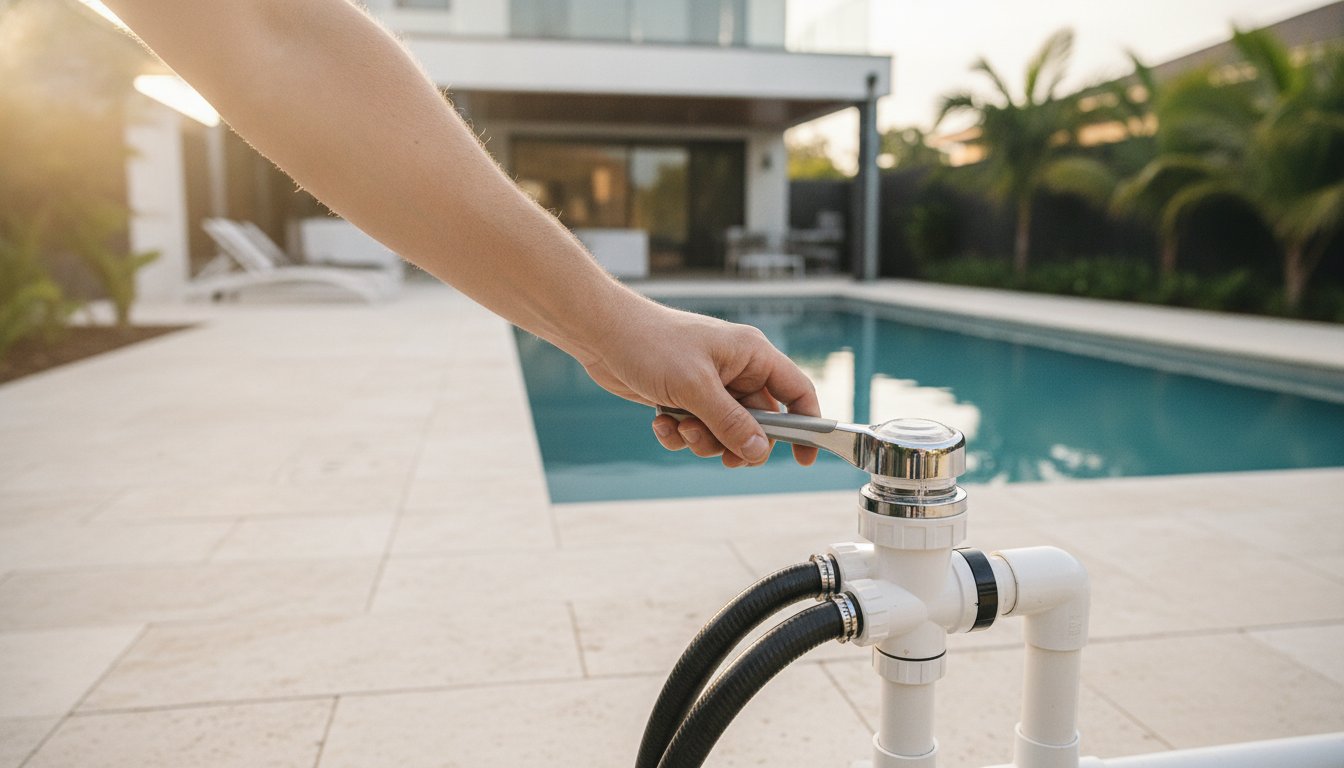
Your pool’s multiport valve is the gearbox of your entire filtration system, and shifting it incorrectly is the fastest way to turn a minor maintenance task into a costly repair. Understanding your pool multiport valve settings is essential for any owner who wants to avoid the frustration of cloudy water or the expense of a blown internal seal. You might feel a flicker of anxiety when standing over that heavy handle, worrying about tearing a delicate spider gasket or accidentally draining the pool during a routine clean. It’s a common concern, especially when the water refuses to clear after a heavy summer storm.
Mastering these controls is the key to maintaining a healthy, inviting swimming environment and ensuring your equipment stands the test of time. We promise to provide the clarity you need to operate your system with total confidence, moving beyond guesswork to professional-grade care. This 2026 guide walks you through the seven essential valve positions, the correct sequence for backwashing, and the expert techniques we’ve refined over thirty years to keep Brisbane pools sparkling through every season.
Key Takeaways
- Understand why the multiport valve acts as the essential control centre for your filtration, allowing you to manage water flow with precision and ease.
- Master the seven primary pool multiport valve settings to ensure you are using the most efficient mode for daily cleaning or intensive debris removal.
- Learn the “Golden Rule” of turning off your pump before moving the handle to prevent “dead-heading” and protect your expensive PVC pipework.
- Gain expert insights on handling Brisbane-specific scenarios, such as using the “Waste” setting to recover your pool after a heavy summer storm.
- Discover how to spot early signs of wear in your filter’s internal components, helping you avoid costly repairs and maintain perfect water balance.
Understanding Your Pool Multiport Valve: The Control Centre of Your System
The multiport valve is the undisputed control centre of your pool’s circulation system. It’s a sophisticated piece of plumbing that acts as a traffic warden, directing the flow of water into, through, and out of your filter tank. By manipulating a single lever, you can switch between cleaning the filter media, bypassing the tank entirely, or even draining the pool to the street. This centralised control is what makes modern pool ownership manageable, saving you from the headache of adjusting multiple manual gate valves every time you want to backwash.
The physical anatomy of the valve is built for durability and precision. You’ll find a spring-loaded handle that sits in one of several locking notches, each corresponding to a specific function. Beneath this handle lies a rotating diverter, a heavy-duty plate that pivots to align with various internal plumbing ports. When you select different pool multiport valve settings, you are physically repositioning this diverter to open or close the pathways required for that specific task. It’s a mechanical process that relies on a perfect seal to maintain the pressure required for effective filtration.
The Role of the Spider Gasket
Deep within the valve body sits the spider gasket, a critical rubber seal shaped like a wagon wheel. This component is the primary barrier that prevents water from “bleeding” between different settings, such as the filter port and the waste port. It’s the most common point of failure we encounter during equipment repairs. A failing gasket often reveals itself through a subtle but constant leak from the backwash line while the system is in its normal filtering mode. If you see water escaping where it shouldn’t, or if the handle becomes exceptionally difficult to turn, the gasket likely needs professional attention to prevent internal pressure damage.
Sand vs. DE Filter Multiport Valves
It’s vital to understand that multiport valves are not universal across all filter types. Valves designed for sand filters are engineered to direct water from the top of the sand bed downwards during filtration, whereas Diatomaceous Earth (DE) valves must accommodate the specific backwashing needs of fabric-covered grids. Conversely, cartridge filter systems rarely utilise a multiport valve at all. They usually rely on a simple “push-pull” slide valve or require you to manually open the tank to clean the elements. Knowing your specific filter brand and model is the first step toward accurate maintenance, as the internal components for a Hayward valve will not fit a Zodiac or AstralPool equivalent.
The 7 Essential Multiport Valve Settings and What They Actually Do
Each notch on the valve plate serves a distinct purpose, and understanding these functions is the difference between a crystal-clear swim and a frustrating afternoon of troubleshooting. While most owners leave their system on a single setting for months, your pool multiport valve settings are designed to be dynamic, allowing you to respond to everything from heavy leaf litter to chemical imbalances.
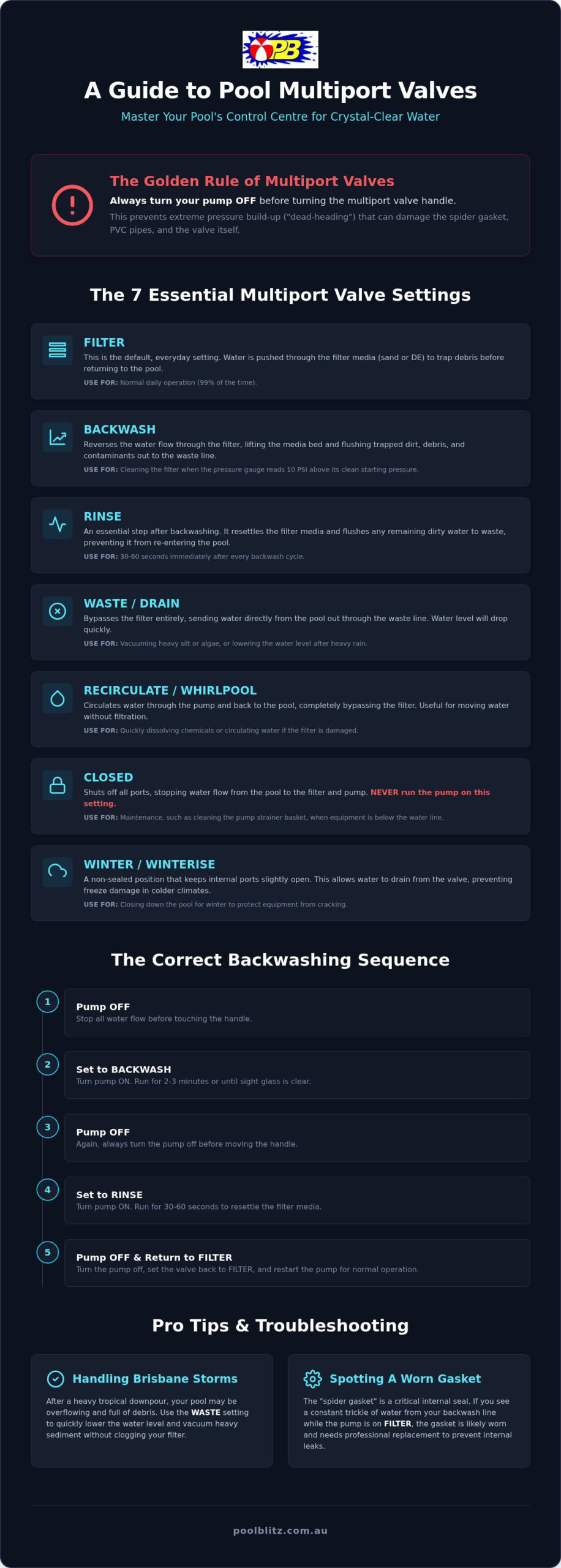
- Filter: This is your default position. Water flows through the filter media, trapping debris before returning to the pool. It’s the setting you’ll use for the vast majority of your pump’s operating hours.
- Backwash: When the pressure gauge rises, this setting reverses the water flow. It lifts the filter bed and flushes trapped dirt out through the waste line, effectively cleaning the media without you having to open the tank.
- Rinse: This often-overlooked step is vital after backwashing. It settles the filter media back into place and clears any remaining dirty water from the internal pipes, preventing a puff of cloudiness from entering the pool when you switch back to “Filter” mode.
- Waste: This bypasses the filter entirely and sends water straight to the drain. It’s perfect for vacuuming heavy silt or lowering the water level after a typical Brisbane tropical downpour.
- Recirculate: Water moves through the pump and back to the pool without entering the filter tank. This is ideal for mixing chemicals or keeping the water moving if your filter media is currently out of action.
The Specialised Settings: Closed and Winter
The “Closed” setting is purely for maintenance, such as opening the pump basket while the equipment is below the water level. You must never run the pump while in this position, as the lack of an outlet will cause an immediate and dangerous pressure spike that can crack your PVC pipework. Many modern valves also feature a “Winter” or “Winterise” position. This is a neutral notch that keeps the diverter lifted slightly off the spider gasket. It prevents the rubber from sticking or deforming during long periods of inactivity, which is a simple way to extend the life of your pool filtration systems without spending a cent.
When to Use the Recirculate Mode
Recirculate is a powerful tool for rapid chemical distribution. If you’ve just added a heavy dose of salt or a liquid clarifier, this setting ensures the water circulates quickly without clogging the filter media with undissolved particles. It’s also a helpful troubleshooting mode. If your pump is struggling to prime, switching to recirculate reduces the resistance the motor has to fight against, making it easier to get the system running before you reintroduce the filter to the loop. This setting is a lifesaver when you need to keep the water moving but suspect your sand or glass media is too clogged to function safely.
Beyond the Basics: Choosing the Right Setting for Every Brisbane Pool Scenario
Brisbane weather is notoriously unpredictable, and your maintenance routine must adapt to the sudden shifts from scorching heat to torrential afternoon downpours. Selecting the correct pool multiport valve settings is your first line of defence against environmental stress. During the height of summer, most pools require the “Filter” mode to run for eight hours daily to maintain clarity, but a single storm can change those requirements in minutes. If you’re dealing with a green pool recovery, switching to “Recirculate” allows you to distribute shock chemicals rapidly without overwhelming your filter media with dead algae. This proactive approach ensures your water remains safe for swimming while protecting your equipment from unnecessary strain.
Handling Heavy Brisbane Rain
A common mistake during the storm season is allowing the pool to overflow, which can lead to soil erosion and damage to your coping or surrounding deck. Using the “Waste” setting is the most efficient way to lower the water level back to the halfway mark on your skimmer box. Unlike the “Backwash” setting, which forces water through your filter media, “Waste” pumps it directly out of the system. This method is faster and prevents unnecessary wear on your pool plumbing. It’s a simple, effective step that protects your equipment from the extreme pressure of a flooded system and keeps your chemistry from becoming completely diluted.
Vacuuming to Waste vs. Vacuuming to Filter
When your pool floor is covered in fine silt or heavy leaf litter after a storm, vacuuming directly to the “Filter” setting will likely result in a clogged tank within minutes. Choosing the “Waste” setting allows you to suck that debris straight out to the street, preserving the integrity of your filter sand or glass media. While this does result in some water loss, it’s a small price to pay for avoiding a full filter media replacement later. It’s a trade-off that seasoned pool owners understand well. To do this effectively, prime your vacuum hose, switch the pump off, and move the handle to “Waste.” Vacuum slowly to ensure you don’t stir up the sediment, then top up the pool water level once you’re finished to ensure your pump doesn’t run dry during the next filtration cycle.
The Golden Rule of Multiport Valves and Common Troubleshooting Tips
The “Golden Rule” of pool maintenance is non-negotiable: you must always turn the pump off before adjusting your pool multiport valve settings. If you shift the handle while the motor is running, you risk a phenomenon known as “dead-heading.” This occurs when the water flow is momentarily blocked by the internal diverter, creating a massive pressure spike that can instantly crack your PVC pipes or blow the internal seal out of its tracks. It’s a simple habit that prevents hundreds of dollars in unnecessary damage and keeps your filter shed dry. You should also ensure the handle is fully seated in its notch before restarting the pump, as a partially engaged valve can cause internal bypass and poor filtration.
Why Your Valve Handle is Hard to Turn
A stiff handle is often a sign of salt and calcium buildup within the diverter assembly, a common issue in Brisbane’s salt-chlorinated pools. Over time, the friction between the moving parts increases, making it feel like you’re fighting the equipment. You might notice the handle doesn’t “click” with the same authority it once did, or it may feel “spongy” when you try to lock it into place. To maintain smooth operation, use only specialised silicone-based lubricants; never use petroleum jelly, as it will cause the rubber seals to swell and perish. If the handle refuses to move even after lubrication, the internal stainless steel spring has likely failed or become jammed with debris, requiring a professional teardown to restore functionality.
Fixing a Leaking Multiport Valve
If you notice water trickling from the waste line while the valve is in the “Filter” position, you have a compromised spider gasket. You can verify the severity with a “Bucket Test” by catching the discharge over a set period to see how much water you’re actually losing. A constant flow is an urgent issue that can lead to significant water loss and chemical imbalance, eventually requiring expensive pool pump repairs if the water level drops below the skimmer box. While replacing a gasket is a common DIY task, the precision required to glue it into place means many owners prefer the peace of mind that comes with a professional service. If your valve is becoming a source of stress, we recommend booking one of our pool equipment repairs to restore your system’s integrity and ensure your water stays where it belongs.
Maintaining Your Multiport Valve for Longevity and Crystal Clear Water
Maintaining your filtration system requires more than just a passing glance at the pressure gauge; it demands a structured approach to equipment care. Your pool multiport valve settings are the foundation of this routine, but the physical components of the valve require their own dedicated attention to ensure they remain reliable. A proactive maintenance schedule prevents the sudden equipment failures that often occur during the peak of the Brisbane swimming season, when your system is under the most pressure from high bather loads and heat.
An annual inspection checklist for your filtration system should include:
- Checking the waste line for any signs of constant dripping or bypass.
- Testing the handle movement to ensure it doesn’t stick or feel gritty.
- Lubricating the diverter O-rings with a silicone-based lubricant.
- Verifying that the pressure gauge returns to zero when the pump is off.
- Ensuring the locking notches on the valve lid are not worn or rounded.
Expert water balancing is another critical factor in valve longevity. When your water chemistry is neglected, calcium can crystallise on the internal surfaces of the valve, acting like sandpaper against the rubber seals. This wear leads to internal leaks that compromise the efficiency of your filtration and your robotic pool cleaner. When your valve is sealed perfectly, your cleaner operates with maximum suction, ensuring every centimetre of the pool floor is scrubbed effectively without losing pressure through the waste line.
Professional Equipment Servicing in Brisbane
While basic cleaning is part of the weekly routine, an expert eye on your pool repairs can catch subtle signs of a failing diverter before it leads to a catastrophic leak. At Pool Blitz, we’ve spent over thirty years helping Brisbane families navigate the complexities of pool ownership with confidence. We understand how the local climate impacts your equipment, and our technicians are trained to identify the early warning signs of spring fatigue or gasket deformation that a casual observer might miss. This preventative care is the most cost-effective way to extend the life of your entire filtration pad.
Next Steps for Your Pool Health
If your valve handle has become difficult to shift or you’ve noticed your water clarity declining despite long pump hours, it’s time for a professional audit. Booking a casual pool service provides a comprehensive review of your system, from the pump basket to the internal filter media. For older pools, we can also discuss upgrading to modern, high-efficiency valves that offer smoother operation and better flow rates. Taking action before the summer rush ensures your pool remains a source of relaxation rather than a maintenance burden. Get your pool equipment sorted by the Brisbane experts at Pool Blitz today to ensure your system is ready for another year of crystal-clear swimming.
Securing Your Pool’s Future with Professional Care
Mastering your pool multiport valve settings is about more than just routine maintenance; it’s a commitment to protecting one of your home’s most significant assets. By adhering to the Golden Rule and adapting your settings to Brisbane’s shifting weather patterns, you effectively safeguard your equipment against common causes of premature wear. These simple adjustments make the difference between a system that struggles and one that provides years of reliable service. Your pool deserves expert care.
Since 1994, Pool Blitz has operated as a trusted local authority in filtration and pump repairs across the Brisbane region. Our team provides the expert water balancing and technical precision necessary to handle our unique sub-tropical conditions with ease. If your multiport valve is showing signs of age or you want to ensure your system is operating at peak efficiency, we encourage you to Book a Professional Pool Equipment Check with Pool Blitz Brisbane. We look forward to helping you maintain a clear, safe, and trouble-free swimming environment for many seasons to come.
Frequently Asked Questions
Can I change the multiport valve setting while the pump is running?
No, you must never move the handle while the pump is operational. Doing so causes a sudden pressure spike that can tear the internal spider gasket or crack your PVC pipework. This simple habit is the most effective way to prevent expensive equipment repairs and ensure your valve operates smoothly for years. Always wait for the motor to stop completely before shifting between your pool multiport valve settings to maintain the integrity of the internal seals.
How long should I backwash my pool filter for?
You should typically backwash for two to three minutes, though the best indicator is the clarity of the water in the sight glass. Once the rushing water turns from cloudy to clear, the process is complete. Following this with a 30 second rinse is essential to settle the sand bed. This ensures that no residual debris is flushed back into your pool when you return the system to its normal filtration mode.
Why is water coming out of my waste line when I am in the Filter position?
Water escaping through the waste line during normal filtration usually indicates a perished or displaced spider gasket. This internal rubber seal is designed to keep water in the correct channels, but salt and age can cause it to deform. If you notice a constant trickle, it’s a sign that your valve requires a professional teardown. Ignoring this leak leads to significant water loss and makes it difficult to maintain your pool’s chemical balance.
What happens if I leave my pool filter on the Waste setting?
Leaving your system on the Waste setting will cause the pool water level to drop rapidly as it bypasses the filter and heads straight to the drain. This can be dangerous if the water falls below the skimmer box, as the pump will begin to suck air and potentially overheat. It’s a setting intended for specific tasks like vacuuming heavy debris or lowering levels after a storm, so always return to “Filter” once the job is done.
Do I need to rinse every time I backwash?
Yes, rinsing for approximately 30 to 60 seconds after every backwash is a vital step for water clarity. This setting settles the filter media and flushes out any dirty water remaining in the valve’s internal plumbing. Skipping the rinse often results in a cloud of fine dust being blown back into the pool as soon as the pump restarts. It’s a small time investment that keeps your water looking its absolute best.
Why is my multiport valve handle so hard to move?
A stiff handle is generally caused by a buildup of calcium or salt inside the diverter assembly, which increases friction against the seals. It can also indicate that the internal stainless steel spring is starting to rust or bind. Applying a specialised silicone-based lubricant can often resolve the issue, but if the resistance continues, it’s best to have a technician inspect the unit. Forcing a stuck handle can easily snap the plastic components or the diverter itself.
Can a faulty multiport valve cause my pool to turn green?
A faulty valve can certainly contribute to algae growth if it allows water to bypass the filter media entirely. If the internal diverter isn’t sealing correctly, water may simply circulate without being cleaned, even if the pump runs for the recommended eight hours. This lack of effective filtration, combined with Brisbane’s summer heat, creates the perfect environment for a green pool. Correcting your pool multiport valve settings and ensuring a tight seal is crucial for maintaining clarity.
Is it better to vacuum to Waste or Filter?
It depends on the amount of debris on your pool floor. For light, everyday dust, vacuuming to the “Filter” setting is perfectly fine. However, if you’re cleaning up heavy silt or leaf litter after a storm, vacuuming to “Waste” is the superior choice. This prevents your filter media from becoming instantly clogged and saves you from multiple backwash cycles. While you lose some water, it protects your sand or glass media from unnecessary contamination.
No responses yet