
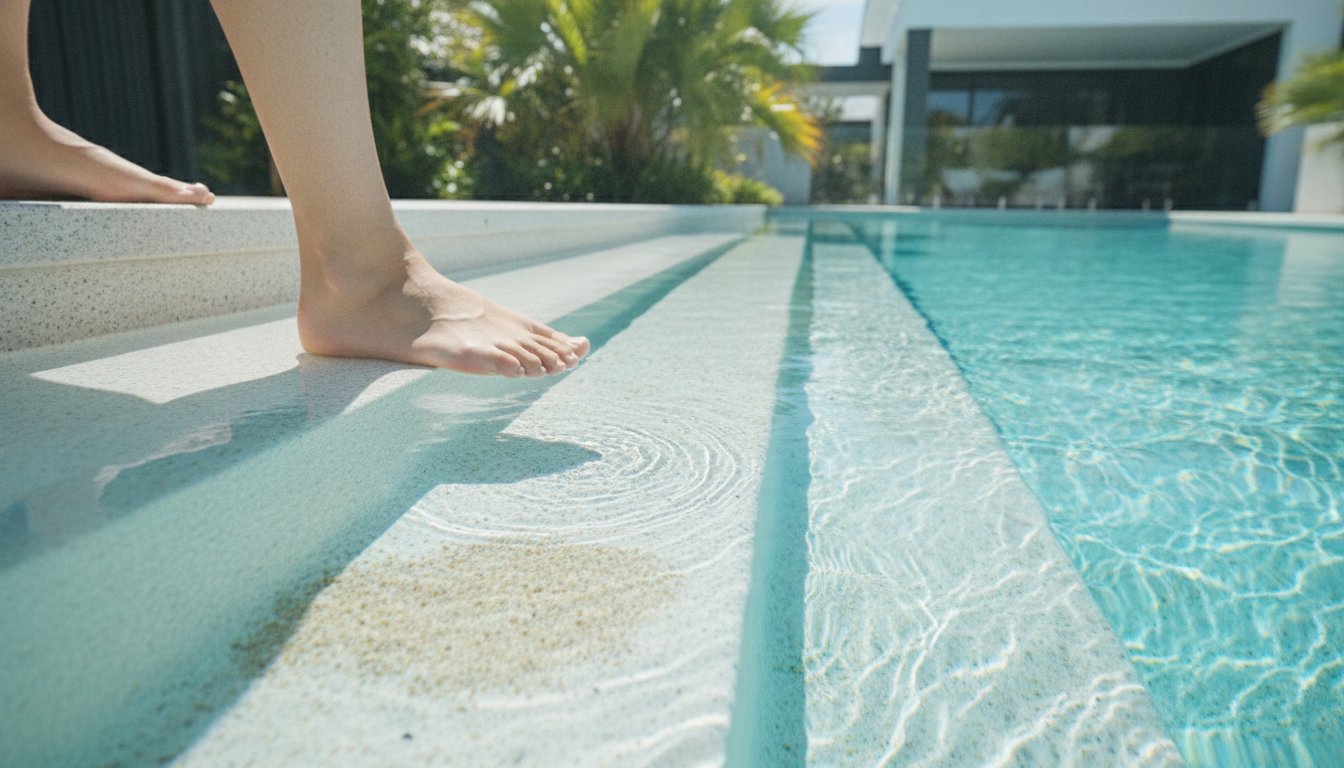
You step onto the top step of your pool on a sweltering Brisbane afternoon, but instead of smooth pebblecrete or tile, you feel a sharp, gritty texture underfoot. Finding pool filter sand in pool is more than just a nuisance for your feet; it is often a mechanical “S.O.S.” from your filtration system. While it is easy to assume the worst, this grit is usually a clear sign that a specific internal component has reached the end of its functional life after years of reliable service in our harsh climate.
We understand the frustration of seeing cloudy water and debris despite your best maintenance efforts during a busy Queensland summer. This guide will show you exactly how to confirm the source of the leak and identify whether a cracked lateral, a faulty multi-port valve, or a worn standpipe is to blame for the mess. By the end of this article, you will know how to address the issue before it impacts your plumbing, and whether you can handle the repair yourself or need to call in a seasoned Brisbane expert to restore your peace of mind.
Key Takeaways
- Learn the simple “smear test” to quickly determine if the debris on your pool floor is gritty silica or just a stubborn patch of mustard algae.
- Understand why cracked laterals or a fractured standpipe are the primary reasons you’ll find pool filter sand in pool and how to spot these failures early.
- Follow a methodical diagnostic process using your filter’s multiport valve settings to pinpoint whether the issue is a mechanical break or a simple seal failure.
- Discover how to use the “wet-vac” method to safely remove old sand and replace delicate internal components without risking damage to the filter tank.
- Recognise when a professional pressure test and a comprehensive filtration service are necessary to protect your equipment from the demands of a Brisbane summer.
Identifying the Problem: Is it Really Pool Filter Sand in Your Pool?
Finding sediment on the floor of your swimming pool is a common sight after a heavy Brisbane storm, but when that sediment is coarse and gritty, you are likely dealing with a mechanical breach. Filter sand leakage occurs when the internal barrier designed to keep the media inside the tank fails. To understand the mechanics, it helps to review how sand filters work; essentially, water is pushed through a bed of silica sand which traps debris before the clean water returns to the pool. When you find pool filter sand in pool, it means that sand has bypassed the laterals and travelled through the return lines.
During the peak storm months from October to March, Brisbane pools face a massive influx of organic debris. This extra load forces your filter to work harder, often leading to rapid pressure spikes. If the internal components are already aged, these pressure surges can be the final straw that causes a lateral to crack. Once the integrity of the filter is compromised, sand will continue to enter your pool every time the pump is running.
The Sand vs. Mustard Algae Diagnostic
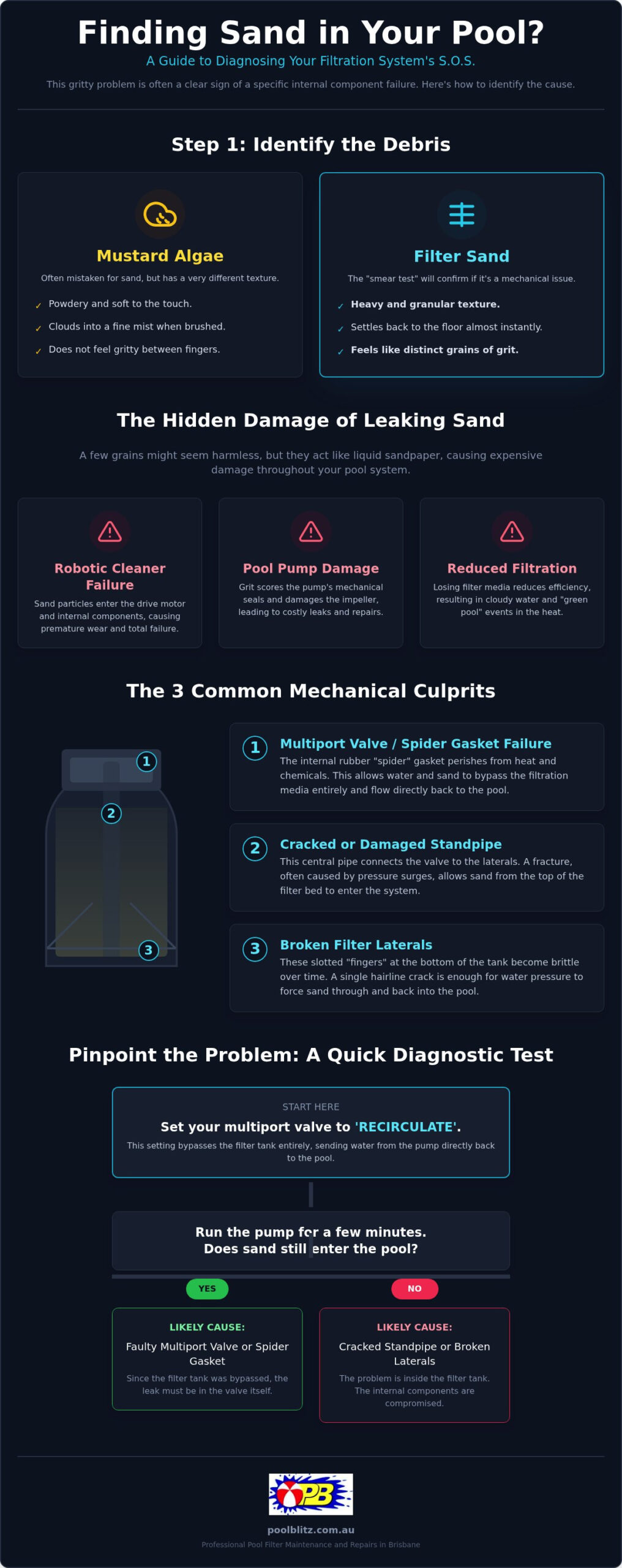
Many pool owners initially mistake mustard algae for sand because both tend to settle on the floor in yellow or brown clumps. You can distinguish them by observing how they react to touch. Algae is powdery and will cloud into a fine mist if you wave your hand over it or brush it. In contrast, sand is heavy and granular. It will settle back to the floor almost instantly. The most reliable method is the “hand feel” test: if you can feel distinct grains of grit between your fingers, you have confirmed that there is pool filter sand in pool.
Why Ignoring Sand Leakage is Damaging Your Pool
While a few grains of sand might seem harmless, they act like liquid sandpaper within your system. If you use a robotic pool cleaner, these particles can enter the internal drive motor and cause premature wear or total failure. The sand also reaches your pool pump, where it can score the mechanical seals and damage the impeller. Over time, the loss of filter media reduces the system’s ability to trap fine particles. This often results in a “green pool” event during a humid Queensland heatwave, as the water can no longer be effectively polished and cleared of microscopic spores.
The Mechanical Culprits: Why Your Filter is Leaking
Mechanical failures within your filtration system are usually the root cause when you notice pool filter sand in pool. These systems are designed to be closed loops, but the combination of age and high operating pressures can compromise the internal plastic assembly. While the tank itself may last for decades, the delicate components inside are subject to constant wear and tear from water velocity and chemical exposure.
Understanding Your Filter’s Laterals
Laterals are the small, slotted pipes at the base of your filter tank that act as the final gatekeeper for your water. Their primary role is to allow filtered water to pass through while keeping the heavy media securely inside the tank. Over time, these components can become brittle due to chemical exposure or simply reach the end of their service life. If even a single lateral develops a hairline crack, the force of the water flow will push sand through that gap and straight back into your pool. It is also common for laterals to be damaged during a DIY sand change if the media is poured in too quickly without a water buffer to cushion the impact.
Multiport Valve and Spider Gasket Failures
The multiport valve sits at the top or side of your tank and directs water flow based on your selected setting. Inside this valve is a spider gasket, a wagon-wheel-shaped rubber seal that prevents water from crossing into the wrong ports. When this gasket perishes or becomes unseated, water can bypass the filtration cycle entirely and carry sand into the return lines. Brisbane’s intense summer heat often accelerates the degradation of these rubber seals, leading to leaks that are difficult to spot without opening the valve head. To troubleshoot the most common issues, you should inspect the handle of the multiport valve for any unusual “play” or looseness, which often indicates an internal seal failure.
The standpipe is the central conduit connecting the multiport valve to the laterals. If this pipe is not perfectly centred or if it develops a fracture, sand will enter the system from the top of the tank. Internal pressure surges, often caused by failing to bleed air from the system after a backwash, can put immense strain on these plastic parts. If you suspect your system is under-performing, a professional assessment of your pool filtration systems can prevent a minor crack from turning into a major equipment failure.
How to Diagnose Your Sand Filter Issues at Home
Before you commit to a full equipment overhaul, a methodical diagnostic approach can save you significant time and expense. Identifying exactly when you see pool filter sand in pool is the first step in narrowing down the culprit. Start by vacuuming the existing sand out of the pool and then monitoring the return jets closely while the pump is running on its standard filtration setting.
- Observe the timing: If sand appears immediately after a backwash cycle, the issue may be procedural or a faulty valve seal. If it flows constantly, you likely have a cracked internal component.
- Feel the valve handle: A multiport valve handle should feel firm and click into each setting with precision. If it feels “spongy” or has excessive play, the internal spider gasket has probably shifted or perished.
- Inspect the waste line: During a backwash, check the water coming out of the waste pipe or through the sight glass. Finding heavy sand here suggests the sand level in the tank is too high or the sand is so old it has lost its weight.
Performing a deep backwash followed by a thorough rinse cycle is the best way to clear the lines and reset the system. This process flushes out any loose particles that may have bypassed the laterals during a recent pressure spike. If the water in the sight glass remains cloudy even after a long backwash, your filter media is likely clogged with oils and minerals, requiring a chemical filter cleaner or a complete sand replacement.
The ‘Rinse’ Cycle Test
The ‘Rinse’ cycle is often the most overlooked step in pool maintenance, yet it is vital for diagnostic purposes. The ‘Rinse’ cycle’s role is to settle the sand bed and clear the internal pipework of debris before returning water to the pool. If you skip this step, small amounts of sand that were disturbed during the backwash will be sent straight back into your pool. By running a 30-second rinse and then checking the pool floor, you can determine if the sand leakage is a one-off result of backwashing or a persistent mechanical failure.
When to Open the Tank
If your valve seems functional but the grit persists, it is time to inspect the internal media and pipework. You must always turn off the pump and depressurise the tank by opening the air bleed valve before attempting to remove the filter lid or multiport valve. Once open, look for “channelling,” which appears as deep ruts or holes in the sand bed where water has bypassed the filtration media entirely. This usually happens when the sand is calcified or over five years old, at which point you should learn how and when to change pool filter sand to restore your system’s efficiency. Check the top of the central standpipe for any visible cracks or misalignment, as a slight tilt can allow sand to enter the return stream.
Fixing the Leak: Replacing Sand and Broken Parts
Once you have confirmed that pool filter sand in pool is the result of a mechanical failure, the remedy involves a thorough extraction of the old media and a careful inspection of the internal assembly. Removing several hundred kilograms of wet, compacted sand is a labour-intensive task that requires patience to avoid further damaging the tank. Most Brisbane pool owners find that the physical effort required to empty a large in-ground filter is the most challenging part of the entire repair process.
Using a heavy-duty wet-dry vacuum is the most efficient way to clear the tank without straining your back or the equipment. You should scoop out the top layer by hand, but as you reach the delicate laterals at the bottom, the vacuum allows for precision removal. This method reduces the risk of accidentally snapping a lateral that might still be intact. It also ensures the bottom of the tank is completely clear of fine grit, allowing for a proper visual inspection of the standpipe and the hub assembly.
Step-by-Step Lateral Replacement
Most modern filters use folding laterals that “umbrella” out once they are positioned inside the tank. You must fold them carefully to fit through the narrow top opening and ensure the central standpipe remains perfectly vertical before you begin refilling. A common mistake is letting the standpipe shift or tilt, which makes reattaching the multiport valve nearly impossible once the weight of the sand is added. Always fill the tank one-third full with water before adding any new media. This water acts as a vital cushion, preventing the heavy sand from cracking the new plastic laterals as it is poured in.
Choosing the Right Filter Media in 2026
While traditional silica sand is the standard, many Brisbane homeowners are switching to recycled glass media during their filter repairs. Glass is less dense than sand, meaning you need approximately 20% less media by weight to achieve the same filtration volume. In our subtropical climate, glass media is particularly effective because it resists the calcification and clumping that often lead to channelling in older sand beds. It also requires significantly shorter backwash cycles, which helps conserve water during our humid summer months. For a deeper dive into maintaining a pristine swimming environment, refer to our Ultimate Brisbane Pool Filtration & Health Guide.
Taking the time to perform these repairs correctly ensures your system remains resilient against the heavy debris loads of the next storm season. If the process of extracting sand and handling delicate internal parts seems too daunting, our team provides expert pool equipment repairs to restore your filtration system to peak performance with total precision.
Professional Pool Filter Maintenance and Repairs in Brisbane
Maintaining a crystal clear swimming environment in South East Queensland requires more than just skimming leaves and checking the chlorinator. When you start seeing pool filter sand in pool, it is often a sign that the system’s internal tolerance has been exceeded by age or pressure. While identifying the fault is a great first step, professional intervention ensures that the repair actually lasts through our demanding summer seasons. A professional service is not merely a media swap; it is a full diagnostic event that identifies why the failure occurred in the first place.
Our approach at Pool Blitz involves a comprehensive health check of the entire filtration circuit. We perform pressure testing to ensure the tank’s integrity and meticulously inspect every seal within the multiport valve. This level of care prevents the “cracked lateral cycle” where a hasty DIY install leads to sand leaking again within months. Additionally, we focus on expert water balancing as a preventative measure. High acidity or poorly managed chemical levels can make the internal plastic components of your filter brittle, so keeping your water chemistry stable directly protects the life of your standpipe and laterals.
The Risks of DIY Sand Changes
Many homeowners are encouraged by online forums to attempt a sand change themselves, but this frequently leads to expensive mechanical mistakes. The sheer weight of a 20kg bag of silica sand falling onto a dry, unsupported lateral is the most common cause of a hairline fracture. If the standpipe is not held perfectly steady during the refill, the valve will not seat correctly, leading to persistent leaks. Incorrect reassembly of the valve head can also result in internal bypass issues that send debris straight back into the pool. For a detailed look at maintaining your system, see our guide on Expert Pool Equipment Repairs Brisbane.
Brisbane’s Local Filter Experts
Pool Blitz has been a trusted partner for Brisbane families since 1994, bringing over 30 years of experience to every backyard. We understand how the intense Queensland sun and humidity impact pool hardware, which is why we only use high-quality replacement parts designed to withstand local conditions. Booking a comprehensive filtration service before the spring peak ensures your pool remains a source of relief rather than a maintenance burden. If you are tired of seeing pool filter sand in pool and want a permanent solution, it is time to let a seasoned authority handle the task. Contact Pool Blitz for a professional filter inspection today and ensure your equipment is ready for the heat.
Restoring Your Pool’s Clarity and Comfort
Finding pool filter sand in pool is a clear signal that your filtration system requires expert attention to prevent further mechanical wear. We have explored how to distinguish silica grit from mustard algae and why internal failures, such as cracked laterals or perished spider gaskets, lead to debris returning through your jets. While the temptation to perform a DIY sand change is strong, the precision required to protect the internal standpipe makes professional servicing a much safer investment for your equipment’s longevity.
Pool Blitz is a locally owned and operated business that has been a staple of the Brisbane community since 1994. With over 30 years of expertise and a team of specialist equipment repair technicians, we provide the thorough diagnostic care needed to keep your water crystal clear throughout the storm season. Don’t let a gritty pool floor or cloudy water ruin your summer. Book a Professional Filter Service with Pool Blitz today to ensure your filtration system is operating with absolute precision. You deserve the peace of mind that comes with a perfectly maintained pool.
Frequently Asked Questions
Is it normal for a small amount of sand to enter the pool after backwashing?
It is common to see a small puff of debris if you don’t use the ‘Rinse’ setting after backwashing your system. The backwash cycle reverses the water flow and lifts the sand bed, which can leave loose particles in the internal plumbing. Running the ‘Rinse’ cycle for at least 30 seconds ensures the sand is resettled and the pipes are cleared before water returns to the pool. If you still find pool filter sand in pool after rinsing, a mechanical fault is likely.
How do I know if the sand in my pool is from the filter or just wind-blown dirt?
You can identify the source by examining the texture and weight of the debris. Filter sand is consistently sized silica grit that feels sharp between your fingers and sinks immediately when disturbed. Wind-blown dirt in Brisbane is usually much finer, darker, and tends to cloud the water when you brush it. If the grit is clustered specifically under the return jets, it is almost certainly coming from your filtration system rather than the surrounding environment.
Can I vacuum filter sand out of my pool with a robotic cleaner?
You should avoid using a robotic pool cleaner to remove large amounts of filter sand. While these machines are excellent for leaves and dust, silica sand is highly abrasive and can score the internal drive motors and impellers. It is much safer to use a manual vacuum set to the ‘Waste’ position on your multiport valve. This bypasses the filter entirely and sends the abrasive grit straight out of your system without damaging your expensive cleaning hardware.
How long does pool filter sand usually last in Brisbane’s climate?
Standard silica sand typically lasts between 5 and 7 years in a Brisbane swimming pool. Over this period, the sharp edges of the sand grains become rounded due to constant water friction, which significantly reduces their ability to trap fine contaminants. Our local climate’s high bather loads and heavy storm runoff often mean the sand becomes clogged with oils and minerals faster than in cooler regions, necessitating more frequent professional inspections to maintain water clarity.
What happens if I don’t fix a broken lateral in my sand filter?
Ignoring a broken lateral will lead to a persistent cycle of equipment damage and poor water quality. The escaping sand acts like an abrasive paste that wears down your pump’s mechanical seals and damages the internal components of your chlorinator cell. Eventually, the loss of media will cause your filtration to fail completely. This often results in a rapid “green pool” event during a humid Queensland summer, requiring expensive chemical treatments and professional intervention to rectify.
Can a faulty multiport valve cause sand to leak into the pool?
A faulty multiport valve is a very common cause of sand leakage. The internal spider gasket is responsible for sealing the different ports; if it perishes or becomes unseated, water can flow into the return line while carrying sand from the top of the tank. Brisbane’s intense heat can cause these rubber seals to become brittle over time. If your valve handle feels loose or “spongy” when you change settings, it is a clear sign the gasket needs professional replacement.
Is it worth replacing the sand in an old filter, or should I buy a new one?
Replacing the sand and internal laterals is usually the most cost-effective path if the filter tank itself is structurally sound. Most high-quality fibreglass or plastic tanks are built to last 15 to 20 years. However, if the tank shows signs of “blooming” fibreglass or has visible cracks, a full replacement is the safer option. Our technicians can perform a pressure test to help you decide which route provides the best long-term stability for your property.
How much sand should be in my pool filter tank?
Most sand filter tanks should be filled to approximately two-thirds or three-quarters of their total capacity. It is vital to leave enough “freeboard” space at the top of the tank to allow the sand bed to expand during the backwash cycle. If the tank is overfilled, you will find pool filter sand in pool or out the waste line every time you backwash. Always check your specific filter model’s manual or consult a Brisbane professional for the exact weight requirements for your unit.
No responses yet