
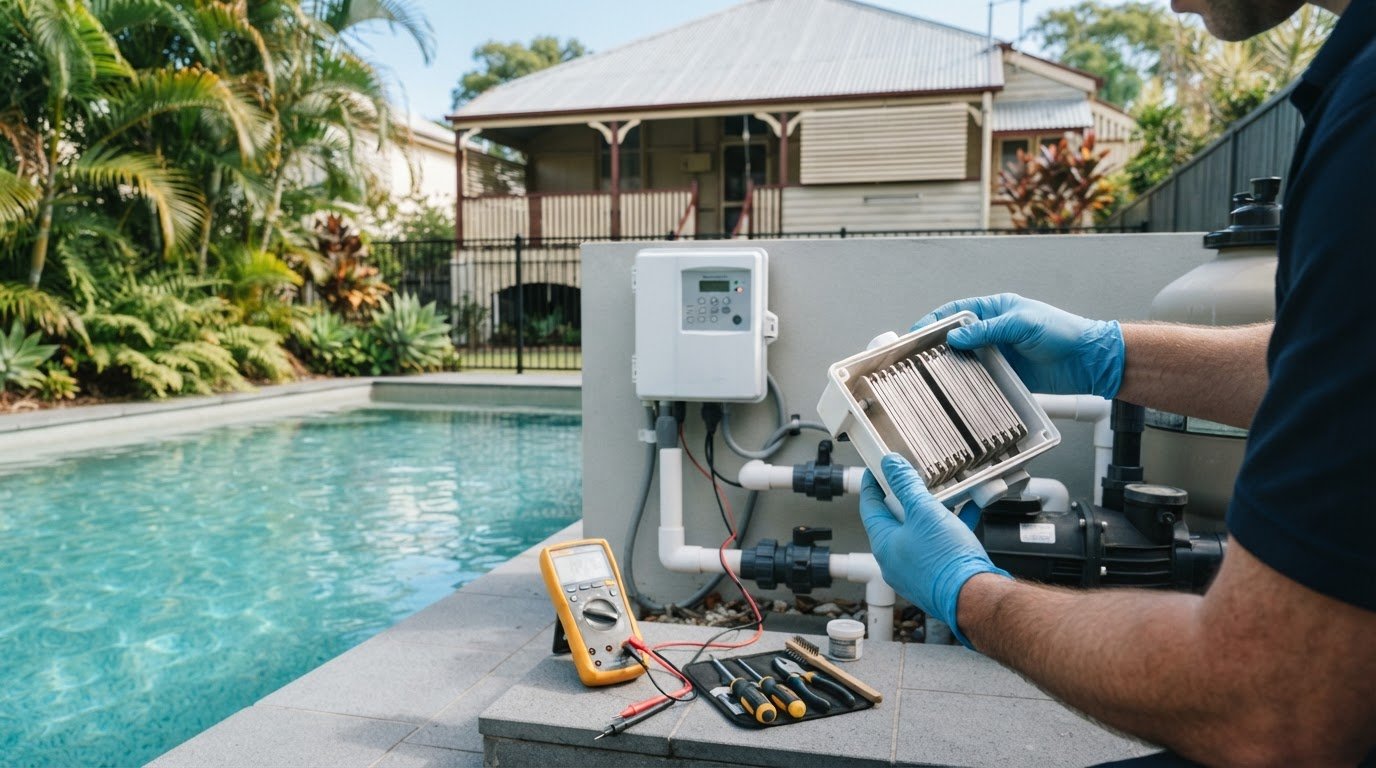
A low chlorine reading doesn’t automatically mean the cell has failed. Salt chlorinator repairs in Tarragindi should start with diagnosis, since the cause may be the cell or another part of the system. The right repair or replacement depends on what the assessment finds.
It’s reasonable to want a clear idea of the cost before approving work. The price depends on the fault and the recommended solution. A useful quote explains the work and gives you the opportunity to approve it before it proceeds. Warranty coverage depends on the applicable terms and the issue being assessed.
This guide explains how technicians assess a chlorinator cell, what can affect a repair-or-replacement decision, and what to review in a quote and warranty information. It also covers how approval fits into the process, so you can make an informed decision about your pool equipment.
Key Takeaways
- Don’t assume a low chlorine reading means the cell needs replacing; diagnosis helps identify whether the fault is in the cell or another part of the system.
- Understand how inspection and electrical testing help guide the decision between repair and replacement.
- Compare the proposed work and applicable warranty terms so you know what the fee covers.
- Review the quote and approve the recommended work before it proceeds.
Chlorinator cell repairs and replacement
Pool equipment repair technicians are the right specialists for salt chlorinator repairs in Tarragindi. An assessment should distinguish a worn cell from a fault elsewhere, such as the controller or water flow. A low chlorine reading alone doesn’t prove the cell needs replacing. The first step is to inspect the equipment and identify the fault before recommending work.
The cell’s condition and the chlorinator’s operation guide the next step. A technician can inspect the cell plates for scale, damage or wear, then assess whether cleaning or another repair is suitable. If the cell is damaged or no longer performs adequately, replacement may be the practical option. The controller, connections and water circulation also need attention, since the cell may not be the cause of low chlorine production.
A replacement cell must match the chlorinator’s make and model. Check the equipment label for the manufacturer and model details, then provide them when arranging an assessment. Cells that look alike aren’t necessarily compatible, so matching the model matters more than appearance.
Repair time depends on the diagnostic findings and whether a suitable replacement cell is available. Same-day attendance and same-day completion are different: a visit may identify the fault, while parts requirements or further testing can affect when work is finished.
- Record the model: Photograph the chlorinator label and note the manufacturer before arranging repairs.
- Describe the symptoms: Share the chlorine reading, warning lights or error message, if displayed.
- Ask what the assessment found: Confirm whether the recommendation is cell cleaning, repair or replacement, and why.
A visible deposit on the cell calls for a different assessment from a damaged plate or controller warning. The technician’s findings help establish whether the cell is responsible and whether replacement is justified. A step-by-step diagnosis gives you a clearer basis for considering the proposed work before approving it.
Chlorinator diagnosis and electrical testing
A useful diagnosis distinguishes a chlorinator fault from problems elsewhere in the pool system. The technician can compare the unit’s display and settings with its chlorine output, then inspect water flow and cell connections. For example, a warning light with normal circulation calls for different checks than a pump that isn’t moving water through the cell.
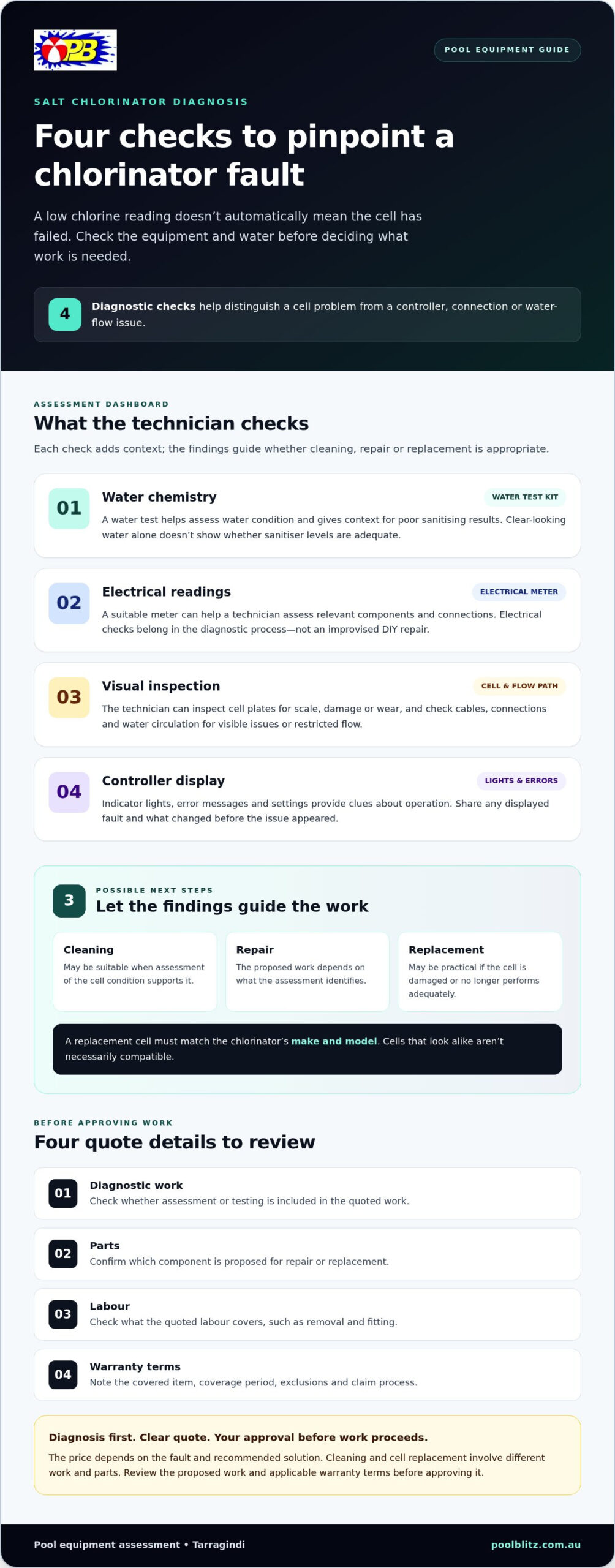
Testing should consider both the equipment and the pool water. A water test kit helps assess water condition, while a suitable electrical meter can help a technician test relevant components and connections. Inspecting the cell, controller, cables and flow path helps narrow down the fault. The findings should be explained clearly before repair work is proposed.
- Water test kit: Measures water chemistry, giving context for poor sanitising results.
- Electrical meter: Helps a technician assess electrical readings at relevant components.
- Visual inspection: Identifies visible damage, loose connections, deposits or signs of restricted flow.
- Controller display: Error messages and indicator lights provide useful clues about operation.
Is it safe to swim with a faulty salt chlorinator? A fault can affect chlorine production, so assess the water chemistry before swimming. Clear-looking water alone doesn’t show whether sanitiser levels are adequate.
Don’t open the controller or handle its wiring as a DIY test. Electrical checks should be part of the diagnostic process, not an improvised repair. Note the displayed fault and leave the equipment closed for assessment.
For a fault that involves pool equipment, a professional equipment assessment can help identify the next repair step. Share the chlorinator model, any displayed error and what changed before the issue appeared. Those details give the technician a clearer starting point and help distinguish a cell concern from a controller, connection or circulation problem.
Repair fees and warranties
The price depends on the fault and is provided after a quote request. Costs can include diagnostic work, labour and parts, depending on whether the recommended repair involves the cell, controller or another component. Cleaning and cell replacement involve different work and parts, so a single estimate won’t fit every repair.
Read the quote and warranty information before approving work. A product warranty and any warranty for a repair can have different terms. Check which component is covered, the coverage period, any exclusions and how to make a claim. Keep the quote, invoice and relevant warranty document together so you can identify the work and applicable terms later.
Match the paperwork to the equipment. Record the chlorinator’s make and model, then check that the quote identifies the relevant cell or component. If a replacement part is listed, its identity should be clear. This helps distinguish a warranty question about the original chlorinator from one about a supplied part or completed repair.
- Diagnostic work: Identify whether assessment or testing is included in the quoted work.
- Parts: Confirm which component is proposed for repair or replacement.
- Labour: Check what work the quoted labour covers, such as removal and fitting.
- Warranty terms: Note the covered item, period, exclusions and claim process.
Compare the recommended repair with replacement using the technician’s findings, not the warranty wording alone. A warranty describes coverage but doesn’t establish whether a particular fault qualifies. A failed cell and a controller fault involve different components, so both the diagnosis and relevant warranty document matter.
Before approving work, ask for the proposed repair and its cost to be set out clearly in the quote. Keep a copy of your approval and final paperwork, including any warranty terms supplied for the work. These records provide a useful reference if the same component develops an issue later, without assuming every subsequent fault is covered.
Repair quotes and customer approval
When booking a salt chlorinator repair, provide clear details: the Tarragindi property location, chlorinator make and model, symptoms, any displayed error, and changes such as reduced water flow. Share chlorine readings or recent water test results if available. These details help focus the initial assessment.
A written quote should link the diagnosis to the proposed work. Check that it identifies the component being repaired or replaced, labour, parts and the total price in Australian dollars. For a cell replacement, the quote should identify the cell and state whether removal and fitting are included. If testing is quoted separately, its scope should be clear.
- Before booking: Photograph the equipment label and controller display.
- Describe the fault: Note when the issue began and whether the unit shows a warning.
- Review the quote: Check parts, labour, diagnostic work and any stated warranty terms.
- Keep the record: Save the written quote and your approval for comparison with the final invoice.
Approve the repair before the quoted work proceeds. Read the proposed work carefully and compare it with the technician’s explanation. If the assessment identifies a controller fault rather than a cell problem, the quote should reflect that. Ask for a revised quote if the work or price changes, then decide whether to approve the updated scope.
Be specific about access when arranging a visit. Explain where the chlorinator is located, whether the equipment area is accessible, and any relevant pool-system details. This helps distinguish the chlorinator from the pump and other equipment. Keep decisions in writing, especially if you approve one repair but not additional work.
Ready to discuss the next step? Request a pool equipment repair quote and provide the chlorinator details, symptoms and location so the issue can be assessed.
Pool Blitz: Regular Pool Servicing
Pool Blitz offers Regular Pool Servicing to help keep routine pool care on track after a chlorinator issue has been assessed. Ongoing maintenance can help you monitor the pool’s condition rather than waiting for another problem to interrupt its use.
For a one-off maintenance need, Casual Pool Servicing may be a better fit. Pool Blitz also offers Pool Chemicals, as well as Robotic Pool Cleaners and Repairs for other pool-care needs. Choose the service that suits the task, whether you need ongoing care or help with a robotic cleaner.
For follow-up pool care in Tarragindi, contact Pool Blitz to discuss Regular Pool Servicing.
Take the next step with confidence
Turn the fault into a clear repair decision: note what the chlorinator is doing, find its make and model, and keep the quote with your equipment records. These details provide a useful reference for future servicing and help you track the work approved for your pool.
For salt chlorinator repairs in Tarragindi, Pool Blitz provides Pool Equipment Repairs. If you’re planning broader pool care, Regular Pool Servicing and Casual Pool Servicing support different maintenance needs. Pool Blitz also offers Robotic Pool Cleaners and Repairs for owners who need help with a pool-cleaning robot.
Contact Pool Blitz about pool equipment repairs to discuss the issue and take a considered next step for your pool.
Frequently Asked Questions
What are common salt chlorinator faults and symptoms?
Common warning signs include a chlorinator alert, inconsistent operation or water test results showing inadequate sanitiser. These symptoms signal a problem to investigate, not a specific failed part. Note the exact display message and whether it appears continuously or intermittently. This record helps distinguish a recurring fault from a brief interruption and gives the technician a useful starting point.
Can a salt chlorinator be repaired, or is replacement more cost-effective?
A salt chlorinator may be repairable when the diagnosed fault has a practical solution and the required component suits the unit. Compare the written repair scope with a replacement recommendation, including the parts and labour covered by each option. Comparing the full scope helps you assess the proposed work, rather than focusing only on the cell or another single component.
How can I troubleshoot a salt chlorinator before calling a technician?
Start with safe external checks: read the display, note any alert, and compare the visible settings with the unit’s manual. Record when the symptom occurs and whether the pool pump is running at the time. A water test result can provide useful context. Don’t open the controller or handle wiring; share your observations with the technician instead.
Which salt chlorinator brands do Tarragindi pool repair services support?
A replacement cell must match the chlorinator’s make and model. Provide the manufacturer and model details when arranging an assessment.
No responses yet