
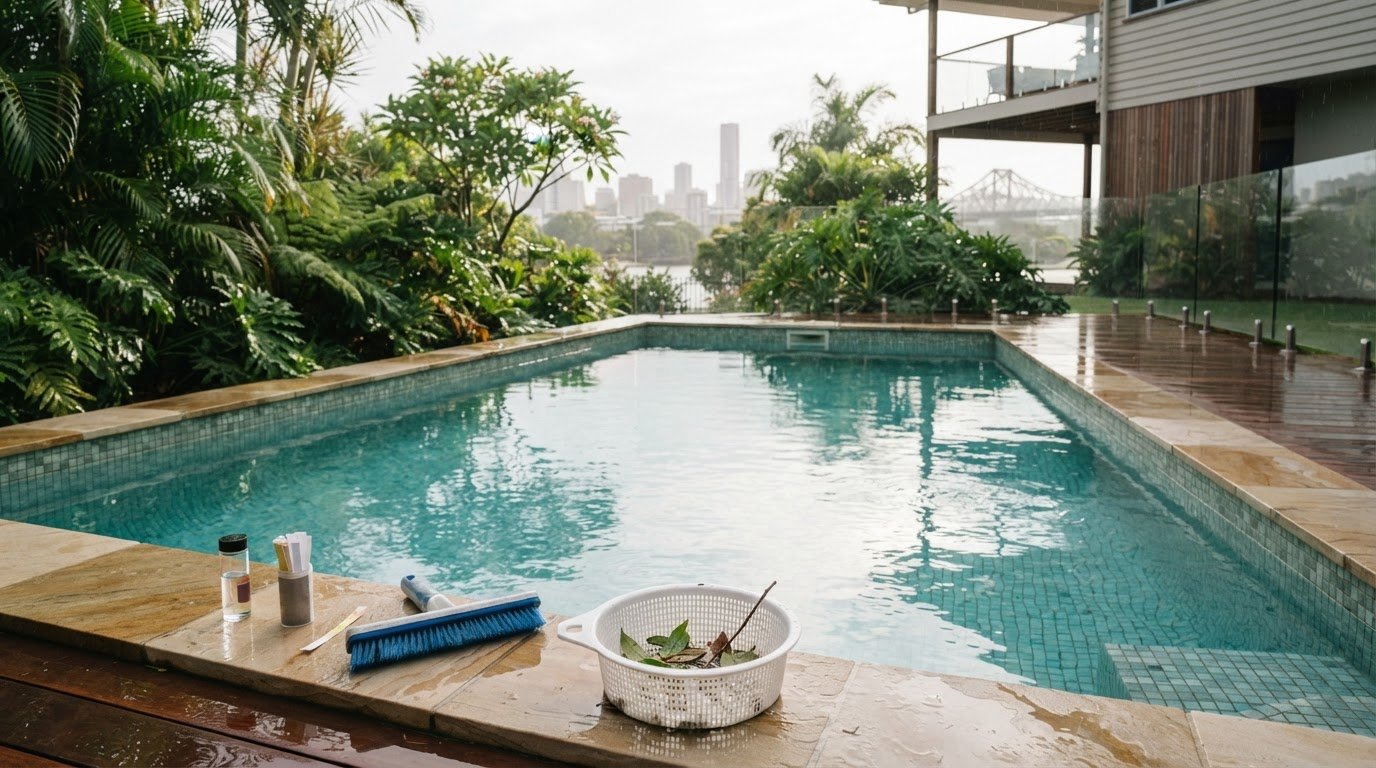
A sparkling Brisbane pool depends on a steady routine, not a single deep clean. For keeping your pool sparkling all year in Brisbane, test the water two to three times per week in summer and every 10-14 days in winter, brush the walls and floor regularly, vacuum weekly and clear debris after storms. These simple steps help keep water clean as heat, rain and changing seasons affect pool conditions.
It’s natural to wonder what a professional pool cleaning service should cover, especially when the water looks clear but leaves or algae keep returning. Consistent care goes beyond the surface: it includes water balance, pool surfaces, filtration and debris, with extra attention after heavy rain.
This guide explains how to adjust your routine through the year, including what to test, when to brush and vacuum, and how to manage storm clean-up. You’ll also learn when professional servicing can help with water balancing, cleaning and pool equipment, so your pool stays ready for a swim.
Key Takeaways
- Test pH, chlorine and alkalinity more often in Brisbane’s summer heat, then adjust your routine as conditions change in winter.
- Brush pool walls and floors regularly to dislodge algae and help keep surfaces clean, even when the water looks clear.
- After heavy rain, clear leaves promptly and give the pool extra attention to help the filtration system recover.
- Skim debris, empty skimmer baskets and vacuum weekly to limit buildup and support clear water.
1. Pool water testing and chemical balancing
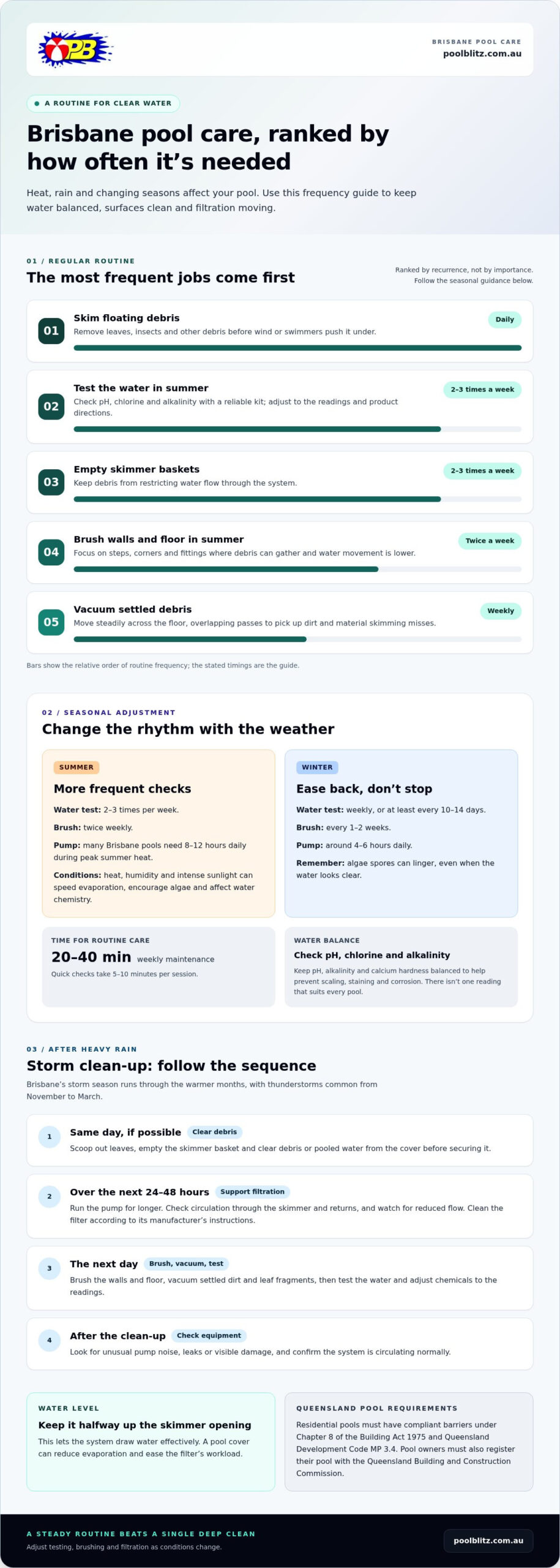
Brisbane’s heat, humidity and intense sunlight can speed evaporation, encourage algae and affect water chemistry. Test pH, chlorine and alkalinity with a reliable kit, then adjust chemicals according to the readings and product directions. In summer, test two to three times per week; warm, humid conditions may also call for pool care twice weekly.
In winter, test weekly, or at least every 10-14 days. A weekly pool maintenance routine takes about 20-40 minutes, while quick checks take 5-10 minutes per session. Check the water after heavy rain, too, because rainfall can alter the balance and dilute chemicals. Keep pH, alkalinity and calcium hardness balanced to help prevent scaling, staining and corrosion damage.
Keep the water level halfway up the skimmer opening so the system can draw water effectively. A pool cover can reduce evaporation and ease the workload on the filter. For lower energy use, adjust pump run time to the season and pool’s needs: many Brisbane pools need 8-12 hours daily during peak summer heat, compared with around 4-6 hours daily in winter.
Queensland residential pools must have compliant pool barriers under Chapter 8 of the Building Act 1975 and Queensland Development Code MP 3.4. Pool owners must also register their pool with the Queensland Building and Construction Commission.
A useful Brisbane pool cleaning service covers water testing, pH and alkalinity balancing, appropriate chlorine or salt treatment, and equipment checks. This addresses water quality and filtration, not just visible debris.
There isn’t one chlorine or pH reading that suits every pool. Test both regularly, then balance them according to your pool’s sanitising system, chemical directions and measured water condition.
To reduce maintenance costs and energy use, prevent avoidable chemical imbalance, cover the pool to limit evaporation, and clean the filter according to its manufacturer’s instructions. Seasonal pump schedules can also reduce unnecessary running while keeping filtration suited to conditions.
2. Brushing pool walls and floor to prevent algae
Brush pool walls and floors weekly to loosen algae before it takes hold. In Brisbane summer, brush twice weekly, paying particular attention to steps, corners and areas around fittings. These spots can collect fine debris and receive less water movement than open sections of the pool. Choose a brush suited to your pool surface, then let the filter capture the loosened material.
Winter needs a different rhythm, not a complete pause in pool care. Brush every 1-2 weeks, because bacteria and algae spores can linger over winter even when pool water looks clear. A winter algaecide can help prevent algae growth, while phosphate remover helps support clear water. Follow each product’s directions, and keep brushing as part of a comprehensive routine rather than relying on chemicals alone.
Warm, humid summer conditions make algae prevention especially important. Inspect shaded corners and steps as you brush, looking for slippery patches, green marks or cloudy water. If you spot growth, brush the affected surface thoroughly and test the water chemistry. Adjust chemical levels based on the results, including alkalinity, so the sanitising treatment can work effectively.
Spring is a useful time to address spores that may have persisted through winter. A shock treatment using chlorine or another suitable treatment is recommended in spring; follow the product directions and brush the pool to dislodge algae from surfaces. If persistent algae appears alongside unstable water readings, expert water balancing can help address the chemistry as part of your algae-control approach.
3. Pool care after storms and heavy rain
Brisbane’s storm season runs through the warmer months, with thunderstorms common from November to March. After heavy rain, leaves, dirt and other debris can quickly collect on the surface and around the skimmer. Scoop out leaves the same day if possible, then empty the skimmer basket to keep debris from restricting water flow. Check the pool cover, too, and secure it after clearing pooled water, leaves and other debris.
Give filtration extra support after a storm. Run the pump for longer over the next 24-48 hours, allowing it to move and filter water affected by rain and debris. Check that water is circulating through the skimmer and returns, and watch for reduced flow that could indicate a full basket or filter. Clean the filter according to its manufacturer’s instructions; avoid cleaning it more often than needed.
The next day, brush the walls and floor, then vacuum settled dirt and leaf fragments. Work methodically across steps, corners and the pool floor, where fine material can remain after surface debris is gone. Test the water after rainfall and adjust chemical levels to suit the readings. Heavy rain can change water balance, so don’t assume your usual weekly routine is enough straight after a storm.
Inspect pool equipment once the immediate clean-up is complete. Look for unusual pump noise, leaks or visible damage, and make sure the system is circulating. Queensland weather can shift quickly during storm season, so resume regular pool care once the water clears and the equipment runs normally. If a pump or other pool equipment is damaged or stops working, Pool Blitz can repair it before the fault further disrupts filtration.
4. Pool vacuuming and debris removal
Use a skimmer, basket, pool vacuum, filter and pump to manage debris year-round. Skim leaves, insects and other floating material daily, before wind or swimmers push it underwater. Empty skimmer baskets two to three times per week so debris doesn’t restrict circulation. A clear basket helps water move through the filter as intended.
Vacuum the pool weekly to remove settled dirt, leaf fragments and material surface skimming misses. Move steadily across the floor, overlapping each pass so debris isn’t simply stirred into another area. Pay attention to corners, steps and the waterline, where dirt can collect. After vacuuming, inspect the basket and filter for trapped material.
Skimmer socks can act as a pre-filter, catching leaves, hair and bugs before they reach the main filtration system. This reduces the load on the pump and filter, particularly after windy weather or heavy use. Check the sock regularly and clear it when debris builds up, rather than letting it obstruct water flow.
Brisbane’s summer weather can bring extra leaves, insects and organic matter into the pool. Keep up daily skimming and weekly vacuuming, then adjust your cleaning routine after storms or a busy swimming day. Debris left in the water can affect its condition and place extra demand on filtration. Test chlorine after heavy rain or substantial debris, then balance the water based on the reading.
For year-round cleaning, match equipment to the task: the skimmer collects surface debris, the vacuum lifts settled material, and the filter captures fine particles. If a pump, filter or other pool equipment isn’t working properly, arrange pool equipment repairs to help restore effective circulation and filtration.
Pool Blitz: Regular Pool Servicing
Pool Blitz offers Regular Pool Servicing to keep routine cleaning and water care on track. It’s a practical option if testing, brushing and debris removal are becoming difficult to manage consistently, or if you want professional attention to your pool’s ongoing condition.
For a one-off visit, Casual Pool Servicing can address a specific cleaning or maintenance need. Pool Blitz also offers Robotic Pool Cleaners and Repairs, as well as Pool Chemicals, to support owners managing their own pool care between services.
Choose the support that suits your pool and the tasks you need help with. Contact Pool Blitz to discuss pool servicing and care.
Make clear water part of your pool routine
A pool that’s ready for a swim is easier to enjoy when its care fits naturally around your household routine. Choose tasks you can maintain consistently, and bring in extra support when seasonal changes or equipment issues make pool care harder to manage. That steady approach makes keeping your pool sparkling all year in Brisbane more achievable.
Pool Blitz offers Regular Pool Servicing for ongoing care, Casual Pool Servicing for a specific maintenance need, and Robotic Pool Cleaners and Repairs to support pool cleaning between visits. Choose the help that suits how you use your pool and the care you want to manage yourself.
Contact Pool Blitz about pool cleaning to discuss the right support for your pool. With a practical routine and trusted help when needed, you can look forward to a clean, inviting pool through every season.
Frequently Asked Questions
What Should Be Covered In a Professional Pool Cleaning Service?
A professional pool cleaning service should address water quality, visible dirt and the equipment that circulates and filters the water. Ask what the service includes, such as water testing, chemical balancing, surface cleaning and an equipment inspection. Pool Blitz provides Regular Pool Servicing and Casual Pool Servicing, with Expert Water Balancing for pools needing focused attention to water chemistry.
How often should Brisbane pools be cleaned and serviced year-round?
Plan for regular weekly cleaning, then increase attention when heat, humidity, storms or heavy swimming add extra demand. For keeping your pool sparkling all year in Brisbane, test the water two to three times per week in summer and weekly, or at least every 10-14 days, in winter. These are home-care checks, not a fixed professional servicing interval.
What pool maintenance schedule works best for Brisbane’s subtropical climate?
A seasonal routine works well: keep up regular cleaning throughout the year, then adapt checks to weather and pool use. During warm, humid weeks, follow the care routine twice weekly; in winter, brush every 1-2 weeks and keep the pump running for a few hours each day. After storms, add a clean-up and water check before returning to your usual schedule.
How do Brisbane’s summer storms and heavy rain affect pool water chemistry?
Heavy rain can dilute pool chemicals and introduce organic material, so a familiar chemical dose may no longer suit the water. Test pH, chlorine and alkalinity after substantial rainfall, then base any adjustment on those results. Leaves and other debris can also increase the load on filtration. Clear them promptly, as decomposing material can make balanced, clear water harder to maintain.
How can I prevent algae in a Brisbane pool during hot, humid weather?
Combine regular surface cleaning with effective water circulation and balanced chemistry. Algae can take hold in shaded corners, steps and other areas where water moves less, so inspect those spots as you clean. If you notice slippery surfaces or green marks, brush them and test the water rather than relying on appearance alone. Increase checks during humid spells, when algae growth can accelerate.
What should I do after a Brisbane storm to restore pool water quality?
For keeping your pool sparkling all year in Brisbane, clear storm debris and restore effective circulation before returning to routine care. Remove leaves, check the skimmer basket and run the pump longer for 24-48 hours after heavy rain or a storm. Brush and vacuum the next day, then test the water and adjust chemicals according to the readings. If circulation remains poor, inspect the equipment.
No responses yet