
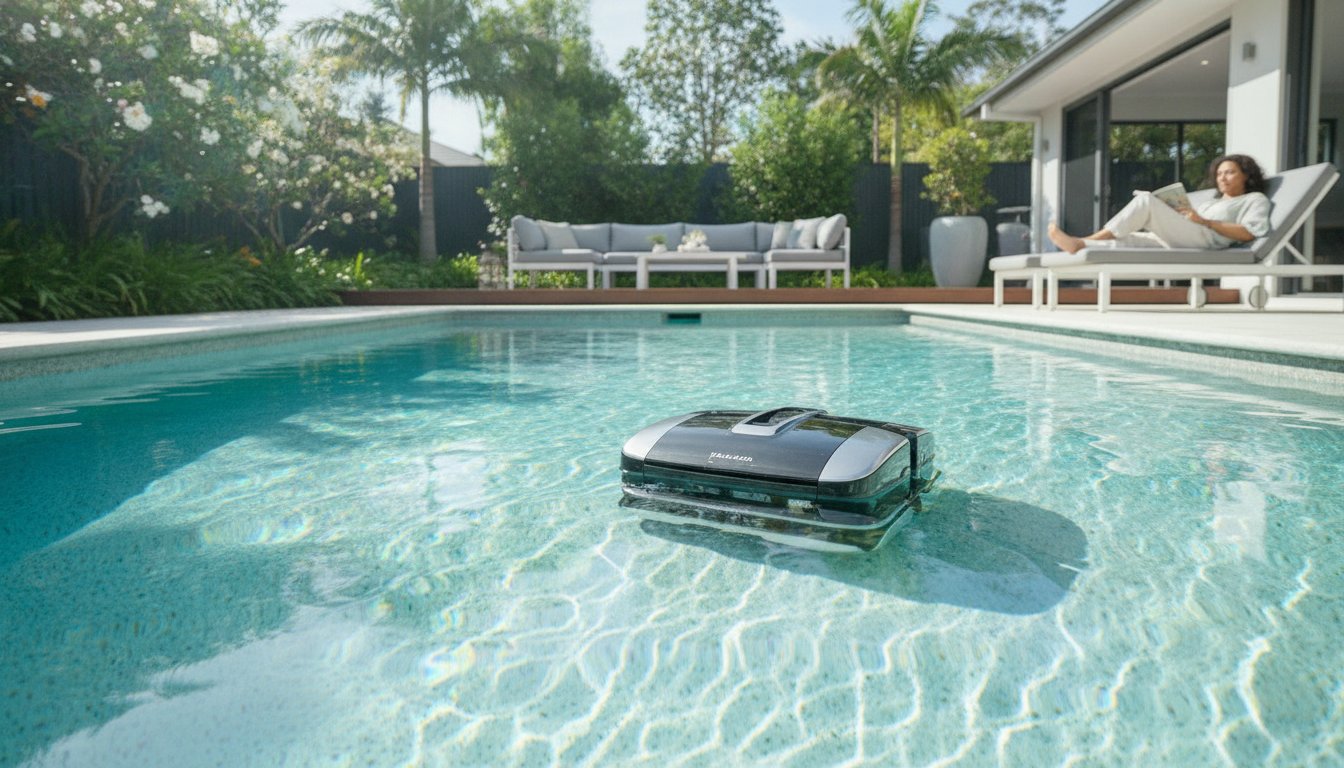
Your pool pump shouldn’t have to work overtime just to keep the floor clean. Most Brisbane locals are all too familiar with the back-breaking weekend ritual of wrestling with heavy suction hoses while the Queensland sun bears down. It’s a time-consuming chore that often leaves you with a half-clean pool and a frustratingly high electricity bill at the end of the month. Transitioning to a modern swimming pool robot is the most effective way to reclaim your leisure time and ensure your water remains inviting year-round.
We know that you value both precision and reliability when it comes to your home’s outdoor centrepiece. Just as you would seek out a reputable dealership like Blasius Mitsubishi when looking for a dependable vehicle, this guide provides the professional clarity you need to choose, operate, and maintain your equipment with total confidence. You’ll discover how to match the latest 2026 technology to your specific backyard layout, learn the essential steps for daily operation, and gain expert insights into avoiding the common pitfalls that lead to mechanical failure. We’ve compiled this advice to help you achieve a sparkling pool every morning while keeping your running costs to a minimum.
Key Takeaways
- Understand how a swimming pool robot operates independently of your main filtration system to significantly extend the longevity of your pool pump.
- Learn how to select the correct brush type for your specific Brisbane pool surface, ensuring effective cleaning for pebblecrete, tile, or fibreglass.
- Master the essential “gentle drop” technique to properly purge air from the chassis and ensure your cleaner remains submerged for a thorough cycle.
- Establish a consistent post-swim ritual to protect your equipment from chemical wear and maintain the integrity of your ultra-fine filter canisters.
- Identify common operational glitches and understand when to engage a specialist repair centre for professional technical support.
What is a Swimming Pool Robot and How Does it Differ from Traditional Cleaners?
A swimming pool robot is a sophisticated, self-contained electric vacuum designed to maintain your pool without relying on your existing filtration equipment. While traditional cleaners are tethered to your skimmer box or a booster pump, these autonomous units operate on a low-voltage power supply. This fundamental shift in design means the robot does the heavy lifting of scrubbing and vacuuming while your main pool pump remains free to focus solely on water circulation.
Choosing an independent system is a strategic move for the long-term health of your pool equipment. Traditional suction cleaners force your main pump to work harder to pull water through a long, often clogged hose, which increases wear on the motor and bearings. In contrast, a robotic cleaner uses a fraction of the energy. It’s a highly efficient process that leads to lower quarterly electricity bills and a significantly longer lifespan for your primary filtration pump.
Efficiency and thoroughness are the hallmarks of any professional cleaning service, whether it is for your backyard pool or a large-scale commercial project. If you require assistance with professional commercial cleaning or site remediation, click here to explore a guide on expert janitorial solutions.
This focus on mechanical longevity through fluid purity is a principle shared across many industries; for example, maintaining high-performance machinery often requires the specialised lubrication and purification expertise of BioKem Oil Services.
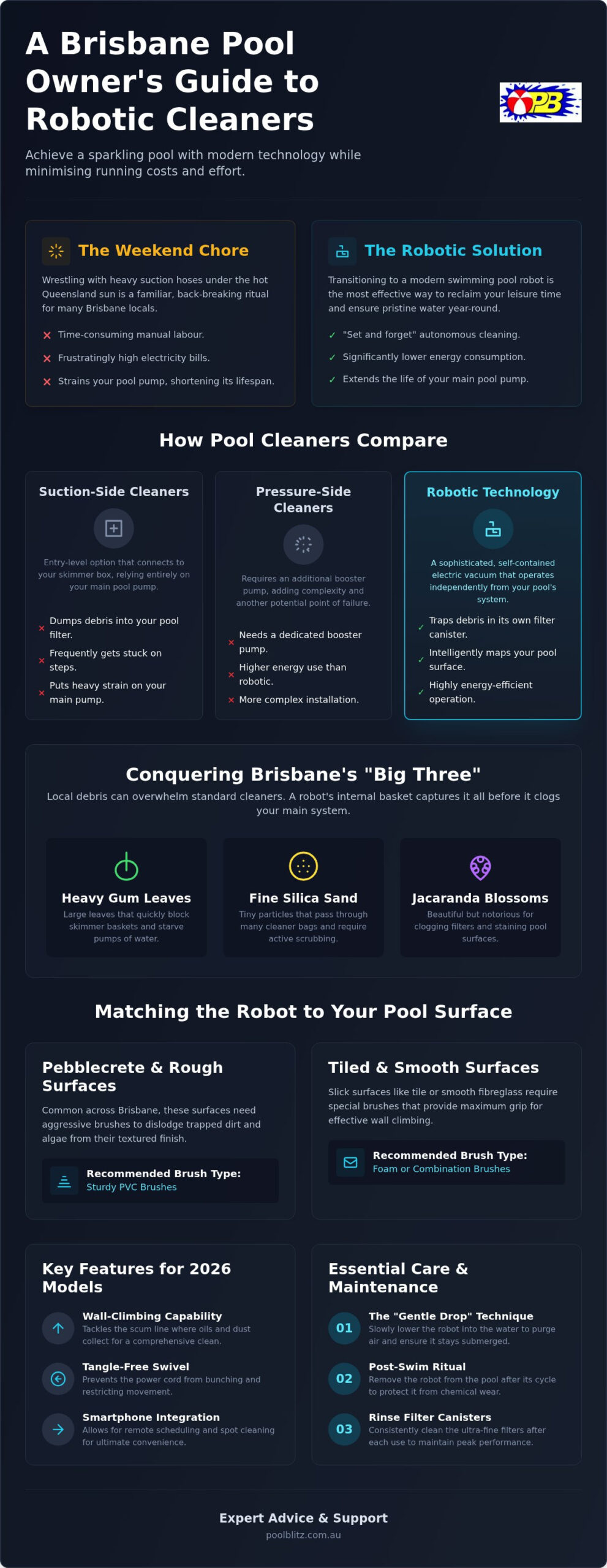
- Suction-side cleaners: These are the entry-level option, but they frequently get stuck on steps and dump debris directly into your filter basket.
- Pressure-side cleaners: These require an additional booster pump, which adds complexity and another point of potential failure.
- Robotic technology: This offers a precision-engineered solution that maps your pool’s floor and walls for a comprehensive clean every time.
The Mechanics of Modern Pool Robotics
Modern units are powered by internal motors that control both the drive tracks and the high-speed vacuum impeller. The internal “brain” found in 2026 models allows the unit to navigate efficiently rather than wandering aimlessly like older mechanical models. Because the debris is trapped in an on-board filter canister, you aren’t constantly backwashing your sand filter or cleaning out cartridge elements. The active scrubbing brushes on the underside of the robot also physically agitate the surface. This mechanical action removes biofilm and stubborn algae that passive suction cleaners simply glide over.
Why Brisbane Pool Owners are Swapping to Robots
Brisbane backyards present a unique set of challenges that can overwhelm standard cleaning equipment. Our local environment is famous for the “Big Three” debris types: heavy gum leaves, fine silica sand, and the beautiful but troublesome jacaranda blossoms. These materials often clog skimmer boxes and starve pool pumps of water, which can lead to expensive repairs. A swimming pool robot handles these with ease, collecting the mess in large-capacity internal baskets before it ever reaches your filtration system. For busy families in the Western Suburbs or the bayside, the “set and forget” nature of these machines provides the relief of knowing the pool is always ready for a dip. It’s about more than just a clean floor; it’s about the peace of mind that comes from a reliable, professional-grade maintenance partner, and for those in the Sydney area, you can learn more about Pool Boys to achieve this same standard of care.
Choosing the Right Swimming Pool Robot for Your Pool Surface
Selecting a cleaner isn’t just about the latest technology; it’s about matching the machine to the specific terrain of your backyard. Your pool’s interior surface dictates the type of brushes and drive system required for optimal performance. If you are looking to improve that terrain, Rod Cameron Pools offers expert advice on pool landscaping and renovations to ensure your entire outdoor area remains functional and stylish. A swimming pool robot needs the right level of grip to climb walls and scrub the waterline effectively, otherwise, it will simply spin its wheels and waste energy.
Wall-climbing models are generally the preferred choice for Brisbane homes. These units tackle the scum line where oils and dust collect, providing a more comprehensive result than floor-only units. You should also consider the physical constraints of your pool. A tangle-free swivel is an essential feature for any corded unit, as it prevents the power lead from bunching up and restricting the robot’s movement during a long cycle.
Smartphone integration and Wi-Fi controls offer more than just novelty in 2026. Being able to schedule cleans or remotely direct the robot to a specific dirty spot provides a level of convenience that fits into a modern, busy lifestyle. If you’re unsure which traction system suits your backyard, seeking professional advice on robotic pool cleaners can prevent a costly mismatch.
Pebblecrete vs. Tiled Pools: The Traction Test
Traction defines the quality of the clean. Pebblecrete, which is common across Brisbane, needs sturdy PVC brushes to dig into the rough texture and dislodge stubborn debris. Tiled pools are different; they require softer, specialised “sticky” brushes to maintain contact with the vertical walls without slipping. For those exploring high-quality finishes for their pool area, you can discover Express Tiling Limited to learn about durable, stain-proof tiling solutions. If your pool has complex features like tanning ledges or steep deep-ends, make sure the robot’s sensors are advanced enough to detect these transitions without getting stuck.
Corded vs. Cordless: The 2026 Verdict
The debate between corded and cordless models has evolved with recent improvements in battery density. Cordless units are excellent for avoiding cable tangles, but they have limitations regarding run-time and charging cycles. In the intense Queensland sun, battery health can be a concern if the unit is left on a hot deck to charge. Corded models remain the reliable workhorses for larger residential pools where uninterrupted power is necessary for a deep clean. You can explore our best robotic pool cleaner Brisbane guide for a detailed breakdown of the top-performing models currently available. If you are specifically considering a Zodiac unit for your Brisbane backyard, our dedicated automatic pool cleaner Zodiac buyer’s guide breaks down the full 2026 model lineup to help you find the right fit for your pool surface and budget.
Setting up your new equipment correctly is the first step toward achieving long-term reliability. A swimming pool robot is a precision instrument, and treating it with the same care you would give any high-end household appliance ensures it performs at its peak for years to follow. For those who also manage professional tools or commercial gear, you can learn more about the rigorous calibration standards required for electrical safety equipment. Before the first dip, perform a thorough “dry run” visual inspection by checking that the tracks are seated correctly and the filter canisters are locked firmly in place. This simple habit prevents minor factory misalignments from turning into major mechanical issues during the initial cycle.
The “gentle drop” technique is a vital part of the deployment process that many owners overlook. You should never simply toss the unit into the water; instead, hold it submerged by the handle and rotate it slightly to allow all trapped air to escape from the chassis. If air remains inside the body, the robot may suffer from buoyancy issues that cause it to tilt or float away from the floor. This air-purging process ensures the unit maintains the necessary contact with the pool surface for a comprehensive clean.
Optimising your cleaning cycles will also save you time and energy. Most 2026 models feature varied settings, such as a 1-hour “floor only” mode that is perfect for a quick refresh before guests arrive. For a deep scrub that tackles the walls and the waterline, the 3-hour “full clean” is the superior choice. Managing the Power Supply Unit (PSU) is equally important for longevity. You must keep the PSU in a shaded, well-ventilated spot, as the intense Brisbane sun can overheat the internal electronics and degrade the protective plastic casing over time.
Step-by-Step: Your First Cleaning Cycle
Success begins with proper cable management. You should uncoil the power cable fully and lay it out on the pool deck for an hour to remove any “memory-kinks” from the packaging. Once the cable is supple, submerge the robot until all bubbles stop rising to the surface before releasing it to the floor. Position the PSU at the midpoint of the pool’s long side, which allows the robot to reach every corner without the cable being pulled taut or restricted.
The Role of Water Chemistry in Robot Performance
Water chemistry has a direct impact on the physical integrity of your equipment. High chlorine levels can effectively “cook” the rubber seals and plastic components, making them brittle and prone to cracking. Similarly, a pH imbalance can cause scrubbing brushes to harden, which reduces their traction and cleaning effectiveness on pebblecrete or tiled surfaces. Expert water balancing at Pool Blitz protects your hardware investment by ensuring your water remains within the ideal parameters for both swimmers and machinery.
Beyond pool maintenance, if your Brisbane property utilises alternative sources such as bore water or rainwater tanks, obtaining a professional lab analysis from AWARE Water Testing is a vital step in maintaining overall water quality and safety.
While you focus on the quality of your pool, you can also learn more about Great Water Filters to ensure the water used inside your home meets the same high standards of purity and safety.
The Brisbane Toll: Maintenance Secrets to Protect Your Equipment
Maintaining a swimming pool robot in the harsh Queensland climate requires more than just a quick rinse after use. While these machines are built for durability, the combination of intense UV radiation and local debris can take a heavy toll if left unchecked. Establishing a consistent “Post-Swim” ritual is the most effective way to ensure your investment lasts as long as the 1994-era pools we still service across the city. You should always remove the cleaner from the water once the cycle is complete, as leaving it submerged for days exposes the internal seals to unnecessary chemical wear.
Cleaning the filter canisters is a task that demands precision rather than just speed. Most modern units come with interchangeable panels, and you must distinguish between the “fine” mesh for large leaves and the “ultra-fine” mesh used for trapping silt and dust. After every use, spray the canisters from the outside in to dislodge trapped particles without pushing them deeper into the fabric. It’s also vital to inspect the impeller regularly. In a typical Brisbane backyard, a single gum nut or a cluster of jacaranda stems can easily stall the motor, potentially leading to an expensive burnout if the unit continues to struggle against the obstruction. Adopting a meticulous approach to component care, a strategy often advocated by Paradise Pools, Inc. for long-term equipment health, ensures that small debris issues don’t escalate into costly mechanical repairs.
A dedicated caddy is more than just a convenient way to move your gear; it’s a protective station for your hardware. Storing the robot on its brushes for long periods causes “flat-spots” that reduce cleaning efficiency and cause the unit to vibrate during operation. By using a caddy, you keep the weight off the scrubbing rollers and ensure the cable is coiled loosely to prevent internal wire fractures.
UV Protection and Storage
The Brisbane sun is the primary enemy of your robot’s longevity. Constant exposure to high UV levels will eventually make the power cable brittle and cause the plastic housing to fade or crack. We recommend the “shadow rule”: always store your cleaner in a fully shaded area, such as a garage or a dedicated equipment shed, during the heat of the day. If you aren’t using the robot during the cooler winter months, ensure the battery in cordless models is kept at roughly 50% charge to maintain its chemical stability and overall health.
Impeller and Brush Maintenance
Debris management extends beyond the filter baskets. You should periodically check the drive tracks and brush axles for tangled hair or garden twine, as these can create friction that overworks the drive motor. Recognising the signs of worn brushes, such as reduced climbing ability or visible thinning of the PVC bristles, allows you to replace them before they stop scrubbing entirely. If your cleaner starts acting up or loses its usual rhythm, you can see our guide on robotic pool cleaner repairs Brisbane for a detailed troubleshooting walkthrough. For comprehensive care that keeps your equipment in peak condition, we invite you to book a professional equipment health check with our seasoned team.
Troubleshooting and Professional Support: When to Call Pool Blitz
Even the most advanced swimming pool robot can occasionally encounter a technical hitch that interrupts its routine. Understanding the difference between a simple adjustment and a mechanical failure is key to maintaining your peace of mind. If your unit begins moving in repetitive circles, it’s often a sign of a snagged drive track or a sensor that has become obscured by fine Brisbane silt. These glitches are frequently resolved with a thorough clean of the external components, but persistent issues may indicate a deeper electronic fault that requires specialised attention.
Before assuming the worst, perform a basic power supply check. Ensure the PSU is receiving power from the mains and that the low-voltage cable is seated firmly in the socket. If the PSU light is active but the robot remains motionless, the issue likely resides within the motor block itself. Attempting a DIY repair on a sealed motor unit is a significant risk; these components are vacuum-sealed to remain watertight, and opening them without specialised tools can lead to immediate flooding and irreversible damage. Our role as a seasoned authority is to handle these complex technicalities so you don’t have to.
Common Robot Red Flags
When a robot climbs the wall only to fall off prematurely, it’s rarely a sign of laziness. This behaviour usually points to a clogged filter canister that has altered the unit’s buoyancy or brushes that have lost their grip on the pebblecrete. Similarly, if your cleaner gets stuck in a particular corner, check the position of your pool’s return eyeballs. Strong water flow from these jets can often push a swimming pool robot off its path, creating a “syndrome” that is easily fixed by angling the returns slightly upward. A professional diagnostic at Pool Blitz can save hundreds in unnecessary parts by identifying the specific component that requires attention rather than replacing the entire motor block.
Why Local Brisbane Expertise Matters
Brisbane’s unique environment, from the high humidity to the heavy seasonal leaf litter, requires a local perspective on equipment care. Our history in the region, dating back to 1994, means we understand how to keep your hardware stable despite these local challenges. We maintain a comprehensive inventory of genuine spare parts for major brands like Dolphin and Zodiac, ensuring your repairs are performed to the highest manufacturer standards. This commitment to quality acts as a protective steward for your property, ensuring your pool remains a source of relaxation rather than a technical burden. Ready to upgrade your pool care? Contact the Pool Blitz team today for expert advice that keeps your water crystal clear.
Securing the Future of Your Brisbane Pool
Mastering the operation of a swimming pool robot is about more than just convenience; it’s a commitment to the long-term health of your backyard oasis. By matching the right traction to your pool surface and protecting your hardware from the intense Queensland sun, you ensure that your investment delivers a crystal-clear result for years to come. These simple habits of air-purging and proper storage transform a high-tech gadget into a reliable, lifelong partner in pool maintenance.
We’ve been Brisbane-owned and operated since 1994, and our team understands the specific challenges that local weather and debris pose to your equipment. As an authorised repair centre for leading brands, we provide the precision care and genuine parts needed to keep your system running smoothly. Every regular service we perform also includes expert water balancing to protect both your swimmers and your machinery from chemical wear. Our goal is to provide the stability and expertise you need to enjoy your outdoor lifestyle without the burden of manual chores; much like how professional services such as Laundry Breeze simplify daily household tasks, we aim to make your maintenance routine completely effortless.
Just as a pool robot protects your filtration system, proactive pest management protects your home’s structure; you can find out more about identifying and treating termites to ensure your property remains a safe sanctuary.
Maintaining a clear gutter system is also crucial for preventing overflow and water damage during heavy storms; if you are looking for specialist roofing services, you can check out Roof Plumbing Expert for expert guidance on property protection.
Beyond the pool itself, maintaining the surrounding surfaces like decks and driveways ensures your entire property remains in top condition; you can find expert tips on exterior maintenance at platinumpowerwashing.com.au.
If you want to ensure your equipment is in peak condition for the upcoming swim season, Book a Robotic Cleaner Health Check with Brisbane’s Experts today. Let us handle the technical details so you can get back to enjoying a sparkling, trouble-free pool.
Frequently Asked Questions
Can I leave my swimming pool robot in the water all the time?
No, you should remove your robot from the pool once the cleaning cycle is finished. Leaving the unit submerged for extended periods exposes the rubber seals and internal components to constant chemical oxidation, which can lead to premature failure. Taking it out also allows you to rinse the chassis and check the filter, ensuring the machine remains in peak condition for its next deployment.
How often should I run my robotic pool cleaner in Brisbane?
Running your cleaner two to three times per week is usually sufficient for most residential pools. However, during the height of the Brisbane storm season or when jacarandas are in bloom, a daily cycle may be necessary to prevent organic matter from affecting your water balance. Regular use ensures that fine dust and sand don’t settle into the floor’s texture, making the overall maintenance task much simpler.
Do pool robots use a lot of electricity compared to suction cleaners?
Robotic cleaners are remarkably energy-efficient and use a fraction of the power required by traditional suction systems. Unlike suction cleaners that require your high-wattage main pool pump to run at full speed, a swimming pool robot operates on a low-voltage power supply. This independent operation leads to substantial savings on your quarterly electricity bill while reducing the mechanical load on your primary filtration system.
Will a robotic cleaner work in a pool with a lot of gum leaves?
Yes, modern robots are specifically designed to handle heavy organic debris like gum leaves and twigs. Most 2026 models feature large-capacity filter baskets that can collect significant amounts of leaf litter before needing to be emptied. It’s important to use the coarse filter panels rather than the ultra-fine mesh when dealing with heavy fall, as this prevents the basket from clogging too quickly and starving the motor of flow.
Can a pool robot climb steps and benches?
Most high-quality wall-climbing models are capable of navigating steps and benches, provided the surfaces are wide enough for the tracks to maintain contact. The success of the climb often depends on the robot’s sensor technology and the level of grip provided by its brushes. If your pool has particularly narrow ledges, the robot may occasionally bypass them, but it will generally tackle the majority of vertical surfaces and the waterline with ease.
What is the average lifespan of a robotic pool cleaner in Australia?
You can typically expect a well-maintained swimming pool robot to last between five and eight years in Australian conditions. This longevity depends heavily on your post-swim maintenance routine and how well you protect the unit from the intense Queensland UV rays. Regular professional servicing and the timely replacement of wearing parts like tracks and brushes can often extend this lifespan even further, providing excellent value for your investment.
Do I still need to add chemicals if I have a pool robot?
Yes, maintaining correct water chemistry is still essential even with a robotic cleaner on duty. While the robot excels at removing physical debris and scrubbing surfaces, it doesn’t sanitise the water or balance the pH levels. Keeping your water professionally balanced is actually a protective measure for your robot, as it prevents corrosive conditions from damaging the machine’s internal motors and sensitive seals.
Is it worth repairing an old robotic pool cleaner or should I buy new?
Deciding whether to repair or replace often comes down to the age of the unit and the specific nature of the fault. If the issue is a simple cable replacement or a new power supply, a repair is usually the most cost-effective and sustainable choice. However, if a motor block fails on a unit that is over six years old, we may recommend upgrading to a newer model to benefit from the latest energy-saving technology and improved navigation features. If you are considering a Zodiac upgrade in particular, our automatic pool cleaner Zodiac buying guide outlines the full range of current models to help you make a well-informed decision.
No responses yet