

Your backyard pool is the most significant leisure asset you own, yet it is often treated as a demanding weekend chore rather than a precision investment. Effective pool maintenance is a form of proactive stewardship that ensures your water remains a source of joy rather than a recurring stress. It is a commitment to clarity that requires more than just a surface skim; it demands a professional approach to protect both the water and your expensive equipment.
We understand the frustration of waking up to green water after a sudden Brisbane storm or feeling overwhelmed by confusing chemical terminology. It is common to worry about rising electricity costs from aging pumps or the physical labour required to keep everything pristine. This guide will help you master the essentials of upkeep so you can protect your equipment investment and enjoy crystal-clear water all year round. We will examine the latest 2026 water balancing standards, energy-efficient filtration options, and the simple routines that extend the lifespan of your valuable pumps and filters.
Key Takeaways
- Understand why your pump acts as the heart of your system and how consistent circulation prevents the growth of organic contaminants.
- Master the “Sanitisation Triangle” of pH, alkalinity, and chlorine to simplify your pool maintenance and ensure water health.
- Compare the efficiency of robotic cleaners against manual methods to reduce physical labour and maintain a pristine finish on your pool surfaces.
- Learn how to protect your water chemistry from the diluting effects of Brisbane’s intense summer storms and prevent the dreaded “green pool” phenomenon.
- Discover how regular professional inspections can identify minor equipment issues before they escalate into expensive filtration or pump failures.
Understanding the Anatomy of Your Swimming Pool
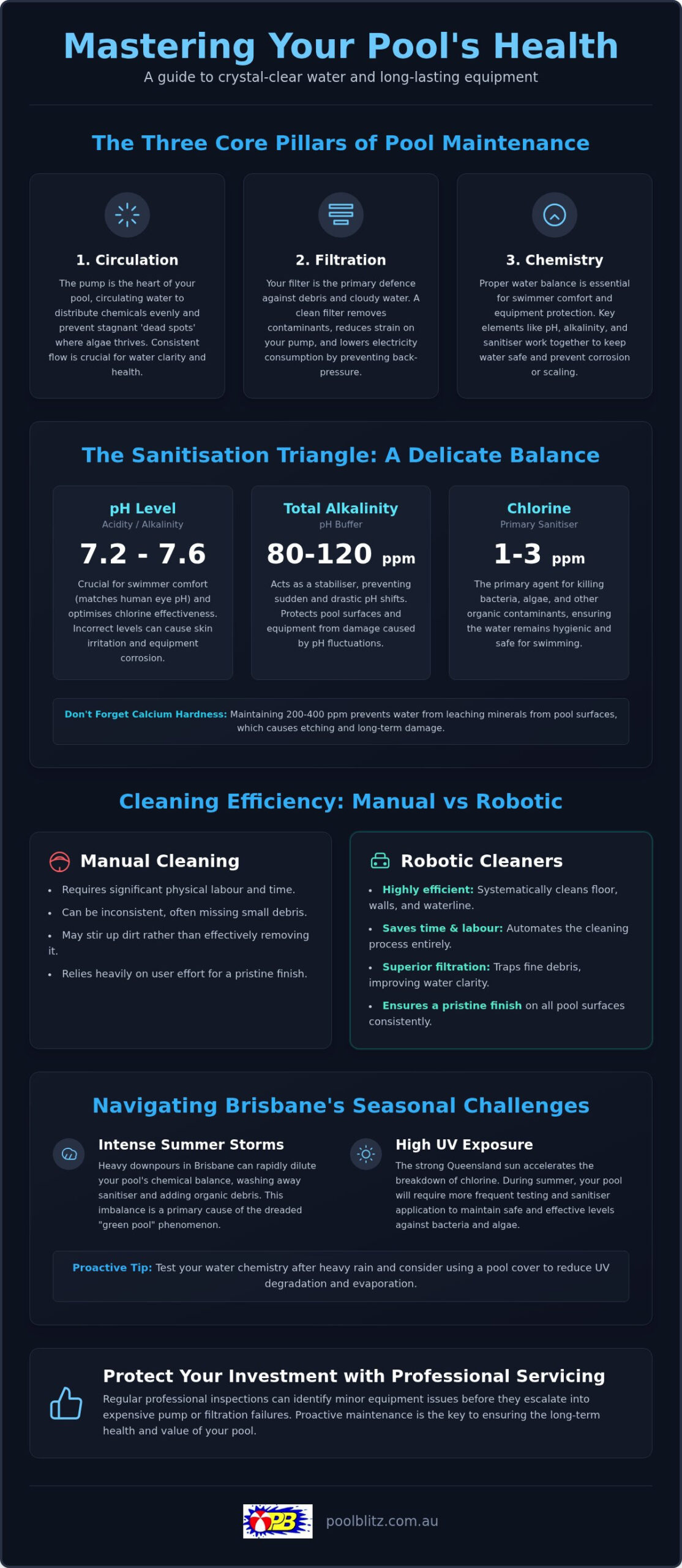
Effective pool maintenance is not a series of isolated tasks; it is the careful synchronisation of three core pillars: circulation, filtration, and chemistry. When these elements work in harmony, they create a self-sustaining environment that remains clear and inviting. The “Pool Heart” is undoubtedly the pump, as it is responsible for the vital task of moving water through the entire system. Without this constant movement, chemicals cannot distribute evenly and debris begins to settle, leading to stagnant conditions that invite trouble.
The skimmer acts as the frontline sentry for your pool, capturing leaves and surface debris before they have a chance to sink and decay on the floor. Meanwhile, the returns push purified water back into the main body of the pool. This creates the necessary pressure to prevent “dead spots,” which are stagnant areas where algae tend to colonise despite your best efforts with chemicals. Maintaining this flow is the most important step in protecting your equipment investment over the long term.
The Filtration System: Your First Line of Defence
Your filter is the primary barrier between pristine water and a cloudy mess. Most Brisbane pools utilise one of three main types: sand, cartridge, or glass media. Sand filters are traditional and robust, while glass media offers finer filtration and better longevity for the modern owner. Cartridge filters are often favoured for their water-saving properties and high surface area, making them an excellent choice for smaller suburban blocks. A clean filter is essential because a clogged one creates significant back-pressure, which forces your pool pump to work harder and consumes more electricity. In technical terms, the micron rating is the specific measure of a filter’s debris-catching ability. For a deeper look at how these systems interact with chemical treatments, you can explore various swimming pool sanitation methods that rely on high-quality filtration to remain effective throughout the year.
Returns and Skimmers: Mastering Water Flow
Achieving the perfect flow requires more than just turning on the pump. You should aim your return jets slightly downwards and in the same direction to create a consistent circular flow pattern. This “vortex” effect ensures that water reaches every corner of the pool, leaving no room for contaminants to hide. Your skimmer basket also requires regular attention, especially after a windy day or a heavy downpour. If you notice the water level inside the skimmer dropping or hear a sucking sound, it’s a sign that the basket is choked with debris and needs urgent clearing to prevent pump cavitation. Don’t overlook the weir door either. This small flap maintains surface tension, which allows the skimmer to pull in floating debris far more effectively than a wide-open pipe ever could.
The Science of Water Balancing and Chemistry
A crystal-clear pool often masks underlying chemical imbalances that can irritate skin or corrode expensive equipment. Professional pool maintenance involves looking beyond the surface to manage the “Sanitisation Triangle,” which consists of three interconnected elements:
- pH: The measure of how acidic or alkaline the water is, affecting both swimmer comfort and chemical efficiency.
- Total Alkalinity: The essential buffer that prevents sudden, wild shifts in your pH levels.
- Chlorine: The primary sanitising agent responsible for eliminating bacteria and organic contaminants.
Brisbane’s subtropical climate presents unique challenges for water health. High bather loads during a humid January weekend and intense UV exposure deplete chlorine levels at an accelerated rate. Additionally, maintaining correct Calcium Hardness is vital for long-term stability. If these levels are too low, the water becomes “hungry” and leeches minerals directly from your pool’s concrete or tile surfaces, leading to permanent etching and structural degradation. When it comes to the structural integrity of your pool surrounds and other residential areas, Jason Becker Concreting provides the professional expertise needed for long-lasting results.
pH and Alkalinity: The Balancing Act
pH is the most critical factor for ensuring a pleasant swimming experience and protecting your hardware. Ideally, your water should mirror the pH of the human eye to prevent stinging and redness. Total Alkalinity acts as a stabiliser for this measurement. Without sufficient alkalinity, your water can quickly become acidic, which can rapidly degrade the internal metal components of your pool pump and heater. Following established pool safety and health guidelines ensures your family stays protected while your equipment remains in peak condition. It is a delicate chemical dance that requires precision to master.
Sanitisation and Salt Chlorinators
Most modern Brisbane homes utilise salt chlorinators to maintain a safe environment. These systems use electrolysis to convert dissolved salt into a pure form of chlorine, providing a consistent and gentler sanitising effect compared to manual dosing. However, this chlorine is vulnerable to the harsh Queensland sun. Stabiliser, also known as Cyanuric Acid, acts as a “sunscreen” for your pool’s chlorine by preventing it from evaporating within hours of a bright morning. For a standard Brisbane residential pool, a free chlorine level between 2.0 and 3.0 parts per million is the ideal range for maintaining safety and clarity. Achieving this balance doesn’t have to be a solo effort; our team is always available for expert water balancing to keep your backyard sanctuary stable and inviting throughout the seasons.
Effective Cleaning Strategies: Manual vs Robotic Efficiency
Maintaining a pristine finish requires a strategic approach to physical cleaning. While our previous discussion focused on the chemical ‘Sanitisation Triangle’, physical pool maintenance is what prevents organic matter from overwhelming those delicate balances. Traditional manual vacuuming remains a reliable method for deep cleans, yet modern robotic solutions have become the preferred choice for Brisbane families seeking a ‘set and forget’ lifestyle. These automated units don’t just pick up leaves; they provide a secondary layer of filtration that captures fine particles before they ever reach your main sand or cartridge filter.
Brushing your pool walls is a step many owners overlook, yet it’s vital for dislodging invisible algae spores that cling to the grout and corners. Even when the water looks clear, these spores can be present, waiting for a drop in chlorine to bloom. By following established CDC guidelines on pool chemistry and combining them with a vigorous brushing routine, you ensure that your sanitiser can reach every surface effectively. It is this combination of chemical precision and physical agitation that creates a truly safe swimming environment.
The Manual Routine: Skimming and Brushing
A daily five-minute skim of the surface is a small investment that pays significant dividends. It prevents leaves from sinking and decaying, which reduces the strain on your skimmer basket and main pump. When brushing, focus on the steps and corners where circulation is naturally lower. You’ll also need to know when to vacuum to ‘waste’ rather than ‘filter’. If you’re dealing with a heavy dust load or a recent algae treatment, vacuuming to waste bypasses the filter entirely, ensuring the contaminants are removed from the system for good. This prevents the debris from simply being trapped in your filter media and potentially blowing back into the pool later.
The Rise of Robotic Pool Cleaners
Robotic cleaners represent a leap forward in efficiency compared to older suction-side models that rely on your pool’s primary filtration system. These independent units operate on low-voltage power and move autonomously to map your pool’s floor and walls. Because they don’t depend on your main pump, they reduce wear and tear on your core equipment while saving on electricity costs. To maintain this level of performance, your robot requires its own care schedule, including regular bag cleaning and track inspections. If your unit begins to lose traction or stops mid-cycle, seeking professional robotic pool cleaner repairs can prevent a minor mechanical glitch from becoming a total failure. A well-maintained robot is your best ally in keeping the water clear with minimal physical labour.
Navigating Brisbane’s Seasonal Pool Maintenance Challenges
Brisbane’s subtropical climate creates a unique set of challenges that generic guides often overlook. While southern states might “winterise” and forget their pools, Queenslanders enjoy a year-round relationship with their water. This constant use, combined with our intense weather patterns, makes professional pool maintenance a necessity rather than a luxury. The most dramatic shift occurs during the storm season, where a single Southeast Queensland afternoon deluge can introduce enough nitrogen and organic contaminants to deplete your chlorine reserves entirely. Within hours, a pristine oasis can transform into the dreaded “green pool” phenomenon.
Rainfall doesn’t just add volume; it dilutes your carefully balanced chemistry and shifts your pH levels. When combined with Brisbane’s notoriously high UV index, which can strip chlorine from the water in a matter of hours, your pool becomes vulnerable to rapid algae blooms. Even in the drier winter months, the challenges don’t vanish. Low humidity and persistent westerly winds accelerate evaporation, which can drop your water level below the skimmer box. If this occurs, your pump will begin sucking air, potentially leading to melted seals and expensive motor failures. Managing these seasonal fluctuations requires a proactive approach to protect your property and your equipment.
Storm Recovery and Algae Prevention
Your immediate priority after a heavy storm is to clear the skimmer and pump baskets of debris to maintain proper circulation. Once the flow is restored, you must test and balance the pH, as acidic rainwater can significantly hinder your sanitiser’s performance. “Shocking” the pool is often necessary to oxidise the influx of organic matter brought in by the rain. This high-dose chlorine treatment breaks down contaminants that regular filtration cannot handle on its own. Be particularly vigilant for “mustard algae,” which often appears as a fine yellow dust on the shady side of the pool. Unlike common green algae, this strain is resistant to standard chlorine levels and requires a specialised treatment plan to eradicate completely.
Summer Heat and Evaporation Management
Maintaining a consistent water level is the simplest way to ensure long-term pump health. If the level falls too low, the pump will lose its prime, causing it to run dry and overheat. Utilising a high-quality pool cover can reduce water evaporation significantly, while also acting as a thermal barrier to keep your chemicals from burning off in the sun. During the peak of summer, you should also increase your chlorinator output to match the higher bather loads and UV intensity. If you find yourself struggling to stay ahead of these seasonal shifts, our regular pool servicing plans provide the expert oversight needed to keep your water clear through every storm and heatwave.
Professional Servicing: Ensuring Long-Term Equipment Health
While the daily tasks of skimming and checking baskets are manageable for most owners, professional pool maintenance offers a level of diagnostic precision that goes beyond the surface. A seasoned expert brings what we call the “Expert Eye” to your backyard, identifying subtle warning signs that are often invisible to the untrained observer. This might include the faint hiss of a minor suction leak or the specific high-pitched whine of a motor bearing beginning to fail. Catching these issues early prevents the catastrophic failure of your filtration system and saves you from the stress of a mid-summer equipment breakdown.
Precision water balancing is another area where professional intervention pays for itself. While basic test kits provide a general idea of your chemistry, professional-grade testing ensures your water is not “aggressive” towards your hardware. Water that is even slightly out of balance can cause calcium scaling on salt chlorinator cells or internal corrosion in expensive gas heaters. By maintaining these fine tolerances, you are directly extending the operational life of your most significant backyard investments. Pool Blitz acts as a protective steward for your property, combining modern diagnostic technology with over 30 years of local Brisbane experience.
Preventive Equipment Repairs
Your pool pump is a hardworking machine that eventually shows signs of wear. If you hear a screeching sound or notice a significant loss of suction, these are clear indicators that your pump requires urgent attention before the motor burns out completely. Similarly, your filter media doesn’t last forever. Whether you use sand, glass, or cartridges, a professional media change every few years is essential to maintain water clarity and reduce system pressure. For those using automated technology, specialised robotic pool cleaner repairs are a cost-effective alternative to replacement. Servicing your robot ensures it continues to provide that vital secondary filtration without the need for a premature and expensive upgrade.
Regular vs Casual Servicing: Which is Right for You?
Choosing the right service frequency depends on your lifestyle and how much time you wish to spend on chemistry. A regular professional schedule provides the ultimate peace of mind, as it ensures consistent water health and keeps chemical costs low through steady, incremental adjustments. It is the most effective way to avoid the “rollercoaster” of chemical spikes and dips that can damage pool surfaces. Conversely, a casual service is the perfect solution for specific needs, such as recovering from a severe summer storm, preparing for a family party, or conducting a comprehensive annual equipment audit. Whatever your requirements, you can contact Pool Blitz for professional Brisbane pool servicing to ensure your sanctuary remains clear, safe, and efficient all year round.
Achieving Year-Round Clarity for Your Brisbane Pool
Mastering the nuances of pool maintenance ensures your backyard remains a sanctuary rather than a source of stress. By understanding how circulation, chemistry, and seasonal shifts interact, you can protect your equipment from the harsh Queensland environment. Whether it’s recovering from a sudden afternoon storm or optimising your robotic cleaner’s performance, a proactive approach is the key to equipment longevity and healthy water. Clear water is the result of precision and consistent care, and for those looking to further enhance their outdoor living space, you can learn more about Aussie Online Blinds for premium shading solutions.
Our team has served the local community as independent Brisbane experts since 1994. We provide the stability and knowledge required to keep complex systems functioning at their best, and we operate as a specialist robotic cleaner repair centre for all major brands. We offer a qualified approach to pump and filter maintenance that prioritises the long-term health of your pool. You don’t have to manage these technical complexities alone. You can book your professional Brisbane pool service with Pool Blitz today to ensure your water stays crystal clear and your equipment remains in peak condition. We look forward to helping you enjoy a trouble-free swimming season.
Frequently Asked Questions
How often should I test my pool water in Brisbane?
You should test your water at least once a week during the peak summer months and once every fortnight during the cooler winter period. Brisbane’s high humidity and frequent storms can cause rapid shifts in chemistry that lead to algae if left unchecked. A quick weekly check ensures you catch minor imbalances before they require expensive corrective treatments.
What is the best way to clear a green pool quickly?
The fastest way to clear a green pool is a high-dose chlorine shock treatment combined with an effective algaecide and continuous filtration for 24 to 48 hours. If the water is so dark you cannot see the bottom, it is often safer to seek professional assistance to avoid clogging your filtration system with heavy organic waste. This process requires patience to allow the chemicals to oxidise the algae completely.
How long should I run my pool pump every day?
You should aim to run your pump for 8 to 10 hours a day during summer and 4 to 6 hours during winter. The goal is to achieve at least two complete turnovers of your pool’s total volume to maintain clarity. This consistent movement is a fundamental part of pool maintenance that prevents stagnant spots and ensures even chemical distribution.
Why is my pool water cloudy even though the chemicals are balanced?
Cloudy water despite balanced chemicals usually indicates a filtration issue or the presence of microscopic particles that are too small for your filter to catch. You may need to clean your filter media or use a specialised clarifier to clump these particles together. If the cloudiness persists, it could be a sign that your sand or glass media has reached the end of its functional life and requires replacement.
Do robotic pool cleaners really save money on chemicals?
Robotic cleaners save money by removing organic debris before it has a chance to break down and consume your chlorine. Because they operate independently of your main filtration system, they also reduce the frequency of backwashing or cleaning your main filter. This efficiency keeps your chemical costs lower while extending the lifespan of your primary pump and motor.
What should I do to my pool before a major storm?
You should never drain your pool before a storm; instead, balance the pH and add a preventative dose of chlorine or algaecide. Draining the water can lead to structural damage if the surrounding ground becomes saturated and creates upward pressure on the pool shell. Ensure all loose backyard furniture is secured and check that your skimmer baskets are clear to handle the expected influx of leaf litter.
Is it cheaper to maintain a salt water pool or a chlorine pool?
Saltwater pools are generally more cost-effective to maintain on a day-to-day basis because the salt cell generates its own sanitiser, reducing the need for manual chlorine purchases. While the initial equipment cost for a chlorinator is higher, the long-term savings on chemicals and the gentler feel on the skin often make it the preferred choice for Brisbane families. You will still need to balance other chemicals like pH and alkalinity regardless of the system type.
How can I tell if my pool pump needs a professional repair?
You can tell your pump needs professional attention if it begins making loud screeching or grinding noises, or if you notice water leaking around the motor housing. A loss of suction or a pump that frequently loses its prime are also significant warning signs of internal wear. These symptoms often relate to failing mechanical seals or motor bearings that require expert tools to replace safely before the entire unit fails.
No responses yet